
What Bespoke Metal Fabrication Really Means in Manufacturing
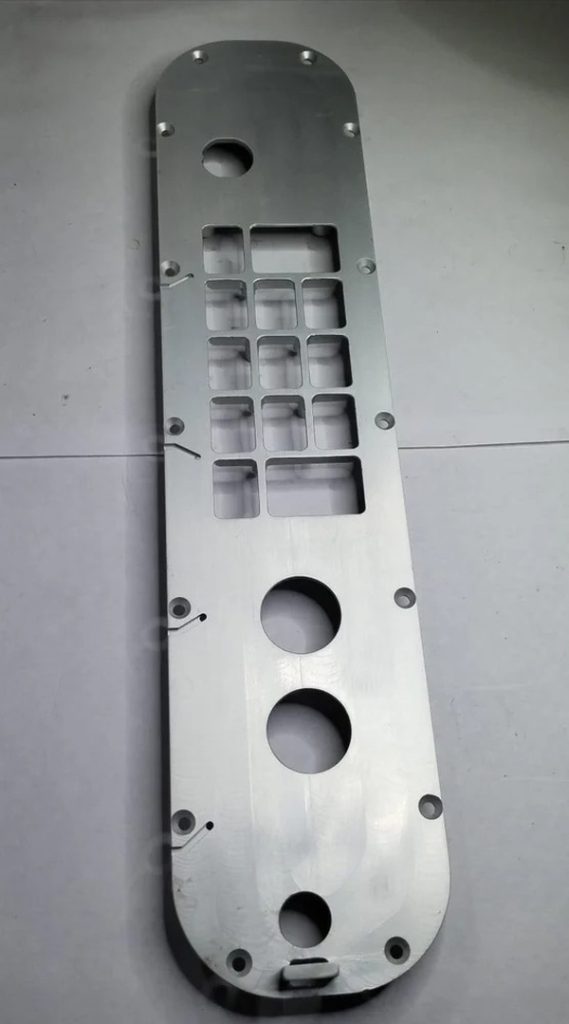
Bespoke metal fabrication refers to the end-to-end creation of metal components or assemblies that are engineered specifically for a unique application, rather than produced from standard catalog parts. Unlike generic fabrication, bespoke projects typically start from engineering drawings, 3D models, or performance requirements, not off-the-shelf dimensions.
In practice, bespoke metal fabrication often involves:
- One-off prototypes or low-to-mid volume production
- Tight tolerances and application-specific geometry
- Integration with other systems (mechanical, electrical, or structural)
- Iterative design refinement before final production
This approach is common in industries where standardized parts fail to meet mechanical, spatial, or regulatory constraints, such as aerospace tooling, industrial automation frames, medical equipment housings, and custom machinery enclosures.
Design for Manufacturability (DFM) in Custom Metal Projects
DFM is one of the most overlooked cost drivers in bespoke metal fabrication. A design that looks acceptable in CAD may become expensive or unstable if fabrication constraints are ignored.
Key DFM considerations include:
| Design Factor | Poor Practice | Optimized Practice |
|---|---|---|
| Hole placement | Too close to bends | ≥ material thickness × 2 |
| Bend radius | Sharp internal corners | ≥ material thickness |
| Weld access | Hidden seams | Open, inspectable joints |
| Tolerance stacking | Over-specified | Function-based tolerances |
For example, reducing unnecessary ±0.01 mm tolerances on non-critical surfaces can lower machining and inspection costs by 15–30% without affecting performance.
A capable bespoke fabricator will challenge the drawing, not blindly follow it, and suggest design adjustments that preserve function while improving manufacturability.
Material Selection and Performance Trade-Offs
Material choice directly impacts strength, corrosion resistance, machinability, weight, and lifecycle cost. Bespoke fabrication allows material selection to be optimized per application instead of defaulting to common grades.
Common materials and practical considerations:
| Material | Typical Use | Key Consideration |
|---|---|---|
| Mild Steel (S235 / A36) | Frames, brackets | Low cost, needs coating |
| Stainless Steel 304 | Food, medical | Corrosion resistant, harder to machine |
| Stainless Steel 316 | Marine, chemical | Superior corrosion resistance |
| Aluminum 6061 | Lightweight structures | Excellent machinability |
| Aluminum 5052 | Sheet metal enclosures | Better forming than 6061 |
For instance, switching from 304 to 316 stainless steel can double material cost, but may extend service life by years in corrosive environments—often justifiable in industrial or coastal applications.
Precision Cutting Technologies and Tolerance Control
Cutting defines the dimensional foundation of bespoke metal fabrication. The chosen process affects edge quality, flatness, and achievable tolerances.
| Cutting Method | Typical Tolerance | Best Use Case |
|---|---|---|
| Laser Cutting | ±0.1 mm | Thin sheet, complex profiles |
| Waterjet Cutting | ±0.15 mm | Thick plates, heat-sensitive parts |
| Plasma Cutting | ±0.5 mm | Structural steel, rough cuts |
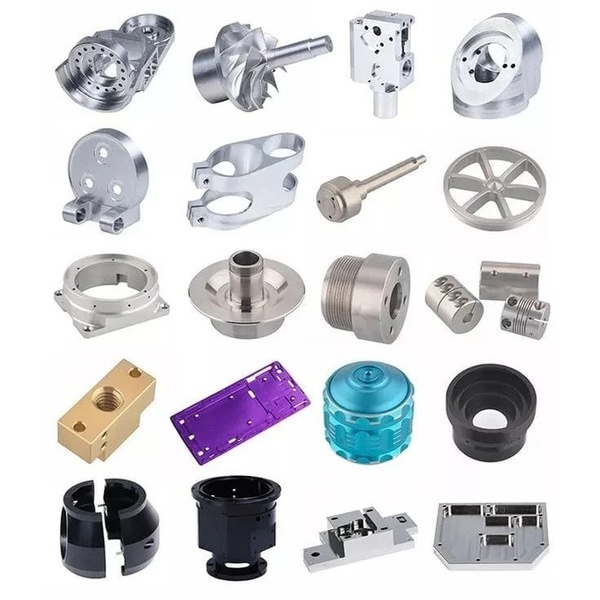
| CNC Milling | ±0.01–0.05 mm | Precision interfaces |
Laser cutting is often preferred for bespoke sheet metal because it minimizes secondary machining. However, for thick sections (>25 mm), waterjet or CNC milling may provide better dimensional stability.
Forming, Bending, and Structural Accuracy
Bending accuracy determines whether parts assemble cleanly or require rework. In bespoke fabrication, bend allowance and springback compensation must be calculated per material and thickness.
Key variables influencing bend accuracy:
- Material yield strength
- Grain direction
- Bend radius
- Tooling wear
A 2 mm aluminum sheet may spring back 2–3°, while stainless steel of the same thickness may spring back 5–7°, requiring different tooling setups.
Professional fabricators use CNC press brakes with offline simulation, ensuring repeatability even for complex multi-bend components.
Welding, Joining Methods, and Strength Validation
Welding in bespoke metal fabrication is rarely cosmetic—it is structural. Choosing the wrong method can lead to distortion, cracking, or premature failure.
| Joining Method | Advantage | Typical Application |
|---|---|---|
| MIG Welding | Fast, economical | Frames, structural parts |
| TIG Welding | Clean, precise | Stainless & aluminum |
| Spot Welding | Minimal distortion | Sheet metal assemblies |
| Mechanical Fasteners | Serviceable | Modular systems |
In load-bearing applications, weld strength is often validated through:
- Visual inspection
- Dye penetrant testing
- Load or fatigue testing (when required)
Good bespoke fabrication prioritizes weld sequence planning to minimize thermal distortion rather than correcting problems afterward.
Surface Finishing and Functional Treatments
Surface finishing is not only about appearance—it affects corrosion resistance, wear, and electrical properties.
Common finishes and purposes:
| Finish | Function |
|---|---|
| Powder Coating | Corrosion protection, aesthetics |
| Anodizing | Wear resistance for aluminum |
| Brushing / Polishing | Hygiene, reduced friction |
| Galvanizing | Outdoor steel protection |
For example, powder coating adds 60–120 μm thickness, which must be accounted for in mating features and threaded areas during design.
Quality Control, Inspection, and Compliance Standards
Bespoke metal fabrication often supports regulated or mission-critical applications. Quality control goes beyond visual checks.
Typical inspection tools include:
- Digital calipers & micrometers
- Height gauges
- Coordinate Measuring Machines (CMM)
- Material certificates (EN 10204 3.1)
Many buyers require compliance with ISO 9001, and in some industries, ISO 13485 or AS9100.
The value of bespoke fabrication lies in traceability and repeatability, even for low-volume production.
Cost Structure, Lead Time, and Scalability
Unlike mass production, bespoke fabrication costs are driven by engineering time, setup, and process complexity, not just material weight.
Indicative cost breakdown:
| Cost Component | Share |
|---|---|
| Engineering & DFM | 15–25% |
| Material | 20–35% |
| Fabrication & Machining | 30–40% |
| Finishing & Inspection | 10–15% |
Lead times can range from 1–2 weeks for simple assemblies to 6–8 weeks for complex welded systems. A scalable partner designs fixtures and processes so that prototypes can transition smoothly into batch production.
Industry Applications and Real-World Use Cases
Bespoke metal fabrication is widely used where standard components fail:
- Industrial automation frames requiring millimeter-level alignment
- Medical device housings with hygienic finishes
- Custom machinery guards and enclosures
- Aerospace ground support equipment
- Energy and battery system structures
In many cases, a single bespoke assembly replaces multiple standard parts, reducing assembly time and long-term maintenance costs.
Why Xavier Is a Reliable Partner for Bespoke Metal Fabrication
Xavier approaches bespoke metal fabrication as an engineering-driven manufacturing service, not just a fabrication shop. From DFM review and material selection to precision cutting, welding, and final inspection, every step is aligned with real-world application requirements.
Whether you need a one-off prototype or a scalable custom metal solution, Xavier focuses on function, durability, and manufacturability, helping customers reduce risk, control cost, and move from concept to production with confidence.
Xavier is a professional manufacturer specializing in bespoke metal fabrication, providing high-precision CNC machining for aluminum CNC machined aluminum, stainless steel CNC machined stainless steel, magnesium alloys, acrylic CNC machined acrylic, and ABS parts. We support CNC machining for aerospace components CNC aerospace parts and automotive components CNC automotive parts, as well as medical components. Our capabilities include 5 axis milling, CNC milling services, CNC turning services, and Swiss turning services. Surface finishing options include anodizing and electroless nickel plating. For global batch production and CNC machining pricing, contact Xavier for details.
Some of the images and text in this article are collected and compiled from the internet. If there is anything inappropriate, please contact us for processing.