
Hard Coat Anodize: Complete Guide to Type III Hardcoat Anodizing for CNC Machined Aluminum Parts
10 Key Topics Covered in This Article
- What Is Hard Coat Anodize? Understanding Type III Anodizing
- How Does the Hardcoat Anodizing Process Work?
- Hard Anodizing vs. Standard Anodizing: Type III vs. Type II
- Hardcoat Anodizing Thickness and Dimensional Tolerances
- Hardness, Wear Resistance, and Surface Performance
- Best Aluminum Alloys for Hardcoat Anodizing
- Hardcoat Anodizing Colors, Class 1, and Class 2
- Sealed vs. Unsealed Hardcoat Anodizing
- Advantages, Disadvantages, and Common Applications
- CNC Machining Design Considerations and Quality Inspection
1. What Is Hard Coat Anodize? Understanding Type III Anodizing
Hard coat anodize, also known as hardcoat anodizing, hard anodizing, or Type III anodizing, is an electrochemical surface treatment primarily used for aluminum and aluminum alloys. Unlike conventional anodizing, which is often selected for appearance and general corrosion protection, hardcoat anodizing focuses on improving surface hardness, abrasion resistance, and durability under demanding operating conditions.
During the process, the aluminum component is immersed in an electrolyte solution and connected as the anode in an electrical circuit. An electrical current causes oxygen to react with the aluminum surface, forming a dense aluminum oxide (Al₂O₃) layer.
This oxide coating is not simply deposited onto the metal like conventional electroplating. It develops through the conversion of the aluminum substrate itself, creating an integrated surface layer with strong adhesion.
Hardcoat anodizing is commonly specified under MIL-PRF-8625 Type III, a widely recognized military specification for hard anodic coatings.
Typical characteristics include:
| Property | Typical Hardcoat Performance |
|---|---|
| Process type | Type III sulfuric acid anodizing |
| Coating thickness | 25–75 μm |
| Common nominal thickness | 50 μm (0.002 in) |
| Surface hardness | Approximately 400–600 HV on suitable alloys |
| Hardness comparison | Often described as 60–70 HRC equivalent |
| Appearance | Gray, bronze, dark gray, or black |
| Main benefits | Wear resistance, surface hardness, corrosion protection |
| Common materials | 6061, 6063, 7075 aluminum |
These figures are representative rather than guaranteed values. Actual coating performance depends on alloy composition, process conditions, thickness, and finishing requirements.
For CNC machined components, hardcoat anodizing is particularly valuable when aluminum needs to withstand repeated contact, sliding friction, or abrasive operating environments without replacing the lightweight aluminum substrate with steel.
2. How Does the Hardcoat Anodizing Process Work?
Hardcoat anodizing uses a controlled electrochemical process. Compared with conventional Type II anodizing, it generally operates at lower electrolyte temperatures, higher current densities, and longer processing times.
The lower temperature helps reduce the chemical dissolution of the growing aluminum oxide layer, allowing a thicker and harder coating to develop.
The manufacturing process typically involves the following stages:
Step 1: CNC Machining and Surface Preparation
The aluminum component is machined to its required geometry. Tool marks, burrs, sharp edges, and machining contamination should be addressed before anodizing.
The original surface finish directly affects the final appearance. Hardcoat anodizing does not hide deep scratches or machining defects. In many cases, surface irregularities become more noticeable after coating.
Step 2: Cleaning and Degreasing
The components undergo cleaning to remove cutting fluids, oils, fingerprints, and other contaminants. Improper cleaning can lead to uneven coating formation, discoloration, and localized defects.
Step 3: Chemical Pretreatment
Depending on the aluminum alloy and required finish, chemical etching or other pretreatment methods may be used. The objective is to prepare a consistent surface while controlling material removal.
Step 4: Electrochemical Hard Anodizing
The workpiece is immersed in a temperature-controlled sulfuric acid electrolyte. Electrical current passes through the solution, forming aluminum oxide on the component.
Typical industrial hardcoat processes use chilled baths, often around 0–5°C, although actual operating parameters vary by process specification and alloy.
Step 5: Rinsing and Optional Sealing
After anodizing, components are rinsed to remove residual chemicals. Depending on the application, the coating may remain unsealed or undergo a sealing treatment.
Step 6: Final Inspection
The finished components are inspected for coating thickness, appearance, dimensional accuracy, and other application-specific requirements.
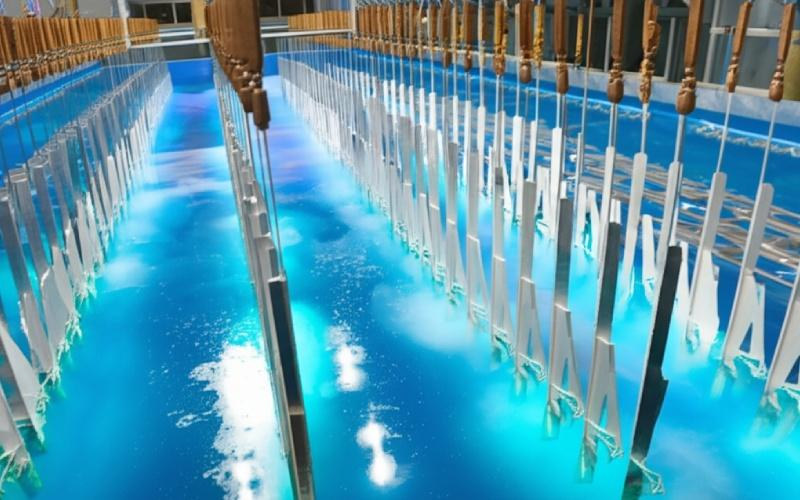
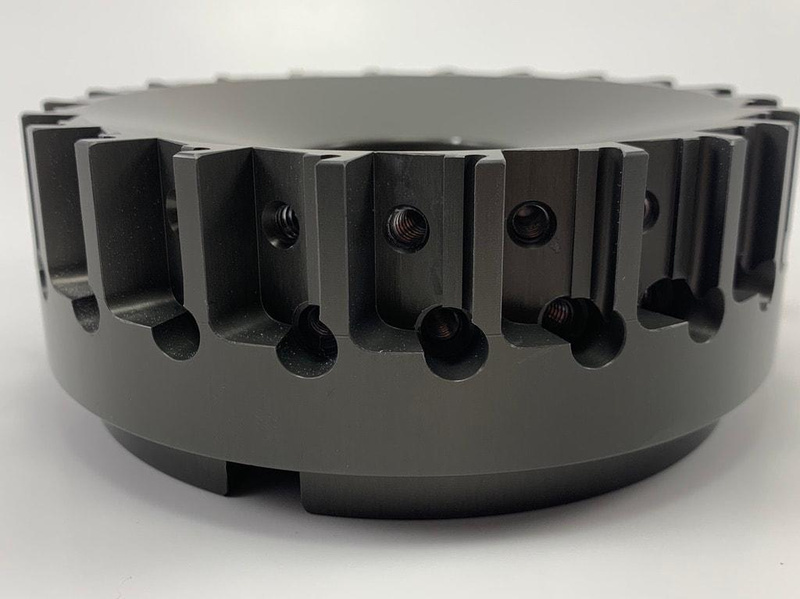
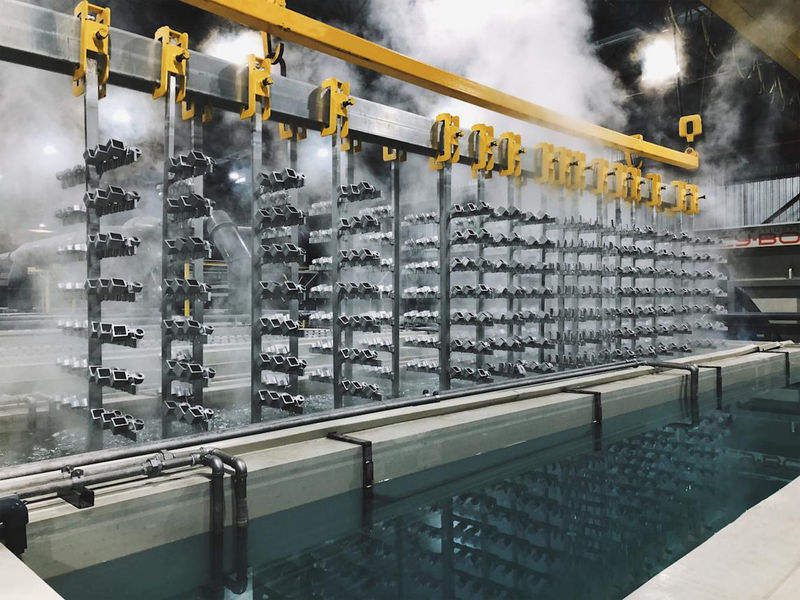
The most important point for CNC manufacturers is that hardcoat anodizing should be considered during product design and machining, rather than treated as an independent finishing operation added after manufacturing.
3. Hard Anodizing vs. Standard Anodizing: Type III vs. Type II
Type II and Type III anodizing both create aluminum oxide layers, but they serve different engineering purposes.
Standard anodizing is commonly selected for decorative finishes and general corrosion protection, while hardcoat anodizing is designed for components exposed to higher mechanical wear.
| Comparison | Type II Anodizing | Type III Hardcoat |
|---|---|---|
| Main purpose | Appearance and corrosion protection | Wear and abrasion resistance |
| Typical thickness | 5–25 μm | 25–75 μm |
| Surface hardness | Lower | Higher |
| Wear resistance | Moderate to good | Excellent |
| Color options | Wide selection | Limited, mainly dark colors |
| Dimensional impact | Relatively small | Significant |
| Sealing | Commonly sealed | Application-dependent |
| Typical applications | Housings, panels, consumer products | Pistons, cylinders, sliding components |
For example, consider two CNC machined aluminum enclosures.
The first is used in an electronic control unit where appearance and general corrosion protection are important. Type II anodizing is usually sufficient.
The second is used as a sliding guide housing in industrial automation equipment. Its internal surface repeatedly contacts another mechanical component. In this situation, Type III hardcoat anodizing offers better resistance to surface wear.
However, hardcoat is not automatically the better choice for every aluminum part. Its additional processing requirements, dimensional buildup, and limited color options can increase manufacturing costs without providing meaningful benefits for purely decorative components.
4. Hardcoat Anodizing Thickness and Dimensional Tolerances
Coating thickness is one of the most important considerations when designing CNC machined aluminum parts for hardcoat anodizing.
Unlike paint or conventional deposited coatings, anodizing converts part of the aluminum substrate into aluminum oxide. Approximately half of the total coating thickness typically penetrates into the original material, while the other half grows outward.
This distinction directly affects final component dimensions.
For example, assume a CNC machined aluminum shaft requires a nominal hardcoat thickness of 50 μm.
- Total coating thickness: 50 μm
- Approximate inward penetration: 25 μm
- Approximate outward growth: 25 μm
The external diameter increases by approximately 50 μm because the coating grows outward on both sides.
For an internal bore, the diameter decreases by approximately 50 μm.
| Coating Thickness | Outward Growth Per Surface | Increase in External Diameter | Reduction in Bore Diameter |
|---|---|---|---|
| 25 μm | 12.5 μm | 25 μm | 25 μm |
| 40 μm | 20 μm | 40 μm | 40 μm |
| 50 μm | 25 μm | 50 μm | 50 μm |
| 75 μm | 37.5 μm | 75 μm | 75 μm |
These are approximate dimensional changes. Actual growth can vary depending on alloy, geometry, and process conditions.
Practical CNC machining example:
Suppose a finished aluminum shaft must have an external diameter of 20.000 mm after hardcoat anodizing.
If the specified coating is 50 μm thick, the machining allowance must account for approximately 25 μm of outward growth on each side.
A preliminary machining diameter would therefore be:
20.000 − 0.025 × 2 = 19.950 mm.
The anodizing supplier should confirm the actual dimensional allowance before production, particularly when tight tolerances are required.
For precision bores, threaded holes, bearing seats, and mating surfaces, engineers should clearly distinguish between pre-anodizing and post-anodizing dimensions on technical drawings.
5. Hardness, Wear Resistance, and Surface Performance
The biggest advantage of hardcoat anodizing is its ability to significantly improve the surface performance of aluminum components.
Aluminum itself is relatively soft compared with hardened steel. Even high-strength aluminum alloys can suffer from scratching, abrasion, and surface damage when repeatedly exposed to friction.
Hardcoat anodizing creates a ceramic-like aluminum oxide surface that is substantially harder than the underlying aluminum.
Depending on the alloy and processing conditions, hardcoat surfaces commonly achieve approximately 400–600 HV.
This makes the treatment particularly useful for components that experience:
- Repeated sliding contact.
- Abrasive particles and surface friction.
- Frequent mechanical movement.
- Surface scratching and handling.
- Electrical insulation requirements.
Consider an aluminum piston operating inside a mechanical cylinder. Without suitable surface protection, repeated contact can gradually wear down the aluminum surface, changing clearances and reducing operating efficiency.
A properly specified hardcoat can improve surface durability and extend the service life of the component.
However, high hardness does not mean unlimited impact resistance. Aluminum oxide is relatively brittle compared with the underlying aluminum. Sharp impacts, concentrated contact pressure, and poorly designed edges can cause cracking or localized coating damage.
Another important consideration is that hardness alone does not guarantee wear performance. Surface roughness, lubrication, contact pressure, counterface material, and operating temperature all influence actual service life.
For sliding applications, engineers should evaluate the complete material pair rather than selecting a coating based only on its hardness rating.
6. Best Aluminum Alloys for Hardcoat Anodizing
Not all aluminum alloys produce identical hardcoat finishes. Their chemical compositions influence coating uniformity, hardness, color, and overall process stability.
The selection of aluminum material should therefore consider both mechanical requirements and surface treatment compatibility.
| Aluminum Alloy | Hardcoat Compatibility | Typical Characteristics | Common Applications |
|---|---|---|---|
| 6061-T6 | Excellent | Consistent coating, good machinability | Precision brackets, housings, fixtures |
| 6063 | Good | Good surface appearance | Structural components, profiles |
| 7075-T6 | Moderate to good | High strength, potentially less uniform coating | Aerospace brackets, high-strength parts |
| 2024-T3 | More challenging | Copper content can affect coating quality | Aerospace structural components |
| 5052 | Good | Good corrosion resistance | Marine and industrial components |
| Cast aluminum | Variable | Silicon content may cause coating variation | Housings and cast mechanical parts |
Why is 6061-T6 commonly selected?
6061-T6 offers a practical balance of strength, machinability, corrosion resistance, and anodizing performance. It is widely used for precision CNC machined parts requiring both dimensional accuracy and durable surface protection.
Can 7075 aluminum be hard anodized?
Yes. 7075-T6 is frequently used for high-strength aerospace and industrial components. However, its alloying elements can influence coating appearance and uniformity. The resulting hardcoat may not have the same consistency as one produced on 6061.
For applications where mechanical strength is more important than appearance, 7075 can still be an appropriate choice.
What about 2024 aluminum?
2024 contains relatively high copper content, which can make anodizing more challenging. Specialized process control may be necessary to reduce coating defects and achieve acceptable performance.
The aluminum alloy should always be confirmed with the finishing supplier before committing to a production specification.
7. Hardcoat Anodizing Colors: Class 1 vs. Class 2
Hardcoat anodizing offers fewer color options than conventional Type II anodizing. This is because the thicker oxide layer and the chemical composition of the aluminum influence the final appearance.
Under MIL-PRF-8625, Type III hardcoat is divided into two classes:
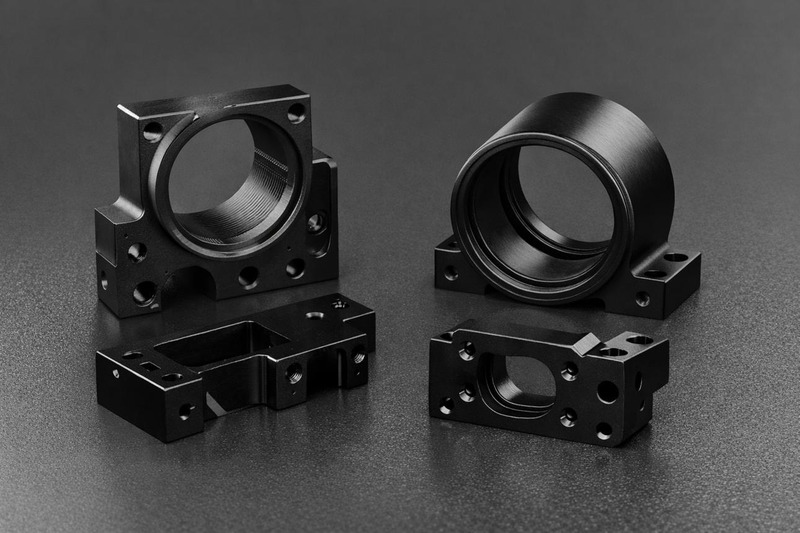
- Class 1 – Non-Dyed: The coating retains its natural appearance, usually ranging from gray and bronze to dark gray.
- Class 2 – Dyed: The coating is dyed after anodizing, with black being one of the most commonly requested finishes.
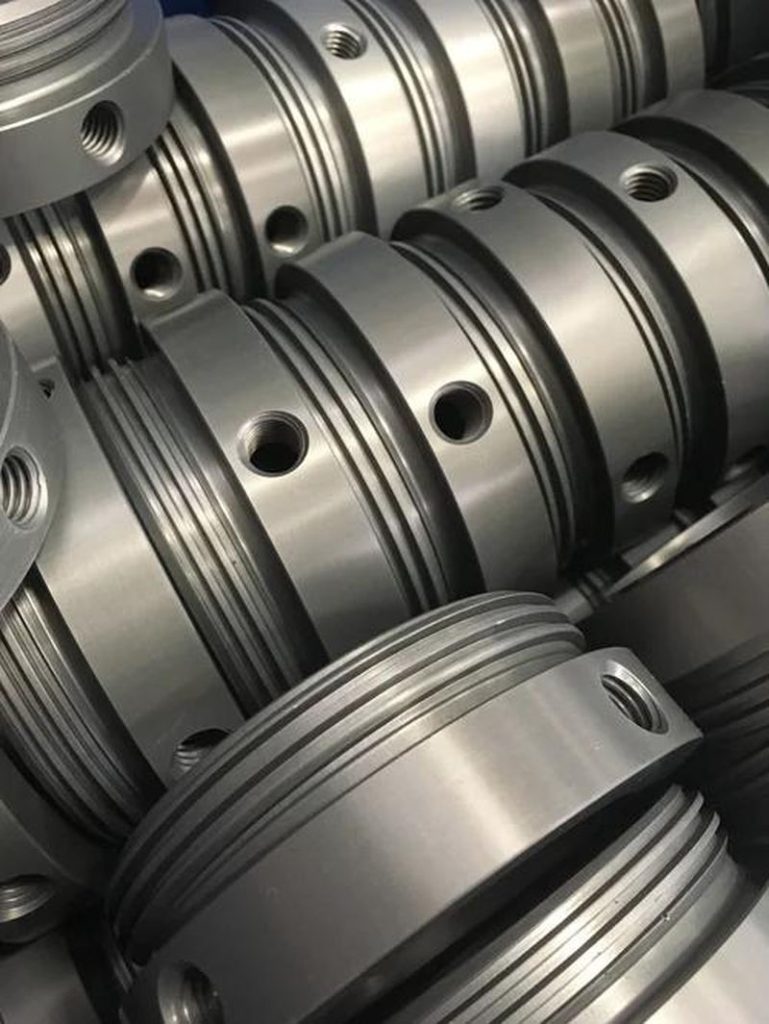
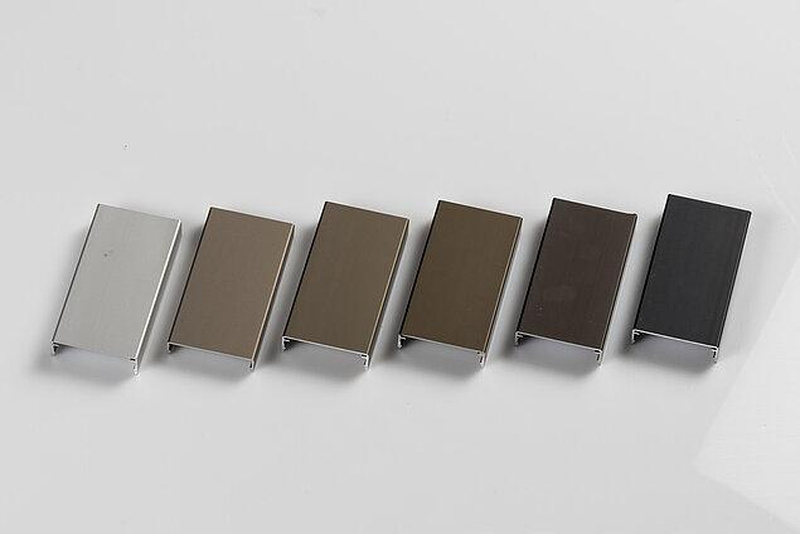
The final color depends on several factors:
- Aluminum alloy: Different alloying elements influence oxide formation and light absorption.
- Coating thickness: Thicker coatings generally appear darker.
- Surface preparation: Bead blasting, grinding, and polishing produce different visual textures.
- Dye selection: Black dye can create a darker and more consistent appearance when the process is properly controlled.
One common mistake in product development is expecting hardcoat anodizing to produce the same bright colors available with Type II anodizing.
If a component requires bright red, blue, green, or other decorative colors, conventional anodizing is generally a more suitable choice.
For industrial components, natural gray and black hardcoat finishes are usually preferred because functionality and surface durability are more important than decorative appearance.
When color consistency matters across multiple production batches, manufacturers should establish an approved reference sample rather than relying only on a general color description.
8. Sealed vs. Unsealed Hardcoat Anodizing
Sealing is another important decision when specifying Type III hardcoat anodizing.
After anodizing, the aluminum oxide layer contains microscopic pores. Sealing closes or reduces these pores, helping improve corrosion resistance by limiting the penetration of moisture and contaminants.
However, sealing can also affect the surface properties of hardcoat anodizing, particularly wear performance.
| Feature | Sealed Hardcoat | Unsealed Hardcoat |
|---|---|---|
| Corrosion protection | Generally improved | Depends more heavily on coating quality |
| Wear resistance | May be reduced | Generally preferred for maximum wear resistance |
| Surface pores | Partially closed | Remain more open |
| Lubricant retention | Depends on sealing method | Can retain certain lubricants |
| Typical applications | Corrosion-exposed components | Sliding and abrasive-contact components |
When should hardcoat anodizing be sealed?
Sealing is worth considering for aluminum components exposed to humidity, saltwater, chemicals, or outdoor environments.
For example, marine equipment housings may benefit from sealed hardcoat anodizing because corrosion protection is a major requirement.
When is unsealed hardcoat preferable?
Unsealed hardcoat is often selected for wear-critical components such as sliding guides, mechanical pistons, and industrial tooling.
The reason is that sealing can reduce the hardness or abrasion performance of the outer coating, depending on the sealing process.
Another option is PTFE-impregnated hardcoat anodizing. This combines a hard anodic oxide layer with a low-friction surface treatment, making it useful for certain sliding applications.
However, PTFE impregnation is not a universal replacement for lubrication. Engineers should evaluate operating loads, temperatures, counterface materials, and friction requirements before specifying it.
The correct choice depends on whether corrosion resistance, abrasion resistance, or low friction is the primary engineering requirement.
9. Advantages, Disadvantages, and Common Applications
Hardcoat anodizing is widely used in precision manufacturing because it improves the surface properties of aluminum without significantly changing the component’s overall lightweight structure.
However, it also introduces certain design and production limitations.
Main Advantages
1. Excellent Wear Resistance
The hard aluminum oxide layer protects components against repeated friction, scratching, and abrasive contact. This is especially valuable for moving mechanical parts.
2. Improved Corrosion Resistance
A properly processed hardcoat provides additional protection against environmental exposure. Sealing can further improve corrosion performance when required.
3. High Surface Hardness
The coating is considerably harder than untreated aluminum, helping reduce surface damage during mechanical operation.
4. Electrical Insulation
Aluminum oxide is electrically insulating. Hardcoat anodizing can therefore be useful for certain electrical housings, fixtures, and components that require surface insulation.
5. Strong Coating Adhesion
Because the oxide layer develops from the aluminum substrate, it does not behave like a conventional paint film that can easily peel away.
Main Disadvantages
- Limited color selection compared with decorative anodizing.
- Increased manufacturing cost due to specialized processing.
- Dimensional changes that require machining allowances.
- Brittle oxide that can crack under concentrated impact.
- Potential reduction in fatigue performance, particularly for cyclically loaded components.
- More complicated processing for certain aluminum alloys.
Hardcoat anodizing can influence fatigue strength because the brittle surface layer may initiate or propagate cracks under repeated loading. For fatigue-critical aerospace or structural components, engineers should evaluate the coating’s effect through appropriate design analysis and testing.
Common Industrial Applications
| Industry | Typical Components | Why Hardcoat Is Used |
|---|---|---|
| Aerospace | Structural brackets, housings, fixtures | Wear resistance and lightweight construction |
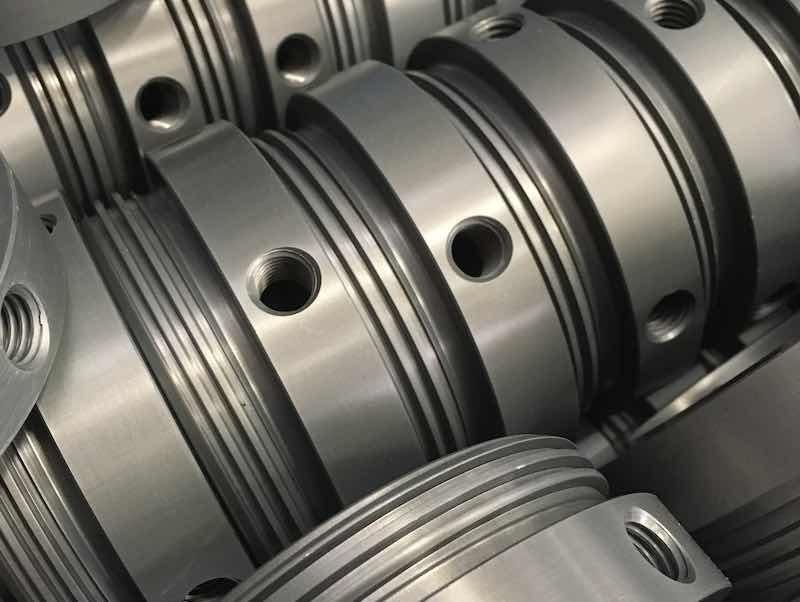
| Automotive | Pistons, throttle components, mechanical housings | Surface durability |
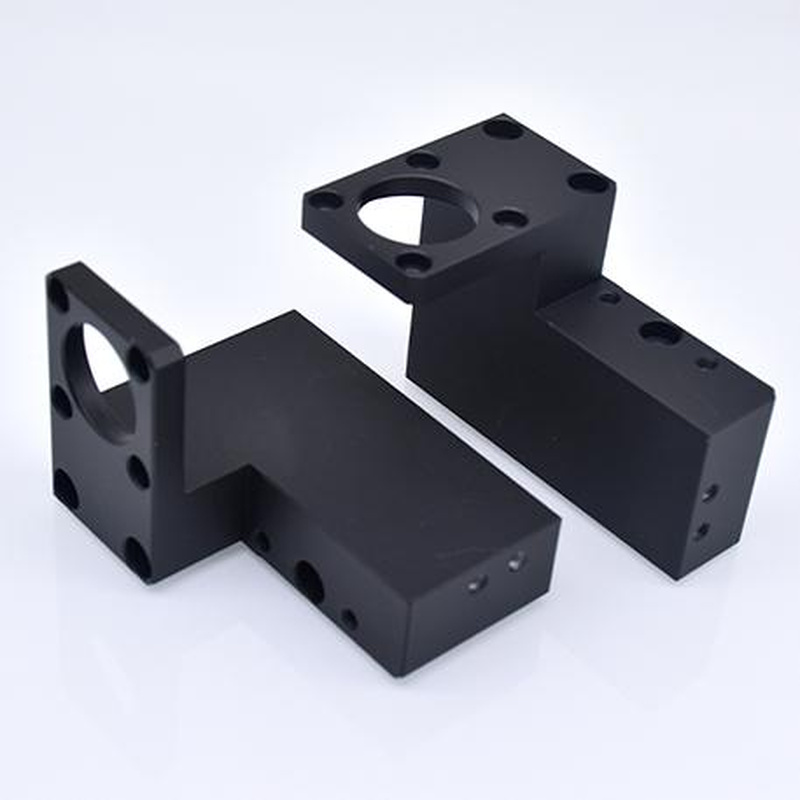
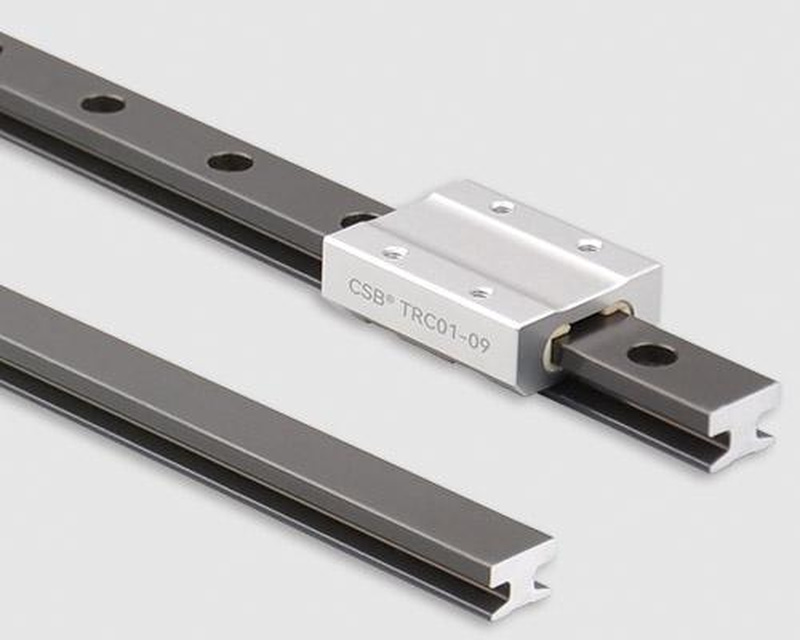
| Industrial automation | Sliding guides, fixtures, machine components | Abrasion resistance |
| Marine | Equipment housings, mechanical fittings | Corrosion protection |
| Medical equipment | Instrument housings and mechanical components | Durable surfaces |
| Electronics | Heat sinks, mounting fixtures, enclosures | Electrical insulation and surface protection |
For example, an industrial automation manufacturer may use 6061-T6 aluminum to machine a precision sliding guide. Applying a 50 μm hardcoat can improve the surface’s resistance to repeated contact while maintaining the lightweight properties of aluminum.
The actual coating specification must still account for the guide’s clearance, contact pressure, lubrication, and operating environment.
10. CNC Machining Design Considerations and Quality Inspection
Hardcoat anodizing is not simply a finishing operation. It affects machining dimensions, surface geometry, material selection, and inspection requirements.
For CNC manufacturers, coordinating machining and anodizing processes is essential to avoid dimensional problems and unnecessary production costs.
1. Allow for Coating Growth
Machining dimensions should be calculated based on the specified coating thickness.
For precision shafts, bearing seats, and internal bores, the drawing should identify whether dimensions apply before or after anodizing.
2. Avoid Sharp Edges and Corners
Sharp external edges can develop thin, uneven, or damaged coatings. Rounded edges generally provide more reliable coating coverage.
NASA’s anodizing process specification includes recommended edge radii associated with different Type III coating thicknesses. For example, it references approximately 1.6 mm radius for a 50 μm coating. Actual requirements should be confirmed against the applicable drawing and specification.
3. Consider Threads and Small Holes
Hardcoat buildup can affect threaded holes, internal bores, and small openings. Masking may be necessary for features that must retain their original dimensions.
For critical threads, discuss whether they should be masked, protected, or finished after anodizing.
4. Control the Original Surface Finish
The surface finish before anodizing influences the final appearance and functional performance.
For example, a precision sliding surface should generally receive appropriate machining and finishing before hardcoat treatment. Anodizing will not correct poor machining quality.
5. Establish Clear Inspection Requirements
Quality inspection should be based on the actual functional requirements of the part.
| Inspection Item | Recommended Inspection Method | Purpose |
|---|---|---|
| Coating thickness | Eddy-current coating thickness gauge | Verify coating thickness |
| Surface hardness | Appropriate microhardness or specified hardness test | Evaluate coating hardness |
| Surface appearance | Visual inspection | Identify discoloration and defects |
| Dimensional accuracy | CMM or precision measuring instruments | Verify final dimensions |
| Surface roughness | Surface roughness tester | Check functional surface finish |
| Corrosion resistance | Applicable corrosion test | Evaluate corrosion performance |
| Abrasion resistance | Taber or specified abrasion test | Assess wear performance |
It is important to distinguish between coating hardness and actual abrasion resistance. A hardness reading alone does not prove that a component will achieve the required wear life. Different tests should be selected according to the coating’s intended function.
Example: Hardcoat Anodizing Specification for a CNC Machined Aluminum Part
For a precision industrial aluminum bracket, an engineering drawing might include the following requirements:
| Specification | Example Requirement |
|---|---|
| Base material | Aluminum 6061-T6 |
| Surface treatment | MIL-PRF-8625 Type III |
| Coating class | Class 1, undyed |
| Coating thickness | 50 ± 10 μm |
| Sealing | Unsealed, subject to application approval |
| Appearance | Uniform natural gray |
| Critical dimensions | Dimensions apply after anodizing |
| Inspection | Thickness and final dimensional inspection |
This is an illustrative engineering callout, not a universal specification. The applicable standard, revision, coating tolerance, sealing requirements, and inspection methods must be agreed upon by the customer and finishing supplier.
Planning these requirements before machining helps prevent oversized components, assembly interference, and costly rework.
Why Choose Xavier for CNC Machining and Hardcoat Anodizing?
Selecting the right surface treatment is only one part of manufacturing a reliable precision component. The quality of the final product also depends on material selection, CNC machining accuracy, dimensional planning, surface preparation, and finishing process control.
Xavier provides CNC machining services for international B2B customers, specializing in custom precision metal components and outsourced CNC manufacturing.
Whether you need 6061-T6 aluminum brackets, 7075 aerospace components, precision housings, mechanical fixtures, or complex industrial parts, our manufacturing team can help evaluate the appropriate machining and surface finishing requirements.
Our manufacturing considerations include:
- Custom CNC Machining: Precision milling, turning, drilling, boring, and other machining operations.
- Material Selection: Aluminum alloys, stainless steel, alloy steel, brass, copper, titanium, and engineering plastics.
- Surface Finishing: Hardcoat anodizing, conventional anodizing, electroless nickel plating, zinc plating, passivation, and other finishing options.
- Dimensional Control: Consideration of coating buildup, machining allowances, and critical tolerances.
- Custom Production: Support for prototypes, low-volume orders, and production batches.
If you are developing aluminum components that require high surface hardness, excellent wear resistance, and reliable dimensional performance, Xavier can help you evaluate the right CNC machining and hardcoat anodizing solution.
Contact Xavier today to discuss your drawings, material requirements, coating specifications, and production needs. Request a customized CNC machining quotation and turn your design into precision-manufactured components.
As an integrated CNC machining manufacturer and trading company in China, Xavier specializes in custom CNC machining and precision metal component manufacturing for global customers. We offer professional CNC machining of PEEK, CNC machining of titanium, and CNC machining of aluminum. Our manufacturing capabilities cover a broad selection of metals, alloys, and engineering plastics, including alloy steel, aluminum, brass, bronze, copper, Inconel, Invar 36, mild steel, stainless steel, titanium, tool steel, ABS, FR4, G-10, nylon, PEEK, PEI, PET, PMMA (acrylic), polycarbonate, polyethylene, polypropylene, POM (acetal), PPSU, PTFE, and PVC. We manufacture precision components for robotics, aerospace, marine, automotive, medical, and other industrial applications.
Contact Xavier, your trusted CNC machining of PEEK manufacturer, for reliable CNC machining of titanium services in bulk production. Get in touch with us today to inquire about CNC machining of aluminum pricing and discuss your project requirements.
Some of the images and text in this article are collected and compiled from the internet. If there is anything inappropriate, please contact us for processing.