
10 Key Topics to Cover: Galvanized vs. Galvannealed
- What Is Galvanized Steel? – Definition, hot-dip galvanizing process, zinc coating composition, and protective characteristics.
- What Is Galvannealed Steel? – Zinc-iron alloy coating, additional annealing process, and metallurgical characteristics.
- Galvanized vs. Galvannealed: Key Differences in Composition and Appearance – Differences in coating chemistry, surface texture, color, and hardness.
- Corrosion Resistance and Rust Protection – How both coatings protect steel, their performance in outdoor environments, and unpainted service life.
- Paint Adhesion and Surface Finishing – Why galvannealed steel is generally easier to paint and powder coat.
- Weldability and Fabrication Performance – Resistance spot welding, electrode wear, welding consistency, and fabrication considerations.
- Formability, Bending, and Coating Durability – Differences in ductility, stamping, bending, coating cracking, and powdering.
- ASTM Standards and Coating Weight Designations – Understanding G60, G90, A40, A60, Z275, and ZF120.
- Applications and Industrial Uses – Automotive parts, electrical enclosures, construction, appliances, and industrial components.
- How to Choose Between Galvanized and Galvannealed Steel for CNC and Sheet Metal Parts – Material selection, machining considerations, cost, and practical engineering recommendations.
Galvanized vs. Galvannealed: 10 Important Differences, Properties, and Applications
Choosing the right steel coating is essential when manufacturing metal components that need corrosion protection, reliable fabrication, and a consistent surface finish. Two commonly used materials are galvanized steel and galvannealed steel.
Although both materials use zinc-based coatings to protect steel against rust, their manufacturing processes produce different surface characteristics and performance.
Galvanized steel is generally preferred when strong corrosion protection without additional painting is required. Galvannealed steel, on the other hand, is particularly suitable for components that require painting, powder coating, or resistance spot welding.
Understanding these differences helps engineers, manufacturers, and purchasing professionals select the right material for their applications while avoiding unnecessary processing costs and quality problems.
1. What Is Galvanized Steel?
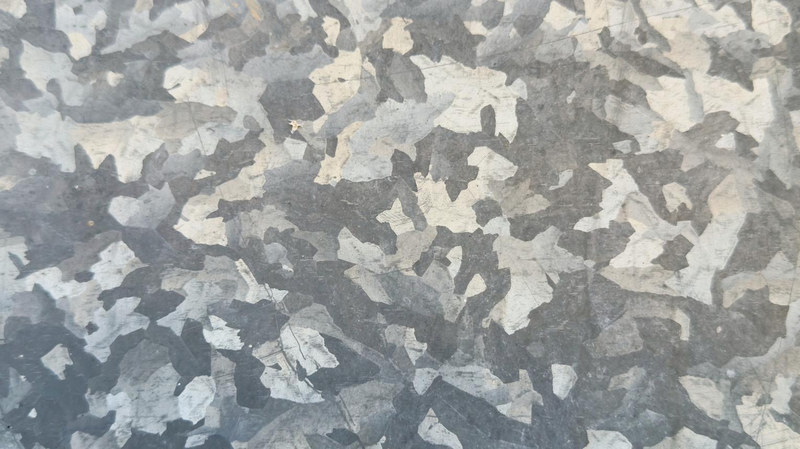
Galvanized steel is carbon steel or another suitable steel grade coated with a layer of zinc to prevent corrosion. The most common manufacturing method for galvanized sheet steel is continuous hot-dip galvanizing.
During production, the steel strip passes through several preparation stages:
- Surface cleaning: Oil, dirt, and other contaminants are removed to prepare the steel surface.
- Pickling and rinsing: Oxide scale and surface impurities are removed where required by the production line.
- Fluxing or surface conditioning: The steel surface is prepared for effective zinc coating.
- Hot-dip coating: The steel passes through molten zinc, typically maintained at approximately 450°C.
- Cooling and finishing: The coating solidifies, and the strip undergoes thickness control and inspection.
The resulting coating consists primarily of zinc, with a small amount of aluminum commonly present in continuously galvanized coatings.
The main advantage of galvanized steel is its ability to protect the underlying steel through two mechanisms.
First, the zinc coating creates a physical barrier that limits contact between steel, moisture, and oxygen. Second, zinc provides sacrificial protection. Because zinc is more electrochemically active than iron, it preferentially corrodes when exposed to the environment, helping protect small exposed areas of the steel substrate.
This makes galvanized steel particularly useful for roofing panels, brackets, structural supports, electrical equipment, and outdoor sheet metal components.
2. What Is Galvannealed Steel?
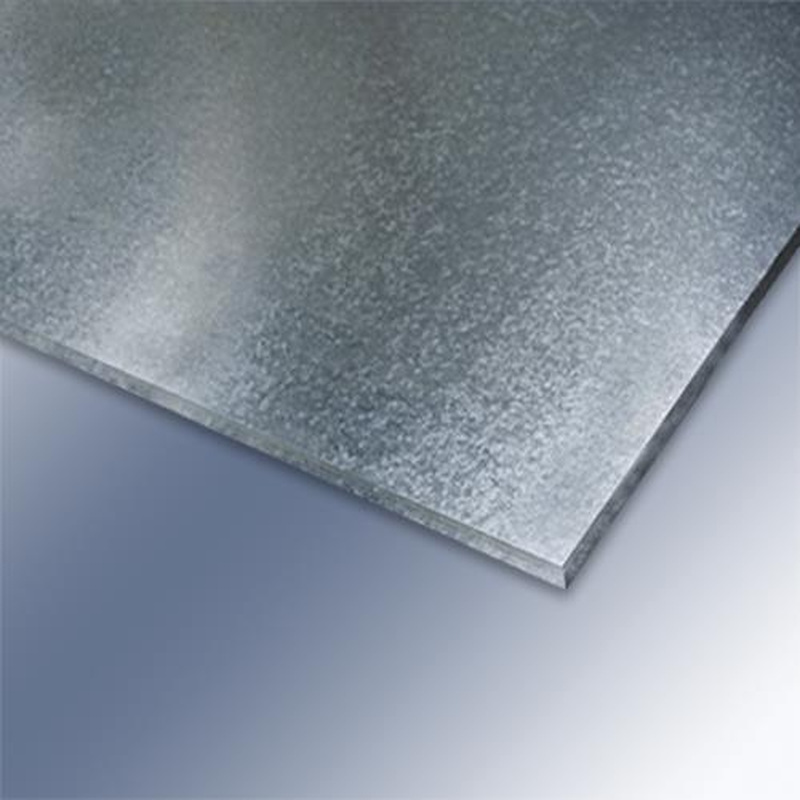
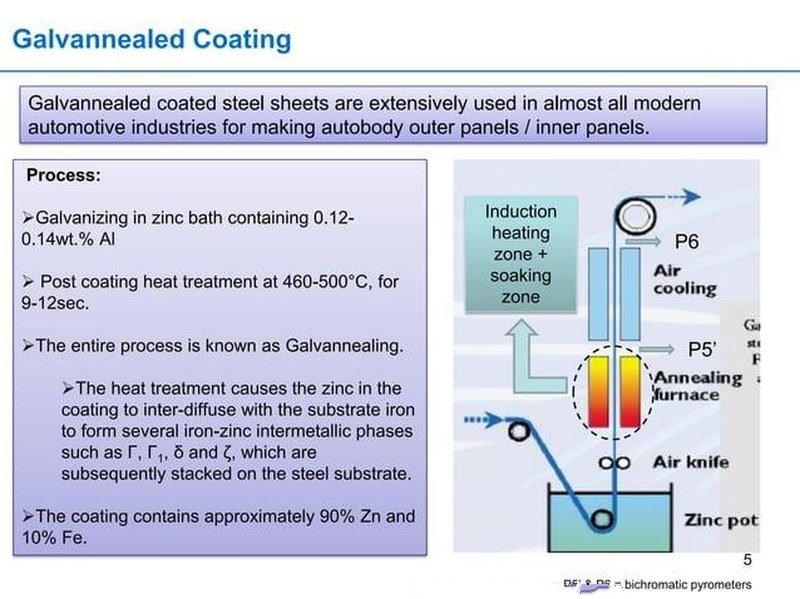
Galvannealed steel is also produced using a hot-dip galvanizing process, but it undergoes an additional heat-treatment stage called galvannealing.
After the steel strip exits the molten zinc bath, it enters a controlled heating furnace. The temperature is commonly around 500–565°C, depending on the production process and required coating characteristics.
During this treatment, iron from the steel substrate diffuses into the zinc coating, creating an iron-zinc alloy layer.
The resulting coating typically contains approximately 8–12% iron, although the exact composition depends on production conditions and coating requirements.
This metallurgical change significantly affects the steel’s surface properties.
Compared with conventional galvanized steel, galvannealed steel generally has:
- A matte gray appearance rather than a bright metallic finish.
- Better paint and primer adhesion.
- More consistent resistance spot welding behavior.
- Greater surface hardness.
- A higher tendency toward coating powdering during severe forming operations.
For example, an automotive manufacturer producing an interior door panel may prefer galvannealed steel because the component needs to be stamped, spot welded, and subsequently painted.
The additional alloying process makes the surface more suitable for these manufacturing operations.
3. Galvanized vs. Galvannealed: Composition and Appearance
The most fundamental difference between these materials is their coating composition.
Galvanized steel has a predominantly zinc coating, while galvannealed steel contains an iron-zinc alloy.
This difference changes not only the chemical composition but also the coating’s physical behavior.
| Property | Galvanized Steel | Galvannealed Steel |
|---|---|---|
| Main coating | Zinc | Zinc-iron alloy |
| Iron content | Very low | Typically 8–12% |
| Surface appearance | Bright, metallic | Matte gray |
| Surface hardness | Relatively soft | Harder |
| Paint adhesion | Requires suitable preparation | Generally better |
| Spot welding | More challenging | Generally more consistent |
| Bare corrosion resistance | Generally higher | Generally lower |
| Coating flexibility | Generally better | More susceptible to powdering |
One easy way to distinguish the materials is by examining their surface appearance.
Galvanized steel often has a shiny silver-gray appearance, sometimes featuring visible spangle patterns. Galvannealed steel generally has a uniform, dull gray or matte surface.
However, appearance alone is not a reliable identification method. Surface treatments, passivation, and production variations can change the final appearance.
For industrial purchasing, checking the material certificate and coating designation is more reliable than visual inspection.
4. Corrosion Resistance and Rust Protection
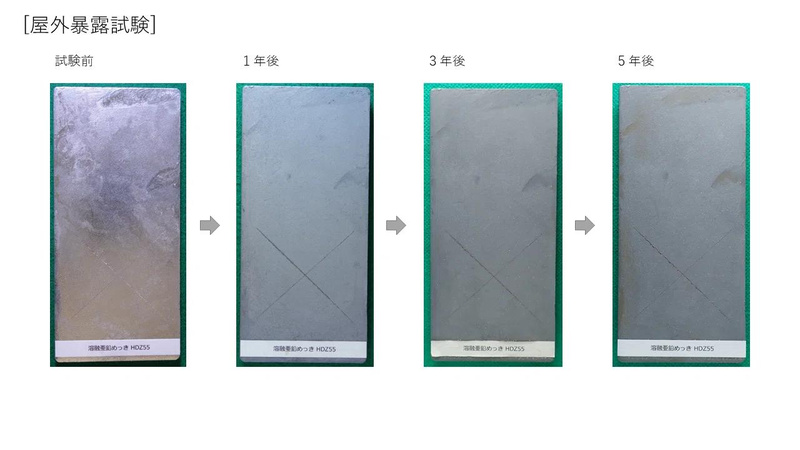
Corrosion resistance is one of the most important considerations when comparing galvanized vs. galvannealed steel.
Both materials protect steel through zinc-based coatings, but galvanized steel generally provides better corrosion resistance when used without paint.
The reason is related to the coating’s zinc content and protective behavior.
A conventional galvanized coating contains a relatively high proportion of free zinc. This zinc provides sacrificial protection when the surface becomes scratched or damaged.
Galvannealed steel contains iron-zinc intermetallic phases. Although these phases still provide corrosion protection, their corrosion performance is generally lower than that of comparable conventional galvanized coatings when exposed without additional protection.
For example, consider two electrical equipment brackets installed outdoors.
- A galvanized bracket may be suitable when the component needs to remain exposed without painting.
- A galvannealed bracket may be more appropriate when the component will receive a properly specified primer and powder coating.
However, coating weight, environmental exposure, surface preparation, and cut-edge protection all affect actual service life.
Salt spray testing can help compare coating performance, but a salt spray result should not be directly converted into an expected number of outdoor service years.
For coastal environments, industrial chemical exposure, or applications with frequent moisture contact, the complete coating system should be evaluated rather than relying only on the material name.
5. Paint Adhesion and Surface Finishing
Paintability is one of the strongest advantages of galvannealed steel.
The iron-zinc alloy surface generally provides better adhesion for primers and paints than an untreated, conventional galvanized surface.
Galvanized steel has a relatively smooth zinc-rich surface. Depending on its passivation, oiling, and surface condition, paint or powder coating may not adhere reliably without appropriate preparation.
Typical pretreatment operations include:
- Degreasing to remove oil and contaminants.
- Surface cleaning and conditioning.
- Chemical conversion treatment where specified.
- Primer application.
- Powder coating or liquid painting.
Galvannealed steel generally provides a more paint-friendly surface, which is why it is widely used in automotive body panels and painted industrial enclosures.
However, better paint adhesion does not mean pretreatment can always be eliminated. Oil contamination, storage conditions, and surface passivation can still affect coating performance.
Practical example:
Suppose a manufacturer needs to produce 500 steel electrical enclosures with a uniform powder-coated finish.
Galvannealed steel may be a suitable option because its surface supports paint adhesion and can reduce the risk of coating delamination when the correct pretreatment system is used.
For parts requiring a decorative, bright metallic appearance without painting, galvanized steel may be the better choice.
6. Weldability and Fabrication Performance
Weldability is another important difference, especially in automotive manufacturing and sheet metal fabrication.
Galvanized steel can be resistance spot welded, but its zinc-rich coating affects the welding process.
During spot welding, the coating influences electrical contact resistance, electrode conditions, and the formation of the weld nugget. Zinc can also contribute to electrode wear and contamination.
Galvannealed steel generally provides more consistent resistance spot welding performance because of its iron-zinc alloy coating.
This is particularly useful in automated production lines where manufacturers need stable weld quality across large production batches.
| Welding consideration | Galvanized | Galvannealed |
|---|---|---|
| Resistance spot welding | More process-sensitive | Generally more consistent |
| Electrode wear | Can be higher | Often more manageable |
| Welding parameter control | Requires optimization | Requires optimization |
| Coating-related fumes | Possible | Possible |
| Production consistency | Depends on coating and process | Often advantageous |
For example, when manufacturing automotive brackets using multiple spot welds, galvannealed steel can help improve welding consistency.
Nevertheless, neither material should be considered weld-ready without process qualification. Welding current, electrode force, welding time, sheet thickness, and coating weight all influence the final result.
Appropriate ventilation and fume controls are also essential when welding zinc-coated materials.
7. Formability, Bending, and Coating Durability
Formability is especially important when steel sheets are processed through stamping, bending, roll forming, or deep drawing.
Galvanized steel generally has a more ductile coating because its zinc layer is relatively soft. It can accommodate many forming operations without significant coating damage.
Galvannealed steel has a harder iron-zinc alloy coating. Although this can improve surface durability during certain handling operations, it also increases the risk of coating powdering under severe deformation.
Powdering occurs when small particles of the coating separate from the surface during forming.
The tendency depends on several factors:
- Coating thickness and weight.
- Iron content and alloy phase distribution.
- Bending radius and deformation severity.
- Tool geometry and surface condition.
- Forming speed and lubrication.
For instance, a simple 90-degree bend in a low-carbon steel bracket may be suitable for either coating, provided the bend radius and coating specification are appropriate.
However, a complex deep-drawn automotive component may require more careful galvannealed coating selection to avoid excessive powdering.
Engineers should evaluate the substrate’s mechanical properties separately from the coating’s formability. The coating does not determine the steel’s tensile strength or elongation by itself.
8. ASTM Standards and Coating Weight Designations
When purchasing galvanized or galvannealed steel, understanding coating designations is essential.
ASTM A653/A653M covers hot-dip zinc-coated and zinc-iron alloy-coated steel sheet.
Under this specification, galvanized coatings commonly use the G designation, while galvannealed coatings use the A designation in inch-pound terminology.
Common examples include:
| Coating designation | Coating type | Total coating weight, both sides |
|---|---|---|
| G60 | Galvanized | 0.60 oz/ft² |
| G90 | Galvanized | 0.90 oz/ft² |
| A40 | Galvannealed | 0.40 oz/ft² |
| A60 | Galvannealed | 0.60 oz/ft² |
| Z275 | Galvanized | 275 g/m² |
| ZF120 | Galvannealed | 120 g/m² |
These values represent total coating mass on both sides under the applicable designation, not the coating thickness on one side.
For example, G90 indicates a nominal designation of 0.90 oz/ft², approximately 275 g/m², across both surfaces.
A higher coating weight generally provides more corrosion protection, but it can also affect forming and welding behavior.
Importantly, G90 and Z275 are approximately equivalent coating-mass designations, whereas A40 and ZF120 are not interchangeable with them.
When specifying materials, engineers should identify the substrate grade, coating designation, applicable ASTM edition, and any additional surface-treatment requirements.
9. Applications and Industrial Uses
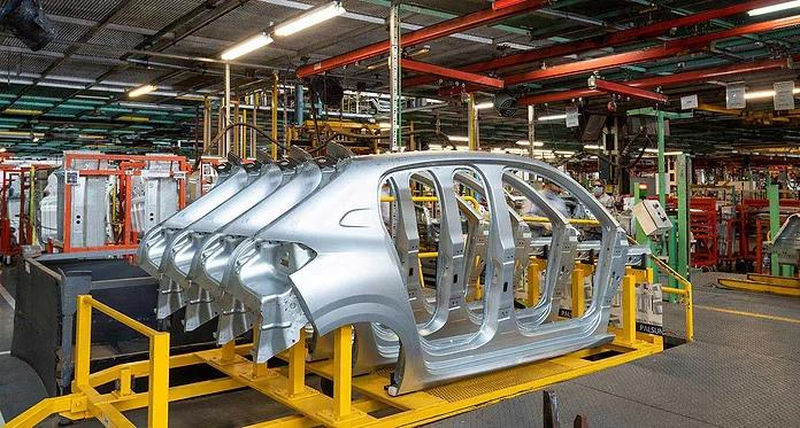
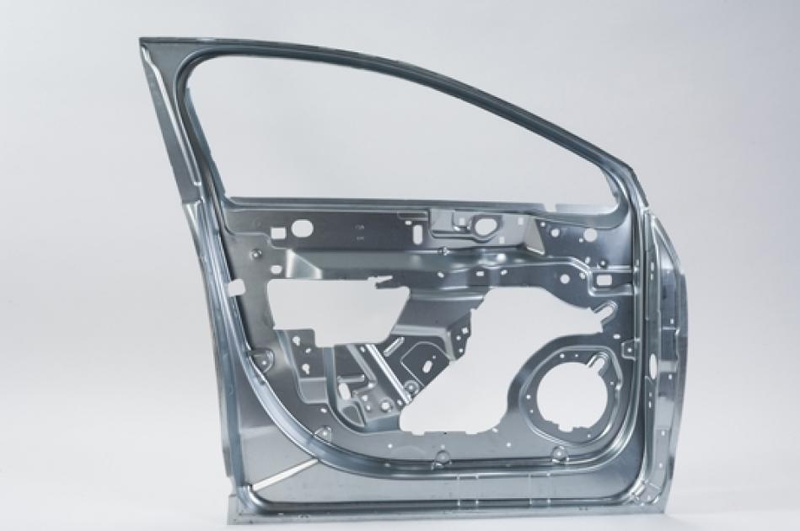
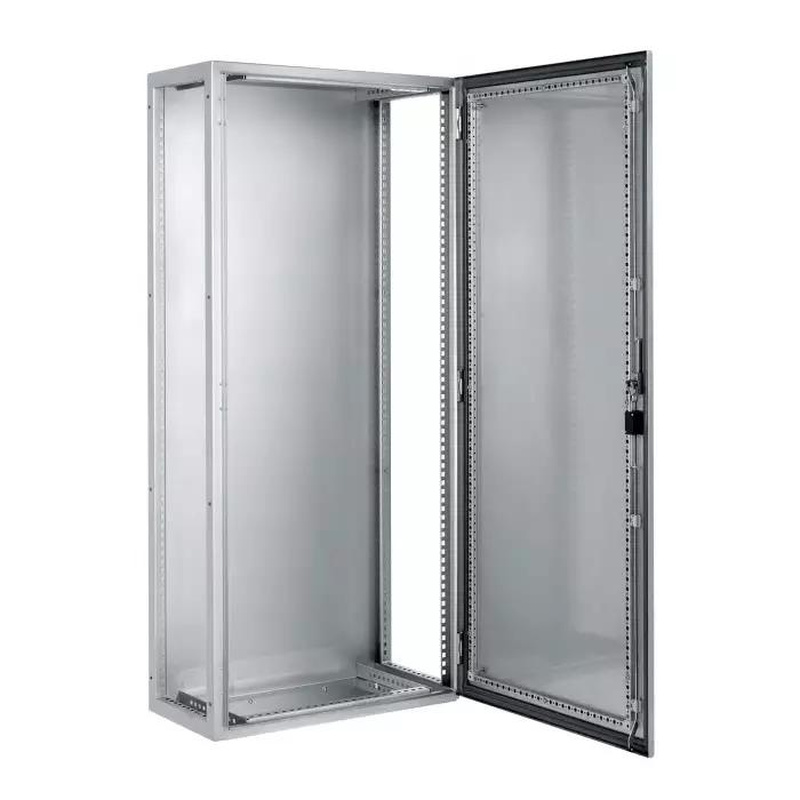
Galvanized and galvannealed steel are both widely used in industrial manufacturing, but their applications differ according to their surface requirements and working environments.
Galvanized steel applications
Galvanized steel is commonly selected for products that require reliable corrosion protection without necessarily needing an additional paint layer.
Typical applications include:
- Construction: Roofing sheets, wall panels, steel supports, and structural brackets.
- Electrical equipment: Cable trays, junction boxes, mounting brackets, and outdoor electrical enclosures.
- Automotive manufacturing: Chassis components, underbody parts, and selected structural components.
- Industrial equipment: Machine guards, ventilation ducts, equipment housings, and protective covers.
- Agricultural equipment: Steel frames, brackets, and components exposed to outdoor moisture.
For example, an outdoor mounting bracket installed on a factory building may benefit from galvanized steel because its zinc coating provides sacrificial corrosion protection even when the surface is not painted.
Galvannealed steel applications
Galvannealed steel is more commonly used in applications where painting, welding, and consistent surface finishing are important.
Typical applications include:
- Automotive body panels and inner structural panels.
- Refrigerator and washing machine housings.
- Painted electrical cabinets and industrial enclosures.
- HVAC ductwork and fabricated sheet metal assemblies.
- Industrial equipment covers and interior metal components.
Consider an automotive door assembly. Its inner steel panel needs to undergo stamping, welding, and painting before final assembly. Galvannealed steel can be advantageous because of its paint adhesion and resistance spot welding characteristics.
The key principle is that galvanized steel is often selected for exposed corrosion protection, while galvannealed steel is often selected for manufacturing processes that require subsequent finishing.
10. How to Choose Between Galvanized and Galvannealed Steel for CNC and Sheet Metal Parts
Selecting the right material requires more than comparing coating composition. Engineers should consider the entire manufacturing process, from raw material purchasing to machining, fabrication, finishing, and final installation.
The following factors can help guide material selection.
1. Consider the operating environment
If the component will be exposed to rain, humidity, or outdoor atmospheric conditions without additional painting, galvanized steel is generally a stronger starting point.
If the component will receive a qualified paint or powder coating system, galvannealed steel may provide better surface preparation and adhesion characteristics.
2. Evaluate machining and fabrication requirements
Galvanized and galvannealed steel are commonly supplied as sheets or coils. Their coatings can be damaged during laser cutting, drilling, punching, milling, and other fabrication operations.
For example, when laser cutting galvanized sheet metal, the coating is removed or altered along the cut edge. The exposed steel may become vulnerable to corrosion if the edge is not adequately protected.
For CNC machining, engineers should also consider whether the part should be machined before or after coating.
Machining a pre-coated component can expose the substrate and create areas with reduced corrosion protection. Conversely, coating a finished machined component may require additional masking of precision features.
3. Consider dimensional accuracy
Zinc-based coatings add material to the steel surface. Although the thickness is relatively small, it can affect close-fitting components, threaded holes, mating surfaces, and precision assemblies.
For example, if a bracket requires a close-fitting hole with a specified diameter, engineers should determine whether the hole will be machined before coating or finished after coating.
Critical dimensions should be defined with the coating process in mind.
4. Compare total manufacturing costs
Galvanized steel is often less expensive because it does not require the additional galvannealing heat-treatment stage.
However, the lowest raw material price does not always produce the lowest finished-part cost.
A galvannealed component may reduce the need for additional surface preparation or improve consistency during painting and welding.
The total cost should include:
- Raw material and coating costs.
- Laser cutting or CNC machining.
- Bending and forming.
- Welding and assembly.
- Surface pretreatment and painting.
- Inspection and rework.
Practical material selection guide
| Manufacturing requirement | Recommended starting point |
|---|---|
| Outdoor use without painting | Galvanized steel |
| High corrosion protection in atmospheric exposure | Galvanized steel |
| Components requiring powder coating | Galvannealed steel |
| Automotive resistance spot welding | Galvannealed steel |
| Bright metallic surface appearance | Galvanized steel |
| Complex forming operations | Evaluate both coating systems |
| Painted electrical enclosures | Galvannealed steel |
| Precision machined steel components | Select based on coating sequence and dimensional requirements |
Neither material is universally superior. The correct selection depends on the finished component’s performance requirements, production method, and operating environment.
Why Choose Xavier for Custom CNC Machining and Metal Parts?
Selecting the right steel material and coating is only one part of manufacturing a reliable industrial component. Machining accuracy, dimensional consistency, surface treatment, and quality inspection are equally important.
At Xavier, we specialize in custom CNC machining and precision metal parts manufacturing, providing integrated manufacturing and machining services for international B2B customers. galvanized vs galvannealed
Our manufacturing capabilities support a wide range of metal materials and component requirements, including:
- CNC milling and CNC turning for precision metal components.
- Custom steel brackets, housings, fixtures, and mechanical parts.
- Precision drilling, tapping, boring, and dimensional machining.
- Material selection and manufacturing process recommendations.
- Surface finishing solutions based on application requirements.
Whether you need galvanized steel components for outdoor equipment or galvannealed sheet metal parts for painted industrial assemblies, selecting the appropriate material and processing sequence is essential to achieving consistent quality.
Contact Xavier today and send us your technical drawings, material specifications, quantities, and surface finishing requirements. Our team can help evaluate the manufacturing process and provide a customized CNC machining solution for your project.
Xavier is an integrated manufacturing and trading company specializing in CNC machining services, custom CNC production, and precision metal part manufacturing. We work with a broad selection of metals and engineering plastics, including alloy steel, aluminum, brass, bronze, copper, Inconel, Invar 36, mild steel, stainless steel, titanium, tool steel, ABS, FR4, G-10, nylon, PEEK, PEI, PET, PMMA (acrylic), polycarbonate, polyethylene, polypropylene, POM (acetal), PPSU, PTFE, and PVC. Our machining capabilities cover CNC machining brass, CNC machining aluminum, and CNC machining POM. We manufacture components for various industries and applications, including robotics, aerospace, marine engineering, automotive, medical equipment, and other precision engineering sectors.
As a professional CNC brass machining manufacturer, we provide high-volume aluminum CNC machining services. Contact us today to discuss your project and inquire about POM CNC machining prices.
Some of the images and text in this article are collected and compiled from the internet. If there is anything inappropriate, please contact us for processing.