
10 Key Topics Related to Bead Blast Aluminum
- What Is Bead Blasting Aluminum and How Does It Work?
- Glass Bead Media Selection and Particle Size
- Bead Blasting Aluminum Surface Finish and Roughness (Ra)
- Bead Blasting vs. Sandblasting and Other Surface Finishes
- Bead Blasting Different Aluminum Alloys: 6061, 7075, and 5052
- Bead Blasting Aluminum Before Anodizing
- Effects of Bead Blasting on Dimensions, Tolerances, and Surface Properties
- Common Bead Blasting Defects and How to Prevent Them
- Applications and Advantages of Bead Blasted Aluminum Parts
- Bead Blasting Cost, Process Control, and Quality Inspection
Bead Blast Aluminum: Process, Surface Finish, Benefits, and Applications
Aluminum is widely used in CNC machining because of its lightweight properties, excellent machinability, corrosion resistance, and versatility. However, freshly machined aluminum components often have visible tool marks, directional machining patterns, and inconsistent reflections. These characteristics may not meet the appearance requirements of products with exposed metal surfaces.
Bead blast aluminum is a popular mechanical surface finishing process that creates a uniform matte or satin appearance using compressed air to propel small spherical particles against the aluminum surface. It is frequently applied to CNC-machined aluminum enclosures, brackets, housings, panels, and precision components.
Unlike painting or powder coating, bead blasting does not add a separate coating layer. Instead, it changes the surface texture through controlled particle impact. Understanding the media, pressure, surface roughness, and subsequent finishing processes is essential for achieving consistent results.
1. What Is Bead Blasting Aluminum and How Does It Work?
Bead blasting aluminum is a surface treatment process that uses compressed air to accelerate small spherical abrasive particles, typically glass beads, toward an aluminum component. When the beads impact the surface, they create numerous tiny indentations and redistribute microscopic surface peaks.
The repeated impacts produce a consistent texture that reduces the visibility of machining marks and creates a soft, non-reflective appearance.
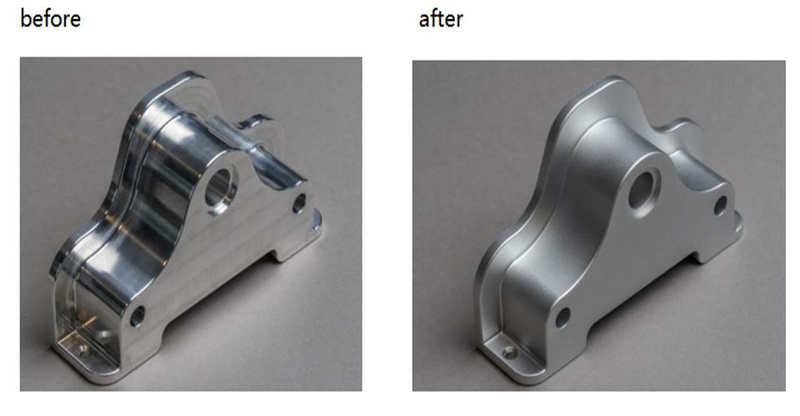
How the Bead Blasting Process Works
The process generally involves four steps:
- Surface cleaning: Remove cutting oil, fingerprints, coolant residue, and other contaminants before blasting.
- Media preparation: Select suitable glass beads according to the desired surface appearance and component geometry.
- Controlled blasting: Direct compressed air and glass beads toward the aluminum surface at a controlled pressure, angle, and distance.
- Post-blasting cleaning: Remove residual media and dust, then inspect the surface for uniformity and contamination.
Unlike aggressive abrasive cutting, spherical glass beads primarily produce a peening and surface-texturing effect rather than deep material removal.
For example, a CNC-machined 6061-T6 aluminum enclosure may have visible milling lines on its external surfaces. Bead blasting can reduce their visual prominence and create a consistent satin finish without requiring a thick coating.
2. Glass Bead Media Selection and Particle Size
Glass beads are the most commonly used media for cosmetic bead blasting aluminum because their rounded shape produces a relatively smooth and uniform texture.
However, not all glass beads create the same appearance. Particle size, hardness, cleanliness, and media condition directly affect the final result.
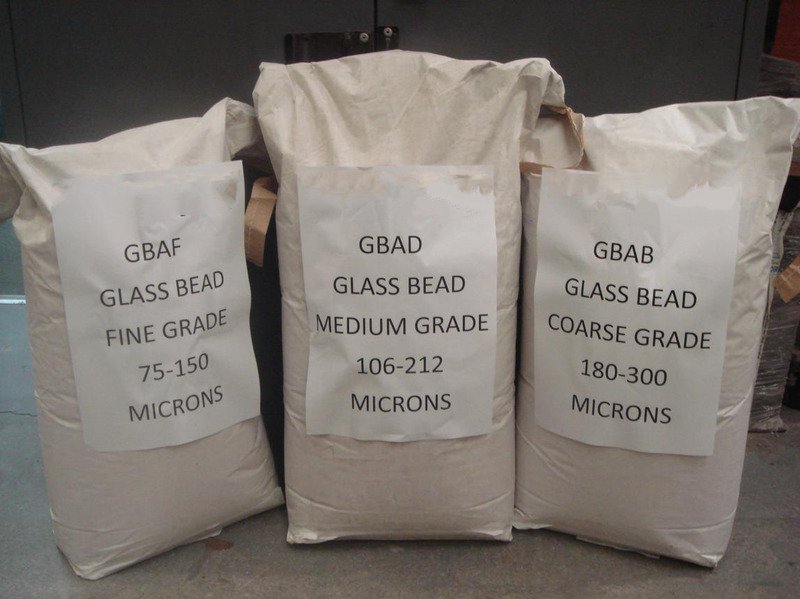
Common Glass Bead Sizes
| Media size | Typical surface appearance | Common application |
|---|---|---|
| Fine beads | Smooth, subtle matte | Precision housings and cosmetic parts |
| Medium beads | Uniform satin matte | General CNC aluminum components |
| Coarse beads | More pronounced texture | Cast aluminum and heavier surface blending |
Fine glass beads are generally suitable for products requiring a refined appearance, while medium-sized beads are often selected for general industrial components.
Glass Beads vs. Aluminum Oxide
These two materials should not be treated as interchangeable.
- Glass beads: Rounded particles that produce a softer satin texture with relatively limited cutting action.
- Aluminum oxide: Angular particles that cut into the surface, creating a more aggressive texture and greater material removal.
If the goal is to achieve a decorative matte finish on a 6061 aluminum enclosure, glass beads are usually the more appropriate option. If the component requires a stronger surface profile for paint or powder coating adhesion, aluminum oxide blasting may be more suitable.
Media should also be kept clean and separated by material. Contaminated or repeatedly fractured media can cause inconsistent finishes and surface defects.
3. Bead Blasting Aluminum Surface Finish and Roughness (Ra)
Surface roughness is one of the most important technical considerations when specifying bead blasted aluminum.
The roughness value, commonly expressed as Ra in micrometers (μm), describes the average deviation of a surface profile from its mean line. It helps engineers communicate surface texture requirements, but it does not completely describe visual appearance.
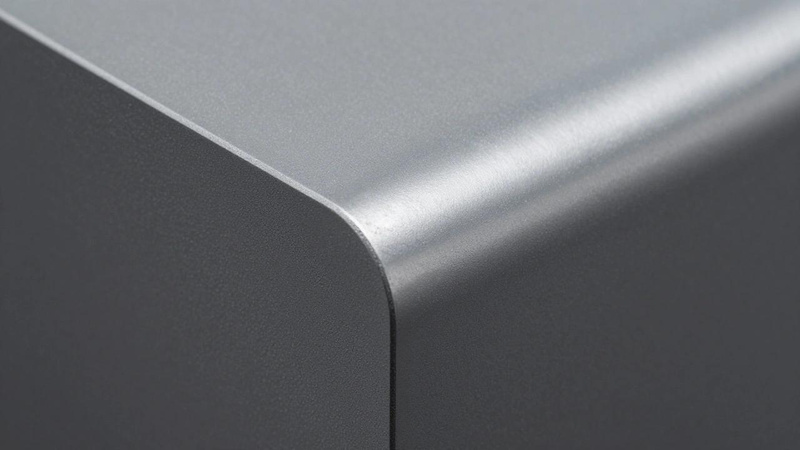
Typical Surface Roughness Ranges
| Surface treatment | Typical Ra range | Appearance |
|---|---|---|
| Fine glass bead blasting | 0.8–1.5 μm | Fine matte |
| Medium glass bead blasting | 1.5–3.0 μm | Satin matte |
| Coarse glass bead blasting | 2.0–4.0 μm | More visible texture |
| Fine machining | 0.8–1.6 μm | Directional tool marks |
| Polishing | 0.1–0.8 μm | Smooth and reflective |
These are indicative engineering ranges, not guaranteed process specifications. Actual results depend on the original machined finish, alloy, bead size, blasting pressure, nozzle distance, and measurement method.
What Determines the Final Ra Value?
Three factors deserve particular attention:
- Media size: Larger beads generally produce a more noticeable texture, although the relationship is affected by bead condition and impact energy.
- Air pressure: Higher pressure increases impact energy and can create a more pronounced surface texture.
- Blasting duration: Excessive exposure can produce uneven texture, edge rounding, and unnecessary dimensional changes.
For precision aluminum parts, it is better to establish the required appearance using a physical reference sample rather than relying exclusively on an Ra number.
4. Bead Blasting vs. Sandblasting and Other Surface Finishes
Bead blasting and sandblasting are sometimes used interchangeably in manufacturing discussions. However, they can produce significantly different surface results.
The main difference is the shape and behavior of the blasting media.
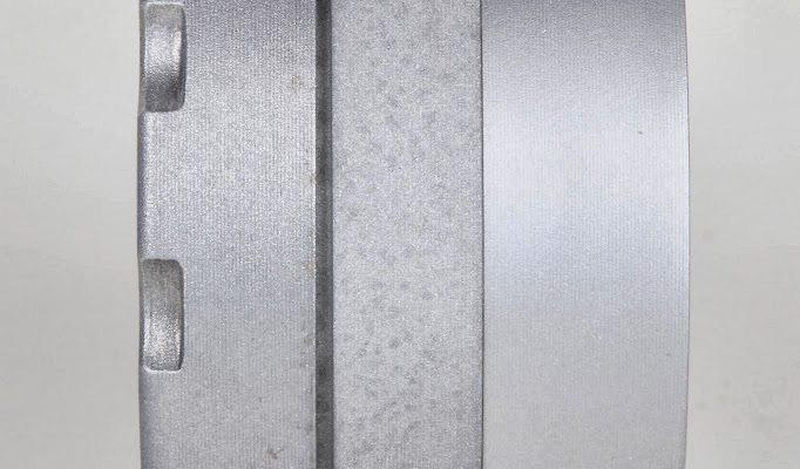
Comparison of Common Aluminum Surface Finishes
| Process | Surface appearance | Main advantage | Typical application |
|---|---|---|---|
| Bead blasting | Uniform matte | Low-glare appearance | Electronic housings |
| Aluminum oxide blasting | Rough matte | Better coating preparation | Industrial components |
| Brushing | Directional grain | Decorative linear texture | Panels and covers |
| Polishing | Bright and reflective | Smooth appearance | Decorative components |
| Anodizing | Colored or natural oxide layer | Improved corrosion and wear resistance | Outdoor and industrial parts |
Bead blasting is particularly useful when the design requires a non-directional appearance. Brushing, by comparison, leaves visible linear grain patterns.
Another important distinction is that bead blasting alone does not provide the corrosion protection of anodizing. For components exposed to moisture, chemicals, or outdoor environments, a protective finishing process may still be necessary.
5. Bead Blasting Different Aluminum Alloys: 6061, 7075, and 5052
Different aluminum alloys do not respond identically to bead blasting. Their hardness, temper, chemical composition, and original surface condition can influence the final texture.
For CNC machining projects, selecting the correct blasting parameters for the specific aluminum grade is important for maintaining appearance and dimensional consistency.
6061 Aluminum
6061 aluminum is one of the most frequently used materials for CNC-machined components. It offers a good balance of strength, machinability, corrosion resistance, and availability.
Bead blasting 6061-T6 can produce a uniform satin matte appearance, making it suitable for electronic enclosures, automation brackets, equipment housings, and mounting components.
For cosmetic applications, fine or medium glass beads are generally a good starting point. However, excessive blasting pressure can round edges and affect small machined details.
7075 Aluminum
7075 aluminum is known for its high strength and is commonly used in aerospace, robotics, and high-performance mechanical components.
Because 7075 is generally harder than 6061, its response to the same blasting conditions may differ. A blasting setup developed for 6061 should not automatically be transferred to 7075 without testing.
For precision 7075 components, controlling the blasting duration and maintaining a consistent media condition are especially important.
5052 Aluminum
5052 aluminum has excellent corrosion resistance and is frequently used in sheet metal fabrication, covers, panels, and enclosures.
Its relatively soft characteristics make it more sensitive to aggressive blasting. Thin 5052 sheet components may experience surface deformation or warping if blasting pressure and exposure time are not properly controlled.
| Aluminum alloy | Main characteristics | Typical applications | Blasting considerations |
|---|---|---|---|
| 6061-T6 | Balanced strength and machinability | CNC housings and brackets | Good general-purpose option |
| 7075-T6 | High strength | Aerospace and precision components | Validate finish on samples |
| 5052-H32 | Excellent corrosion resistance and formability | Sheet metal panels | Use gentle parameters |
The most reliable approach is to test the actual alloy and temper before approving a production batch.
6. Bead Blasting Aluminum Before Anodizing
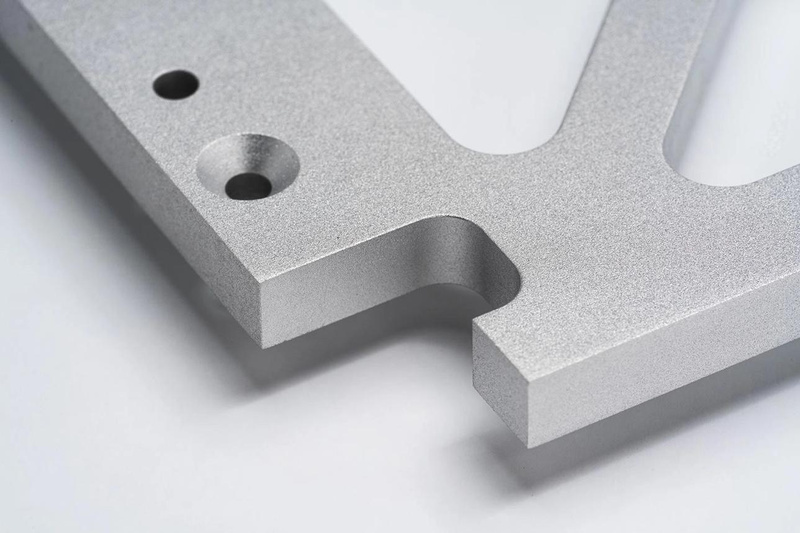
One of the most common applications of bead blast aluminum is surface preparation before anodizing.
Anodizing is an electrochemical process that creates a controlled aluminum oxide layer on the metal surface. Bead blasting is often performed before anodizing to establish a consistent surface texture.
Why Is Bead Blasting Performed Before Anodizing?
Machined aluminum surfaces may contain visible cutter marks, minor machining variations, and directional reflections.
When these surfaces are anodized directly, the original machining patterns may remain visible beneath the anodized layer.
Bead blasting helps reduce these visual differences by creating a more uniform surface texture.
A typical manufacturing sequence is:
- CNC machining and dimensional inspection.
- Deburring and edge preparation.
- Bead blasting to establish the required matte texture.
- Cleaning and removal of residual media.
- Chemical pretreatment and anodizing.
- Final appearance and dimensional inspection.
Does Anodizing Change the Bead Blasted Appearance?
Yes. The anodizing process can influence the final color and visual consistency.
Clear anodizing generally maintains a natural aluminum appearance, while black anodizing produces a darker matte finish. Other anodizing colors may also be available depending on the alloy and finishing requirements.
However, aluminum alloy composition can affect color uniformity. For example, 6061 and 7075 may not produce exactly the same anodized appearance even when similar blasting parameters are used.
Important: Bead blasting should normally be completed before anodizing. Blasting an already anodized component can damage or remove the protective oxide layer.
7. Effects of Bead Blasting on Dimensions, Tolerances, and Surface Properties
Although bead blasting is primarily a surface finishing operation, it should not be considered completely dimension-neutral.
Particle impacts can slightly deform the surface, round sharp edges, and affect delicate features. These effects are especially important for CNC-machined parts with tight tolerances.
Dimensional Changes to Consider
For ordinary cosmetic glass bead blasting, material removal is usually very small. Some manufacturing references report changes below approximately 5 μm per surface under suitable conditions, but this should not be treated as a universal guarantee.
The actual dimensional effect depends on pressure, media, exposure time, and material condition.
| Component feature | Potential effect | Recommended control |
|---|---|---|
| Precision bores | Surface texture changes | Mask or plug |
| Threaded holes | Media contamination | Use protective plugs |
| Sharp edges | Edge rounding | Control exposure |
| Thin walls | Distortion or bowing | Reduce pressure and support parts |
| Sealing surfaces | Contact performance changes | Mask critical areas |
| Datum surfaces | Measurement variation | Protect reference faces |
Does Bead Blasting Improve Mechanical Strength?
Ordinary cosmetic bead blasting should not be specified as a strength-enhancement treatment.
Although particle impacts can create localized compressive residual stresses, decorative blasting does not provide the controlled intensity, coverage, and verification required for certified shot peening.
If a component requires fatigue-life improvement, engineers should specify an appropriate controlled shot-peening process rather than assuming that cosmetic bead blasting provides the same benefit.
8. Common Bead Blasting Defects and How to Prevent Them
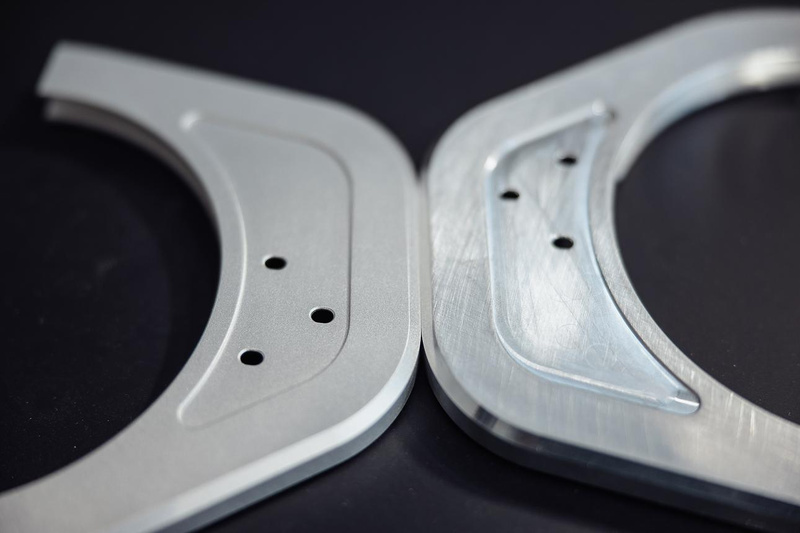
Even when the correct media is selected, poor process control can lead to inconsistent aluminum finishes.
These defects can affect both product appearance and functional performance.
Common Problems and Solutions
| Defect | Possible cause | Prevention |
|---|---|---|
| Uneven matte appearance | Inconsistent nozzle movement | Maintain uniform coverage |
| Dark spots | Oil or media contamination | Clean parts and media |
| Excessive roughness | High pressure or coarse beads | Adjust media and pressure |
| Rounded edges | Excessive exposure | Control blasting time |
| Embedded particles | Incorrect or contaminated media | Use clean dedicated media |
| Warped thin sections | Excessive impact energy | Reduce pressure and support parts |
One frequently overlooked issue is contamination from previously used blasting media.
For example, if steel blasting media is used on aluminum components, iron contamination may become embedded in the surface and later cause corrosion-related discoloration.
A dedicated blasting cabinet and properly maintained media are therefore important for high-quality aluminum finishing.
Another practical consideration is cleaning blind holes and internal cavities. Glass beads can become trapped inside these areas, so components should be thoroughly cleaned and inspected before delivery.
9. Applications and Advantages of Bead Blasted Aluminum Parts
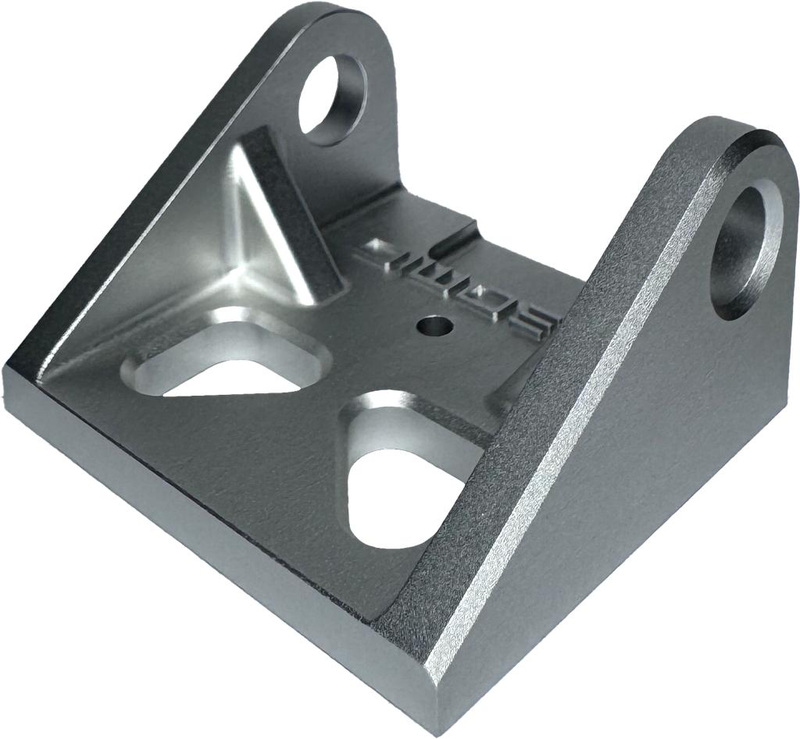
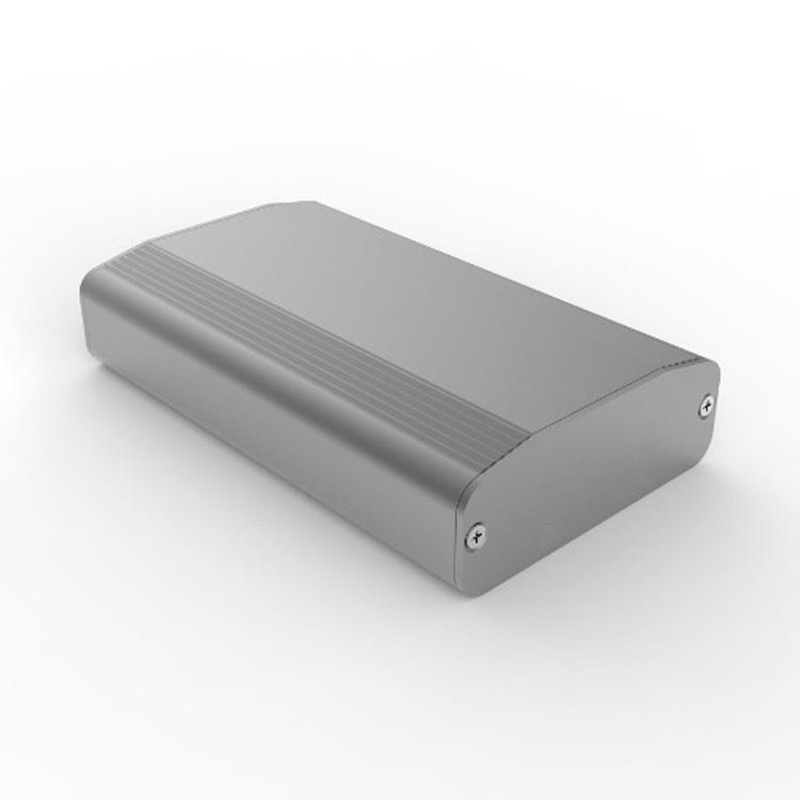
Bead blasted aluminum is widely used in industries where product appearance, surface consistency, and low reflectivity are important.
Its matte finish is particularly suitable for components that remain visible after assembly.
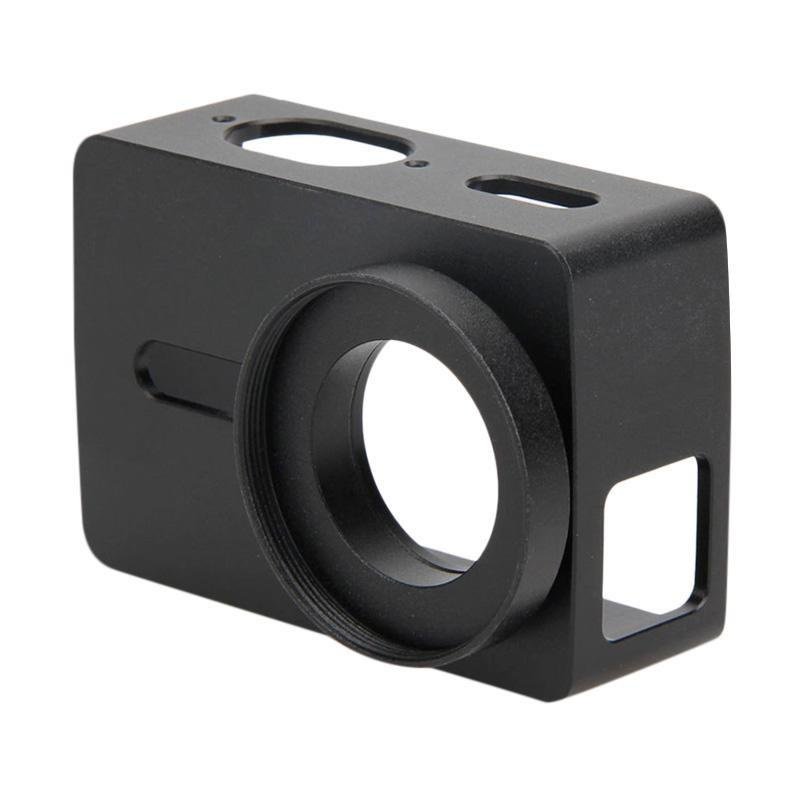
Major Industrial Applications
- Electronics: Aluminum enclosures, instrument housings, heat sink covers, and control panels benefit from a clean, low-glare appearance.
- Aerospace: Selected aluminum brackets, equipment housings, and non-critical cosmetic components use matte finishes according to their engineering specifications.
- Automotive: Interior aluminum trim, equipment housings, and selected mounting components use bead blasting to achieve consistent surface appearance.
- Medical equipment: Instrument housings and equipment components may use bead blasted aluminum for a clean, uniform exterior, subject to applicable material and cleaning requirements.
- Industrial automation: Robot brackets, machine covers, mounting plates, and sensor housings benefit from consistent surface finishing.
Main Advantages
The biggest advantage of bead blasting is its ability to create a uniform appearance without adding a thick coating.
It also reduces glare, helps blend minor directional machining marks, and provides a suitable base for subsequent anodizing.
However, bead blasting cannot remove deep scratches, machining errors, or major surface defects. These problems should be corrected during machining or preliminary surface preparation.
10. Bead Blasting Cost, Process Control, and Quality Inspection
The cost of bead blasting aluminum depends on more than the physical blasting operation. Part geometry, quantity, surface area, cosmetic requirements, and additional finishing processes all influence the final price.
For CNC manufacturers, establishing a repeatable process is essential when producing multiple batches of visually identical components.
What Factors Affect Bead Blasting Cost?
| Cost factor | Impact on processing cost |
|---|---|
| Part size | Larger surface areas require more processing |
| Geometric complexity | Recesses and internal features increase handling time |
| Media specification | Specialized media may increase operating costs |
| Surface requirements | Tighter cosmetic standards require more inspection |
| Production quantity | Larger batches can reduce setup cost per part |
| Additional anodizing | Adds another finishing operation |
For example, a simple 6061 aluminum mounting plate may require relatively little blasting time. A complex CNC-machined housing with deep pockets, threaded holes, and multiple cosmetic surfaces requires more masking, handling, and cleaning.
Quality Inspection Checklist
Before approving bead blasted aluminum parts, manufacturers should verify:
- Surface appearance is consistent with the approved sample.
- No visible contamination, embedded media, or dark spots remain.
- Critical dimensions remain within drawing tolerances.
- Threads, bores, and internal passages are clean.
- Masked surfaces and functional interfaces are protected.
- Anodized components meet the specified color and appearance requirements, where applicable.
For production projects, a physical golden sample is particularly useful. It gives both the manufacturer and customer a common reference for evaluating surface appearance across different production batches.
Why Choose Xavier for Bead Blasted Aluminum CNC Machining?
Choosing the right surface finishing process is just as important as selecting the correct aluminum alloy and machining method. A good bead blasted finish requires more than simply spraying glass beads onto a component. Media selection, blasting pressure, exposure time, surface preparation, and dimensional control must all work together.
At Xavier, we provide professional CNC machining services for custom aluminum components, supporting international customers from prototype development to production manufacturing.
Our manufacturing capabilities cover 6061, 7075, 5052, and other aluminum alloys, with customized surface finishing options including bead blasting, anodizing, electroless nickel plating, and other finishing treatments.
Whether you need a small batch of precision aluminum brackets, complex CNC-machined enclosures, or larger production runs of industrial components, we focus on dimensional accuracy, consistent surface appearance, and reliable manufacturing quality.
If you are looking for a reliable China CNC machining manufacturer for bead blasted aluminum parts, Xavier can help you evaluate material selection, machining requirements, surface finishing specifications, and production costs.
Contact Xavier today to discuss your aluminum CNC machining project. Send us your 2D drawings or 3D CAD files to receive a professional manufacturing assessment and a competitive quotation.
As an integrated CNC machining manufacturer and trading supplier, Xavier specializes in custom CNC machining and the production of precision metal components. We also provide professional CNC anodizing surface finishing, CNC electrogalvanizing surface finishing, and CNC chemical conversion coating services to meet different industrial requirements.
We are a reliable CNC anodizing manufacturer, offering bulk CNC electrogalvanizing services. Contact us today to inquire about CNC chemical conversion coating prices. Feel free to get in touch with Xavier for your custom manufacturing needs.
Some of the images and text in this article are collected and compiled from the internet. If there is anything inappropriate, please contact us for processing.