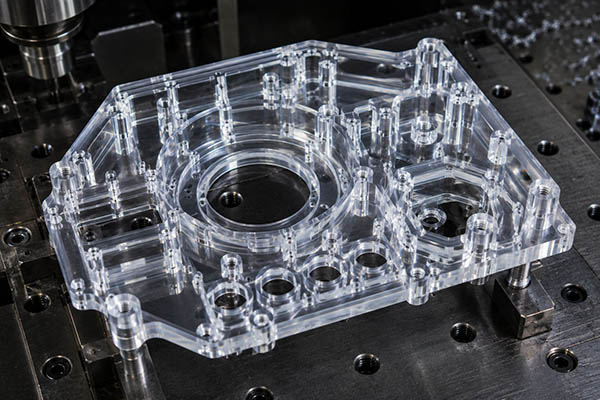
Acrylic Machining Services: Precision CNC Manufacturing for High-Quality PMMA Components
Acrylic, commonly known as PMMA (Polymethyl Methacrylate), is one of the most widely machined transparent plastics used in modern manufacturing. Thanks to its excellent optical clarity, UV resistance, lightweight properties, and ease of machining, acrylic has become a preferred material across industries such as medical devices, electronics, automotive, aerospace, retail displays, and scientific equipment.
Unlike injection molding, CNC acrylic machining allows manufacturers to produce custom parts with exceptional dimensional accuracy, rapid turnaround times, and no tooling investment. Whether producing one prototype or hundreds of production parts, CNC machining offers flexibility while maintaining excellent surface quality.
This article explores the five most important aspects of acrylic machining services, including material properties, design guidelines, machining techniques, finishing methods, and industry applications.
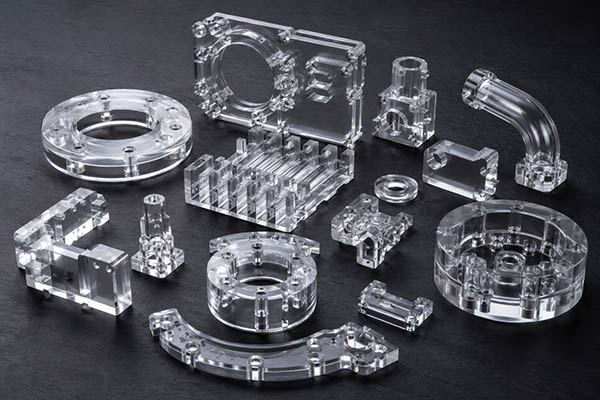
Five Key Topics Covered
- Understanding Acrylic Material Properties for CNC Machining
- Design Guidelines That Improve Machining Quality
- CNC Machining Processes and Recommended Cutting Parameters
- Surface Finishing Options for Acrylic Parts
- Industries and Applications That Benefit from Acrylic Machining
Understanding Acrylic Material Properties for CNC Machining
Before selecting acrylic for a project, engineers should understand how its physical and mechanical characteristics influence machining performance. Although acrylic is relatively easy to machine, it behaves quite differently from metals and engineering plastics like PEEK or Delrin.
What Is Acrylic (PMMA)?
Acrylic is a transparent thermoplastic polymer that offers excellent light transmission and weather resistance. It is commonly sold under trade names such as Plexiglas®, Perspex®, and Acrylite®.
Compared with standard glass, acrylic provides:
- Approximately half the weight
- Better impact resistance
- Easier machining
- Lower manufacturing cost for custom parts
- Excellent outdoor durability
These characteristics make CNC-machined acrylic ideal for transparent covers, optical windows, protective shields, display products, and lighting components.
Mechanical Properties of Acrylic
The following table summarizes the typical mechanical properties of CNC machining grade acrylic.
| Property | Typical Value |
|---|---|
| Density | 1.18–1.20 g/cm³ |
| Tensile Strength | 60–75 MPa |
| Elastic Modulus | 2.8–3.3 GPa |
| Rockwell Hardness | M95–M102 |
| Water Absorption (24h) | <0.4% |
| Continuous Service Temperature | 80–90°C |
| Light Transmission | Up to 92% |
| Thermal Expansion | 70–77 µm/m·°C |
One of acrylic’s most attractive features is its outstanding optical clarity. With approximately 92% visible light transmission, it is even clearer than many grades of standard glass.
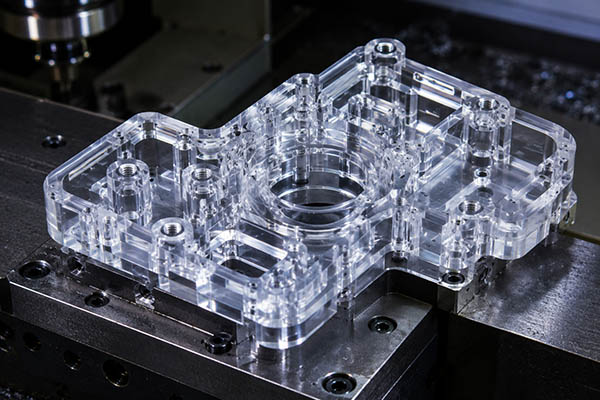
Advantages of CNC Machining Acrylic
Compared with many engineering plastics, acrylic offers several machining advantages.
| Advantage | Benefit |
|---|---|
| Excellent transparency | Suitable for optical applications |
| Easy to machine | Shorter machining cycle |
| Lightweight | Reduced product weight |
| Good dimensional stability | Tight machining tolerances |
| UV resistant | Long outdoor service life |
| Good electrical insulation | Electronics applications |
| Low moisture absorption | Stable dimensions over time |
For example, a laboratory equipment manufacturer may require transparent fluid channels with ±0.05 mm dimensional tolerance. CNC-machined acrylic allows engineers to inspect liquid flow visually while maintaining precise channel geometry.
Challenges When Machining Acrylic
Although acrylic machines well, it is more brittle than many plastics.
Improper machining often results in:
- Edge chipping
- Internal stress cracking
- Surface whitening
- Tool marks
- Heat-induced melting
- Burr formation
Unlike aluminum, acrylic does not dissipate heat efficiently. Most cutting heat remains near the cutting edge. If spindle speed is too high or feed rate is too low, localized temperatures increase rapidly, softening the material and producing poor surface quality.
Another common issue is stress cracking after assembly. Acrylic components that are machined aggressively without stress relief may develop fine cracks weeks or months later, especially when exposed to alcohol, solvents, or cleaning chemicals.
Therefore, professional acrylic machining services focus not only on precision but also on minimizing residual stress throughout the manufacturing process.
Cast Acrylic vs Extruded Acrylic
Selecting the correct acrylic grade is equally important.
| Characteristic | Cast Acrylic | Extruded Acrylic |
|---|---|---|
| Surface Quality | Excellent | Good |
| Internal Stress | Low | Higher |
| Thickness Consistency | Moderate | Excellent |
| Machining Performance | Better | Good |
| Cost | Higher | Lower |
| Optical Quality | Superior | Very Good |
Cast acrylic is generally preferred for precision CNC machining because it has lower internal stress and produces cleaner machined edges.
Extruded acrylic, while more economical, is slightly softer and more prone to melting during machining. It is commonly selected for less demanding commercial applications.
Example: Choosing the Right Acrylic for an Optical Housing
Suppose a manufacturer is producing a transparent inspection window for an industrial laser system.
Project requirements include:
- Crystal-clear optical visibility
- CNC milled pockets
- Threaded mounting holes
- Flame-polished edges
- Long-term UV exposure
- Tight flatness tolerance
For this application, cast acrylic would typically outperform extruded acrylic because it offers:
- Better machining stability
- Reduced internal stress
- Improved optical finish after polishing
- Lower risk of cracking during assembly
Although the material cost may be approximately 15–25% higher, the reduction in scrap rate and post-processing issues often results in a lower overall manufacturing cost.
Design Guidelines That Improve Acrylic Machining Quality
A successful acrylic component begins long before the CNC machine starts cutting. Proper design significantly reduces machining time, minimizes the risk of cracking, improves surface finish, and lowers production costs. Because acrylic is a rigid yet brittle thermoplastic, design choices that work well for aluminum or steel may not be suitable for PMMA.
Experienced CNC manufacturers often review customer drawings for manufacturability (DFM) before production. Small adjustments to hole size, corner radius, wall thickness, or thread design can greatly improve part quality and machining efficiency.
Recommended Wall Thickness
One of the most common design mistakes is creating walls that are too thin.
During machining, thin sections can vibrate or deflect under cutting forces, leading to dimensional inaccuracies or edge chipping. Extremely thin walls may also crack during assembly or transportation.
The table below provides general design recommendations.
| Feature | Recommended Value |
|---|---|
| Minimum wall thickness | 1.5 mm |
| Preferred wall thickness | 2–5 mm |
| Large unsupported wall | ≥3 mm |
| Optical window thickness | 3–10 mm |
For instance, if a transparent electronics cover measures 250 × 180 mm, increasing the wall thickness from 1.5 mm to 3 mm can noticeably improve rigidity without adding excessive weight.
In applications exposed to vibration or repeated handling, slightly thicker walls generally provide better long-term durability.
CNC Machining Processes and Recommended Cutting Parameters
Selecting the appropriate machining process and cutting parameters is essential for producing acrylic components with high dimensional accuracy, excellent optical quality, and minimal internal stress. Unlike metals, acrylic has relatively low thermal conductivity, meaning that heat generated during machining remains concentrated around the cutting area. If cutting conditions are not optimized, problems such as melting, burr formation, edge whitening, or surface cracking can occur.
Professional acrylic machining services typically optimize every stage of the process—from tool selection to coolant strategy—to achieve consistent, repeatable results.
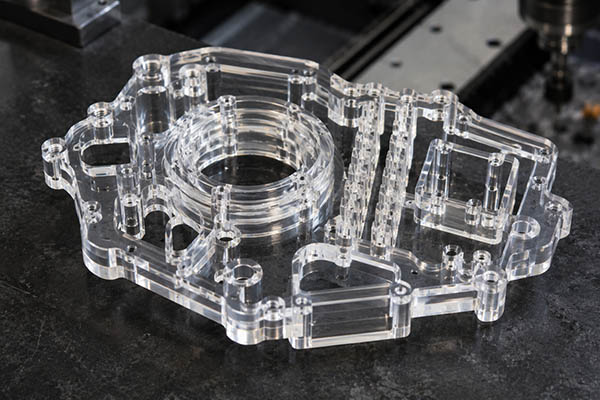
CNC Milling of Acrylic
CNC milling is the most widely used machining process for acrylic parts. It is suitable for manufacturing flat components, enclosures, optical fixtures, display panels, transparent covers, manifolds, and precision housings.
Modern 3-axis and 5-axis CNC machining centers can produce complex acrylic geometries with excellent repeatability.
Typical milling operations include:
- Face milling
- Pocket milling
- Profile machining
- Slot machining
- Engraving
- Surface contouring
- Chamfering
- Bevel machining
Compared with manual machining, CNC milling provides significantly better consistency, particularly when producing multiple identical parts.
Typical Milling Tolerances
| Feature | Typical Tolerance |
|---|---|
| Linear dimensions | ±0.05 mm |
| Hole diameter | ±0.03 mm |
| Pocket depth | ±0.03 mm |
| Flatness | 0.05–0.10 mm |
| Parallelism | 0.03–0.08 mm |
Actual tolerances depend on part size, geometry, material thickness, and fixturing method.
CNC Turning for Acrylic Components
Round acrylic parts are generally produced using CNC lathes.
Common turned components include:
- Optical lenses
- Transparent cylinders
- Light diffusers
- Laboratory containers
- Decorative knobs
- Fluid chambers
- Medical tubing connectors
Because acrylic chips differently than aluminum, sharp cutting tools and proper chip evacuation are critical.
Typical turning advantages include:
- Excellent roundness
- Smooth cylindrical surfaces
- High concentricity
- Fast production cycles
A well-optimized turning process often produces surfaces that require only minimal polishing.
Drilling Acrylic Without Cracking
Drilling is one of the most common operations performed on acrylic parts, yet it is also one of the easiest ways to introduce cracks if performed incorrectly.
Standard metal twist drills often generate excessive cutting pressure near breakthrough, increasing the likelihood of edge chipping.
Professional machining shops frequently use specially modified drill geometries with:
- Larger rake angles
- Reduced point angles
- Polished flutes
- Sharp cutting edges
The drilling process generally follows these steps:
- Pilot drilling
- Progressive enlargement
- Peck drilling for deep holes
- Deburring
- Optional reaming for high-precision holes
For transparent components, avoiding excessive heat buildup during drilling is particularly important because internal stress may remain invisible until later assembly.
Thread Machining in Acrylic
Although acrylic can be threaded, directly cutting fine internal threads is not always the best engineering solution.
For frequently assembled products, manufacturers often recommend:
- Brass threaded inserts
- Stainless steel inserts
- Helical threaded inserts
- Bonded inserts
These solutions provide:
- Higher pull-out strength
- Longer service life
- Better assembly reliability
- Reduced risk of cracking
If direct threading is required, coarse thread profiles generally perform better than fine threads.
Recommended Cutting Tools
Tool geometry has a significant influence on machining quality.
Most professional acrylic machining uses carbide cutting tools because they maintain sharp cutting edges over long production runs.
The following table summarizes common tool recommendations.
| Operation | Recommended Tool |
|---|---|
| Face milling | Carbide end mill (2 flute) |
| Pocket milling | Single-flute carbide cutter |
| Slot milling | O-flute router bit |
| Drilling | Acrylic-specific drill bit |
| Finishing | Polished carbide end mill |
| Engraving | V-bit engraving cutter |
Single-flute or two-flute tools are generally preferred because they evacuate chips more efficiently and reduce heat generation.
Typical Cutting Parameters
Actual machining parameters vary depending on machine rigidity, coolant system, cutter diameter, and acrylic grade.
The following values are commonly used as a starting point.
| Parameter | Typical Range |
|---|---|
| Spindle speed | 8,000–24,000 RPM |
| Feed rate | 800–3,500 mm/min |
| Cutting depth | 0.5–3 mm |
| Step-over | 20–60% of cutter diameter |
| Coolant | Air blast or mist cooling |
Instead of maximizing spindle speed, experienced machinists balance spindle speed and feed rate to produce larger, cleaner chips that carry heat away from the cutting zone.
Preventing Heat Buildup
Heat is the primary cause of poor acrylic machining quality.
Common symptoms include:
| Problem | Likely Cause |
|---|---|
| Melted edges | Excessive spindle speed |
| White cutting marks | Dull cutting tool |
| Surface haze | Heat accumulation |
| Burr formation | Low feed rate |
| Chip welding | Poor chip evacuation |
Several techniques help minimize heat generation:
- Use razor-sharp cutting tools.
- Maintain consistent feed rates.
- Avoid unnecessary dwell time.
- Employ compressed air to remove chips.
- Reduce radial engagement during finishing passes.
- Replace worn tools promptly.
These practices improve both surface finish and dimensional stability.
Example: Machining a Transparent Medical Cover
Consider a customer requiring a transparent cover for a medical diagnostic instrument.
Specifications
| Requirement | Value |
|---|---|
| Material | Cast Acrylic |
| Thickness | 12 mm |
| Quantity | 200 pcs |
| Surface finish | Optical quality |
| Tolerance | ±0.05 mm |
| Threaded holes | M4 |
| Edge finish | Flame polished |
A recommended manufacturing process might include:
- CNC profile milling
- Pocket milling
- Precision drilling
- Thread insert installation
- Progressive sanding
- Flame polishing
- Dimensional inspection
- Protective film application
- Individual packaging
Following this workflow helps ensure excellent optical clarity while reducing the risk of stress cracking during installation.
Surface Finishing Options for Acrylic Parts
Even with precision machining, acrylic parts often require additional finishing to achieve the desired appearance, transparency, or functional performance. The right finishing process depends on the application’s optical requirements, cosmetic expectations, and environmental conditions.
Unlike metals, acrylic finishing is not intended to improve corrosion resistance. Instead, finishing primarily enhances:
- Optical transparency
- Surface smoothness
- Scratch resistance (through coatings)
- Aesthetic appearance
- Branding and identification
- User safety by removing sharp edges
Different finishing methods produce different visual effects and are suited to different applications.
As-Machined Finish
The simplest finish is the as-machined surface, which is produced directly after CNC machining.
Characteristics include:
- Fine tool paths may be visible under light.
- Good dimensional accuracy.
- Suitable for non-optical components.
- Lowest production cost.
- Fastest delivery time.
Typical applications include:
- Internal machine components
- Mounting brackets
- Structural supports
- Prototype parts
- Hidden assemblies
For many industrial parts, an as-machined finish is sufficient and avoids unnecessary processing costs.
Flame Polishing
Flame polishing is one of the most popular finishing methods for acrylic because it quickly restores transparency to machined edges.
During the process, a controlled flame briefly melts the outermost surface layer. As the material resolidifies, small machining marks disappear, leaving a smooth, glossy finish.
Advantages
- High optical clarity
- Fast processing speed
- Cost-effective for straight edges
- Excellent visual appearance
Limitations
- Best suited for external edges.
- Requires experienced operators.
- Excessive heat can introduce internal stress.
- Not ideal for intricate internal features.
Flame polishing is commonly used for retail displays, museum cases, light guides, and decorative acrylic products.
Vapor Polishing
For components requiring exceptional transparency, vapor polishing is often preferred.
This process exposes the acrylic surface to a controlled solvent vapor, which softens microscopic surface irregularities and creates an optically smooth finish.
Compared with flame polishing, vapor polishing offers:
| Feature | Flame Polishing | Vapor Polishing |
|---|---|---|
| Optical clarity | Excellent | Outstanding |
| Internal features | Limited | Better accessibility |
| Surface uniformity | Very good | Excellent |
| Processing time | Fast | Moderate |
| Operator skill | High | High |
Vapor polishing is frequently selected for:
- Medical devices
- Optical instruments
- Laboratory equipment
- Microfluidic channels
- Scientific visualization components
Because the process involves specialized chemicals and strict environmental controls, it should only be performed by experienced professionals.
Mechanical Polishing
Mechanical polishing is one of the most versatile finishing methods for acrylic parts. It uses progressively finer abrasive materials followed by polishing compounds to remove machining marks and improve surface smoothness.
Unlike flame polishing, mechanical polishing removes a controlled amount of material rather than melting the surface. This makes it suitable for parts where dimensional accuracy must be maintained.
A typical polishing sequence includes:
- Initial sanding (320–600 grit)
- Intermediate sanding (800–1200 grit)
- Fine sanding (1500–3000 grit)
- Buffing with polishing compound
- Final cleaning and inspection
Advantages
- Produces a highly uniform surface
- Suitable for flat and curved surfaces
- Maintains dimensional consistency
- Compatible with complex geometries
- No thermal stress is introduced
Limitations
- More labor-intensive than flame polishing
- Longer production time
- Higher finishing cost for large quantities
Mechanical polishing is commonly selected for:
- Precision optical covers
- Medical equipment panels
- Display windows
- High-end consumer products
- Aerospace inspection windows
Sand Blasting (Matte Finishing)
Not every acrylic component requires a crystal-clear appearance. In many products, a matte or frosted surface is preferred to reduce glare, improve aesthetics, or diffuse light.
Sand blasting creates a uniform textured surface by directing fine abrasive media at controlled pressure across the acrylic.
Typical applications include:
- LED light diffusers
- Decorative architectural panels
- Privacy screens
- Instrument covers
- Anti-glare display panels
Surface Appearance Comparison
| Finish Type | Transparency | Gloss | Typical Application |
|---|---|---|---|
| As-machined | Medium | Medium | Industrial parts |
| Mechanical polished | High | High | Precision products |
| Flame polished | Very High | Very High | Display products |
| Vapor polished | Optical grade | Excellent | Medical & laboratory |
| Sand blasted | Low | Matte | Decorative and lighting |
For example, an LED lighting manufacturer may specify a sand-blasted finish for diffuser panels to eliminate visible hot spots from individual LEDs, resulting in a softer and more uniform light distribution.
Laser Engraving and CNC Engraving
Acrylic is an excellent material for permanent markings due to its clean engraving characteristics.
Both laser engraving and CNC engraving are widely used for:
- Company logos
- Product serial numbers
- QR codes
- Control panel labels
- Safety markings
- Decorative graphics
Laser Engraving
Laser engraving creates high-contrast markings without physical contact.
Advantages include:
- Extremely fine detail
- Fast production
- No tool wear
- Excellent repeatability
- Suitable for complex graphics
CNC Engraving
CNC engraving uses precision cutting tools to machine text or graphics directly into the surface.
Advantages include:
- Greater engraving depth
- Suitable for filled-color lettering
- Better for large components
- Can produce decorative chamfered lettering
Selection depends on the required appearance, production volume, and engraving depth.
Silk Screen Printing and UV Printing
Many acrylic products require printed graphics rather than engraved markings.
Two common printing methods are:
Silk Screen Printing
Best suited for:
- Solid colors
- Large production volumes
- Company logos
- Instrument panels
Advantages include:
- Excellent color consistency
- Durable ink adhesion
- Cost-effective for mass production
UV Digital Printing
UV printing enables:
- Full-color graphics
- Photographic images
- Variable data
- Small production runs
Compared with screen printing, UV printing offers greater design flexibility and eliminates the need for printing screens.
Protective Coatings
Although acrylic offers excellent optical clarity, its surface is softer than glass and can scratch more easily.
Various coatings can improve durability.
| Coating Type | Primary Function |
|---|---|
| Hard coating | Improved scratch resistance |
| Anti-fog coating | Prevents condensation |
| Anti-reflective coating | Reduces glare |
| UV-resistant coating | Extends outdoor service life |
| Chemical-resistant coating | Improves solvent resistance |
For outdoor kiosks or industrial control panels, a hard-coated acrylic surface can significantly extend service life in demanding environments.
Industries and Applications That Benefit from Acrylic Machining
The versatility of acrylic allows it to serve a wide range of industries where transparency, precision, and lightweight construction are important.
Medical Equipment
Medical manufacturers frequently use CNC-machined acrylic for:
- Protective instrument covers
- Diagnostic equipment windows
- Laboratory fluid chambers
- Medical display panels
- Sample observation devices
Because acrylic is easy to sterilize and offers excellent optical clarity, it is widely used in laboratory and diagnostic equipment.
Example:
A blood analysis instrument may incorporate a transparent acrylic cover that allows technicians to monitor internal mechanisms while protecting sensitive components from dust and accidental contact.
Electronics and Semiconductor Equipment
Precision acrylic parts are commonly found in:
- Inspection windows
- Cleanroom equipment
- Wafer handling systems
- Protective covers
- Machine enclosures
In semiconductor manufacturing, optical visibility and dimensional precision are critical. CNC machining enables complex acrylic components with tight tolerances while maintaining excellent transparency.
Automotive Industry
Automotive manufacturers use machined acrylic for both functional and aesthetic components.
Examples include:
- Interior display covers
- Lighting prototypes
- Dashboard lenses
- Sensor protection windows
- Instrument cluster covers
During vehicle development, CNC machining allows engineers to rapidly produce prototype components without investing in expensive molds.
Aerospace and Defense
Although acrylic is not generally used for structural aircraft components, it is commonly applied in:
- Inspection windows
- Optical covers
- Cabin display panels
- Instrument protection
- Lighting systems
High-quality CNC machining ensures that these components meet strict dimensional and optical requirements while minimizing weight.
Retail and Commercial Displays
Retail display manufacturers are among the largest users of acrylic machining services.
Typical products include:
- Product display stands
- Museum showcases
- Cosmetic displays
- Luxury retail fixtures
- Exhibition equipment
Acrylic combines excellent transparency with a premium appearance, making it ideal for showcasing products while maintaining durability.
Scientific and Laboratory Equipment
Research institutions often require custom acrylic components because standard products rarely meet specialized experimental needs.
Applications include:
- Microfluidic devices
- Chemical observation chambers
- Flow visualization systems
- Optical research fixtures
- Analytical instruments
CNC machining enables rapid customization without the long lead times associated with molding.
Why Choose Xavier for Acrylic Machining Services?
Choosing the right machining partner is just as important as selecting the right material. At Xavier, we specialize in precision CNC machining services for custom acrylic components, delivering consistent quality from prototype development to full-scale production.
Our capabilities include:
- High-precision 3-axis and 5-axis CNC machining
- Custom machining of cast and extruded acrylic
- Tight tolerances for complex geometries
- Flame polishing, vapor polishing, and mechanical polishing
- Laser engraving, silk screen printing, and custom finishing
- Low-volume prototypes and high-volume production
- Strict quality inspection using advanced measuring equipment
- Fast global delivery and responsive engineering support
Whether your project involves transparent optical components, medical device housings, semiconductor equipment, retail displays, or industrial enclosures, Xavier provides tailored manufacturing solutions that meet demanding performance and appearance requirements.
From design review and material selection to machining, finishing, inspection, and packaging, our experienced engineering team works closely with customers to ensure every acrylic part meets the highest standards of precision and reliability.
If you are looking for a trusted partner for custom acrylic machining services, Xavier is ready to help turn your designs into high-quality finished products with competitive lead times and consistent results.
As a professional CNC machining company with integrated manufacturing and trading capabilities, we focus on custom CNC machining and the production of precision metal and plastic components. Serving customers across various industries, we provide flexible manufacturing solutions from prototyping to mass production. Our expertise includes CNC machining titanium, CNC machining POM, and CNC machining medical components, ensuring high accuracy, consistent quality, and cost-effective production.
We are a leading CNC machining titanium manufacturer, offering bulk CNC machining POM service, and providing competitive CNC machining medical components price. Contact us today to discuss your project requirements and receive a customized quotation.
Some of the images and text in this article are collected and compiled from the internet. If there is anything inappropriate, please contact us for processing.
FAQ
1. Can acrylic be CNC machined?
Yes. Acrylic is one of the most commonly machined plastics and is suitable for milling, turning, drilling, engraving, and polishing.
2. What tolerance can CNC-machined acrylic achieve?
Typical tolerances are around ±0.05 mm, although tighter tolerances may be achievable depending on part geometry and manufacturing conditions.
3. Is cast acrylic better than extruded acrylic?
For most precision-machined components, cast acrylic offers lower internal stress, better edge quality, and improved machining performance.
4. Can acrylic parts be polished to optical clarity?
Yes. Flame polishing, vapor polishing, and mechanical polishing can all produce highly transparent surfaces, depending on the application requirements.
5. What industries commonly use acrylic machining services?
Medical, electronics, semiconductor, automotive, aerospace, laboratory, retail display, lighting, and industrial automation industries all frequently use CNC-machined acrylic components.