
Alodine Chromate: The Complete Engineering Guide to Chromate Conversion Coating for CNC Machined Aluminum Parts
Alodine chromate, also known as chromate conversion coating, chem film, or chemical film, is one of the most widely specified finishes for precision CNC machined aluminum components. It creates an extremely thin protective layer that improves corrosion resistance, maintains electrical conductivity, and provides an excellent base for paint and adhesives.
For aerospace housings, electronics enclosures, defense brackets, and industrial CNC parts, Alodine is often preferred over anodizing because it adds virtually no measurable thickness while still meeting stringent standards such as MIL-DTL-5541.
This article is briefly summarized as follows:
- What Is Alodine Chromate?
- How Chromate Conversion Coating Works
- Common Aluminum Alloys Used with Alodine
- MIL-DTL-5541 Type I vs Type II
- Class 1A vs Class 3
- Coating Thickness and Dimensional Impact
- Typical Colors and Appearance
- Corrosion Resistance Performance
- Electrical Conductivity Advantages
- Paint and Adhesive Bonding
- Alodine vs Anodizing
- CNC Manufacturing Applications
- Process Steps and Production Flow
- Environmental and RoHS Compliance
- Cost, Lead Time, and Design Recommendations
What Is Alodine Chromate?
Alodine is a trade name originally associated with Henkel chemistry, but the term is now used generically to describe chromate conversion coatings applied to aluminum and its alloys.
Other common names include:
| Term | Meaning |
|---|---|
| Alodine | Generic industry term |
| Chem Film | Shop-floor terminology |
| Iridite | Trade name from MacDermid Enthone |
| Chemical Conversion Coating | Formal technical term |
| Chromate Conversion Coating | Engineering specification term |
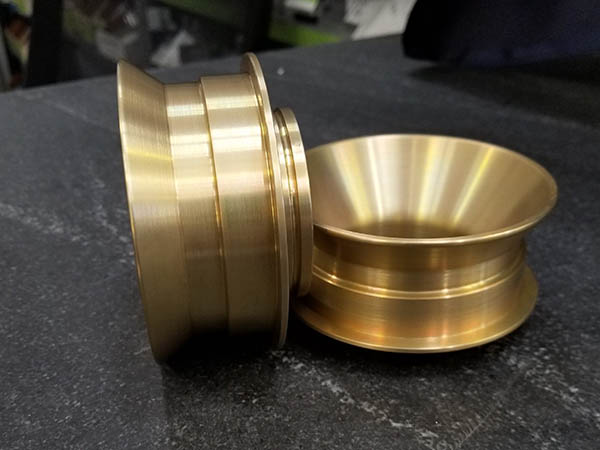
Unlike plating or anodizing, Alodine chemically reacts with the aluminum surface instead of building a thick deposited layer.
How Chromate Conversion Coating Works
When aluminum is immersed in an acidic chromate solution:
- Surface oxide is partially dissolved.
- Fresh aluminum reacts with chromium compounds.
- Insoluble chromium/aluminum oxides form.
- A dense, protective film bonds to the substrate.
This layer is usually less than 0.00004 inch (1 µm) thick and often cannot be measured with conventional micrometers.
Simplified Reaction
- Aluminum oxidizes.
- Chromium ions reduce and precipitate.
- A passive barrier layer forms.
This barrier slows oxidation and corrosion while preserving conductivity.
Common Aluminum Alloys Used with Alodine
Alodine is primarily used on aluminum alloys.
| Alloy | CNC Usage | Alodine Performance |
|---|---|---|
| 6061-T6 | General machining | Excellent |
| 5052 | Sheet metal | Excellent |
| 7075-T6 | Aerospace | Excellent |
| 2024-T3 | Aircraft structures | Excellent |
| 6082 | Structural parts | Excellent |
| Cast aluminum | Housings | Good |
Example
A CNC-machined 6061 electronics enclosure can be chem filmed to protect against oxidation while preserving grounding conductivity.
MIL-DTL-5541 Type I vs Type II
The most common specification is MIL-DTL-5541 overview.
| Feature | Type I | Type II |
|---|---|---|
| Chemistry | Hexavalent chromium | Trivalent chromium |
| Color | Gold to brown | Clear to light blue |
| RoHS Compliance | Generally No | Yes |
| Self-healing ability | Excellent | Good |
| Environmental impact | Higher | Lower |
| Current industry trend | Declining | Dominant |
Type II has become the standard choice for RoHS-compliant industries.
Class 1A vs Class 3
MIL-DTL-5541 also defines coating classes.
| Class | Primary Purpose | Electrical Resistance |
|---|---|---|
| 1A | Maximum corrosion protection | Moderate |
| 3 | Low contact resistance | Very low |
When to Use Each Class
- Class 1A: Outdoor equipment, aerospace brackets, marine parts.
- Class 3: Grounding surfaces, EMI/RFI enclosures, electrical connectors.
Coating Thickness and Dimensional Impact
One of Alodine’s biggest advantages is negligible thickness.
| Finish | Typical Thickness |
|---|---|
| Alodine | 0.00001–0.00004 in |
| Type II Anodize | 0.0002–0.0010 in |
| Hardcoat Anodize | 0.001–0.003 in |
CNC Benefit
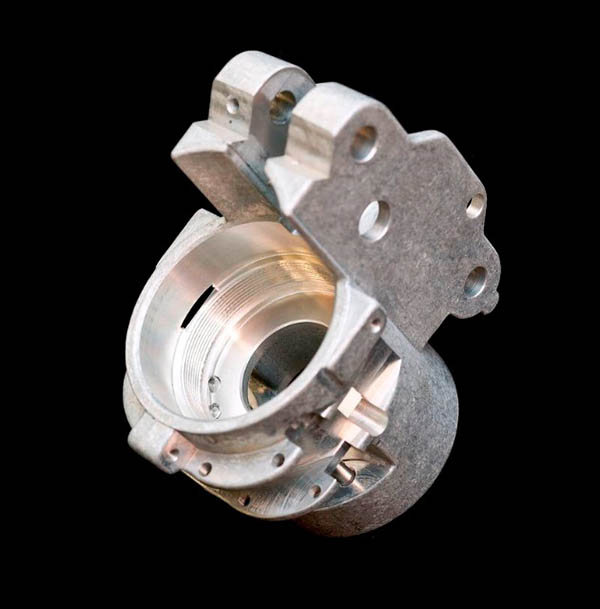
A precision hole machined to Ø10.000 ±0.005 mm remains effectively unchanged after Alodine treatment.
Typical Colors and Appearance
Color is not a reliable indicator of performance, but common appearances include:
| Type | Typical Appearance |
|---|---|
| Type I | Gold, yellow, iridescent brown |
| Type II | Clear, colorless, blue tint |
| Thin coatings | Very faint or nearly invisible |
Experienced machinists note that performance is determined by specification and process control, not color alone.
Corrosion Resistance Performance
MIL-DTL-5541 coatings are commonly qualified to withstand salt spray testing per ASTM B117.
| Specification | Typical Salt Spray Requirement |
|---|---|
| Class 1A | Up to 168 hours minimum |
| Painted systems | Significantly longer service life |
Practical Example
An outdoor telecom enclosure made from 6061 aluminum can resist white corrosion and oxidation while maintaining serviceability.
Electrical Conductivity Advantages
Unlike anodizing, Alodine remains electrically conductive.
| Property | Alodine | Anodizing |
|---|---|---|
| Conductive | Yes | No |
| Suitable for grounding | Yes | Usually requires masking |
| EMI shielding | Excellent | Limited |
This makes Alodine ideal for:
- RF enclosures
- Satellite housings
- Defense electronics
- Grounding brackets
Paint and Adhesive Bonding
Alodine significantly improves adhesion of:
- Powder coating
- Epoxy primers
- Structural adhesives
- Sealants
Example
A painted 7075 aerospace bracket with Alodine pretreatment can achieve better coating durability than paint applied directly to bare aluminum.
Alodine vs Anodizing
| Feature | Alodine | Anodizing |
|---|---|---|
| Thickness | Extremely thin | Much thicker |
| Conductivity | Excellent | Poor |
| Wear resistance | Low | High |
| Paint adhesion | Excellent | Excellent |
| Cost | Lower | Higher |
| Dimensional impact | Negligible | Requires allowance |
Selection Guidelines
Choose Alodine when:
- Tight tolerances matter
- Conductivity is required
- Cost needs to be minimized
Choose anodizing when:
- Hardness and wear resistance are needed
- Decorative color is desired
CNC Manufacturing Applications
Typical CNC-machined parts using Alodine include:
- Aerospace brackets
- UAV structures
- Electronic housings
- Medical instrument frames
- Semiconductor fixtures
- Radar enclosures
Aerospace Example
A 7075-T6 machined bracket is often processed as:
- CNC machining
- Deburring
- Cleaning
- Alodine per MIL-DTL-5541 Type II Class 1A
- Final inspection
Process Steps and Production Flow
The Alodine process generally includes:
- Alkaline cleaning
- Water rinse
- Etching
- Deoxidizing/desmutting
- Conversion coating immersion
- Final rinse
- Drying
- Inspection
Typical Immersion Time
- 30 seconds to 3 minutes depending on chemistry and class requirements.
Environmental and RoHS Compliance
Type I coatings contain hexavalent chromium, which is heavily regulated.
Type II coatings:
- Are hex-free
- Support RoHS and WEEE compliance
- Are preferred for electronics and consumer products
Regulatory Comparison
| Requirement | Type I | Type II |
|---|---|---|
| RoHS | Restricted | Compliant |
| WEEE | Restricted | Compliant |
| Aerospace legacy specs | Common | Increasingly accepted |
Cost, Lead Time, and Design Recommendations
Typical Commercial Pricing
| Quantity | Typical Cost Impact |
|---|---|
| Prototype | Moderate setup cost |
| Production | Low per-part cost |
| Large volume | Highly economical |
Lead Time
- Standard: 1–3 business days
- Expedited: Same day to 24 hours
Design Tips
- Specify exact type and class.
- Avoid trapped solution areas.
- Add drain holes to blind cavities.
- Define cosmetic requirements separately.
Engineering Specification Examples
RoHS-Compliant Electronics Housing
Chemical Conversion Coating per MIL-DTL-5541, Type II, Class 3Aerospace Bracket
Chemical Conversion Coating per MIL-DTL-5541, Type I, Class 1APainted Aluminum Part
Chem Film per MIL-DTL-5541, Type II, Class 1A prior to primerCommon Mistakes to Avoid
- Specifying only “Alodine” without type and class.
- Assuming gold color always means better protection.
- Using Alodine where abrasion resistance is needed.
- Forgetting conductivity requirements.
- Not confirming RoHS compliance.
Frequently Asked Questions
Is Alodine the Same as Chromate Conversion Coating?
Yes. Alodine is a widely used trade name for chromate conversion coating.
Does Alodine Add Thickness?
Practically none; it is ideal for precision CNC components.
Can Alodine Be Applied to 6061 Aluminum?
Yes, 6061-T6 is one of the most common alloys for this finish.
Is Alodine Conductive?
Yes, especially Class 3 coatings.
Is Type II Better Than Type I?
Type II is preferred for environmental compliance, while Type I remains popular for some legacy aerospace applications.
Why CNC Manufacturers and Aerospace OEMs Prefer Alodine
Alodine provides a unique combination of:
- Excellent corrosion resistance
- Minimal dimensional change
- Superior conductivity
- Outstanding paint adhesion
- Low cost
- Fast turnaround
These advantages make it one of the most practical finishing choices for precision-machined aluminum parts.
Why Choose Xavier for Alodine Chromate CNC Parts
At Xavier, we manufacture precision CNC machined aluminum components and provide professional surface finishing, including Alodine chromate conversion coating, anodizing, black oxide, electroless nickel, and powder coating.
Whether you need:
- 6061 electronic enclosures
- 7075 aerospace brackets
- 2024 aircraft fittings
- Custom precision aluminum parts
our engineering team can recommend the exact MIL-DTL-5541 Type and Class to meet your corrosion, conductivity, and compliance requirements.
Xavier delivers:
- Tight-tolerance CNC machining
- Certified finishing partners
- Rapid prototyping
- Production volumes
- Competitive global pricing
- Reliable quality documentation
If your project requires conductive, corrosion-resistant aluminum components, Xavier is your trusted partner from machining through final finishing.
As a one-stop CNC machining manufacturer and exporter, we specialize in custom CNC machining and the production of high-precision metal parts. In addition to machining, we offer advanced finishing solutions such as CNC zinc plating surface treatment, CNC chemical conversion coating surface treatment, and CNC electrolytic polishing surface treatment to improve corrosion resistance, durability, and appearance. As a professional CNC zinc plating surface treatment manufacturer, we provide bulk CNC chemical conversion coating surface treatment services. Contact us now to get the most competitive CNC electrolytic polishing surface treatment price.
Some of the images and text in this article are collected and compiled from the internet. If there is anything inappropriate, please contact us for processing.