
Black Plating: Complete Guide for CNC Machined Parts, Corrosion Resistance, and Industrial Applications
Black plating is widely used in CNC machining, automotive hardware, aerospace fasteners, tactical equipment, consumer electronics, and industrial tooling. Unlike ordinary decorative coatings, modern black plating technologies combine appearance, corrosion protection, wear resistance, conductivity, and dimensional stability.
Today’s manufacturers commonly use black nickel plating, black zinc plating, black oxide, black zinc-nickel, and black electroless nickel depending on engineering requirements. Different black coatings provide dramatically different performance in salt spray resistance, hardness, conductivity, and long-term durability.
What Is Black Plating?
Black plating refers to a family of surface finishing processes that create a black or dark gray appearance on metal parts. These finishes are applied through electroplating, chemical conversion coating, or electroless deposition.
The main goals of black plating include:
- Corrosion protection
- Reduced light reflection
- Improved wear resistance
- Decorative appearance
- Electrical conductivity
- Lubricity enhancement
- Dimensional stability
Unlike paint or powder coating, most black plating finishes are extremely thin, which makes them ideal for precision CNC machined parts and threaded components.
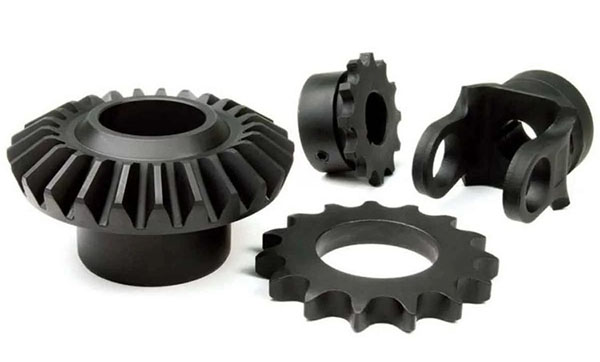
Common Types of Black Plating
| Finish Type | Process Type | Typical Thickness | Corrosion Resistance | Conductivity | Appearance |
|---|---|---|---|---|---|
| Black Oxide | Conversion coating | 0.5–1.5 µm | Low to Medium | Good | Matte black |
| Black Nickel | Electroplating | 2–10 µm | Medium | Moderate | Dark glossy |
| Black Zinc | Zinc plating + chromate | 5–15 µm | Medium | Good | Deep black |
| Black Zinc-Nickel | Alloy electroplating | 8–15 µm | Very High | Good | Satin black |
| Black Electroless Nickel | Autocatalytic deposition | 5–50 µm | High | Excellent | Non-reflective black |
Data compiled from industrial plating specifications and manufacturers.
Black Oxide Coating for CNC Steel Parts
Black oxide is one of the most economical black finishes used in CNC manufacturing. It is a chemical conversion coating that converts the metal surface into magnetite (Fe3O4).
Why Manufacturers Use Black Oxide
Black oxide is popular because:
- It adds almost no dimensional change
- Threads remain accurate
- Cost is low
- Processing speed is fast
- Surface glare is reduced
This makes it ideal for:
- Socket head screws
- Tool holders
- Firearm components
- Precision fixtures
- Cutting tools
- Machine assemblies
Typical Black Oxide Process
The process usually includes:
- Degreasing
- Water rinse
- Acid cleaning
- Blackening bath
- Rinse
- Oil sealing
According to industrial process data, black oxide thickness is commonly only 0.6–1.5 µm.
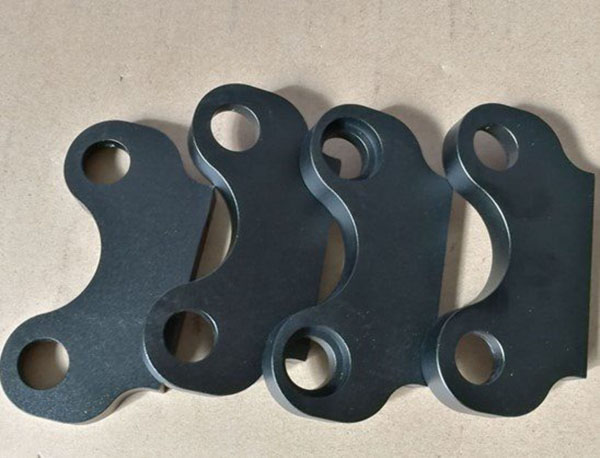
Advantages of Black Oxide
| Advantage | Engineering Benefit |
|---|---|
| Minimal thickness | Preserves tolerances |
| Matte finish | Reduces reflection |
| Low cost | Ideal for large batches |
| Good lubricity | Better assembly performance |
| No flaking | Stable coating |
Limitations of Black Oxide
Black oxide alone has weak corrosion resistance. Without oil sealing, salt spray resistance may only reach 1–2 hours. With oil sealing, it can increase to around 3–4 hours depending on process quality.
This means black oxide is not ideal for outdoor marine environments unless combined with protective oil or wax sealing.
Black Nickel Plating
Black nickel plating is an electroplated alloy coating composed mainly of nickel, zinc, and sulfur compounds.
Unlike black oxide, black nickel adds an actual metallic layer to the component surface.
Key Characteristics
| Property | Typical Performance |
|---|---|
| Appearance | Dark gray to black |
| Reflectivity | Low |
| Hardness | Moderate |
| Conductivity | Moderate |
| Decorative Quality | Excellent |
Black nickel is frequently used in:
- Consumer electronics
- Camera hardware
- Audio equipment
- Optical instruments
- Luxury hardware
- Tactical products
Why CNC Manufacturers Prefer Black Nickel
Black nickel creates a premium metallic appearance that looks more refined than paint or powder coating. It also maintains dimensional precision better than thicker coatings.
Compared with ordinary painting:
| Feature | Black Nickel | Black Paint |
|—|—|
| Thickness Control | Excellent | Poor |
| Wear Resistance | Better | Lower |
| Conductivity | Partial | None |
| Appearance | Metallic | Flat |
Real Engineering Concern
One practical issue is color consistency. Poor bath chemistry control can create:
- Brownish tones
- Uneven gloss
- Green tinting
- Patchy surfaces
Industrial platers often tightly control:
- pH
- Temperature
- Metal ion concentration
- Current density
to maintain consistent black appearance.
Black Zinc Plating
Black zinc plating combines zinc electroplating with black chromate conversion coating.
The zinc layer provides sacrificial corrosion protection, while the black chromate creates the dark appearance.
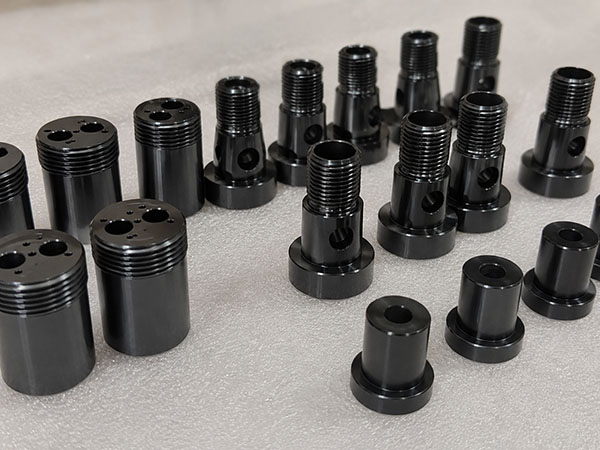
Applications
Black zinc is commonly used for:
- Automotive brackets
- Industrial fasteners
- Hinges
- Chassis hardware
- Sheet metal parts
Corrosion Performance
Black zinc performs significantly better than black oxide in humid environments.
However, over time the finish may shift from deep black to greenish-brown as the chromate layer degrades.
This is why black zinc is often avoided for luxury cosmetic products requiring long-term appearance stability.
Black Zinc vs Standard Zinc
| Feature | Standard Zinc | Black Zinc |
|—|—|
| Appearance | Silver | Black |
| Corrosion Resistance | Good | Good |
| Decorative Quality | Medium | High |
| UV Stability | Better | Lower |
Black Zinc-Nickel Plating
Black zinc-nickel plating is considered one of the best black coatings for corrosion protection.
The alloy typically contains:
- 10–17% nickel
- Remaining zinc
according to industrial plating data.
Why Aerospace and Automotive Industries Use It
Black zinc-nickel can provide over five times the protection of standard zinc plating.
It is commonly specified for:
- Aerospace hardware
- Military components
- Heavy equipment
- Oil and gas systems
- Automotive under-hood parts
Salt Spray Resistance Comparison
| Finish | Typical Salt Spray Resistance |
|---|---|
| Black Oxide | 3–4 hours |
| Black Zinc | 72–240 hours |
| Black Zinc-Nickel | 720–1000+ hours |
Performance varies based on sealing and coating thickness.
Why Zinc-Nickel Replaced Cadmium
Cadmium plating historically offered excellent corrosion resistance, but environmental regulations heavily restricted its use.
Black zinc-nickel became a safer alternative because it provides:
- High corrosion resistance
- Automotive compatibility
- Aerospace approval potential
- Better environmental compliance
Black Electroless Nickel Plating
Black electroless nickel is one of the most advanced black finishes available today.
Unlike traditional electroplating, electroless nickel deposits coating chemically without external electrical current.
Major Engineering Advantages
| Benefit | Why It Matters |
|---|---|
| Uniform thickness | Excellent for complex CNC parts |
| Non-reflective surface | Optical applications |
| High hardness | Better wear resistance |
| Conductivity | Electronics compatibility |
| Excellent coverage | Deep bores and cavities |
Typical Industries
Black electroless nickel is widely used in:
- Aerospace optics
- Medical devices
- Semiconductor hardware
- Defense systems
- Precision instruments
Hardness Performance
Industrial data shows black electroless nickel can achieve:
- 58–63 Rc hardness after heat treatment
which is significantly harder than standard decorative black coatings.
Why Precision CNC Parts Benefit
Electroless nickel deposits uniformly on:
- Internal holes
- Complex geometries
- Sharp corners
- Deep cavities
Traditional electroplating often struggles in these regions because current density varies across surfaces.
Black Plating Thickness and Tolerance Control
One major reason CNC manufacturers prefer black plating over paint is thickness control.
Typical Thickness Comparison
| Finish | Approximate Thickness |
|---|---|
| Black Oxide | <1.5 µm |
| Black Nickel | 2–10 µm |
| Black Zinc | 5–15 µm |
| Powder Coating | 60–120 µm |
Thin coatings help preserve:
- Bearing fits
- Thread accuracy
- Tight tolerances
- Surface geometry
For precision machining, excessive coating thickness can destroy functional dimensions.
Corrosion Resistance in Real Environments
Many customers assume all black coatings perform equally outdoors. That is incorrect.
Outdoor Durability Ranking
| Finish | Outdoor Durability |
|---|---|
| Black Oxide | Poor |
| Black Nickel | Moderate |
| Black Zinc | Good |
| Black Zinc-Nickel | Excellent |
| Black Electroless Nickel | Excellent |
Marine Environment Recommendation
For marine or salt-rich environments:
Recommended:
- Black zinc-nickel
- Black electroless nickel
Not recommended:
- Unsealed black oxide
Conductivity of Black Plating
Some black finishes remain electrically conductive while others become insulating.
Conductivity Comparison
| Finish | Conductivity |
|---|---|
| Black Oxide | Good |
| Black Zinc | Good |
| Black Nickel | Moderate |
| Black Electroless Nickel | Excellent |
| Black Paint | Poor |
This matters greatly in:
- Electronic enclosures
- Connectors
- Shielding systems
- Grounding applications
Surface Appearance and Reflection Control
Black plating is heavily used in optical and military systems because it reduces light reflection.
Non-reflective surfaces help prevent:
- Sensor interference
- Optical distortion
- Visible glare
- Infrared reflection issues
Black electroless nickel is particularly valuable in optical applications due to its matte, non-reflective appearance.
Common Defects in Black Plating
Uneven Color
Caused by:
- Poor surface preparation
- Contamination
- Incorrect pH
- Uneven current density
Brown or Green Tinting
Common in black zinc when chromate layers degrade over time.
Poor Adhesion
Often caused by:
- Oil contamination
- Incomplete cleaning
- Rust residue
- Improper activation
Rough Surface Texture
Improper pretreatment or poor sealing can create rough or chalk-like surfaces.
Choosing the Right Black Finish for CNC Parts
Recommended Selection Table
| Requirement | Recommended Finish |
|---|---|
| Lowest cost | Black oxide |
| Premium appearance | Black nickel |
| Automotive corrosion resistance | Black zinc-nickel |
| Precision optical equipment | Black electroless nickel |
| Minimal dimensional change | Black oxide |
| Maximum outdoor durability | Black zinc-nickel |
Black Plating for Fasteners and Hardware
Fasteners are one of the largest application areas for black plating.
Why Black Fasteners Are Popular
- Attractive appearance
- Better corrosion resistance
- Reduced glare
- Improved lubricity
- Better wear performance
Common examples include:
- Socket screws
- Bolts
- Washers
- Tactical fasteners
- Automotive hardware
Environmental Regulations and RoHS Compliance
Modern plating systems increasingly require:
- RoHS compliance
- REACH compliance
- Reduced hexavalent chromium usage
Many modern black electroless nickel systems now meet:
- RoHS
- REACH
- ELV standards
This is especially important for:
- Automotive exports
- Aerospace supply chains
- Electronics manufacturing
Cost Comparison of Black Plating Processes
| Finish | Relative Cost |
|---|---|
| Black Oxide | Low |
| Black Zinc | Low-Medium |
| Black Nickel | Medium |
| Black Zinc-Nickel | Medium-High |
| Black Electroless Nickel | High |
The correct finish should always balance:
- Cost
- Appearance
- Durability
- Corrosion resistance
- Precision requirements
Why CNC Manufacturers Must Understand Black Plating
Surface finishing is not simply cosmetic. In CNC manufacturing, black plating directly affects:
- Dimensional accuracy
- Corrosion resistance
- Mechanical wear
- Product lifespan
- Customer perception
A poorly selected finish can cause:
- Premature rust
- Thread failure
- Cosmetic rejection
- Assembly problems
- Field failure
Professional CNC suppliers evaluate:
- Base material
- Environmental exposure
- Functional requirements
- Conductivity needs
- Tolerance sensitivity
before selecting a black coating solution.
Why Xavier Is a Reliable Partner for Black Plated CNC Parts
Xavier specializes in precision CNC machining and advanced surface finishing solutions for global industrial customers.
Whether your project requires:
- Black oxide for tooling
- Black nickel for premium appearance
- Black zinc-nickel for automotive durability
- Black electroless nickel for aerospace precision
Xavier can provide engineering-driven manufacturing support with strict quality inspection and stable finishing consistency.
Our CNC machining capabilities support:
- Tight tolerances
- Complex geometries
- Multi-axis machining
- Custom prototyping
- Mass production
- Surface finishing integration
By combining precision machining with professional black plating solutions, Xavier helps customers achieve both functional performance and premium appearance in demanding industrial applications.
Some of the images and text in this article are collected and compiled from the internet. If there is anything inappropriate, please contact us for processing.