
Difference Between 6061 and 6063 Aluminum: A Complete Engineering Guide
Aluminum alloys from the 6000 series are widely used in manufacturing, construction, and CNC machining. Among them, 6061 aluminum and 6063 aluminum are two of the most common alloys used worldwide. Both belong to the Al-Mg-Si alloy family, meaning they rely on magnesium and silicon for strength and heat-treatability.
However, despite their similarities, these alloys serve very different roles in engineering. 6061 is known for strength and machinability, while 6063 is famous for extrusion quality and surface finish.
This guide explores the key differences between 6061 and 6063 aluminum from a manufacturing, engineering, and CNC machining perspective. 5 axis milling machining
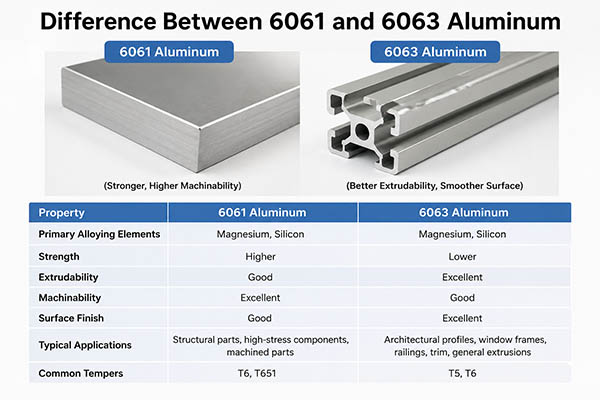
Overview of 6061 vs 6063 Aluminum
Before diving into technical details, here is a quick overview comparing the two alloys.
| Property | 6061 Aluminum | 6063 Aluminum |
|---|---|---|
| Alloy series | 6000 (Al-Mg-Si) | 6000 (Al-Mg-Si) |
| Typical tensile strength | ~42,000 psi | ~27,000 psi |
| Machinability | Excellent | Good |
| Extrudability | Good | Excellent |
| Surface finish | Good | Excellent |
| Main applications | Structural parts, CNC components | Architectural extrusions |
| Typical tempers | T6, T651 | T5, T6 |
Typical strength values show that 6061 is significantly stronger, while 6063 excels in extrusion and surface appearance.
Chemical Composition Differences
Although both alloys belong to the same aluminum family, their chemical compositions differ slightly, which directly affects mechanical properties.
| Element | 6061 (%) | 6063 (%) |
|---|---|---|
| Magnesium | 0.8 – 1.2 | 0.45 – 0.9 |
| Silicon | 0.4 – 0.8 | 0.2 – 0.6 |
| Copper | 0.15 – 0.40 | ≤0.10 |
| Aluminum | Balance | Balance |
6061 contains more magnesium and copper, which increases strength and hardness. 6063 has fewer alloying elements, giving it better formability and smoother surface finish.
For CNC manufacturing, these differences significantly affect tool wear, chip formation, and dimensional stability.
Strength and Mechanical Properties
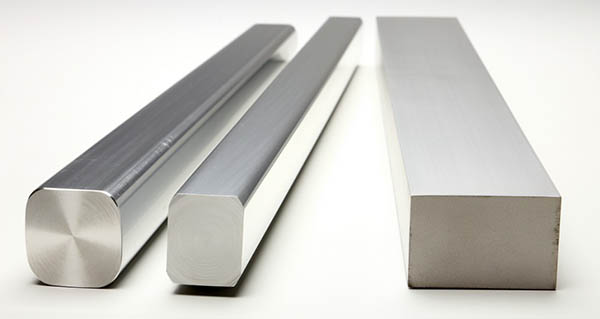
One of the most important differences is mechanical strength.
| Mechanical Property | 6061-T6 | 6063-T6 |
|---|---|---|
| Tensile strength | ~290 MPa | ~186 MPa |
| Yield strength | ~240 MPa | ~145 MPa |
| Hardness | ~95 HB | ~73 HB |
6061 aluminum has about 50% higher tensile strength than 6063.
Because of this, 6061 is commonly used for load-bearing structures, including:
- Aerospace components
- Machine frames
- Bicycle frames
- Automotive structural parts
6063, with lower strength, is more suitable for lightweight architectural structures.
Machinability in CNC Manufacturing
For CNC machining companies, machinability is a critical factor.
6061 aluminum is widely recognized as one of the best aluminum alloys for machining. The copper content helps produce short, brittle chips, which improves chip evacuation during cutting.
Typical machining advantages of 6061 include:
- 20–30% faster cutting speeds
- up to 40% longer tool life
- better dimensional stability
- smoother drilled holes
6063, being softer, tends to create built-up edges on cutting tools, which may affect surface finish during milling or drilling.
For this reason, precision CNC machining shops strongly prefer 6061 for complex components.
Extrusion Performance and Formability
Extrusion is where 6063 aluminum truly shines.
6063 has excellent plasticity, allowing it to be extruded into very thin or complex cross-section shapes.
Examples include:
- LED heat sink profiles
- window frame channels
- decorative aluminum trims
- curved architectural panels
Compared with 6061, 6063 requires lower extrusion force, making it easier to produce complex shapes.
Typical extrusion advantages of 6063:
- smoother flow during extrusion
- fewer surface defects
- higher dimensional consistency
This is why 6063 is often called “architectural aluminum.”
Surface Finish and Anodizing Quality
Surface quality is another major difference.
6063 aluminum offers superior surface finish and anodizing performance compared with 6061.
This is particularly important for:
- architectural aluminum profiles
- consumer electronics housings
- decorative metal components
After anodizing, 6063 produces a more uniform and glossy finish, while 6061 may show slight color variations.
Example:
| Alloy | Anodized appearance |
|---|---|
| 6061 | Slightly matte |
| 6063 | Smooth and glossy |
Therefore, when visual appearance matters, manufacturers typically choose 6063.
Corrosion Resistance Comparison
Both alloys offer excellent corrosion resistance because of their aluminum oxide protective layer.
However, subtle differences exist.
6063 often demonstrates slightly better corrosion resistance, mainly due to its simpler alloy composition and lower copper content.
Typical environments where corrosion matters include:
- outdoor structures
- marine hardware
- construction materials
Both alloys can further improve corrosion resistance through:
- anodizing
- powder coating
- chemical conversion coatings
Thermal Conductivity and Heat Dissipation
Thermal conductivity is another factor engineers consider.
| Alloy | Thermal Conductivity |
|---|---|
| 6061 | ~170 W/m·K |
| 6063 | ~205 W/m·K |
6063 has higher thermal conductivity, which makes it more suitable for heat sinks and cooling profiles.
For example, LED lighting systems often use extruded 6063 aluminum heat sink housings.
Weldability and Fabrication
Both alloys have excellent weldability, especially using methods like:
- TIG welding
- MIG welding
- friction stir welding
However, 6061 welds sometimes require post-weld heat treatment to restore mechanical strength.
Typical fabrication performance:
| Process | 6061 | 6063 |
|---|---|---|
| Welding | Excellent | Excellent |
| Bending | Good | Excellent |
| Stamping | Moderate | Excellent |
6063 performs better in forming operations due to its lower hardness.
Heat Treatment and Temper Differences
Heat treatment strongly influences aluminum performance.
Common tempers include:
6061
- 6061-T6
- 6061-T651
6063
- 6063-T5
- 6063-T6
T6 temper generally provides maximum strength, while T5 is often used for extrusion products.
Understanding temper conditions is critical for CNC machining tolerance and structural performance.
Weight and Density Comparison
Despite property differences, both alloys share nearly identical density.
| Alloy | Density |
|---|---|
| 6061 | ~2.70 g/cm³ |
| 6063 | ~2.70 g/cm³ |
This means weight reduction is not a deciding factor between the two alloys.
Instead, engineers choose based on strength, surface quality, or manufacturability.
Cost and Material Availability
In most markets, the cost difference between 6061 and 6063 is relatively small.
However:
- 6061 often costs slightly more for machining-grade billets
- 6063 may cost more for high-quality architectural extrusion profiles
Price variations mainly depend on:
- temper
- extrusion complexity
- surface finishing requirements
For mass production, material processing cost often exceeds raw material cost.
Typical Applications of 6061 Aluminum
6061 aluminum is widely used in engineering and industrial applications requiring strength.
Common examples include:
- aerospace structures
- bicycle frames
- marine fittings
- CNC-machined components
- automotive parts
Because of its excellent strength-to-weight ratio, 6061 is considered a general-purpose structural aluminum alloy.
Typical Applications of 6063 Aluminum
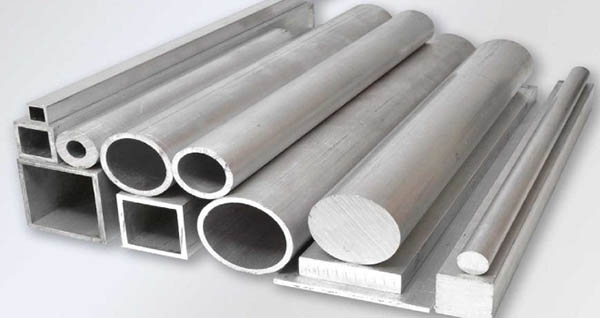
6063 aluminum dominates architectural and extrusion industries.
Typical applications include:
- window and door frames
- curtain wall systems
- railings and fences
- aluminum furniture
- LED lighting housings
In fact, over 80% of architectural aluminum extrusions are produced using 6063 alloy.
How Engineers Choose Between 6061 and 6063
When deciding between these alloys, engineers typically evaluate three criteria:
| Requirement | Recommended Alloy |
|---|---|
| High strength | 6061 |
| Complex extrusion | 6063 |
| CNC machining | 6061 |
| Architectural appearance | 6063 |
| Heat dissipation | 6063 |
| Structural components | 6061 |
In many projects, both alloys may be used together depending on component requirements.
Why CNC Manufacturers Prefer 6061 Aluminum
In CNC machining workshops, 6061 is often the default aluminum alloy because of its predictable cutting behavior.
Advantages include:
- stable cutting performance
- minimal tool adhesion
- high precision tolerance capability
- excellent post-processing options
These characteristics make 6061 ideal for precision mechanical components.
Conclusion: Choosing the Right Aluminum Alloy with Xavier CNC
Understanding the difference between 6061 and 6063 aluminum is essential for selecting the right material in manufacturing projects. Swiss turning
In summary:
- 6061 aluminum → stronger, better for machining and structural parts
- 6063 aluminum → better surface finish and extrusion performance
At Xavier CNC Manufacturing, we specialize in precision machining of aluminum alloys including 6061-T6, 6061-T651, and 6063-T5/T6. Our advanced CNC machining centers deliver:
- tight tolerances
- excellent surface finish
- reliable material sourcing
- fast prototype and mass production services
Whether you require structural aluminum components or precision extruded parts, Xavier provides the engineering expertise to turn your design into high-quality finished products.
If you are unsure which alloy is best for your project, our engineers can help you optimize material selection for strength, cost, and manufacturability. CNC machining materials
Some of the images and text in this article are collected and compiled from the internet. If there is anything inappropriate, please contact us for processing.