
Teflon Metal Coating: A Complete Engineering Guide for Industrial Parts
What Teflon Metal Coating Actually Is
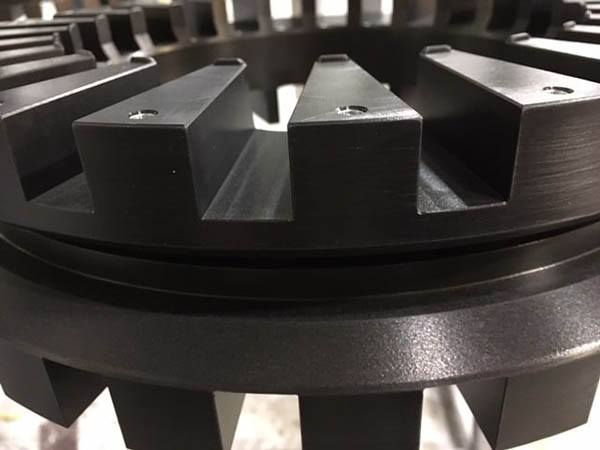
Teflon metal coating refers to a thin fluoropolymer layer made from PTFE (polytetrafluoroethylene) applied onto metal surfaces such as stainless steel, aluminum, or carbon steel. The coating modifies the surface behavior of the part without changing its structural material.
Rather than redesigning a component using expensive materials, engineers often apply a PTFE coating layer to achieve:
- Non-stick surfaces
- Reduced friction
- Chemical resistance
- Improved corrosion resistance
In CNC manufacturing environments, PTFE coatings are frequently applied to:
- precision fasteners
- sliding components
- molds
- machine parts exposed to chemicals
This surface treatment essentially converts a standard metal component into a functional engineered surface.
Core Properties of Teflon Coatings
PTFE coatings are widely used because they combine several rare properties in one material.
| Property | Typical Value | Industrial Benefit |
|---|---|---|
| Continuous temperature resistance | 260°C (500°F) | Suitable for high-heat equipment |
| Coefficient of friction | 0.05–0.10 | Dry lubrication |
| Chemical resistance | Excellent | Works in aggressive environments |
| Surface energy | Extremely low | Non-stick release surface |
| Coating thickness | 10–60 μm | Minimal dimensional change |
PTFE has one of the lowest friction coefficients of any solid material and can maintain stable performance even under high temperature conditions.
Because of these properties, PTFE coating is widely used where lubricants fail or contamination must be avoided.
Typical Coating Thickness and Layer Structure
Unlike electroplating processes, PTFE coatings are relatively thin polymer films.
Typical specifications:
| Coating Type | Thickness |
|---|---|
| Single coat PTFE | 10–25 μm |
| Multi-layer PTFE | 25–60 μm |
| Industrial heavy coating | up to 80 μm |
Most industrial systems use a primer + topcoat structure:
- Primer layer
Improves adhesion to metal substrate. - Intermediate layer
Adds wear resistance. - Top layer (PTFE)
Provides non-stick and low friction.
Depending on the application, manufacturers may apply up to four coating layers.
Surface Preparation Before PTFE Coating
Adhesion is the biggest challenge for fluoropolymers because PTFE naturally has very low surface energy.
Typical preparation process:
- Degreasing
- Chemical cleaning
- Sandblasting or grit blasting
- Surface activation
- Primer application
Surface roughening increases mechanical bonding between coating and metal substrate. Without proper preparation, the coating may peel under stress.
Example:
A CNC stainless steel valve component might be aluminum oxide blasted to Ra 2–4 μm before coating to ensure proper adhesion.
PTFE Coating Application Methods
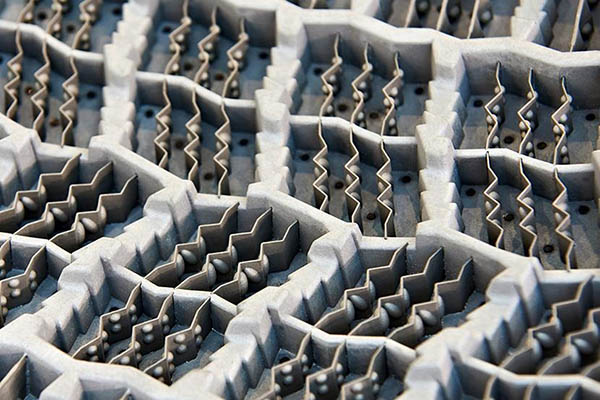
Several industrial processes are used to apply PTFE coatings.
| Method | Description | Typical Applications |
|---|---|---|
| Spray coating | Most common method | Machine parts |
| Dip coating | Uniform thin layers | Small components |
| Electrostatic spray | High efficiency coating | Large batches |
| Powder coating | High durability layers | Heavy equipment |
The coating is usually applied as a water-based dispersion which later cures into a solid fluoropolymer film.
Spray coating is the most common technique for CNC precision parts.
Curing Temperature and Process Control
After application, PTFE coatings require high-temperature curing to bond with the substrate.
Typical curing parameters:
| Parameter | Value |
|---|---|
| Cure temperature | 340–400°C |
| Cure time | 10–30 minutes |
| Furnace type | convection or infrared |
These temperatures allow the polymer particles to melt and coalesce into a continuous film.
One important engineering constraint:
The base metal must withstand curing temperatures near 750°F (≈398°C).
Materials like aluminum, stainless steel, and carbon steel are typically suitable.
Friction Coefficient and Dry Lubrication Performance
One of the most valuable benefits of PTFE coating is its ultra-low friction.
Typical friction data:
| Condition | Coefficient |
|---|---|
| Static friction | 0.12–0.15 |
| Dynamic friction | 0.05–0.10 |
These values are significantly lower than many engineering plastics and metals.
Example:
A PTFE-coated fastener requires lower torque during assembly and prevents galling between stainless steel threads.
Chemical Resistance of PTFE Coatings
PTFE is highly inert due to strong carbon-fluorine bonds.
It resists:
- acids
- solvents
- bases
- industrial cleaning chemicals
This chemical stability makes it ideal for equipment exposed to aggressive process fluids.
Industries that rely heavily on PTFE coatings:
- chemical processing
- pharmaceutical manufacturing
- food processing
- semiconductor production
Heat Resistance and Thermal Stability
PTFE coatings operate reliably under extreme temperature conditions.
Typical performance limits:
| Property | Value |
|---|---|
| Continuous operating temp | 260°C |
| Peak temperature | 290°C |
| Melting point | 327°C |
Because of this thermal stability, PTFE coatings are commonly used on heat sealing equipment and mold tooling.
Corrosion Protection for Metal Components
Metal surfaces often fail due to corrosion rather than mechanical stress.
A PTFE coating forms a protective barrier against oxidation and moisture, extending part life in harsh environments.
Example:
A carbon steel shaft operating in a humid chemical plant may corrode within months. With PTFE coating, the same part can last several years before requiring replacement.
Wear Resistance and Durability Limits
Despite its advantages, PTFE is not the hardest coating.
Typical hardness:
| Property | Value |
|---|---|
| Hardness | ~60 Shore |
For extremely abrasive conditions, engineers may combine PTFE with fillers such as:
- ceramic particles
- graphite
- molybdenum disulfide
These hybrid coatings increase durability while maintaining low friction.
Food-Grade and Medical Applications
Many PTFE coatings meet FDA food contact standards, allowing them to be used in food processing equipment.
Typical examples:
- baking trays
- food molds
- pharmaceutical tablet dies
- medical catheters
Because PTFE surfaces are non-stick, they help reduce contamination and simplify cleaning.
Industrial Applications of Teflon Coated Metal Parts
Common PTFE-coated CNC components include:
| Component | Function |
|---|---|
| Fasteners | Anti-seize assembly |
| Bearings | Low friction movement |
| Mold surfaces | Product release |
| Valves | Chemical resistance |
| Conveyor components | Non-stick surfaces |
In packaging machinery, PTFE coatings prevent adhesives and films from sticking to sealing equipment, reducing downtime during production. CNC machining of materials
PTFE vs Other Fluoropolymer Coatings
Several fluoropolymer coatings exist, each with slightly different properties.
| Coating | Max Temperature | Key Feature |
|---|---|---|
| PTFE | 260°C | Lowest friction |
| FEP | 200°C | Smooth non-porous finish |
| PFA | 260°C | Higher toughness |
| Teflon-S | 175–340°C | Enhanced abrasion resistance |
Engineers typically select PTFE when low friction is the primary requirement.
When Engineers Should Choose Teflon Coating
Teflon metal coating is often chosen when:
- Parts experience sticking or product buildup
- Lubricants cannot be used
- Chemical exposure is severe
- Corrosion protection is needed
- Cleaning time must be minimized
However, it is not ideal for heavy mechanical load surfaces where hard coatings like DLC or ceramic coatings may perform better. teflon metal coating
Why Xavier Recommends PTFE Coating for CNC Precision Parts
For precision machining companies, surface engineering is often as important as the material itself. PTFE coating allows manufacturers to transform ordinary CNC components into high-performance industrial parts without redesigning the entire product. CNC machining materials
At Xavier, we specialize in manufacturing CNC components that integrate advanced surface treatments such as PTFE coatings. Our engineering team evaluates:
- part geometry
- operating temperature
- friction requirements
- chemical exposure
- coating thickness tolerance
This ensures the coating works with the design rather than against it.
Whether you need precision coated fasteners, sliding machine components, or chemically resistant metal parts, Xavier provides reliable CNC machining combined with high-performance coating solutions. cnc machining
Some of the images and text in this article are collected and compiled from the internet. If there is anything inappropriate, please contact us for processing.