The main points of this article are as follows:
- Definition of Heat Deflection Temperature (HDT)
- Why Heat Deflection Temperature Matters in Engineering Materials
- ASTM D648 and ISO 75 Testing Standards
- HDT Test Method and Experimental Procedure
- HDT vs Glass Transition Temperature (Tg)
- HDT vs Vicat Softening Temperature (VST)
- Typical HDT Values of Common Engineering Plastics
- Factors Affecting Heat Deflection Temperature
- Effect of Reinforcements (Glass Fiber, Carbon Fiber) on HDT
- HDT in CNC Machined Plastic Components
- HDT in Injection Molding and Additive Manufacturing
- HDT and Long-Term Thermal Stability
- Design Guidelines When Using HDT in Product Development
- Industry Applications of High-HDT Materials
- Material Selection Strategy Using HDT Data
Heat Deflection Temperature: Complete Engineering Guide for Material Selection
What Is Heat Deflection Temperature (HDT)
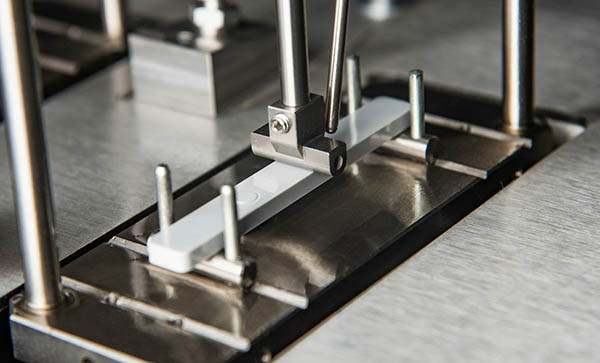
Heat Deflection Temperature (HDT), also called Heat Distortion Temperature or Deflection Temperature Under Load (DTUL), is the temperature at which a plastic or polymer material begins to deform under a specified mechanical load.
During testing, a standard sample is subjected to bending stress while temperature gradually increases until the material deflects by 0.25 mm (0.010 in).
In simple terms:
| Property | Meaning |
|---|---|
| HDT | Temperature where material loses stiffness under load |
| Test Load | Typically 0.46 MPa or 1.8 MPa |
| Deflection Criterion | 0.25 mm bending |
| Heating Rate | ~2°C per minute |
For engineers selecting materials for CNC machining or injection molded components, HDT indicates the upper limit of functional temperature under mechanical stress.
Why Heat Deflection Temperature Matters in Engineering Materials
Many plastics perform well at room temperature but soften when exposed to heat.
HDT is critical because it tells engineers:
- Maximum service temperature for structural parts
- Whether a component will warp or sag
- How materials behave under combined heat + load conditions
Example:
| Material | Melting Point | HDT (approx.) |
|---|---|---|
| PLA | 180°C | 55–65°C |
| ABS | 220°C | 95–105°C |
| Polycarbonate | 270°C | 130–140°C |
Even though PLA melts at ~180°C, it may begin deforming at 60°C under load, which is why PLA parts can warp in hot environments.
ASTM D648 and ISO 75 Testing Standards
Two global standards define HDT testing:
| Standard | Organization | Description |
|---|---|---|
| ASTM D648 | ASTM International | Plastic deflection temperature test |
| ISO 75 | International Organization for Standardization | Equivalent international method |
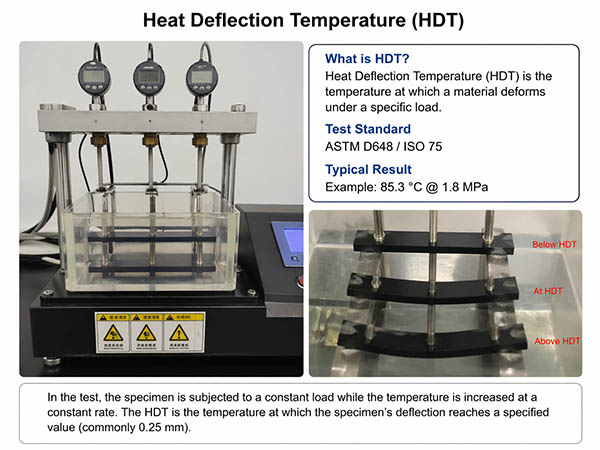
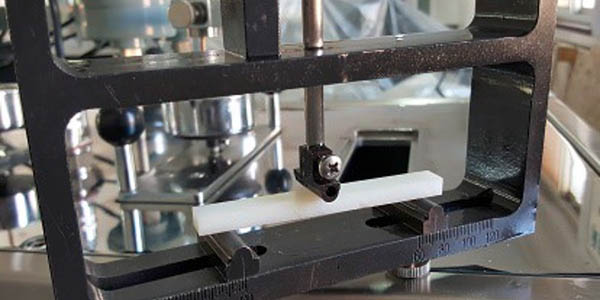
Both standards use a three-point bending test configuration where the sample rests on two supports and a load is applied at the center.
The test allows manufacturers worldwide to compare polymer thermal performance using consistent methodology.
HDT Test Method and Experimental Procedure
The typical HDT test includes the following steps:
- Prepare a rectangular polymer specimen
- Place specimen in a three-point bending fixture
- Apply constant load
- Heat oil bath gradually (~2°C/min)
- Measure deflection until 0.25 mm deformation occurs
| Parameter | ASTM D648 Value |
|---|---|
| Specimen Size | 127 × 12.7 × 3.2 mm |
| Stress Level | 0.455 MPa or 1.82 MPa |
| Heating Rate | 2°C / min |
| Deflection Limit | 0.25 mm |
This process simulates real conditions where parts experience mechanical stress while temperature rises.
HDT vs Glass Transition Temperature (Tg)
Many engineers confuse HDT with Glass Transition Temperature (Tg).
| Property | HDT | Tg |
|---|---|---|
| Measurement Type | Mechanical deformation test | Thermal molecular transition |
| Load Applied | Yes | No |
| Engineering relevance | Structural performance | Polymer chemistry |
| Typical Usage | Product design | Material science |
Example:
| Material | Tg | HDT |
|---|---|---|
| ABS | 105°C | ~100°C |
| Nylon | 50°C | ~160°C |
For structural components, HDT is usually more practical than Tg because it reflects real mechanical loading.
HDT vs Vicat Softening Temperature (VST)
Another commonly reported value in material datasheets is Vicat Softening Temperature (VST).
| Property | HDT | Vicat |
|---|---|---|
| Test Principle | Bending deflection | Needle penetration |
| Mechanical Stress | Yes | Minimal |
| Result Meaning | Structural heat resistance | Softening point |
Vicat is often higher than HDT, because it measures softening rather than structural deformation.
Typical HDT Values of Engineering Plastics
Below is a useful reference for CNC engineers selecting plastic materials.
| Plastic Material | HDT @0.46 MPa | HDT @1.8 MPa |
|---|---|---|
| PLA | 60°C | 50°C |
| ABS | 100°C | 95°C |
| Nylon (PA6) | 160°C | 80°C |
| Polycarbonate | 138°C | 130°C |
| PEEK | 315°C | 160°C |
Engineering polymers such as PEEK or PPS have extremely high HDT values and are often used in aerospace and automotive components.
Factors Affecting Heat Deflection Temperature
Several variables influence HDT performance.
| Factor | Impact |
|---|---|
| Polymer structure | Crystalline polymers often have higher HDT |
| Reinforcements | Glass fiber increases stiffness |
| Load applied | Higher loads reduce measured HDT |
| Additives | Heat stabilizers improve thermal resistance |
| Processing method | Injection molding orientation matters |
Even the same polymer grade can show different HDT values depending on reinforcement and formulation.
Effect of Fiber Reinforcement on HDT
Fiber reinforcement dramatically improves heat resistance.
Example comparison:
| Material | HDT |
|---|---|
| Nylon 6 | 160°C |
| Nylon 6 + 30% Glass Fiber | 220°C |
| Carbon Fiber Reinforced Nylon | 240°C |
Reinforcements increase elastic modulus, which delays deformation under heat.
HDT in CNC Machined Plastic Parts
When machining plastic components, HDT determines whether the part can withstand:
- friction heat during machining
- operational heat during service
- assembly loads at elevated temperature
For example:
| Application | Recommended Material |
|---|---|
| Automotive bracket | Glass-filled Nylon |
| Electronics housing | ABS / PC |
| Aerospace insulation | PEEK |
Using a material with low HDT can cause creep, warping, or dimensional instability.
HDT in Injection Molding and Additive Manufacturing
In injection molded parts, HDT is important for:
- mold temperature selection
- cooling cycle design
- long-term thermal performance
In 3D printing, HDT determines whether printed parts can survive:
- engine compartments
- outdoor sun exposure
- high-power electronics environments
PLA prints may soften in hot cars because HDT is low (~60°C).
HDT and Long-Term Thermal Stability
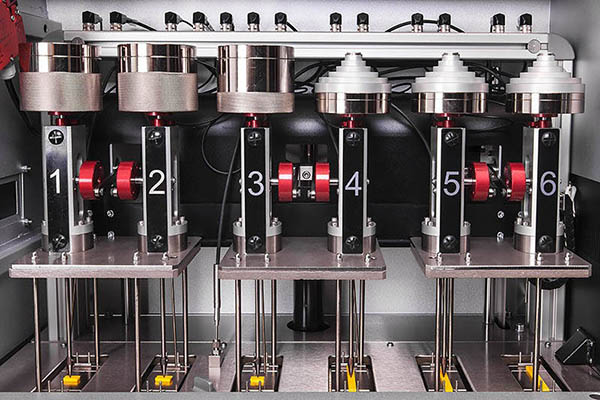
It is important to understand that HDT represents short-term heat resistance.
Long-term performance also depends on:
- creep resistance
- thermal oxidation stability
- continuous service temperature
Engineers often combine HDT data with thermal aging tests when designing durable components.
Design Guidelines When Using HDT
Practical engineering guidelines include:
| Design Rule | Recommendation |
|---|---|
| Service Temperature | Keep 20–30°C below HDT |
| Structural Load | Use HDT @1.8 MPa value |
| Safety Factor | 1.3–1.5 thermal margin |
Example:
If a polymer has HDT = 120°C, safe operating temperature should be around 90–100°C.
Industrial Applications of High-HDT Materials
High heat deflection materials are widely used in:
| Industry | Application |
|---|---|
| Automotive | engine covers, sensor housings |
| Aerospace | lightweight structural brackets |
| Electronics | connector housings |
| Medical | sterilizable components |
These applications require materials that maintain dimensional stability under heat and load.
Material Selection Strategy Using HDT Data
When selecting materials for engineering parts:
- Identify maximum operating temperature
- Determine mechanical load
- Compare HDT values across materials
- Consider reinforcement or high-performance polymers
Example workflow:
| Requirement | Decision |
|---|---|
| 120°C operating temperature | ABS not suitable |
| Moderate load | PC acceptable |
| High load | Glass-filled Nylon recommended |
Why Choose Xavier for High-Performance CNC Components
At Xavier, we understand that material selection directly affects product reliability and lifespan.
Our CNC manufacturing services support a wide range of high-HDT engineering plastics, including:
- PEEK
- Polycarbonate
- Glass-fiber reinforced Nylon
- PPS
- High-temperature ABS blends
With advanced 5-axis CNC machining and precision material sourcing, Xavier ensures that every component maintains dimensional stability, structural strength, and heat resistance even in demanding environments.
If your project requires high-temperature plastic components or precision CNC machining, Xavier provides reliable solutions from prototype to mass production.
Some of the images and text in this article are collected and compiled from the internet. If there is anything inappropriate, please contact us for processing.