
CNC Milling Machine Components Suppliers: A Complete Engineering and Sourcing Guide
Overview of CNC Milling Machine Components Supply Chain
CNC milling machine components suppliers play a critical role in the global manufacturing ecosystem. These suppliers provide precision parts that ensure the performance, rigidity, and accuracy of CNC milling machines used across industries such as aerospace, automotive, and medical.
The supply chain typically includes:
- Raw material providers (cast iron, alloy steel)
- Precision machining suppliers
- Assembly and integration manufacturers
- OEM machine tool builders
Companies like major machine tool manufacturers rely on a network of specialized suppliers to maintain consistency and scalability in production. Haas Automation is one such global example producing CNC equipment and sourcing precision components worldwide.
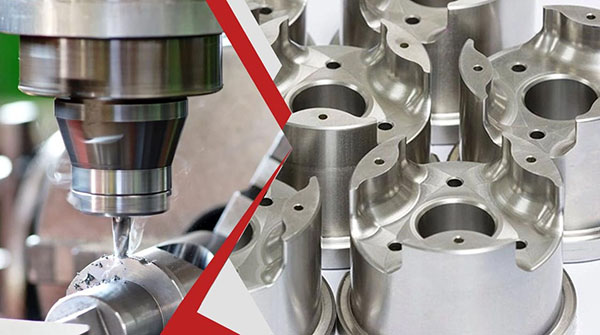
Core Structural Components of CNC Milling Machines
The structural integrity of a CNC milling machine directly impacts machining accuracy, vibration control, and long-term stability.
Key structural components include:
| Component | Function |
|---|---|
| Base / Bed | Supports entire machine structure |
| Column | Provides vertical rigidity |
| Saddle | Supports table movement |
| Worktable | Holds workpiece and fixtures |
These components are typically manufactured from:
- Cast iron (HT250, HT300)
- Ductile iron
- Welded steel structures
Heavy and rigid structures help reduce vibration and improve surface finish during machining.
Even small structural deviations can lead to:
- chatter during cutting
- dimensional inaccuracies
- reduced tool life
Motion Systems and Drive Components
Motion systems are responsible for precise positioning along the X, Y, and Z axes.
Key components include:
| Component | Function |
|---|---|
| Ball screws | Convert rotary motion into linear movement |
| Linear guideways | Ensure smooth and precise motion |
| Servo motors | Provide controlled movement |
| Couplings & gearboxes | Transfer power |
Ball screws can achieve up to 98% efficiency, making them essential for high-precision CNC systems.
Advanced suppliers focus on:
- low backlash systems
- high repeatability (±0.01 mm or better)
- thermal stability
These factors directly impact machining accuracy and repeatability.
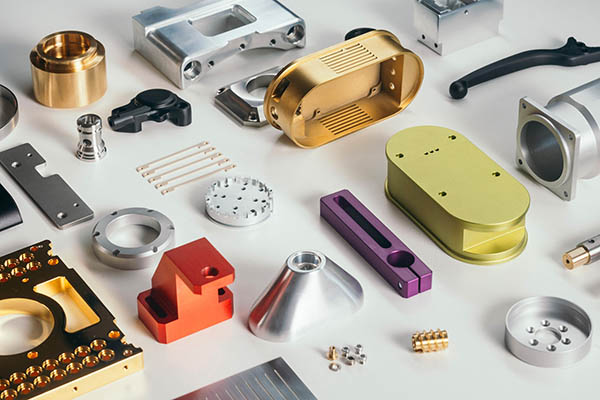
Spindle and Tooling Systems
The spindle is often considered the “heart” of a CNC milling machine.
Its role includes:
- holding cutting tools
- rotating at high speeds
- transmitting cutting forces
Common spindle-related components:
| Component | Function |
|---|---|
| Spindle shaft | Rotational power transmission |
| Bearings | Maintain precision rotation |
| Tool holders | Secure cutting tools |
| Drawbar system | Tool clamping |
The spindle determines:
- cutting performance
- surface finish quality
- machining efficiency
High-end suppliers provide:
- high-speed spindles (10,000–30,000 RPM)
- low runout (<0.005 mm)
- thermal compensation designs
CNC Control Systems and Software Integration
The CNC control system acts as the “brain” of the machine, translating G-code into motion commands.
Core components include:
| Component | Role |
|---|---|
| CNC controller | Executes machining programs |
| PLC system | Manages auxiliary functions |
| Feedback systems | Ensure positioning accuracy |
Controllers interpret G-code and drive axis motors accordingly, ensuring precise machining operations.
Modern suppliers often integrate advanced software such as simulation systems to:
- detect machining errors
- optimize tool paths
- reduce scrap rates
For example, VERICUT is widely used for CNC simulation and verification.
Auxiliary Systems in CNC Milling Machines
Auxiliary systems improve efficiency, automation, and safety.
Common systems include:
| System | Function |
|---|---|
| Coolant system | Reduces heat and tool wear |
| Automatic Tool Changer (ATC) | Enables multi-tool operations |
| Safety enclosure | Protects operators |
| Rotary table (4th axis) | Enables complex machining |
Coolant systems are especially critical as they:
- reduce friction
- extend tool life
- improve surface finish
Materials Used in CNC Machine Components
Material selection is essential for durability and performance.
Common materials include:
| Material | Application |
|---|---|
| Cast iron | Machine base and column |
| Alloy steel (4140, 4340) | High-stress components |
| Stainless steel | Corrosion-resistant parts |
| Aluminum | Lightweight components |
Suppliers often combine machining with:
- heat treatment (quenching, tempering)
- grinding
- surface finishing
to enhance performance and lifespan.
Quality Standards and Inspection for Suppliers
High-quality CNC component suppliers implement strict quality control systems.
Typical inspection tools:
| Tool | Purpose |
|---|---|
| CMM | Dimensional verification |
| Laser interferometer | Position accuracy testing |
| Ball bar system | Machine performance testing |
Typical tolerances:
- Standard precision: ±0.01 mm
- High precision: ±0.005 mm or better
Suppliers may comply with:
- ISO 9001
- ISO 14001
- Industry-specific standards
These ensure consistent quality across production batches.
Custom CNC Component Manufacturing Capabilities
Modern suppliers offer full-service manufacturing capabilities:
- CNC milling and turning
- grinding and finishing
- prototyping to mass production
- assembly and integration
Companies like PartsBadger provide on-demand CNC parts with online quoting systems, enabling faster procurement and production cycles.
Capabilities often include:
| Capability | Benefit |
|---|---|
| 3/4/5 axis machining | Complex geometries |
| Rapid prototyping | Faster product development |
| Multi-material machining | Flexible applications |
How to Choose Reliable CNC Milling Machine Components Suppliers
Selecting the right supplier directly impacts machine performance and long-term cost.
Key evaluation criteria:
Technical Capability
- Multi-axis machining capability
- Tight tolerance control
- Advanced inspection equipment
Quality Assurance
- Certifications (ISO 9001)
- Traceability systems
- Inspection documentation
Production Capacity
- Prototype + mass production capability
- Stable supply chain
- Lead time reliability
Cost vs Value
| Factor | Low-Cost Supplier | High-Quality Supplier |
|---|---|---|
| Price | Lower upfront | Higher upfront |
| Quality | Inconsistent | Stable |
| Lifecycle cost | Higher | Lower |
A slightly higher upfront cost often results in:
- fewer defects
- longer machine life
- lower maintenance costs
Why Choose Xavier as Your CNC Milling Machine Components Supplier
When sourcing high-performance CNC milling machine components, Xavier provides a reliable and engineering-driven solution.
Xavier advantages include:
- Advanced 3/4/5 Axis CNC machining capabilities
- Expertise in machine structural parts, spindle components, and precision assemblies
- Tight tolerances up to ±0.005 mm
- Strong material processing capabilities (cast iron, alloy steel, stainless steel)
- Full-process quality control with CMM inspection
Whether you are a machine tool manufacturer or an industrial equipment builder, Xavier delivers:
- stable quality
- fast lead times
- competitive pricing
For businesses seeking long-term CNC milling machine components suppliers, Xavier offers both technical expertise and scalable production capacity.
Some of the images and text in this article are collected and compiled from the internet. If there is anything inappropriate, please contact us for processing.