CNC Machining for Aerospace: Materials, Precision, and Manufacturing Strategies
Aerospace CNC Machining Overview and Industry Requirements
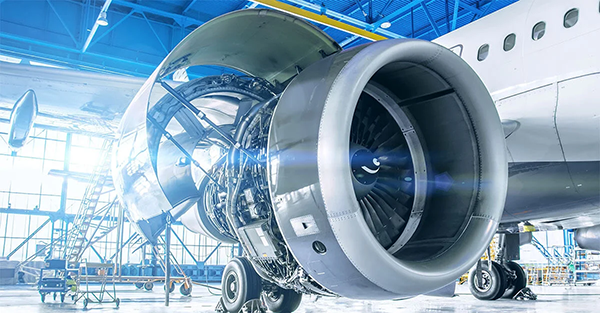
CNC machining plays a critical role in the aerospace industry because aircraft and spacecraft components require extremely high reliability, tight tolerances, and traceable manufacturing processes. Unlike many commercial manufacturing sectors, aerospace components must withstand extreme conditions including vibration, pressure changes, thermal expansion, and high rotational speeds. cnc machining for aerospace
For example:
| Industry | Typical Components | Tolerance Range | Key Standards |
|---|---|---|---|
| Aerospace | Flight controls, structural brackets, engine housings | ±0.005″ – ±0.001″ | AS9100, RTCA |
| Automotive | Engine blocks, shafts | ±0.01″ – ±0.005″ | ISO 9001 |
| Consumer electronics | Housings, connectors | ±0.02″ | ISO 9001 |
Even a 0.01 mm dimensional deviation may cause mechanical imbalance in high-speed turbine assemblies.
Therefore aerospace CNC machining typically requires:
- Advanced multi-axis machining centers
- High-performance cutting tools
- Thermal-controlled machining environments
- Full inspection documentation
These requirements explain why aerospace machining suppliers must maintain far stricter production control systems than general machine shops.
Aerospace Materials Commonly Used in CNC Machining
Material selection is one of the most critical aspects of aerospace engineering because it directly affects weight, strength, corrosion resistance, and thermal stability.
The most commonly machined aerospace materials include:
| Material | Key Properties | Typical Aerospace Parts |
|---|---|---|
| Aluminum 7075 / 6061 | High strength-to-weight ratio | Airframes, brackets |
| Titanium Ti-6Al-4V | Heat resistance, fatigue strength | Engine components |
| Inconel 718 | High-temperature stability | Turbine blades |
| Stainless Steel 17-4PH | Corrosion resistance | Valves, shafts |
| Magnesium alloys | Extremely lightweight | Gear housings |
| PEEK / engineering plastics | Chemical & heat resistance | Insulation parts |
These materials are selected based on strength-to-weight ratio, corrosion resistance, and fatigue life requirements.
Example mechanical properties:
| Alloy | Tensile Strength | Density | Aerospace Use |
|---|---|---|---|
| 7075-T6 Aluminum | ~83 ksi | 0.101 lb/in³ | Wing spars |
| 6061-T6 Aluminum | ~45 ksi | 0.098 lb/in³ | Housings |
| Ti-6Al-4V Titanium | ~130 ksi | 0.160 lb/in³ | Jet engine parts |
High-strength alloys allow aircraft manufacturers to reduce weight while maintaining structural integrity.
Precision Tolerances in Aerospace Components
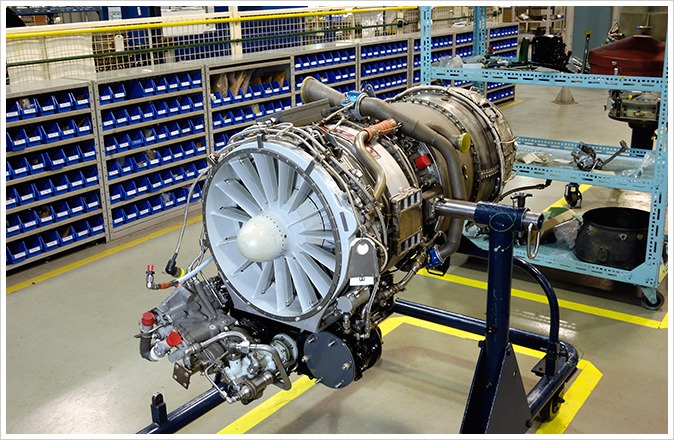
Precision requirements in aerospace machining are significantly tighter than most other industries.
Typical aerospace tolerance ranges include:
| Component Type | Typical Tolerance |
|---|---|
| Structural components | ±0.001 in (25 μm) |
| Engine components | ±0.0002 – 0.0005 in |
| Hydraulic parts | ±0.0001 – 0.0003 in |
These tolerances ensure parts fit perfectly in high-stress assemblies and prevent vibration or failure.
Additional geometric tolerances may include:
- Concentricity: 0.01–0.02 mm
- Flatness: 0.02–0.1 mm
- True position: 0.05–0.15 mm
Surface roughness may be as low as Ra 0.2 μm for sealing surfaces.
5-Axis CNC Machining for Complex Aerospace Parts
Aerospace components often contain complex geometries such as:
- curved aerodynamic surfaces
- internal cooling channels
- thin-wall structures
These shapes are typically manufactured using 5-axis CNC machining, which allows cutting tools to move along five independent axes simultaneously.
Advantages of 5-axis machining include:
| Benefit | Description |
|---|---|
| Reduced setups | Single setup for complex parts |
| Higher accuracy | Less repositioning error |
| Complex geometry | Ideal for turbine blades |
| Better surface finish | Continuous tool engagement |
Example aerospace parts produced by 5-axis machining:
- turbine blades
- impellers
- satellite brackets
- aircraft structural ribs
Without multi-axis machining, these parts would require multiple setups and significantly higher manufacturing cost.
Aerospace Quality Standards and Certifications
Quality assurance in aerospace manufacturing is governed by strict international standards.
Key certifications include:
| Standard | Purpose |
|---|---|
| AS9100 | Aerospace quality management system |
| AS9102 | First Article Inspection |
| NADCAP | Special process certification |
| ASME Y14.5 | GD&T standards |
AS9100 certification ensures:
- traceability of raw materials
- documented manufacturing processes
- risk management procedures
- supplier quality monitoring
NADCAP accreditation is commonly required for:
- heat treatment
- welding
- coatings
- non-destructive testing (NDT)
These standards guarantee consistent quality for flight-critical components.
Machining Challenges of Titanium and Superalloys
Many aerospace components are manufactured from difficult-to-machine materials such as titanium or nickel-based superalloys.
Challenges include:
| Challenge | Explanation |
|---|---|
| Heat concentration | Titanium has poor thermal conductivity |
| Tool wear | Chemical reactivity damages cutting tools |
| Work hardening | Superalloys harden during machining |
| Vibration | Low modulus causes deflection |
Titanium alloys like Ti-6Al-4V are especially challenging because heat accumulates at the tool tip, accelerating tool wear.
To address these challenges, manufacturers use:
- high-pressure coolant systems
- carbide or ceramic cutting tools
- reduced cutting speeds
- optimized tool paths
Surface Finish and Dimensional Accuracy Requirements
Surface finish is particularly important in aerospace parts where fluid dynamics or friction performance matters.
Typical surface finish standards:
| Application | Surface Roughness |
|---|---|
| Structural parts | Ra 1.6 – 3.2 μm |
| Precision mating surfaces | Ra 0.8 μm |
| Turbine blade surfaces | Ra 0.4 μm |
| Sealing surfaces | Ra 0.2 μm |
Smooth surfaces reduce:
- aerodynamic drag
- friction in moving assemblies
- fatigue crack initiation
High-precision CNC machining combined with post-processing such as polishing or grinding is required to achieve these finishes.
Typical Aerospace Components Manufactured by CNC
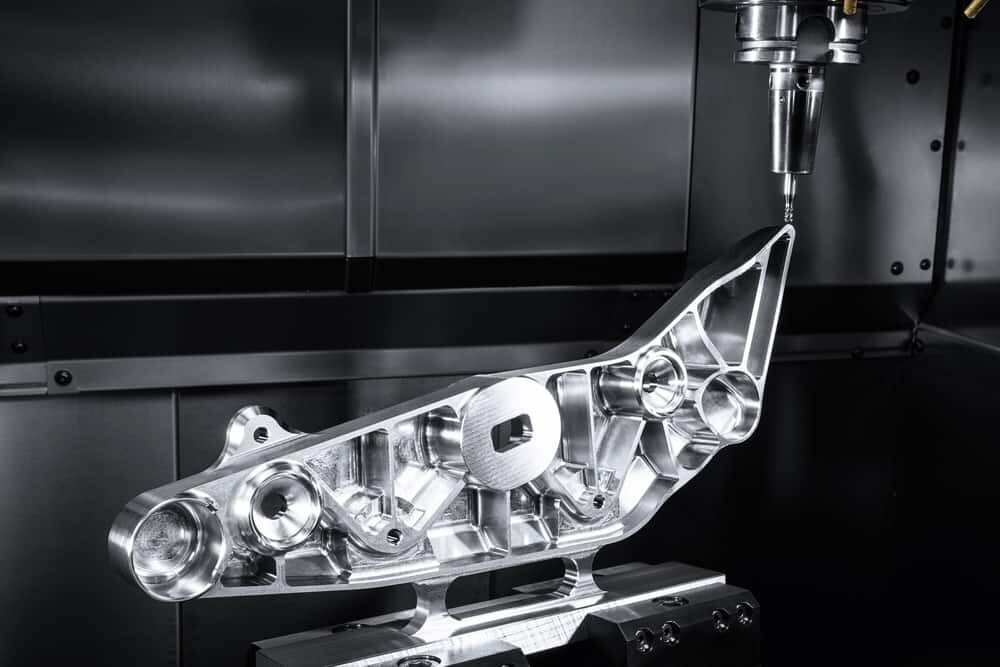
CNC machining is used across nearly every aerospace subsystem.
Common aerospace machined components include:
| Component | Aircraft System |
|---|---|
| Structural brackets | Airframe |
| Engine mounts | Propulsion |
| Turbine blades | Jet engines |
| Hydraulic valve bodies | Control systems |
| Landing gear components | Structural support |
| Satellite housings | Space systems |
Many of these components are machined from billet material to maintain structural integrity.
Inspection and Quality Control in Aerospace Machining
Inspection procedures for aerospace components are extremely comprehensive.
Typical inspection workflow:
- Raw material certification
- In-process dimensional checks
- Coordinate Measuring Machine (CMM) inspection
- Non-destructive testing (NDT)
- Final documentation package
Inspection tools include:
| Tool | Purpose |
|---|---|
| CMM | Dimensional measurement |
| Ultrasonic testing | Detect internal defects |
| Dye penetrant inspection | Surface crack detection |
| Optical measurement systems | Complex geometry verification |
Many aerospace suppliers also implement Statistical Process Control (SPC) to monitor manufacturing stability.
Cost Drivers and Design for Manufacturability in Aerospace Parts
Aerospace CNC machining can be expensive due to strict quality requirements and difficult materials.
Major cost drivers include:
| Factor | Cost Impact |
|---|---|
| Exotic materials | Titanium and Inconel cost more |
| Tight tolerances | Increased machining time |
| Multi-axis machining | Higher machine costs |
| Inspection requirements | Additional QC steps |
| Low production volumes | Limited economies of scale |
Engineers often apply Design for Manufacturability (DFM) principles such as:
- avoiding unnecessary tight tolerances
- minimizing deep cavities
- optimizing tool accessibility
These strategies help reduce production costs while maintaining required performance.
Why Choose Xavier for Aerospace CNC Machining
For aerospace manufacturers seeking reliable CNC machining partners, Xavier provides precision machining solutions tailored to demanding engineering applications.
Key advantages include:
- Advanced 3/4/5 Axis CNC machining centers
- Expertise in machining titanium, aluminum, and superalloys
- Tight tolerance capability down to ±0.005 mm
- Strict quality control aligned with aerospace manufacturing standards
- Flexible production from prototype to low-volume manufacturing
Whether producing aircraft structural components, UAV parts, or satellite housings, Xavier delivers high-precision aerospace machining backed by advanced manufacturing technology and experienced engineering teams.
If your project requires high-precision aerospace CNC machining, Xavier can provide reliable solutions from prototype development to full production.
Some of the images and text in this article are collected and compiled from the internet. If there is anything inappropriate, please contact us for processing.