What Is Swiss Turn Machining and Why It Matters
Swiss turn machining, also known as Swiss CNC machining or Swiss-type machining, is a highly precise and efficient manufacturing method used to produce small, intricate, and highly detailed parts that demand tight tolerances and consistency. It originated in Switzerland for the precision needs of watchmaking but has now expanded into advanced industrial sectors such as medical, aerospace, electronics, and automotive manufacturing.
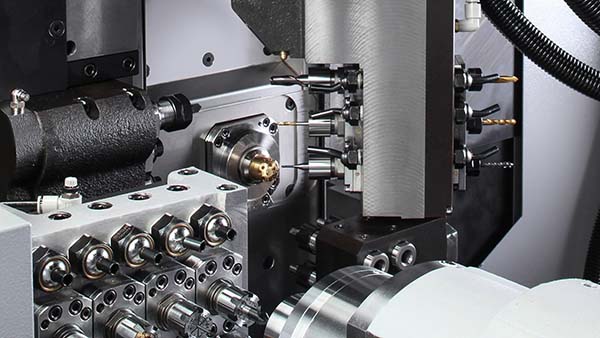
The defining feature of this process is the sliding headstock coupled with a guide bushing system that supports the bar stock very close to where cutting occurs. Unlike conventional CNC lathes where the workpiece is supported only at the chuck, the Swiss style keeps the material stable throughout machining — a critical advantage when working with long or slender components that are prone to deflection and vibration.
How Swiss Machining Works: The Sliding Headstock and Guide Bushing
Swiss turn machining relies on a specialized machine — the Swiss-type sliding headstock CNC lathe. Unlike traditional lathes where the tool moves to the part, Swiss machines feed the bar stock axially through a guide bushing, bringing the workpiece to the tools instead.
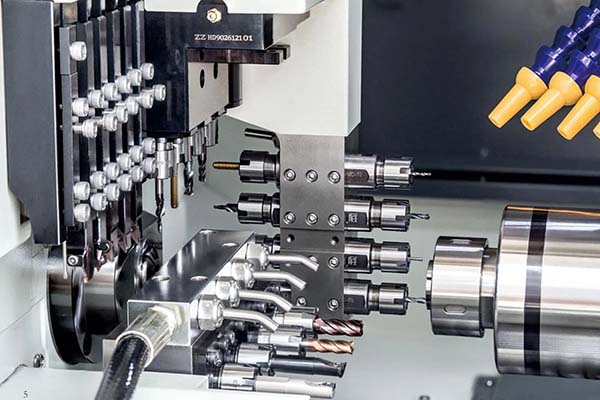
This mechanism reduces unsupported material length and minimizes deflection even on parts with high length-to-diameter ratios. Machines with multiple axes and live tooling also enable simultaneous milling, drilling, tapping, and threading, completing complex geometries in a single setup and reducing overall cycle time.
Precision and Tight Tolerances: What Swiss Turning Can Achieve
One of the strongest selling points of Swiss turn machining is the exceptional level of precision. Thanks to superior support at the cutting zone, Swiss machines maintain extremely tight tolerances and superior surface finishes. It’s common for precision Swiss machines to hold tolerances within ±0.0002 in (±0.005 mm) or better — far tighter than most traditional methods — and surface finishes can reach Ra below 0.2µm.
This precision makes Swiss machining ideal for parts where even minor dimensional errors can compromise function — such as medical implants, aerospace pins, and micro-connectors used in electronics.
Key Industries That Rely on Swiss Turn Machining
Swiss CNC machining has broad industrial relevance because of its ability to handle small, detailed parts with complex features. Key sectors include:
| Industry | Typical Parts |
|---|---|
| Medical Devices | Implants, surgical tool components |
| Aerospace | Precision pins, fuel system fittings |
| Electronics | Micro connectors, terminals |
| Automotive | Precision fasteners, sensor housings |
| Defense | Specialized hardware, firing pins |
Because of this versatility, Swiss machining is now considered a critical capability for high-performance manufacturing environments where quality and consistency directly affect product reliability.
Advantages Over Traditional CNC Turning
Swiss turn machining differs from conventional CNC turning in key ways that directly impact quality and productivity:
- Support and Stability: The guide bushing provides continuous support, reducing chatter and deflection common in long slender parts.
- Multi-Operation Functionality: Swiss machines integrate turning, milling, and drilling within one setup.
- Higher Throughput: Simultaneous operations reduce cycle times and often eliminate the need for secondary operations.
- Better Surface Finish: Stable cutting conditions produce superior surface quality, often removing grinding or finishing steps.
This combination makes Swiss machining more efficient, particularly for components where complex geometries and tight tolerances are required simultaneously.
Materials Best Suited for Swiss CNC Machining
Swiss turn machining supports an extensive range of materials depending on application needs:
| Material Type | Typical Use |
|---|---|
| Stainless Steels (303, 316) | Corrosion-resistant precision parts |
| Aluminum & Alloys | Lightweight, high strength components |
| Brass & Copper | Electrical contacts and connectors |
| Titanium & Nickel Alloys | Aerospace and high-temperature environments |
| Engineering Plastics | Insulators or lightweight components |
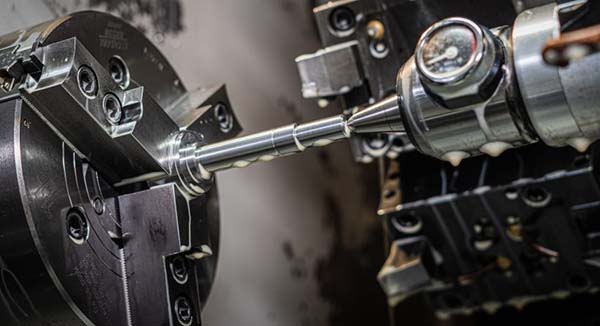
Each material presents different challenges regarding tool wear, heat control, and surface finish. Advanced Swiss machines equipped with live tools and appropriate coolant systems help optimize results across these varieties.
Swiss Machining Capabilities: Multi-Axis and Simultaneous Operations
Modern Swiss-type CNC machines go well beyond simple turning. With multi-axis and live tooling capabilities, operations such as cross-drilling, milling of flats, threading, and even contour machining can occur simultaneously within the same cycle.
For example, a part can be turned and drilled for cross-holes while being threaded and precision finished — all without removing it from the machine. This single-setup approach drastically reduces cycle time and potential dimensional errors.
Automation and Efficiency in High-Volume Production
Swiss turn machining excels in high-volume environments thanks to automatic bar feeders, advanced CNC programming, and automation integration. Machines can operate continuously with minimal human intervention, maintaining consistent precision and lowering per-part costs.
Automation also supports better chip control, reduced scrap, and easier scheduling for large production runs — a key consideration for industries like medical devices where batch sizes can exceed tens of thousands of pieces.
Cost-Benefit Perspective: When Swiss Turning Makes Sense
While Swiss CNC machines can be more expensive than conventional lathes, their cost efficiency becomes evident on the right part types. When parts have:
- Small diameters (typically below ~32 mm)
- Length-to-diameter ratios that cause deflection on conventional machines
- Multiple features requiring tight tolerances
Swiss machines can outperform other methods by reducing cycle times, eliminating secondary processes, and delivering higher yields — ultimately lowering total manufacturing cost per part.
Quality Control and Repeatability in Swiss Machining
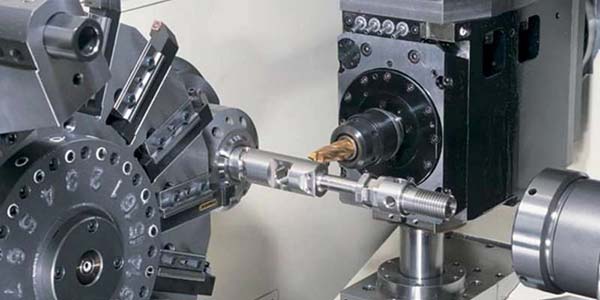
Swiss turn machining provides high repeatability, which means the first and thousandth part are produced with nearly identical precision. The guide bushing, CNC control, and automated feedback loops ensure parts stay within specified tolerances across large production runs — a must for both safety-critical and high-precision applications.
Quality protocols can include real-time inspection using in-machine sensors, offline CMM checks, and statistical process control (SPC), ensuring consistency and compliance with strict standards.
Xavier as Your Swiss Turn Machining Partner
For companies seeking a reliable and technologically advanced Swiss turn machining partner, Xavier delivers excellence from prototype to large-volume production. With state-of-the-art Swiss CNC machines, experienced programmers, and rigorous quality control, Xavier ensures every component meets the most demanding specifications. Whether your parts require ultra-tight tolerances, complex features, or high repeatability, Xavier’s expertise in Swiss machining provides a competitive edge — combining precision, efficiency, and production scalability you can trust.
Some of the images and text in this article are collected and compiled from the internet. If there is anything inappropriate, please contact us for processing.