Medical CNC Machining: Precision Engineering for Health and Safety
In modern healthcare manufacturing, medical cnc machining stands at the heart of producing critical medical devices and components. As the demand for precise, reliable, and biocompatible medical parts rises, CNC-based processes offer the accuracy, repeatability, and versatility needed to meet stringent medical standards. Companies like “Xavier” — a hypothetical brand — leverage these CNC capabilities to deliver high-quality medical parts, from surgical instruments to implants and diagnostic-device housings.
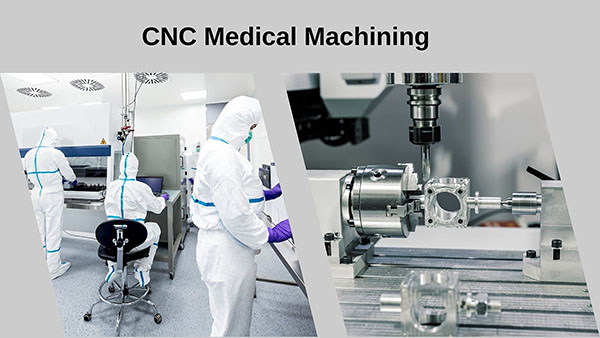
What is medical cnc machining
Medical cnc machining refers to the use of computer-controlled machining tools to produce components used in the medical industry — including surgical tools, implants, diagnostic equipment components, and prosthetics.
This process typically uses CNC milling, CNC turning, Swiss machining, or other subtractive techniques to shape raw materials (metal, plastic, or ceramic) into complex, high-precision parts suitable for medical use.
Why medical precision machining matters
In the medical field, even the smallest deviation can compromise safety or function. CNC-based production ensures extremely tight tolerances, high repeatability, and excellent surface finishes — all essential for medical components.
High Precision & Tight Tolerances
Medical CNC machining can achieve tolerances as strict as ±0.001 inches (about 25 microns) or even tighter, depending on the application. For implants, surgical instruments, and other medical parts, this level of precision helps ensure correct fit, proper function, and patient safety.
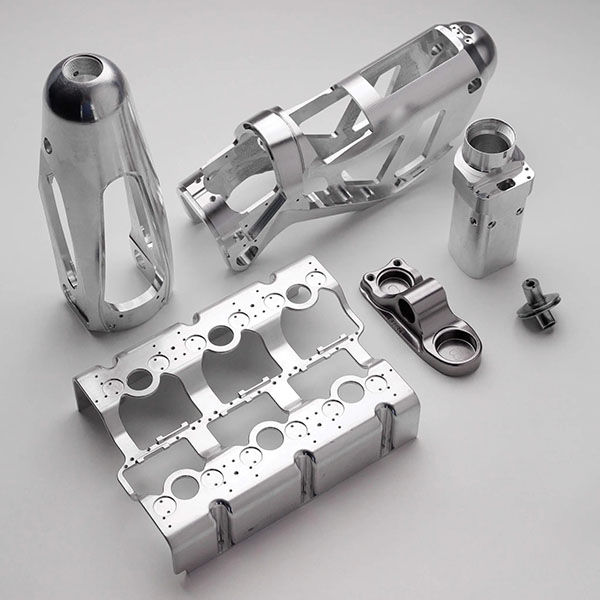
Material and Biocompatibility Versatility
Medical CNC machining supports a variety of materials commonly used in healthcare — such as surgical-grade stainless steel, titanium alloys, biocompatible plastics like PEEK, and sometimes ceramics — depending on device requirements. This versatility allows manufacturers to choose the best material for strength, sterilizability, biocompatibility, or weight depending on the application.
Complex Geometries and Customization
Medical devices often demand complex shapes and fine details — for example, intricate housings, tiny implant features, or patient-specific prosthetics. CNC machining enables creation of such complex geometries that would be difficult or impossible with traditional manufacturing methods. Additionally, for personalized medical devices or custom implants, CNC processes allow customization and rapid prototyping.
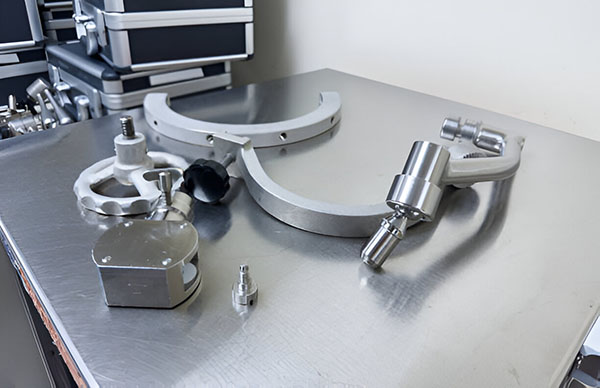
Scalability, Repeatability and Speed
Once programmed, CNC processes can produce identical parts in batches — whether small prototypes or large-volume production — with minimal variation. This repeatability is critical for consistent quality across parts, especially for implants or surgical instruments where safety is non-negotiable. CNC also enables faster turnaround from design to part, which accelerates medical device development cycles.
Main applications of medical CNC machining
The applications of medical device cnc machining span a broad range of medical tools, implants, and equipment components:
- Surgical instruments — such as forceps, clamps, scalpels, blade handles, saws, biopsy tubes: CNC machining can produce precise, sterilizable, durable instruments.
- Implants and orthopedic components — including bone plates, screws, hip or knee implants, spinal implants, custom prosthetics and other internal fixtures. CNC machining ensures implants match exact anatomical and biocompatible requirements.
- Diagnostic and medical equipment parts — housings, casings, frames and precision components used in diagnostic machines (imaging devices, lab equipment), surgical robots, or other medical hardware.
- Dental devices and implants — including crowns, abutments, prosthetic components, dental implant housings — benefiting from tight tolerance and customized CNC precision.
- Custom and small-batch medical components — for specialized or patient-specific medical devices, where one-off or low-volume manufacturing is required. CNC machining is particularly useful here because it doesn’t require large-scale tooling investments.
Challenges & Requirements in CNC medical manufacturing
While CNC brings many advantages, medical CNC machining also faces unique challenges:
- Regulatory compliance and traceability: Medical parts often must meet stringent cleanliness, biocompatibility, and documentation standards. Material traceability, process records, and often certification (e.g. ISO, FDA) are required.
- Material machinability: Many biocompatible materials — titanium, cobalt-chrome alloys, PEEK — can be difficult to machine, requiring careful toolpath design, optimal machining parameters, and sometimes specialized tooling.
- Surface finish and post-processing demands: Medical parts often need very smooth finishes (to avoid tissue irritation or contamination), tight tolerances, and sometimes additional finishing or sterilization-ready surfaces.
- Flexibility and small-batch production costs: For custom or low-volume parts, CNC machining remains more cost-effective than tooling-heavy methods, but the precision requirements still demand investment in high-quality equipment and quality control systems.
Why partner with a specialized CNC medical manufacturer
When you choose a dedicated cnc medical manufacturing partner such as “Xavier,” you benefit from:
- Expert knowledge in medical precision machining, including material selection, tolerance control, surface finish, and regulatory compliance.
- Capability to produce both prototypes and high-volume production runs — whether you need a handful of custom implants or thousands of standardized surgical instruments.
- Flexibility in materials (metals, plastics, etc.), and ability to handle complex geometries, small detailed parts, and stringent quality requirements.
- Process consistency, traceability, inspection, and documentation to meet medical-device standards, ensuring safety and reliability.
How medical cnc machining works: from CAD to finished component
The workflow of cnc machining medical parts typically follows:
- Digital design (CAD/CAM): Engineers design the part digitally, considering geometry, tolerances, and material — sometimes based on patient imaging or custom specifications for implants or prosthetics.
- Material selection: Choose biocompatible material (e.g., titanium, stainless steel, PEEK) suitable for the device’s mechanical, sterilization, and biocompatibility requirements.
- CNC programming and toolpath generation: The CAD model is converted into machine instructions (G-code) for CNC milling, CNC turning, Swiss-type turning, or other machining methods.
- Machining: CNC machine (mill, lathe, Swiss, multi-axis center) removes material to produce the precise shape. For complex shapes, multi-axis milling or Swiss machining may be used.
- Inspection & quality control: Tolerance and surface finish are checked. CNC medical manufacturing often includes inline inspection or post-machining measurement to ensure each part meets specifications.
- Post-processing & finishing: Polishing, cleaning, sterilization-ready finishing, or additional treatments may be applied depending on the device requirements.
- Packaging and documentation: For regulated medical devices, traceability, batch records, and clean assembly/packaging are essential.
The future of CNC machining in medical industry
As medical technology continues to advance — with personalized implants, minimally invasive surgical tools, and high-precision diagnostic devices — medical cnc machining will keep playing a foundational role. Emerging trends include increased use of biocompatible materials, micro-machining for smaller components, rapid prototyping for custom devices, and tighter integration with CAD/CAM and digital workflows.
Manufacturers that combine medical device cnc machining with rigorous quality control, material expertise, and flexible production — like “Xavier” — will be positioned to serve both standard and custom medical device needs, ensuring safety, reliability, and innovation in healthcare.
Xavier is a dedicated {medical cnc machining} manufacturer specializing in high-precision CNC production for a wide range of metal and plastic components. Our main expertise lies in contract CNC machining, and we support materials such as CNC aluminum machining, CNC stainless steel machining, CNC magnesium machining, CNC acrylic machining, CNC ABS machining, and CNC plastic machining for various custom applications. We also offer precision machining solutions for multiple industries, including CNC aerospace parts machining, CNC automotive parts machining, CNC marine component manufacturing, and medical parts machining. Our CNC machining services deliver excellent accuracy, dependable quality, high efficiency, and strong compatibility across diverse production needs. To meet post-processing requirements, we support a full range of finishing options such as sandblasting, hard anodizing, micro-arc oxidation, grinding, polishing, painting, black oxide, electroplating, vacuum coating, chemical plating, phosphating, passivation, silk printing, and texture etching. Our available surface treatments include anodizing, electroless nickel, zinc plating, chemical conversion coating, and electrolytic polishing. We provide comprehensive machining capabilities, including 5 axis milling, CNC milling services, CNC turning, Swiss turning services. As a global medical cnc machining supplier, we support both prototype work and mass-volume CNC manufacturing. For pricing inquiries or project consultation, feel free to contact us anytime.
Some content in this article is sourced from the internet. If there is any inappropriate content, please contact us for removal.