Mastering Machined Stainless Steel Parts: Precision, Challenges and Best Practices
Machined stainless steel parts are a vital component in modern manufacturing — from medical instruments to aerospace hardware — because stainless steel offers a unique combination of corrosion resistance, strength, and longevity. However, machining stainless steel requires understanding both the material’s strengths and its many challenges. Here, we examine how to effectively produce high-quality parts and why companies like Xavier lead in this demanding field.
What Makes Stainless Steel Ideal — and Difficult
Stainless steel is not just ordinary steel. By including chromium (and often nickel, molybdenum, nitrogen, or other alloying elements), stainless steel forms a passive surface layer that resists rust, oxidation, and chemical attack. This corrosion resistance, combined with high tensile strength and good mechanical properties, makes stainless steel ideal for parts exposed to harsh conditions — including marine, chemical processing, medical, and aerospace environments.
At the same time, stainless steel’s desirable characteristics create significant obstacles when machining. Its hardness and toughness make cutting more strenuous than with soft metals like aluminum. Moreover, stainless steel tends to work-harden: when the cutting tool rubs or lingers, the metal at the cut surface becomes even harder, increasing tool wear and degrading finish quality. In addition, stainless steel has relatively low thermal conductivity. During machining, heat tends to concentrate at the cutting zone rather than dissipate, which can damage tools or distort parts if not properly controlled.
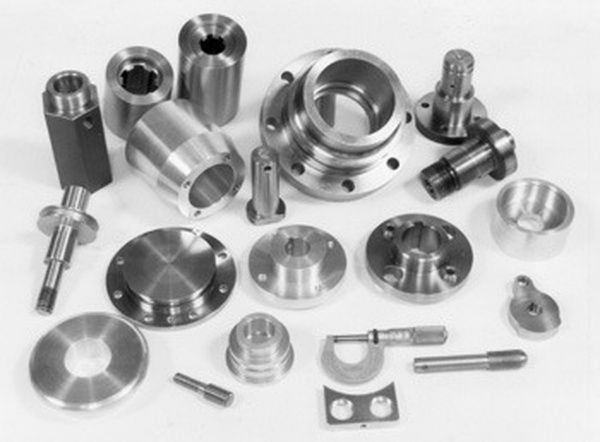
Thus, while stainless steel is ideal for strength and corrosion resistance, these same properties make its machining anything but trivial.
CNC Machining Stainless Steel Parts: Techniques & Best Practices
Selecting the Right Alloy and Tooling
Different stainless steel alloys behave very differently under the cutter. For example, 303 stainless steel — thanks to sulfur addition — is among the easiest to machine, making it suitable for screws, bushings, and fasteners. On the other hand, 304 or 316 stainless steel — common for food, medical or marine components — are more challenging: 304 tends to work-harden quickly, 316 has lower machinability and higher toughness, and may require specialized tools. In contrast, some 400-series or 416 stainless steels provide comparatively easier machining for shafts, valves or mechanical parts.
For successful machining, it is essential to choose tooling made of high-quality carbide or coated high-speed steel (HSS). These tools withstand the abrasive nature and high hardness of stainless steel. Carbide tools offer better wear resistance and longer life — especially for high-volume production — while HSS tools may be sufficient for smaller jobs or less demanding cuts.
Managing Heat, Feed & Chip Control
Because stainless steel holds heat near the cutting zone, controlling temperature is critical. Using flood coolant or high-pressure mist cooling, flood lubrication, and continuously circulating cutting fluid are common and effective strategies. Dry machining is generally discouraged unless using advanced coated tools — because lack of coolant dramatically increases heat, tool wear, and risk of surface defects.
Cutting parameters must be optimized: use moderate cutting speeds (often much lower than for aluminum), balanced feed rates, and moderate depth of cut. Avoid slow “rubbing” passes that cause work hardening; instead maintain a steady, aggressive, but controlled cut. For roughing passes, heavier cuts at slower speed may work; final finishing passes require lighter depth and slower feed for better surface quality.
Chip control is also important. Stainless steel tends to produce long, stringy chips that can wrap around tools, clog flutes, or scratch the part surface. Use chip breakers, pecking drills, and optimized tool paths. For drilling or tapping, peck drilling and spiral-flute taps help evacuate chips and reduce risk of galling. Use rigid machine setups and minimize tool overhang to reduce vibration, improve accuracy, and avoid deflection.
Achieving Precision, Finish Quality and Repeatability
When done correctly, CNC machining of stainless steel parts delivers exceptional precision and repeatability — tolerances as tight as ±0.001″ are common, suitable for high-precision mechanical components. With the right tooling, coolant, and parameter control, surface finishes can be smooth, clean and corrosion-resistant.
Post-processing (if needed) — like polishing, sand-blasting, or brushing — can further enhance surface appearance, remove machining marks, improve corrosion resistance or achieve required aesthetic or functional finish.
Because of stainless steel’s durability and resistance to corrosion, parts produced this way — from screws to complex components — enjoy long service life, minimal maintenance, and reliable performance even in demanding environments.
💡 Why Choose a Specialist Like Xavier for Machined Stainless Steel Parts
Companies like Xavier focus exclusively on stainless steel machining, making them well-suited for challenging jobs. Their expertise allows them to:
- Recommend the optimal stainless steel grade for each application (e.g. choosing 303 for fasteners, 316 for corrosion-intensive environments).
- Use properly coated carbide or HSS tooling, and maintain tool sharpness to prolong tool life and ensure consistent quality.
- Optimize machining parameters: cutting speeds, feed rates, depth of cut, coolant flow — minimizing work-hardening, heat effects, and tool wear.
- Implement chip control strategies (chip breakers, peck drilling, high-pressure coolant) and rigid setups to ensure dimensional accuracy, surface integrity, and efficient production.
- Deliver parts with precise tolerances, consistent repeatability, high corrosion resistance and durable finish — essential for industries like aerospace, medical, marine, or food processing.
If you need high-quality machined stainless steel parts — from simple screws to complex custom components — relying on a specialist like Xavier can significantly reduce lead time, scrap rate, and production cost, while ensuring quality and reliability.
✅ Conclusion
Machined stainless steel parts represent a union of material excellence and manufacturing challenge. Stainless steel offers unmatched strength, corrosion resistance and durability, making it a material of choice for demanding applications.
At the same time, its hardness, tendency to work-harden, low thermal conductivity, and chip behavior make CNC machining significantly more complex than machining softer metals.
However, with correct alloy selection, high-quality tooling, optimized cutting parameters, effective coolant/lubrication, rigid machine setup and skilled craftsmanship — such as those provided by vendors like Xavier — it is entirely possible to produce high-precision, high-quality stainless steel parts with excellent surface finish and reliability.
For anyone requiring robust, long-lasting metal components — from screws to valves to prosthetic components — CNC machining of stainless steel parts remains a premier manufacturing method when done right.
Some of the images and text in this article are collected and compiled from the internet. If there is anything inappropriate, please contact us for processing.
Xavier is a global manufacturer specializing in CNC machining services, mainly producing a wide range of machined stainless steel parts and other precision metal components. Our capabilities cover multiple materials using advanced CNC technologies, including
CNC machining aluminum,
CNC machining stainless steel,
CNC machining magnesium alloy,
CNC machining acrylic,
CNC machining ABS, and CNC machining plastics.
We also support precision component manufacturing for various industries, such as
CNC aerospace parts machining,
CNC automotive parts machining,
CNC medical parts machining, and other sectors that require high accuracy, fast turnaround, and stable quality.
Our machining capabilities include a complete selection of services, such as
5 axis milling,
CNC milling services,
CNC turning services,
Swiss turning services.
To ensure excellent surface quality and performance, we provide a full list of finishing operations, including
anodizing,
electroless nickel plating,
zinc plating, passivation and electropolishing, and chemical conversion coating.
As a worldwide CNC machining manufacturer, Xavier supports both prototype and mass production. If you need high-quality machined stainless steel parts or want to inquire about CNC machining service pricing, feel free to contact us anytime.
Some of the images and text in this article are collected and compiled from the internet. If there is anything inappropriate, please contact us for processing.