Grade 2 vs Grade 5 Titanium: Properties, Strength, Machining, and Real-World Applications
Titanium is one of the most important engineering metals used in aerospace, medical, marine, and high-performance manufacturing. Among the many titanium grades available, Grade 2 titanium and Grade 5 titanium (Ti-6Al-4V) dominate the global market and account for a large portion of industrial titanium usage.
Although both materials share titanium’s well-known characteristics—such as high strength-to-weight ratio, corrosion resistance, and biocompatibility—their performance differs significantly due to differences in chemical composition and microstructure.
This guide explores the technical differences between Grade 2 vs Grade 5 titanium, using engineering data, tables, examples, and machining insights to help engineers, buyers, and manufacturers choose the right material.
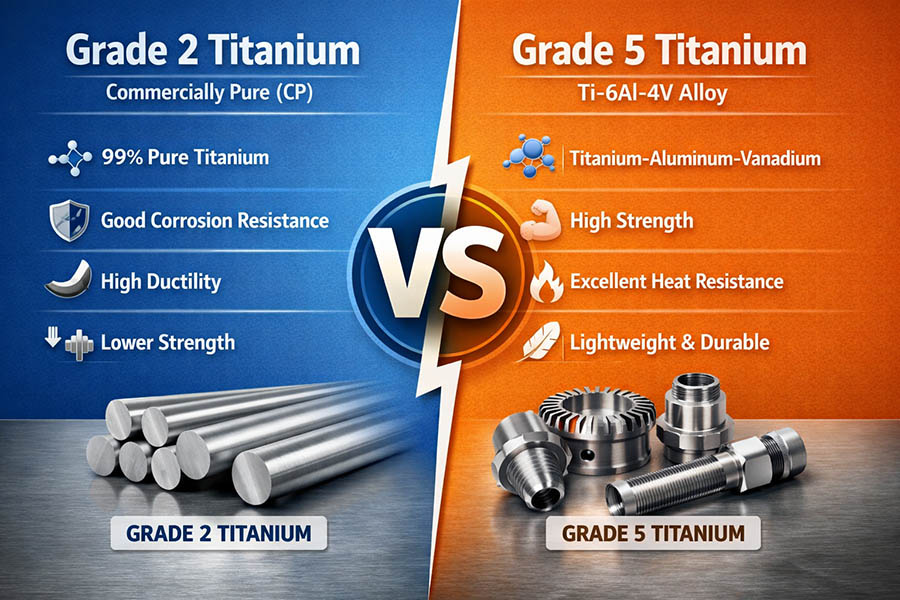
What Are Grade 2 and Grade 5 Titanium?
Before comparing them, it is important to understand how these two materials are classified.
Grade 2 Titanium
- Classified as commercially pure titanium (CP titanium)
- Contains about 98.9% titanium with trace elements like iron and oxygen
- Known for excellent corrosion resistance and ductility
Grade 5 Titanium (Ti-6Al-4V)
- An alpha-beta titanium alloy
- Composition: roughly 6% aluminum + 4% vanadium
- Offers significantly higher strength and heat resistance
In simple terms:
| Material | Type | Key Feature |
|---|---|---|
| Grade 2 | Commercially Pure Titanium | Corrosion resistance and formability |
| Grade 5 | Titanium Alloy (Ti-6Al-4V) | High strength and fatigue resistance |
Because of these differences, Grade 2 is often considered the industrial corrosion-resistant titanium, while Grade 5 is the high-performance structural titanium.
Chemical Composition Differences
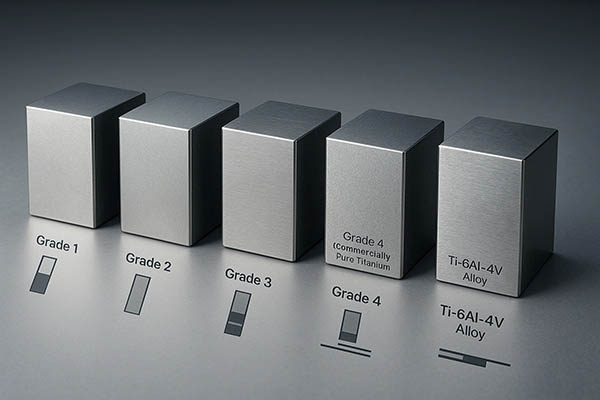
The most fundamental difference between these two grades lies in their chemical composition. Alloying elements significantly influence mechanical strength, heat resistance, and fatigue behavior.
| Element | Grade 2 Titanium | Grade 5 Titanium |
|---|---|---|
| Titanium (Ti) | ≥ 98.9% | Balance |
| Aluminum (Al) | — | 5.5 – 6.75% |
| Vanadium (V) | — | 3.5 – 4.5% |
| Iron (Fe) | ≤ 0.30% | ≤ 0.40% |
| Oxygen (O) | ≤ 0.25% | ≤ 0.20% |
Grade 2’s high purity results in better corrosion resistance and ductility. Grade 5’s aluminum and vanadium additions dramatically increase strength and fatigue resistance.
For example:
- Aluminum stabilizes the alpha phase, increasing strength and heat resistance.
- Vanadium stabilizes the beta phase, improving toughness and fatigue life.
This dual-phase structure is the reason Ti-6Al-4V became the most widely used titanium alloy globally.
Mechanical Properties Comparison
When selecting materials for engineering components, mechanical performance is usually the deciding factor.
| Property | Grade 2 Titanium | Grade 5 Titanium |
|---|---|---|
| Tensile Strength | ~345 MPa | ~895 MPa |
| Yield Strength | ~275 MPa | ~828 MPa |
| Elongation | ~20% | ~10% |
| Hardness | HRB 70–80 | HRC 30–36 |
| Fatigue Strength | ~240 MPa | ~510 MPa |
Grade 5 titanium is roughly 2.5–3× stronger than Grade 2.
However, the trade-off is ductility:
- Grade 2: softer, easier to bend and form
- Grade 5: stronger but more brittle and harder to process
Example:
- A chemical processing pipe benefits from Grade 2 because flexibility and corrosion resistance are more important than extreme strength.
- An aircraft structural bracket requires Grade 5 because it must withstand heavy loads.
Physical Properties and Thermal Behavior
Although their mechanical properties differ significantly, their physical properties are relatively similar.
| Property | Grade 2 | Grade 5 |
|---|---|---|
| Density | 4.51 g/cm³ | 4.43 g/cm³ |
| Melting Point | 1665°C | 1660°C |
| Elastic Modulus | 103 GPa | 113.8 GPa |
| Thermal Conductivity | 16 W/m·K | 6.7 W/m·K |
Two important insights from this data:
- Weight difference is negligible
Both grades maintain titanium’s lightweight advantage compared with steel. - Grade 5 has lower thermal conductivity
This is why heat concentrates during machining operations.
This factor directly affects CNC machining performance.
Corrosion Resistance in Marine and Chemical Environments
Titanium is famous for corrosion resistance because it naturally forms a protective oxide layer (TiO₂) on its surface.
However, Grade 2 generally performs slightly better in highly corrosive environments.
Grade 2 advantages:
- Excellent resistance to seawater corrosion
- Resistant to chloride environments
- Stable in oxidizing acids
Grade 5 advantages:
- Still highly corrosion-resistant
- Performs better under mechanical stress and elevated temperature
Therefore:
| Environment | Better Choice |
|---|---|
| Chemical processing plants | Grade 2 |
| Marine pipelines | Grade 2 |
| Aerospace structures | Grade 5 |
| High-stress fasteners | Grade 5 |
Grade 2 is widely used for heat exchangers, desalination plants, and chemical tanks, while Grade 5 is used in aerospace structures and high-performance machinery.
Machinability and CNC Processing Considerations
From a CNC machining perspective, titanium is already difficult to process due to:
- Low thermal conductivity
- High chemical reactivity
- Strong work-hardening behavior
But the machining challenges differ between the two grades.
| Machining Factor | Grade 2 | Grade 5 |
|---|---|---|
| Hardness | Lower | Higher |
| Tool Wear | Moderate | High |
| Heat Generation | Medium | High |
| Formability | Excellent | Poor |
Grade 2 machining characteristics:
- Softer but “gummy”
- Chips tend to stick to tools
- Requires sharp tools and coolant
Grade 5 machining characteristics:
- Harder material
- Generates intense heat
- Rapid tool wear
Because of these challenges, machining parameters typically include:
Example CNC milling parameters:
| Material | Cutting Speed | Feed Rate |
|---|---|---|
| Grade 2 Ti | 60–90 m/min | Moderate |
| Grade 5 Ti | 40–70 m/min | Lower |
In many aerospace projects, manufacturers prefer 5-axis CNC machining to maintain precision while minimizing heat buildup.
Temperature Resistance and Structural Stability
Temperature tolerance is another major difference.
| Temperature Limit | Grade 2 | Grade 5 |
|---|---|---|
| Continuous service | ~315°C | ~400°C |
| Short-term exposure | ~350°C | ~600°C |
Grade 5 maintains structural strength at higher temperatures due to its alloy composition.
Example applications:
Grade 2
- Chemical reactors
- Marine hardware
- Heat exchanger tubing
Grade 5
- Jet engine components
- Automotive racing parts
- Aerospace structural brackets
Typical Industrial Applications
Different properties lead to completely different industry usage.
Grade 2 Titanium Applications
- Chemical processing equipment
- Marine piping systems
- Medical instruments
- Architectural cladding
- Heat exchangers
Grade 5 Titanium Applications
- Aerospace components
- Aircraft fasteners
- Medical implants
- Performance automotive parts
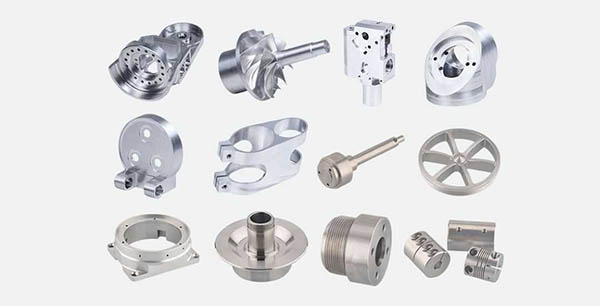
- High-strength CNC machined components
For example:
An aircraft landing gear component must withstand extreme cyclic loads. Engineers therefore choose Grade 5 titanium due to its fatigue strength.
In contrast, a desalination plant heat exchanger benefits more from Grade 2 titanium, which resists seawater corrosion for decades.
Cost Differences and Material Availability
Material cost also influences engineering decisions.
Typical price relationship:
Grade 5 titanium often costs 20–40% more than Grade 2.
Reasons include:
- Alloying elements (Aluminum and Vanadium)
- More complex production
- Harder machining process
Cost comparison factors:
| Cost Factor | Grade 2 | Grade 5 |
|---|---|---|
| Raw Material | Lower | Higher |
| Machining Cost | Moderate | High |
| Forming Cost | Low | High |
However, engineers rarely choose titanium based only on price. The performance-to-weight ratio usually justifies the investment.
How to Choose Between Grade 2 and Grade 5 Titanium
A simple engineering rule can help decision-making.
Choose Grade 2 titanium if your project requires:
- Maximum corrosion resistance
- Excellent weldability
- Easy forming
- Moderate strength
Choose Grade 5 titanium if your application needs:
- High structural strength
- Superior fatigue resistance
- Lightweight high-load components
- Aerospace-grade performance
In practice:
- Chemical industry → Grade 2
- Aerospace industry → Grade 5
Why Precision CNC Machining Matters for Titanium Components
Titanium alloys demand specialized machining expertise. Improper cutting conditions can cause:
- Tool failure
- Surface tearing
- Thermal deformation
- Poor dimensional accuracy
Professional CNC manufacturers optimize:
- Toolpath strategies
- High-pressure coolant systems
- Carbide or coated cutting tools
- Multi-axis machining processes
These techniques ensure tight tolerances and surface quality, especially when machining complex Grade 5 aerospace components.
Xavier Precision Manufacturing Recommendation
If your project involves Grade 2 or Grade 5 titanium CNC machining, working with an experienced manufacturer is essential.
Xavier Precision Manufacturing specializes in:
- 3/4/5-Axis CNC titanium machining
- Aerospace-grade Ti-6Al-4V components
- Medical-grade titanium parts
- Low-volume prototypes and mass production
With advanced machining centers and optimized cutting strategies, Xavier can manufacture complex titanium parts with excellent dimensional accuracy, superior surface finish, and consistent quality.Grade 2 Titanium Machining,Grade 5 Titanium Machining
Whether you need corrosion-resistant Grade 2 components or high-strength Grade 5 aerospace parts, Xavier provides a reliable manufacturing solution for demanding industries. grade 2 vs grade 5 titanium
Some of the images and text in this article are collected and compiled from the internet. If there is anything inappropriate, please contact us for processing.