Custom Copper Parts Machining: Key Considerations for High-Performance Precision Components
Custom copper parts machining plays a critical role in industries where excellent electrical conductivity, thermal performance, and precision are required. From electronics and power systems to industrial equipment and aerospace applications, copper and copper alloys remain essential materials for high-performance components.
However, copper is not an easy material to machine. Its softness, ductility, and thermal characteristics introduce unique challenges that demand experience, proper tooling, and optimized processes. Choosing the right custom copper parts machining manufacturer or custom copper parts machining supplier can directly impact product quality, lead time, and overall cost.
This article explores the most important technical, material, and application factors to consider when sourcing custom copper machining services, while also addressing custom copper parts machining price considerations from a manufacturing perspective.
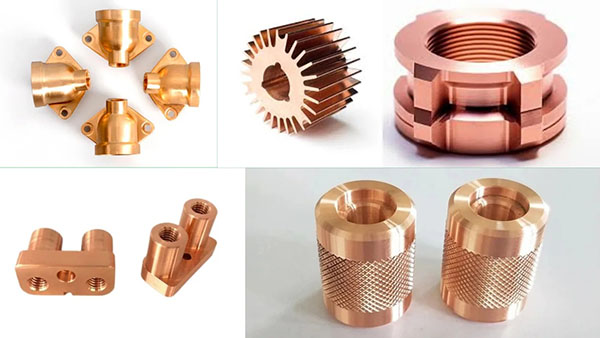
Understanding Copper Materials in Custom Machining
One of the first steps in custom copper parts machining is selecting the appropriate copper grade or alloy. Each type of copper offers different mechanical and electrical characteristics that affect machinability and end-use performance.
Pure copper grades such as C101 and C110 provide outstanding electrical and thermal conductivity, making them ideal for electrical contacts, bus bars, and heat dissipation components. However, pure copper is extremely soft and prone to deformation, tool adhesion, and poor chip control during machining.
Copper alloys, including brass, bronze, and beryllium copper, offer improved strength and machinability while maintaining good conductivity. These materials are often preferred when complex geometries, tight tolerances, or higher structural strength are required.
An experienced custom copper parts machining supplier will evaluate application requirements and recommend materials that balance performance, manufacturability, and cost.
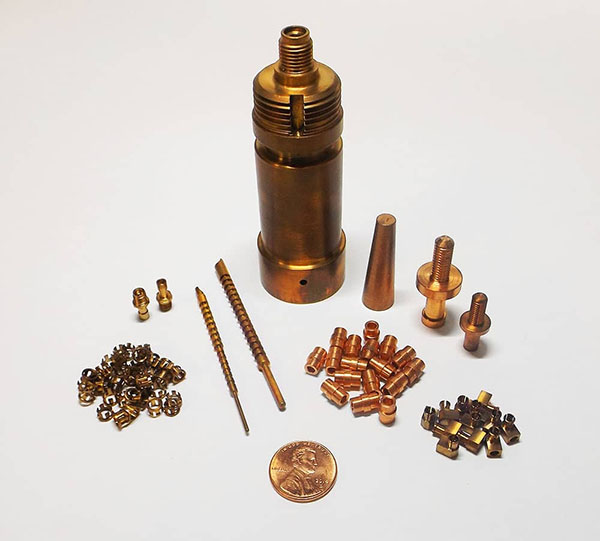
Machining Challenges in Custom Copper Parts Machining
Custom copper parts machining presents several technical challenges that differ from machining steel or aluminum.
Copper tends to generate long, continuous chips that can wrap around cutting tools, affecting surface quality and process stability. Tool adhesion, also known as built-up edge, is another common issue that accelerates tool wear and reduces dimensional accuracy.
Heat management is equally important. Although copper conducts heat efficiently, localized heat buildup at the cutting edge can still lead to tool degradation if cutting parameters are not properly optimized.
To address these challenges, professional manufacturers rely on sharp carbide tooling, optimized tool geometry, controlled cutting speeds, and consistent coolant application. These measures improve chip evacuation, extend tool life, and enhance surface finish.
Tooling, Fixtures, and Process Control
Precision tooling and rigid fixturing are essential in custom copper parts machining. Because copper is soft, excessive clamping force can easily deform the workpiece, especially in thin-walled or delicate designs.
Soft jaws, protective inserts, and custom fixtures are commonly used to distribute clamping pressure evenly. This approach helps maintain dimensional accuracy throughout the machining process.
Advanced CNC equipment, including 3-axis, 4-axis, and 5-axis machining centers, enables complex geometries to be completed in fewer setups. Reducing repositioning improves accuracy and shortens production cycles, which directly influences the custom copper parts machining price.
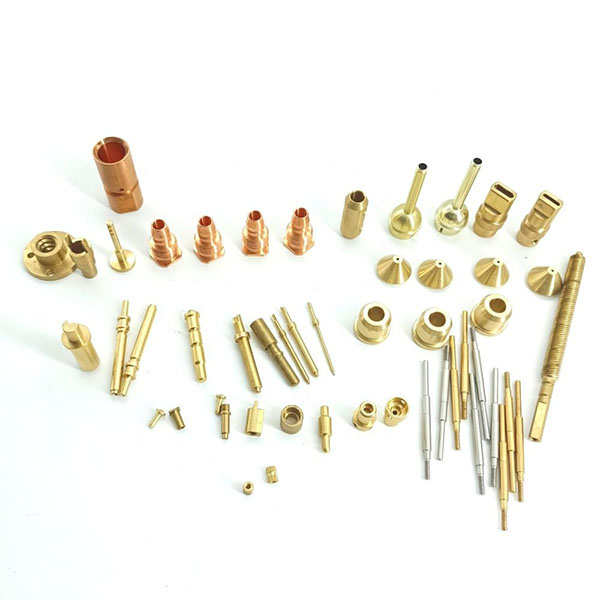
Surface Finish and Post-Processing Requirements
Many custom copper parts require high-quality surface finishes for functional or aesthetic reasons. Electrical components may demand ultra-smooth surfaces to reduce resistance, while visible components may require cosmetic polishing.
Post-processing options include deburring, polishing, grinding, and surface treatments such as nickel plating, silver plating, or gold plating. These processes enhance corrosion resistance, wear performance, and electrical conductivity.
A reliable custom copper parts machining manufacturer will clearly define surface finish specifications during the design review stage to avoid unnecessary rework or cost increases later.
Tolerance Control and Quality Assurance
Precision tolerance control is a defining factor in custom copper parts machining, particularly in electronics, RF systems, and aerospace components. Tight tolerances require stable machining conditions, accurate inspection equipment, and experienced operators.
Design for Manufacturability (DFM) analysis is often conducted before production begins. This evaluation identifies potential risk areas, such as thin features, deep cavities, or tight internal corners, and suggests design adjustments to improve machining reliability.
Quality assurance processes typically include dimensional inspection, material certification, and traceability documentation. These measures are especially important when working with high-value copper alloys.
Applications of Custom Copper Parts Machining
Custom copper parts machining supports a wide range of industries that depend on copper’s physical properties.
In the electrical and electronics sector, copper components are used in connectors, terminals, grounding systems, bus bars, and heat sinks. These applications demand high conductivity and consistent dimensional accuracy.
Industrial equipment manufacturers rely on copper parts for fluid handling systems, heat exchangers, and specialized fittings where thermal efficiency and corrosion resistance are essential.
In aerospace and high-precision industries, copper alloys are used for sensor housings, conductive elements, and specialized mechanical components that require both performance and reliability.
Across all these sectors, working with an experienced custom copper parts machining supplier ensures that application-specific requirements are fully understood and met.
Custom Copper Parts Machining Price: What Influences Cost?
The custom copper parts machining price is influenced by several key factors. Material selection plays a significant role, as pure copper and specialty alloys differ greatly in raw material cost.
Part complexity, tolerance requirements, and surface finish specifications also impact machining time and tooling consumption. Multi-axis machining and tight tolerances typically increase production costs but may reduce assembly steps and long-term operational risk.
Order volume is another major factor. Prototypes and low-volume runs often have higher per-unit costs due to setup time, while higher volumes benefit from process optimization and economies of scale.
Transparent communication with a trusted custom copper parts machining manufacturer helps balance performance requirements with budget constraints.
Choosing the Right Custom Copper Parts Machining Partner
Selecting the right manufacturing partner is critical to project success. A qualified supplier should demonstrate expertise in copper materials, CNC machining processes, and quality management systems.
Xavier specializes in custom copper parts machining, providing end-to-end support from material selection and DFM analysis to precision machining and final inspection. With advanced CNC capabilities and strict quality control, Xavier serves global customers across electrical, industrial, and high-precision markets.
A dependable custom copper parts machining supplier not only delivers parts but also provides technical insight that improves design efficiency and long-term performance.
Xavier is a professional CNC machining manufacturer focused on precision metal components and custom copper parts machining. We support CNC machining aluminum, CNC machining stainless steel, CNC machining magnesium alloy, CNC machining acrylic, and CNC machining ABS, delivering high-accuracy parts for aerospace, automotive, and medical industries.
With advanced equipment and experienced engineers, our CNC machining services ensure high precision, fast lead times, stable quality, and strong material compatibility. We specialize in custom copper parts machining for CNC aerospace parts machining, CNC automotive parts machining, and medical parts machining, covering both prototypes and mass production.
Our machining capabilities include 5 axis milling, CNC milling services, CNC turning services, and Swiss turning services. For surface finishing, we offer anodizing, electroless nickel plating, polishing, sandblasting, and other customized treatments.
As a global CNC machining service provider, Xavier supplies reliable custom copper parts machining at competitive prices. For bulk CNC machining services or price inquiries, feel free to contact us.
Some of the images and text in this article are collected and compiled from the internet. If there is anything inappropriate, please contact us for processing.