Copper Machined Parts: Precision CNC Copper Components for Electronics, Thermal, and Mechanical Uses
What Are Copper Machined Parts — Precision Copper Components Through CNC and Machining
Copper machined parts refer to components made from copper (or copper alloys) that have been shaped, milled, turned, drilled or otherwise processed via machining methods — typically CNC (computer numerical control) milling, turning, or lathe operations. Rather than casting or stamping, machining provides higher precision, tighter tolerances, and flexibility for custom designs.
Because copper has unique material properties — high electrical and thermal conductivity, corrosion resistance, good ductility — machining copper enables production of parts suited for electrical, thermal, mechanical or decorative applications. Using advanced copper processing machine tools, engineers can realize complex geometries, tight fits, and components that meet demanding functional requirements.
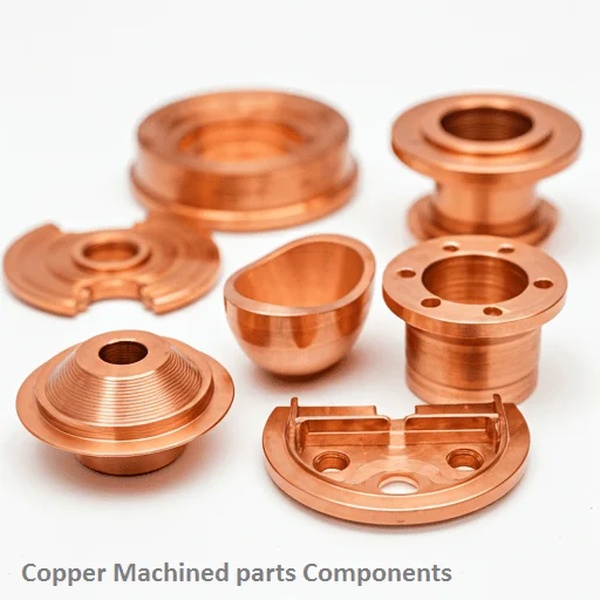
When executed properly, copper machining combines copper’s natural advantages with modern machining precision, resulting in reliable, high-performance copper components.
Why Copper — Advantages That Make Copper Machined Parts Valuable
Excellent Conductivity & Thermal Performance
One of the key reasons copper is widely used is its superior thermal and electrical conductivity.
Copper machined parts thus naturally excel in applications such as heat sinks, heat exchangers, electrical connectors, grounding bars, and other components where efficient heat or current transfer is critical.
Machinability & Flexibility
Despite being a metal, copper is relatively soft and ductile compared to steels, which makes it more amenable to precise machining. Its ductility and formability allow for complex shapes, fine details, and custom designs — whether through milling, turning, drilling, or lathe work. This flexibility is a core advantage when you need bespoke copper parts rather than standard stock components.
Corrosion Resistance & Durability
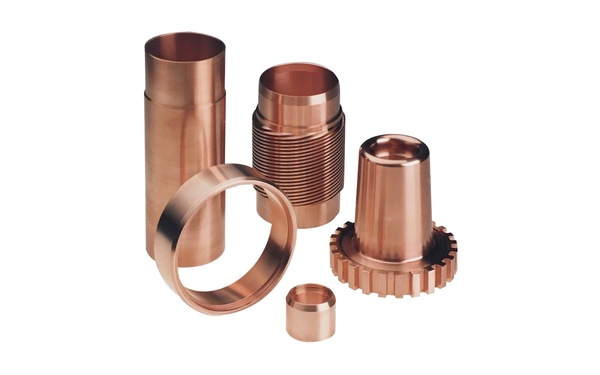
Copper and many of its alloys resist corrosion, which is valuable for components exposed to moisture, environmental stress, or variable temperatures. Machined copper parts thus can maintain conductivity and structural integrity even under harsh conditions — whether used in plumbing, marine, electrical, or industrial systems.
Precision, Tight Tolerances & Repeatability
Using CNC-based copper processing machine centers, manufacturers can produce copper machined parts with tight tolerances, consistent dimensions, and high repeatability. For both single custom parts and batch production, this precision ensures reliability and quality, critical for industries like electronics, aerospace, medical devices, and thermal management systems.
Challenges & Considerations in Copper Machining
Although copper offers many advantages, machining copper is not trivial — it brings several challenges that engineers and machinists must address.
- Softness and chip-forming issues: Because copper is soft and ductile, during cutting it can form sticky or gummy chips. These chips may adhere to cutting tools, leading to burrs, rough surface finish, or tool wear.
- Heat and thermal expansion: Copper’s high thermal conductivity means heat from machining quickly conducts — but this can lead to thermal expansion, affecting dimensional accuracy or causing warping, especially for thin-walled or precision parts.
- Material cost and scrap sensitivity: Copper tends to be more expensive than many metals; mistakes or scrap due to incorrect parameters, burrs, or poor chip control can raise costs significantly.
- Slower machining speed compared to some metals: To avoid thermal and deformation issues, machining often needs to be carefully controlled (tooling, speed, coolant, feeds), which can slow down production relative to easier-to-machine metals like aluminum.
Because of these challenges, successful production of high-quality copper machined parts requires experienced machinists, appropriate equipment (copper lathe, CNC mills, copper processing machine setups), and good process control.
Typical Processes & Machinery — From Copper Lathe to CNC Milling
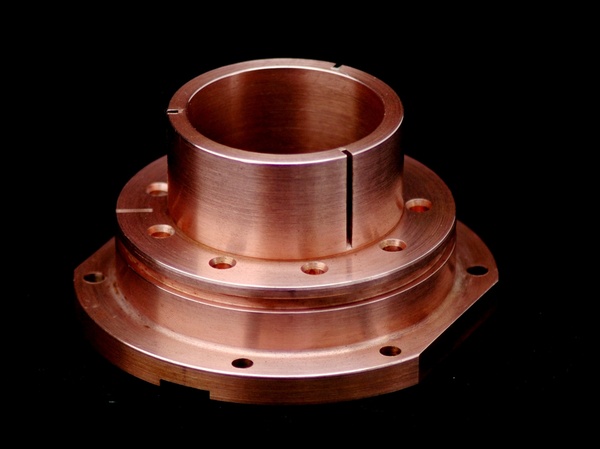
Machining copper involves several processes and types of equipment, depending on the part geometry, complexity and application:
- CNC Milling: Using multi-axis mills to create complex geometries — cavities, slots, custom shapes — especially for parts like housings, heat sinks, plates, manifolds, and structural components.
- CNC Turning (Copper Lathe): For cylindrical parts — rods, shafts, bushings, connectors, screw-like parts — CNC turning on a copper lathe allows high precision, repeatability and tight tolerances.
- Drilling, Threading, Finishing: Machined copper parts may be drilled, tapped or threaded; then post-processed (polishing, electropolishing, plating, media-blasting) to improve surface quality, conductivity, corrosion resistance and appearance.
- Use of Specialized Copper Processing Machine Equipment: Because copper behaves differently from harder metals, machinists often use CNC machines optimized for soft metals, with coolant flow, sharp carbide or coated tools, controlled feed/speed, chip evacuation and well-designed fixturing.
This range of processes and machinery — from copper lathe turning to multi-axis CNC mills — enables production of a wide variety of copper machined parts, tailored to application, function, and design requirements.
Applications of Copper Machined Parts — Where They Make a Difference
Thanks to copper’s material advantages and machining versatility, copper machined parts are found in many industries:
- Electrical & Electronics: Connectors, terminals, bus bars, grounding plates, contacts, electronic housings — for applications where high conductivity is essential.
- Industrial Machinery & Mechanical Components: Fittings, valves, hydraulic or fluid components, connectors, bushings, mechanical parts requiring corrosion resistance and durable conductivity.
- Medical & Aerospace: Precision components, housings, conductive parts for medical devices or aerospace systems, where reliability, precision, and corrosion resistance are required.
- Custom Hardware & Prototyping: When a bespoke copper part is needed — with custom geometry, tight tolerances or special finish — machining offers flexibility and precision that casting or stamping can’t match.
In all these scenarios, copper machined parts combine copper’s natural advantages with precision manufacturing — enabling high performance, reliability, and custom design.
Why Choose a Skilled Machining Service Like “Xavier” for Copper Parts
When quality, precision, and consistency matter, working with an experienced machining provider — here we use “Xavier” as a placeholder brand — can make all the difference. A capable service like Xavier would offer:
- Expertise with copper materials and copper alloys (e.g. pure copper, alloyed copper) — selecting the right grade for conductivity, strength, machinability or corrosion resistance.
- Proper copper processing machine equipment and tooling (sharp carbide or coated cutters, coolant systems, chip control) to manage copper’s softness and prevent tool wear or burrs.
- CNC milling, turning (copper lathe), drilling, threading — and finishing processes (polishing, electropolishing, plating, media blasting) depending on end-use requirements.
- Quality control and consistency: tight tolerances, repeatable machining, precise dimensions, and reliable surface finish.
- Flexibility — from small-volume prototypes to batch production; from simple parts to complex geometries; from mechanical components to electrical and thermal systems.
With such a partner, clients can leverage copper’s advantages — conductivity, thermal performance, corrosion resistance — while avoiding common pitfalls of copper machining, ensuring high-quality copper machined parts that meet demanding specifications.
Conclusion — The Strategic Value of Copper Machined Parts in Modern Manufacturing
In today’s engineering landscape, copper machined parts stand out as a versatile, high-performance solution when standard parts cannot meet design, precision or functional requirements. By combining copper’s intrinsic material advantages — conductivity, thermal performance, corrosion resistance, machinability — with modern machining techniques (CNC milling, copper lathe turning, finishing), manufacturers and designers gain the ability to realize complex, custom components for electronics, thermal management, mechanical systems, aerospace, medical devices and beyond.
Yet the success of copper machining depends heavily on expertise: appropriate material selection, tooling, machining parameters, finishing and quality control. When done right — with a skilled service provider like “Xavier” — copper machined parts deliver long-term reliability, performance, and flexibility that few other materials or processes can match.
Whether you need a single custom part or a full production run, copper machined parts offer a path to precision, performance, and customization.
Xavier is a professional manufacturer specializing in copper machined parts and CNC machining solutions for a wide variety of metal and plastic components. We handle multiple materials, including aluminum CNC machining, stainless steel CNC machining, magnesium CNC machining, acrylic CNC machining, ABS CNC machining, and other CNC plastic machining applications. We also support precision production for advanced industries, covering CNC robot components, CNC aerospace parts machining, CNC marine hardware machining, CNC automotive parts machining, and CNC medical parts machining. Our CNC machining capabilities ensure exceptional accuracy, fast turnaround, stable quality, and broad compatibility with complex part geometries. For surface finishing, we offer a complete set of post-processing options, including sandblasting, hard anodizing, micro-arc oxidation, grinding, polishing, painting, blackening, electroplating, vacuum coating, chemical plating, phosphating, passivation, silk printing, and texture etching. Our finishing services also include anodizing, electroless nickel plating, zinc plating, passivation, electropolishing, and chemical conversion coatings. Our machining services include 5-axis milling, CNC milling, CNC turning, Swiss turning, enabling us to support both prototype development and large-scale production runs efficiently. As a global provider of copper machined parts and CNC machining services, we offer reliable batch manufacturing and high-precision part production. If you are looking for CNC machining pricing or need professional technical support, feel free to contact us anytime.
Some of the images and text in this article are collected and compiled from the internet. If there is anything inappropriate, please contact us for processing.