
3Cr13 Stainless Steel: Properties, Heat Treatment, Machining, and Industrial Applications
3Cr13 stainless steel is a martensitic stainless steel grade widely used in industrial manufacturing, cutlery, mechanical parts, and wear-resistant components. Known for its balance of hardness, corrosion resistance, and cost efficiency, this material is particularly popular in applications where moderate strength and durability are required without the high cost of premium alloys.
The alloy contains approximately 13% chromium and around 0.3% carbon, which allows it to be hardened through heat treatment while still maintaining acceptable corrosion resistance.
Because of its versatile properties and machinability, 3Cr13 stainless steel is widely used in CNC-machined parts, industrial tools, knives, and mechanical components.
Below are 10 key knowledge areas engineers and buyers should understand when evaluating 3Cr13 stainless steel for manufacturing applications.
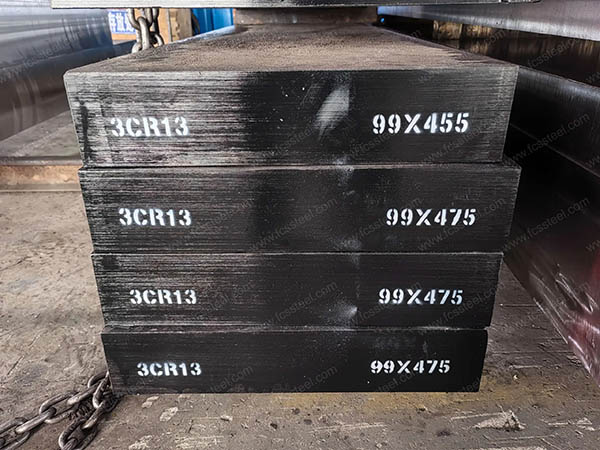
Basic Overview of 3Cr13 Stainless Steel and Its Classification
3Cr13 stainless steel belongs to the martensitic stainless steel family, which is characterized by high hardness and the ability to be strengthened through quenching and tempering heat treatment.
Martensitic stainless steels differ from austenitic grades (like 304 and 316) in several ways:
| Property | Martensitic Stainless (3Cr13) | Austenitic Stainless (304) |
|---|---|---|
| Hardness | High | Low |
| Heat treatable | Yes | No |
| Corrosion resistance | Moderate | Excellent |
| Strength | High | Moderate |
Because of this property balance, 3Cr13 is commonly selected for components requiring both mechanical strength and moderate corrosion resistance.
Typical industrial uses include:
- cutting tools
- mechanical wear components
- industrial blades
- pump shafts
- CNC-machined hardware
Chemical Composition and Alloying Elements
The performance of 3Cr13 stainless steel is largely determined by its chemical composition.
Typical composition:
| Element | Content (%) | Role |
|---|---|---|
| Carbon (C) | 0.26 – 0.35 | Increases hardness and strength |
| Chromium (Cr) | 12 – 14 | Corrosion resistance |
| Manganese (Mn) | ≤1 | Improves toughness |
| Silicon (Si) | ≤1 | Oxidation resistance |
| Phosphorus (P) | ≤0.04 | Controlled impurity |
| Sulfur (S) | ≤0.03 | Improves machinability |
| Nickel (Ni) | ≤0.6 | Enhances toughness |
Chromium plays the most important role in corrosion resistance by forming a protective oxide layer that prevents rust formation in mild environments.
Meanwhile, carbon enables the steel to achieve higher hardness after heat treatment.
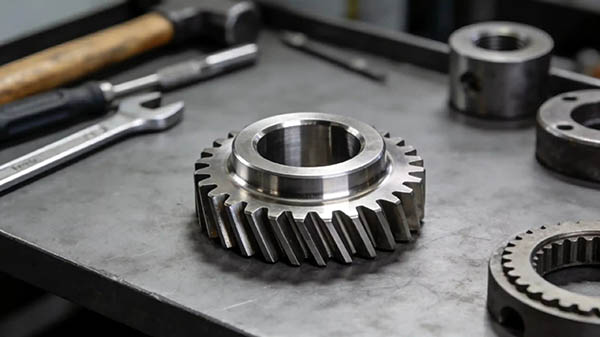
Mechanical Properties and Strength Performance
3Cr13 stainless steel offers solid mechanical performance for many industrial applications.
Typical mechanical properties:
| Property | Value |
|---|---|
| Tensile strength | 520 – 950 MPa |
| Yield strength | ≥ 275 MPa |
| Hardness (heat treated) | 48 – 56 HRC |
| Elongation | 12 – 20% |
After proper quenching and tempering, the hardness can reach about 55 HRC, providing good wear resistance for cutting and mechanical components.
Compared with other stainless steels:
| Material | Hardness (HRC) |
|---|---|
| 304 stainless steel | ~20 |
| 420 stainless steel | 50–56 |
| 3Cr13 stainless steel | 48–56 |
This makes 3Cr13 a suitable material for applications requiring higher hardness than typical stainless steels.
Heat Treatment and Hardening Process
One of the key advantages of 3Cr13 stainless steel is its ability to be hardened through heat treatment.
Typical heat treatment procedure:
| Step | Temperature | Purpose |
|---|---|---|
| Austenitizing | 980 – 1050°C | Dissolve carbides |
| Quenching | Oil or air cooling | Form martensite |
| Tempering | 200 – 400°C | Improve toughness |
This process creates a martensitic microstructure, which significantly increases hardness and strength.
After heat treatment, the steel typically achieves:
- hardness: 50–55 HRC
- improved wear resistance
- better mechanical durability
These characteristics make it suitable for mechanical wear components and cutting edges.
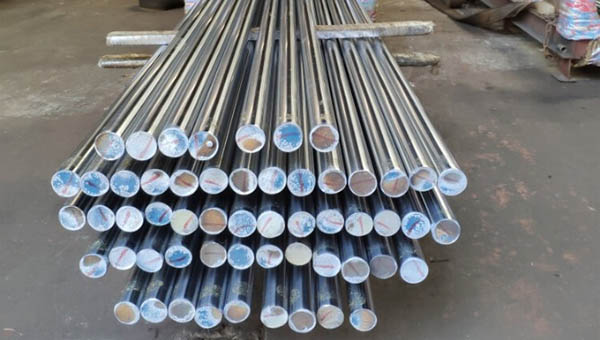
Corrosion Resistance and Environmental Performance
Although 3Cr13 is not as corrosion-resistant as austenitic stainless steels, it still performs well in many environments.
Corrosion resistance comparison:
| Steel Grade | Corrosion Resistance |
|---|---|
| 316 stainless steel | Excellent |
| 304 stainless steel | Very good |
| 3Cr13 stainless steel | Moderate |
| Carbon steel | Poor |
The presence of 12–14% chromium enables the steel to resist oxidation and rust in humid environments and mild chemicals.
However, prolonged exposure to:
- saltwater
- acidic chemicals
- marine environments
may require additional surface protection such as polishing or coating.
Machinability and CNC Processing Characteristics
3Cr13 stainless steel offers relatively good machinability compared with higher-alloy stainless steels.
Typical machining characteristics:
| Property | Performance |
|---|---|
| Machinability | Good |
| Tool wear | Moderate |
| Cutting speed | Medium |
| Surface finish | Good |
Best practices for machining include:
- carbide cutting tools
- coolant lubrication
- moderate cutting speeds
Because the steel hardens after heat treatment, most machining operations are performed before final hardening.
Typical CNC processes include:
- CNC turning
- CNC milling
- drilling
- surface grinding
These processes allow manufacturers to produce precise parts with tight tolerances.
Comparison With Other Stainless Steel Grades
3Cr13 is often compared with other stainless steels used in manufacturing.
| Grade | Type | Key Characteristics |
|---|---|---|
| 304 | Austenitic | Excellent corrosion resistance |
| 316 | Austenitic | Marine corrosion resistance |
| 420 | Martensitic | High hardness |
| 440C | Martensitic | Very high hardness |
| 3Cr13 | Martensitic | Balanced hardness and cost |
International equivalents include:
| Standard | Equivalent Grade |
|---|---|
| AISI | 420B |
| JIS | SUS420J2 |
| DIN | X30Cr13 |
These grades share similar chemical composition and mechanical behavior.
Typical Industrial Applications of 3Cr13 Stainless Steel
Because of its mechanical strength and wear resistance, 3Cr13 is used across several industries.
Common applications include:
Industrial Tools
- cutting blades
- shear blades
- mechanical knives
Manufacturing Equipment
- shafts
- springs
- valves
- pump components
Consumer Products
- kitchen knives
- scissors
- surgical instruments
CNC Machined Parts
- precision mechanical components
- hardware fittings
- machine wear parts
These applications benefit from the alloy’s combination of hardness, durability, and corrosion resistance.
Advantages and Limitations of 3Cr13 Stainless Steel
Like all materials, 3Cr13 offers both advantages and limitations.
Advantages:
- Good hardness after heat treatment
- Moderate corrosion resistance
- Good machinability
- Low material cost
- Suitable for mass production
Limitations:
- Lower corrosion resistance than 304 or 316
- Lower wear resistance than premium steels like 440C
- Edge retention lower than high-carbon tool steels
Because of these trade-offs, 3Cr13 is best used for moderate-duty mechanical applications.
Surface Finishing Options for 3Cr13 Components
To improve performance and appearance, 3Cr13 parts often undergo surface finishing.
Common finishing methods include:
| Process | Purpose |
|---|---|
| Polishing | Improve surface smoothness |
| Passivation | Enhance corrosion resistance |
| Electropolishing | Remove micro-roughness |
| Bead blasting | Matte surface finish |
Polishing is particularly common in knife manufacturing, where a mirror surface improves corrosion resistance and aesthetics.
Why Manufacturers Choose Xavier for 3Cr13 Stainless Steel CNC Parts
For companies requiring precision components made from 3Cr13 stainless steel, machining quality and heat treatment expertise are critical.
Xavier provides advanced CNC manufacturing solutions for stainless steel parts, including 3Cr13 components used in industrial equipment and mechanical assemblies.
Key advantages include:
- High-precision CNC milling and turning
- Experience machining martensitic stainless steels
- Controlled heat treatment processes
- Professional surface finishing capabilities
- Strict dimensional inspection standards
From industrial machinery components to precision metal parts, Xavier delivers reliable and cost-effective 3Cr13 stainless steel machining solutions for global customers.
Some of the images and text in this article are collected and compiled from the internet. If there is anything inappropriate, please contact us for processing.