CNC Machining Medical: Precision Engineering for Modern Healthcare
In a healthcare system increasingly dependent on high-performance, reliable, and safe medical devices, cnc machining medical plays a critical role. Whether producing surgical instruments, orthopedic implants, diagnostic equipment housings or custom prosthetics, CNC-based manufacturing ensures the precision, repeatability and biocompatibility required to meet stringent medical standards. Providers such as “Xavier” offer comprehensive cnc medical manufacturing services, enabling delivery from concept to sterilizable, patient-ready components.
What is cnc machining medical
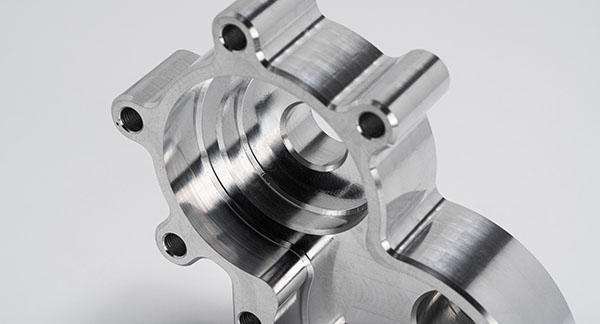
In simple terms, cnc machining medical refers to using computer-controlled machine tools to fabricate parts and components intended for medical use — surgical instruments, implants, diagnostic device housings, and more. This process can include CNC milling, CNC turning (lathes), and multi-axis machining, sometimes under cleanroom or controlled-environment procedures.
This approach handles a broad set of materials — metals like surgical-grade stainless steel and titanium, biocompatible plastics (e.g. PEEK), even ceramics or composite materials — depending on the application requirement.
Because the machines follow precise digital programming (often from CAD/CAM data), cnc machining medical can reliably produce parts with extremely tight tolerances, consistent dimensional accuracy, and clean, smooth surface finishes — all essential when components interact with human tissue, must be sterilized, or assembled with other high-precision parts.
Why cnc medical manufacturing is indispensable
Precision, repeatability and safety
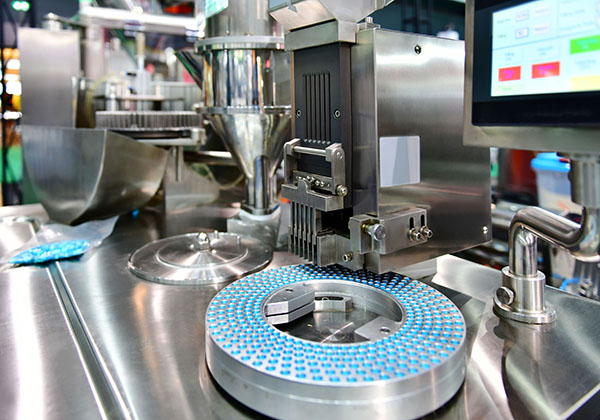
In medical applications, even tiny deviations can compromise device function or patient safety. CNC machining medical parts routinely achieve tight tolerances — often within microns or ±0.001 inches — ensuring accurate fit, consistent function, and reliable performance.
Repeatability is equally important: when producing many identical surgical tools or implants, each unit must meet the same high standard. CNC systems deliver that consistency batch after batch.
Moreover, because of controlled machining and the possibility of automated quality checks (e.g., with coordinate measuring machines, laser scanners, or probes), precision machining medical device components can meet regulatory, safety, and sterilization requirements — critical for patient health.
Material versatility and biocompatibility
The medical industry demands biocompatible materials — metals like titanium and surgical stainless steel, medical-grade plastics such as PEEK, and sometimes ceramics. CNC medical manufacturing supports this variety, enabling designers and engineers to choose the most appropriate material for implants, surgical instruments, diagnostic housings, or disposable components.
This versatility is especially valuable when devices must be lightweight, corrosion-resistant, sterilizable, and safe within the human body.
Complex geometries, customization, and rapid prototyping
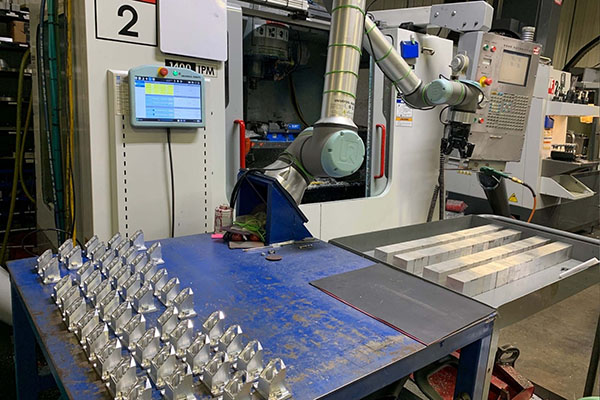
Many medical components require intricate shapes — e.g. implants tailored to a patient’s anatomy, micro-surgical instruments, precision housings for diagnostic equipment, fluid-path components for pumps, or dental abutments. Traditional manufacturing methods often struggle with such complexity; CNC machining excels here.
Furthermore, CNC allows rapid prototyping: from CAD model to functional part in a short time. This responsiveness accelerates innovation and reduces time-to-market for new medical devices or customized implants.
Such flexibility is especially crucial in modern healthcare, where demand can shift rapidly (e.g. custom implants, patient-specific tools, emergency equipment), and where small-batch or even one-off production is often needed — without sacrificing precision or safety.
Regulatory compliance, sterilization readiness, and quality assurance
Medical devices must comply with strict regulations (e.g. ISO standards, FDA or CE standards), and their components must meet sterilization, biocompatibility, and traceability requirements. CNC machining provides a manufacturing environment where every step — from raw material to final part — can be documented, controlled, inspected and validated.
Surface finishing from CNC machining — smooth, burr-free, with tight surface roughness specifications — supports sterilization protocols and reduces risks of contamination or tissue irritation.
All these features together make cnc machining medical parts and cnc machining medical components manufacturing a backbone for modern medical device production.
Typical Applications of CNC Machining Medical Components
Here are common medical applications where CNC plays a central role:
- Surgical instruments — scalpels, forceps, clamps, tweezers, arthroscopic tools, implants-preparation tools. CNC machining ensures ergonomic design, precise geometry, sterilizable surfaces, and reproducible performance.
- Implants and prosthetics — orthopedic implants (bone plates, screws), dental implants and abutments, spinal cages, joint replacements — requiring custom fit, strength, biocompatibility and precise tolerances.
- Diagnostic and device housings — parts and casings for imaging devices, lab equipment, pumps, fluid-handling components — where tight tolerances, complex geometries and sterilizable materials are needed.
- Custom and patient-specific devices — customized prosthetics, patient-specific implants or tools derived from 3D scans or Anatomical modeling, allowing bespoke medical solutions.
- Rapid prototyping of new medical designs — before full-scale manufacturing or certification, prototypes produced by CNC help testing, validation, refinement — speeding up development cycles.
Why Choose a Specialized CNC Medical Manufacturer
Working with a dedicated cnc medical manufacturing partner — for example “Xavier” — brings several advantages:
- Expertise in precision machining medical device components, including handling biocompatible materials, controlling tolerances, ensuring surface finish, and complying with regulatory requirements.
- Flexibility to produce both one-off custom parts (e.g. custom implants) and batch production (e.g. surgical instrument sets), with consistent quality and repeatability.
- Capability to deliver full-cycle manufacturing: from CAD/CAM programming → CNC milling/turning → finishing → quality inspection → sterilization-ready packaging.
- Responsiveness to changes: rapid prototyping, design iteration, small-batch or custom-batch production — helping med-device developers accelerate innovation and bring products to market more quickly.
How the Process Typically Works: From Design to Finished Medical Part
- Digital design (CAD/CAM): Medical engineers design the part (implant, instrument, housing) in digital 3D, considering geometry, tolerances, material, sterilization requirements.
- Material selection: Choose suitable biocompatible material (e.g. titanium, 316L stainless steel, PEEK, medical plastics) depending on application: implant, surgical tool, external casing, etc.
- CNC programming and toolpath generation: Convert CAD model into CNC instructions (G-code) for milling, turning, multi-axis machining.
- Machining: Use CNC mill, lathe, or multi-axis center to cut raw material into precise component. For complex geometries, multi-axis CNC is often required.
- Quality inspection & finishing: Use measurement tools (CMM, laser scanner) to verify tolerances, then apply finishing — polishing, deburring, passivation, surface treatment — to meet sterilization and biocompatibility standards.
- Packaging and documentation: Each batch or part is packaged under controlled conditions; documentation and traceability support compliance with medical regulations.
The Future of CNC Machining in the Medical Field
As medical technology advances — with personalized implants, micro-surgical devices, minimally invasive tools, robotics-assisted surgery — the demand for high-precision, biocompatible, customizable components will only grow. CNC machining for the medical industry is well positioned to meet these demands thanks to its precision, flexibility, material compatibility, and rapid prototyping capabilities.
Moreover, with multi-axis CNC machining, integration with CAD/CAM, and potentially automation and digital manufacturing workflows, CNC medical manufacturing will continue to shorten design-to-production cycles, support patient-specific solutions, and help medical device companies innovate faster and safer.
In short, cnc machining medical is not just a manufacturing method — it is a foundational technology that enables modern medical innovation, patient-specific devices, safe surgical tools, and reliable implants. Companies like Xavier, offering full CNC medical manufacturing services, become indispensable partners in advancing healthcare.
Xavier is a global cnc machining medical solutions provider offering reliable precision manufacturing for a wide range of industries. As a specialist in custom CNC production, we handle diverse metals and plastics through advanced machining. Our capabilities include CNC aluminum machining, CNC stainless steel machining, CNC magnesium alloy machining, CNC ABS machining, CNC acrylic machining, CNC plastic machining, and more. We also support high-accuracy CNC manufacturing for critical sectors such as CNC aerospace parts machining, CNC automotive components machining, CNC medical parts machining, and other precision engineering applications. Whether you need tight-tolerance prototypes or scalable production, our cnc machining medical services ensure consistent accuracy, high efficiency, and excellent material compatibility. Xavier provides multiple advanced machining solutions, including 5-axis milling services, CNC milling services, CNC turning services, Swiss turning services. For finishing, we offer anodizing, chemical nickel plating, zinc electroplating, passivation, electropolishing, and chemical conversion coatings — tailored to meet your cnc machining medical product requirements. As a trusted global CNC machining manufacturer, Xavier delivers both small-batch and volume production. If you want to know the cnc machining medical service price, feel free to contact us anytime.
Some content in this article is sourced from the internet. If there is any inappropriate content, please contact us for removal.