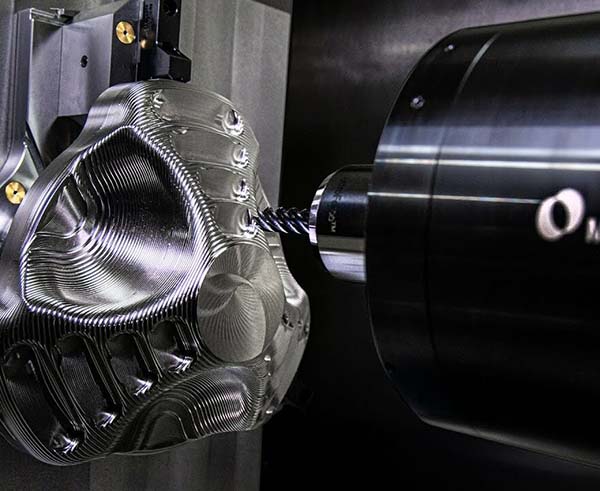
What Titanium Machining Services Are and Why They Matter
Titanium machining services refer to precision CNC (Computer Numerical Control) machining operations tailored specifically for titanium and its alloys — one of the most demanding engineering metals to work with. These services include milling, turning, drilling, milling-turning, and even EDM to produce bespoke titanium components that meet rigorous dimensional and surface quality standards. Titanium’s remarkable strength-to-weight ratio, excellent corrosion resistance, and biocompatibility make it a material of choice for industries including aerospace, medical, defense, and high-performance automotive applications. Due to titanium’s unique properties — high strength but poor thermal conductivity — machining it requires specialized equipment, tooling, and expertise, and that’s exactly what titanium machining services deliver to manufacturers and engineers worldwide.
Core Titanium Alloys Used and Their Application Differences
Not all titanium grades behave the same in machining. Precision machining services frequently work with several key alloys, each selected based on performance requirements:
| Titanium Grade | Properties | Typical Uses |
|---|---|---|
| Grade 2 | Commercially pure, excellent corrosion resistance | Chemical, marine, and medical components |
| Grade 5 (Ti-6Al-4V) | Highest strength, lightweight | Aerospace frames, engine parts, performance automotive |
| Grade 23 (Ti-6Al-4V ELI) | Extra-low interstitials, biocompatible | Surgical implants, dental hardware |
| Grade 9 (Ti-3Al-2.5V) | Good balance of strength/formability | Aerospace tubing & structural parts |
Grade 5 and Grade 23 are especially prevalent in high-performance sectors because they combine strength, fatigue resistance, and machinability. However, Grade 2’s superior corrosion resistance makes it ideal for chemical and marine environments. Choosing the right alloy not only impacts the part’s performance but also the machining strategy and tooling selection.
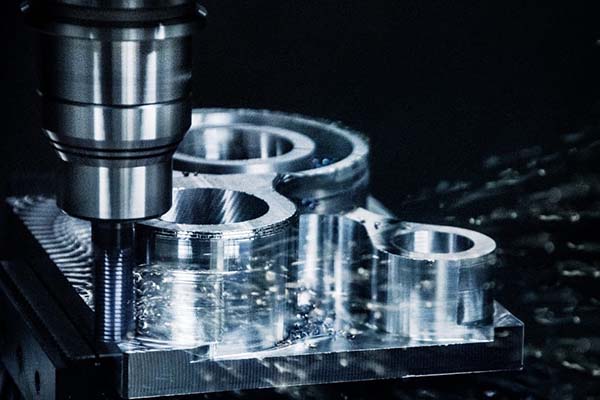
Precision CNC Milling and Turning for Titanium Parts
The backbone of titanium machining services is CNC milling and CNC turning, which convert raw titanium stock into precision parts using cutting tools controlled by computer programs. CNC milling handles complex 3D geometries, including cavities, pockets, and fine features, while CNC turning specializes in cylindrical parts like shafts, bushings, and fasteners. State-of-the-art machining centers — including 3-axis through 5-axis machines — enable multi-directional cutting in a single setup, improving consistency and reducing cycle time. Machining tolerances as tight as ±0.005–±0.01 mm are typical for aerospace and precision medical parts, ensuring components fit perfectly into complex assemblies.
Surface Finishing and Secondary Operations
After the primary machining stage, titanium parts often undergo surface finishing and secondary operations to enhance performance, prevent oxidation, or meet aesthetic requirements. Common finishing techniques include:
- Anodizing – Enhances corrosion resistance and enables customized colors.
- Polishing – Smooths surface textures, often necessary for medical implants.
- Bead blasting – Creates uniform matte finishes and improves adhesion for coatings.
- Passivation – Removes free iron and enhances corrosion resistance.
Surface finishing is vital because titanium’s natural oxide layer can vary in thickness, and improper finishes can affect fit, function, and longevity — especially where biocompatibility and sealing surfaces are critical.
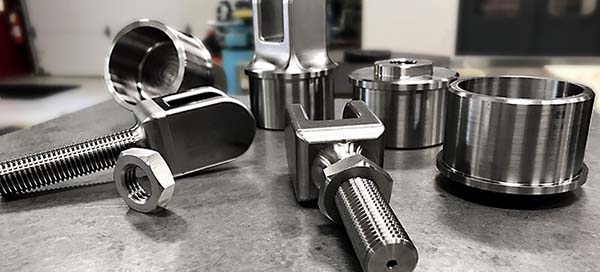
Tight Tolerance Requirements in Critical Industries
Titanium machining services are synonymous with tight tolerance machining, often required for components in aerospace, defense, and medical sectors. Aerospace parts, such as turbine housings or structural fittings, may demand tolerances within ±0.005 mm, while medical implants require extreme precision that ensures biocompatibility and patient safety. Achieving such tolerances necessitates advanced CNC control, precision fixturing, and robust inspection methods including Coordinate Measuring Machines (CMM), optical scanners, and hardness testing equipment. With such quality control, manufacturers can validate every critical dimension, minimizing the risk of part failure in service.
Challenges in Machining Titanium and Proven Solutions
Titanium is notoriously difficult to machine due to several material properties: low thermal conductivity, high strength at elevated temperatures, and a tendency to work-harden. These traits can lead to rapid tool wear, heat buildup, and part distortion during machining. Modern titanium machining services overcome these challenges with:
- Specialized tooling composed of advanced carbide with coatings to handle heat and abrasion.
- High-pressure coolants to reduce cutting temperatures and flush chips.
- Optimized feeds, speeds, and cutting strategies to prevent work hardening.
Some services also utilize multi-axis machines and advanced CAM programming to optimize tool paths and reduce cutting forces, enhancing both part quality and tool life.
Rapid Prototyping to Full-Scale Production
A comprehensive titanium machining service offers high-precision prototyping all the way to full production runs. Rapid prototyping allows engineers to validate designs quickly with functional titanium parts before large-scale manufacturing. Precision services may deliver prototype parts within days (often 24–72 hours depending on complexity), while full production benefits from repeatable processes that maintain quality across thousands of units. This flexibility supports both low-volume specialized applications and high-volume aerospace or industrial programs.
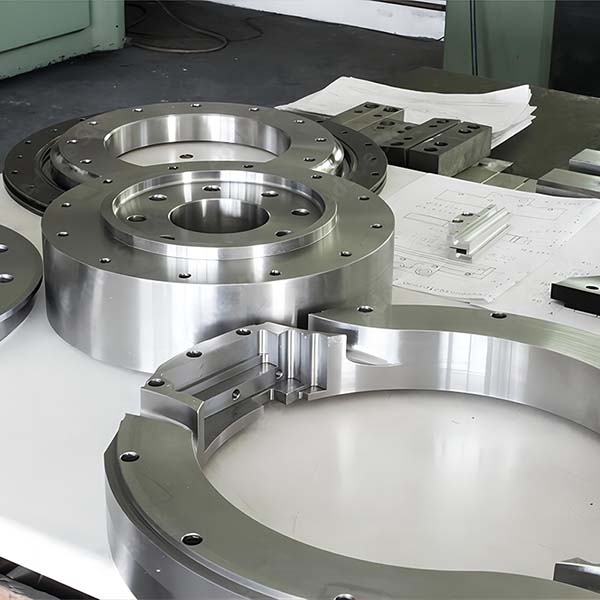
Quality Assurance and Certification Standards
Reputable titanium machining service providers enforce stringent quality assurance systems. Many are ISO 9001 certified, and in aerospace applications may also comply with AS9100 and ITAR regulations. These quality frameworks govern material tracking, machinist procedures, inspection protocols, and documentation — ensuring every part meets both engineering and regulatory requirements. Complete inspection reports, traceability of raw materials (including mill certificates), and controlled process documentation are standard deliverables with certified services.
Sector Applications: Aerospace, Medical, Automotive, Energy
Titanium machined parts are essential across several advanced industries:
- Aerospace: Structural components, fasteners, and engine parts benefit from high strength-to-weight ratios.
- Medical Devices: Implants, surgical instruments, and prosthetic components utilize titanium for biocompatibility.
- Automotive & Motorsports: Engine parts, suspension components, and lightweight brackets where weight reduction is critical.
- Energy & Oil & Gas: Corrosion-resistant heat exchangers, valves, and downhole tools for harsh environments.
For example, titanium alloy Ti-6Al-4V is widely used for aerospace frames and high-stress engine parts, while Ti-6Al-4V ELI (Grade 23) is specified in many implantable devices due to its extra-low interstitial content and verified biocompatibility.
How to Choose the Right Titanium Machining Partner
Selecting a titanium machining service provider involves evaluating several factors:
✔ Material expertise: The provider should have deep knowledge of different titanium grades and their machining properties.
✔ Machining capabilities: Look for advanced CNC, multi-axis machining, and finishing options.
✔ Quality certifications: ISO 9001, AS9100, or industry-specific approvals signal robust quality controls.
✔ Prototyping support & DFM insight: Engineering guidance on design for manufacturability can reduce cost and risk.
✔ Turnaround and logistics: Reliable delivery schedules and global shipping support help meet program timelines.
A strong partner not only machines parts but also provides engineering feedback to improve manufacturability and reduce time-to-market.
Xavier as a Trusted Titanium Machining Services Provider
When precision, performance, and reliability matter, Xavier stands out as a industry-leading partner in titanium machining services. With state-of-the-art CNC equipment (including multi-axis centers), deep material expertise across titanium grades, and rigorous quality systems, Xavier delivers components that meet or exceed specifications for critical applications — from aerospace and medical to advanced industrial uses. Xavier’s full-service capabilities span rapid prototyping, production machining, finishing, inspection, and documentation, ensuring that every part is engineered and manufactured to exacting standards. Whether you are developing a new product or scaling production, Xavier provides the expertise, consistency, and quality assurance that make your titanium machining project a success.
Some of the images and text in this article are collected and compiled from the internet. If there is anything inappropriate, please contact us for processing.