What Are Turned Parts and Their Core Definition
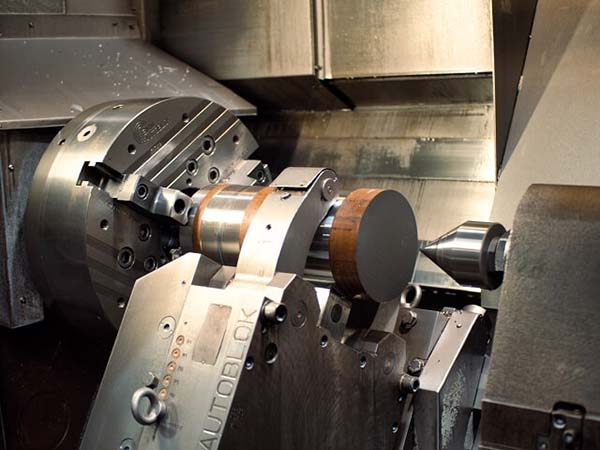
Turned parts are mechanically manufactured components that have rotational symmetry, typically produced using turning processes on lathes. During turning, the workpiece rotates while a cutting tool removes material to form round, cylindrical, or contoured shapes. Such parts are common in shafts, sleeves, spacers, and other components requiring precise round geometries.
In contrast to milling (which cuts with rotating tools on a stationary part), turning uses part rotation as the primary motion — making it inherently ideal for round and symmetrical parts with consistent diameters.
How CNC Turning Works — From CAD to Finished Component
CNC (Computer Numeric Control) turning is the backbone of modern turned parts manufacturing. The process begins with a CAD (Computer-Aided Design) file that gets translated into a CAM/CNC program instructing a lathe how to move tools, feed, and speed.
Typical CNC turning involves:
- Loading bar stock or billets into the lathe spindle.
- Spinning the workpiece at high RPM — often thousands of revolutions per minute.
- Feeding cutting tools into the rotating part to remove material to exact dimensions.
This results in precise, repeatable components whether in single prototypes or high-volume batch runs.
Common Materials Used in Turned Parts Manufacturing
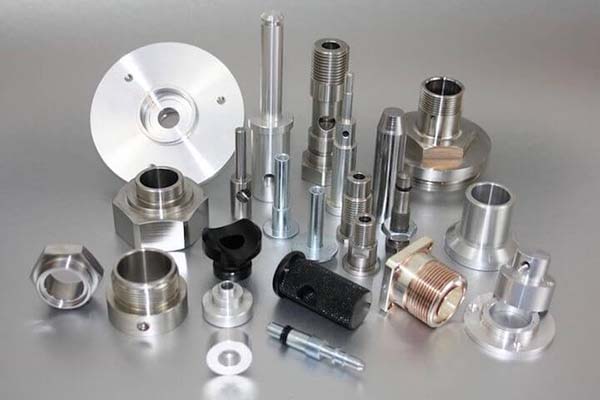
Turned parts can be manufactured from a wide range of materials depending on strength, weight, and function. Common choices include:
| Material | Typical Use Cases |
|---|---|
| Aluminum alloys (6061, 7075) | Aerospace & automotive lightweight parts |
| Stainless steels (303, 304, 316) | Corrosion-resistant components |
| Brass & copper | Electrical and decorative parts |
| Engineering plastics (PEEK, Nylon) | Components requiring low friction or insulation |
Many manufacturers now also handle specialty alloys and plastics, offering multi-material machining within the same production line.
Precision and Tolerances: What Quality Looks Like
Turned parts manufacturers can achieve very tight tolerances and surface finishes. For precision turned parts, tolerances of ±0.02 mm or better are common in high-end production, with surface roughness values (Ra) reaching below 0.8 μm using proper tooling and machining strategies.
Factors influencing precision include:
- Machine accuracy (e.g., multi-axis CNC lathes)
- Material stability
- Cutting tool quality
- Operator skill
For critical industries like aerospace and medical, tolerance adherence is validated with CMM (Coordinate Measuring Machines) and full inspection documentation.
Typical Applications Across Industries
Turned parts are everywhere in modern manufacturing. Common applications include:
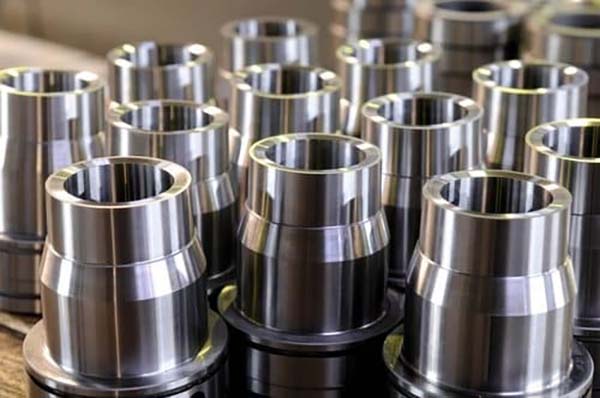
- Automotive components: shafts, bushings, wheel studs
- Aerospace hardware: precision fasteners, actuators
- Industrial machinery: spindles, couplings
- Consumer electronics: small turned metal chassis parts
- Healthcare devices: implants, surgical tool components
The rotational symmetry and strength properties that turning provides make it ideal for parts that both rotate or bear load under stress.
CNC Turning vs. Other Machining Processes
While turning is specific to rotational shapes, modern manufacturing often combines turning with milling, drilling, and tapping operations in one workflow. For example, a part may be turned for its outer profile, then milled to cut flat surfaces, and finally drilled for holes — all on advanced multi-function CNC machines.
This multi-process integration improves accuracy, reduces setup time, and cuts cycle time compared to performing operations on separate machines.
Advanced Turning Techniques: Polygonal Turning and Swiss-Type Machines
Leading manufacturers use advanced turning techniques for efficiency and complex geometry:
- Polygonal turning: enables non-circular profiles (hexes, squares) without interrupting rotation — ideal for fast, precise geometric features.
- Swiss-type turning: offers ultra-tight control and support for long, slender parts with minimal deflection — especially useful in medical and electronics hardware.
These methods allow manufacturers to produce parts at high speeds while maintaining quality and reducing secondary operations.
Surface Finishing Options and Secondary Processes
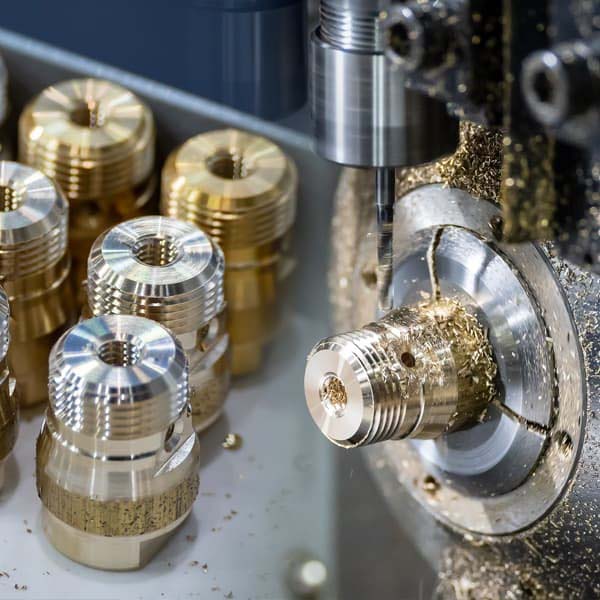
Turned parts frequently undergo secondary processes to enhance performance or aesthetics:
- Anodizing for corrosion resistance and color
- Plating (Ni, Zn, Chrome) for wear resistance
- Polishing and bead blasting for smooth or matte finishes
- Heat treatments for higher strength
By integrating finishing services with turning, manufacturers can deliver ready-to-install parts rather than raw machined pieces, streamlining supply chains.
Quality Control and Manufacturer Reliability
Reputable turned parts manufacturers follow ISO quality systems (ISO 9001, IATF 16949, etc.) and implement rigorous inspection regimes. Key quality standards include:
- Incoming material certification
- In-process inspection with CMM
- Final inspection reports
- Traceability of each batch
When sourcing a partner, check for certifications, sample parts with inspection sheets, and delivery performance records to avoid costly defects or rework.
Outsourcing and Choosing a Turned Parts Partner
Outsourcing turned parts manufacturing can reduce cost and scale production, but choosing the right partner is crucial. Consider these criteria:
✔ Certifications (ISO, AS)
✔ Machine capabilities (multi-axis CNC)
✔ Lead times and batch size flexibility
✔ Material expertise
✔ Communication and response time
Audit suppliers when possible, ask for prototype samples, and verify their capability with past case studies to ensure they meet your performance requirements.
Xavier Brand as a Strategic Turned Parts Solution
For businesses looking for a trusted turned parts manufacturer that aligns with modern CNC precision requirements, Xavier stands out as an industry partner that blends technology, reliability, and service excellence. Drawing on best practices in CNC turning, advanced material handling, and stringent quality control, Xavier provides not only precision components but full support from design optimization to finished product delivery. Their commitment to customer satisfaction, transparent production processes, and scalable manufacturing solutions make them an ideal choice for industries ranging from automotive to high-tech electronics.
Some of the images and text in this article are collected and compiled from the internet. If there is anything inappropriate, please contact us for processing.