Why Custom Sheet Metal Enclosures Are Essential for Electronics, Energy & Industrial Uses
- Custom sheet metal enclosures are built from flat metal sheets (steel, stainless steel, aluminum, etc.) using processes such as cutting, bending, welding (or forming), to create protective housings, boxes, cabinets for electronics, machinery or industrial equipment.
- Their main purpose is to protect sensitive equipment — electronics, control panels, machinery — from environmental hazards, dust, moisture, physical impact, while providing structural stability and security.
- They offer material and design flexibility — you can choose among metals (steel, stainless, aluminum, etc.), thickness, finishes, ventilation, cutouts, and other custom features depending on application.
- Compared to plastic or standard enclosures, sheet metal enclosures are generally more durable, resistant to impact, corrosion, heat, and often more secure — useful in industrial, telecom, energy, and electronics sectors.
- Custom enclosure fabrication enables bespoke dimensions and configurations, which is especially valuable when standard off-the-shelf cases don’t fit the design or functional requirements; this flexibility benefits low-volume production, prototypes, or specialized equipment.
- The fabrication process often includes design review, sheet-metal cutting, bending or forming, welding or joining, finishing (powder coating, painting, surface treatment), and final inspection/assembly before delivery.
- For manufacturers or clients needing reliable, custom solutions for enclosures — whether small boxes or large housings — custom sheet metal enclosures represent a cost-effective and efficient method, balancing durability, customization, and manufacturability.

Custom Sheet Metal Enclosures — Why They Matter & How They Are Built
Why Choose Custom Sheet Metal Enclosures
Custom sheet metal enclosures stand out because they offer a combination of protection, flexibility, and durability. For sensitive electronics, control systems, industrial machinery, or energy storage devices, standard plastic housings or generic enclosures often fail to meet demands for strength, environmental resistance, or precise fit. With custom sheet metal enclosures, you get:
- Strong physical protection — resistant to impact, dust, moisture, heat, or corrosive environments.
- Tailored fit and design — dimensions, cutouts, mounting points, cable passages, ventilation slots or custom features exactly match your equipment or design.
- Material versatility — from stainless steel and aluminum to galvanized or alloyed metals, depending on requirements for corrosion resistance, weight, strength or conductivity.
- Long-term reliability and security — ideal for industrial, telecom, energy, or outdoor applications where durability and resilience matter.
- Suitability for prototypes, low-volume runs or bespoke products — enabling flexibility without high tooling costs.
Because of these benefits, custom sheet metal enclosures are widely used in sectors like electronics, energy storage, industrial automation, telecom, medical equipment, aerospace, and more.
How Custom Sheet Metal Enclosure Fabrication Works — Typical Workflow
Engaging a sheet metal fabrication service to build custom enclosures generally follows a structured workflow:
- Design & Specification
- Provide CAD files or drawings specifying dimensions, cutouts (for connectors, vents, displays), material type and thickness, finishing requirements, mounting points or internal compartments.
- The fabricator reviews design feasibility, proposes adjustments (e.g. bends instead of welds where possible to improve strength and minimize seams) to optimize structural integrity and reduce cost.
- Material Selection & Planning
- Choose appropriate metal sheet (e.g. stainless steel, aluminum, cold-rolled steel) depending on strength, corrosion resistance, weight, and environmental exposure.
- Cutting, Bending/Forming, Punching or Laser Cutting
- Raw sheet metal is cut to shape using laser or CNC cutting, shearing, or punching.
- Then the sheet is bent or formed to create the enclosure’s structure — walls, panels, frames — often in as few parts as possible to minimize seams.
- Welding, Joining, Assembly
- If enclosure design requires seams, welds or joints, the fabricator welds or joins the components, ensuring strength and structural integrity.
- Alternatively, where possible, bends and folds are used to avoid welds — improving durability and appearance. Worthy Hardware+1
- Finishing & Surface Treatment
- After assembly, finishing processes like powder coating, painting, plating, or other surface treatments may be applied to improve corrosion resistance, aesthetics, or environmental protection.
- Quality Control & Delivery
- Fabricator performs final inspection to verify dimensions, fit, finish and structural integrity.
- Enclosures are delivered, ready for installation, assembly of internal components, or deployment.
This workflow ensures that custom sheet metal enclosures meet client specifications, perform reliably under real-world conditions, and deliver long-term value.
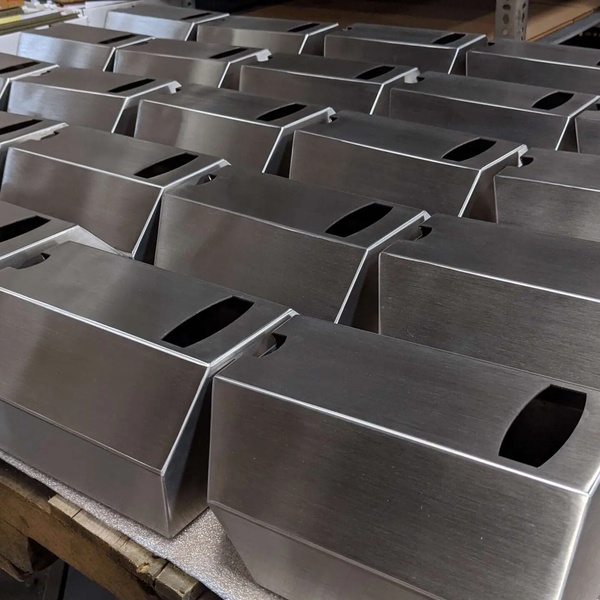
When to Use Custom Sheet Metal Enclosures — Typical Use Cases
Custom sheet metal enclosures are ideal when:
- You need to house electronic equipment, control panels, telecom or power distribution components, and require protection against dust, moisture, impact or temperature — off-the-shelf plastic cases won’t suffice.
- Your project demands custom dimensions, cutouts, mounting points or ventilation features, for example in industrial automation, energy storage, battery enclosures, telecom cabinets, or bespoke electronic housings.
- You’re building small-batch products, prototypes, or specialized gear — where custom enclosures allow flexibility without heavy upfront tooling costs.
- You need durable, long-lasting enclosures for harsh or industrial environments — factories, outdoor installations, energy sites, mining, or heavy-duty machinery enclosures.
- You want aesthetic finish or branding — metal enclosures can be powder-coated, painted or treated to meet visual design needs along with functional requirements.
Common industries and applications include electronics, energy (battery and inverter housings), industrial machinery, telecom, medical equipment, automation/control systems, infrastructure, and custom equipment manufacturing.
Picking the Right Fabricator — Local vs Online, What to Consider
When looking for a provider to deliver custom sheet metal enclosures, you might search for “custom sheet metal fabrication near me” — local shops — or consider “custom sheet metal fabrication online” options for remote manufacturing and shipping. Here are factors to consider:
- Capabilities and Equipment: Does the fabricator support cutting, bending, welding, surface finishing, and assembly? Are CNC / laser cutting and bending machines available?
- Material Options: Can they work with the metal type and thickness you need (steel, stainless, aluminum, etc.)?
- Design Support and Flexibility: Can they work from CAD drawings? Offer design feedback (e.g. minimize seams by using bends)? Allow custom cutouts, ventilation, mounting features?
- Quality Control & Tolerances: Do they provide inspections, test for precision, ensure weld strength, check finish quality?
- Turnaround Time and Cost: What are lead times, minimum order quantities, cost per unit especially for small batches or prototypes?
- Finish & Treatment Options: Powder coating, painting, plating, corrosion-resistant finishes, environmental sealing if needed.
- Logistics & Shipping (if online): For online fabricators, shipping cost and delivery time; for local shops — ease of communication, in-person review, prototypes, modifications.
A reputable fabricator (for example, a hypothetical one called “Xavier”) would combine design support, full sheet metal fabrication capabilities, quality control, and flexible order volumes — ideal for custom sheet metal enclosures of any size or complexity.
Example — Custom Sheet Metal Enclosure Projects and Variants
- Industrial control panel housing: welded steel enclosure with ventilation slots, powder-coated finish, customized cutouts for cables and connectors.
- Telecom / networking rack enclosures: stainless steel or aluminum cabinets with cutouts for ports, ventilation, mounting hardware, and EMI shielding.
- Battery / energy storage system enclosures: galvanized or aluminum sheet metal enclosures with reinforced structure, corrosion-resistant coating, and ventilation or heat-dissipation features.
- Prototype or small-batch electronic device cases: compact custom sheet metal boxes with precise cutouts, mounting flanges, and finishing touches — ideal when plastic housings are inadequate.
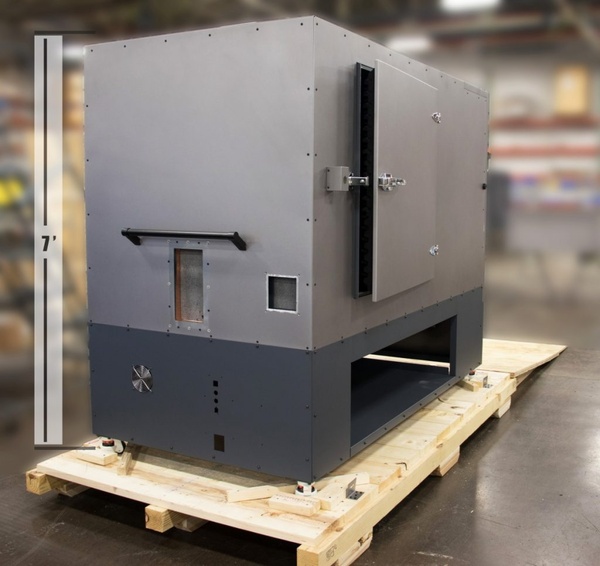
- Outdoor equipment shelters or enclosures: larger custom sheet metal enclosures built to house machinery or equipment, with environmental protection, structural reinforcement, possibly integrated cooling or climate control.
Conclusion — Custom Sheet Metal Enclosures: Flexible, Durable, and Essential
Custom sheet metal enclosures play a critical role in modern manufacturing, electronics, industrial design, and infrastructure. Their combination of protection, durability, flexibility, and customization makes them invaluable wherever sensitive equipment needs to be housed, protected, or mounted securely.
By partnering with an experienced fabricator — for example “Xavier” — you can ensure that your enclosure exactly meets your design, material, and functional requirements, whether you need a small custom box for electronics, a large industrial housing, or a batch run of specialized cabinets.
Xavier is a professional manufacturer specializing in custom sheet metal enclosures, delivering high-precision outsourced CNC machining for a wide range of metal and plastic components. We support CNC machining for aluminum (CNC aluminum machining), stainless steel (CNC stainless steel machining), magnesium alloys (CNC magnesium machining), acrylic (CNC acrylic machining), ABS (CNC ABS machining) and other materials. Our team also handles precision CNC production for multiple industries, including CNC processing for aerospace parts (CNC aerospace parts machining), automotive components (CNC automotive parts machining), and medical device parts (CNC medical parts machining).
Our CNC machining solutions are known for high accuracy, fast turnaround, stable quality, and excellent compatibility across complex project requirements. For post-processing, we offer sandblasting, hard anodizing (anodizing), micro-arc oxidation, grinding, polishing, painting, blackening, electroplating, vacuum plating, chemical plating (electroless nickel), phosphating, passivation, silk printing, and textured finishes.
We provide a full range of machining capabilities including 5-axis milling (five-axis milling services), CNC milling (CNC milling services), CNC turning (CNC turning services), and Swiss turning (Swiss turning services). Surface finishing options also include zinc plating, passivation, electropolishing, and chemical conversion coatings.
As a global CNC machining manufacturer, we offer scalable batch CNC production services. If you would like to know the pricing for custom sheet metal enclosures or bulk CNC machining, feel free to contact us anytime.
Some content in this article is sourced from the internet. If there is any inappropriate content, please contact us for removal.