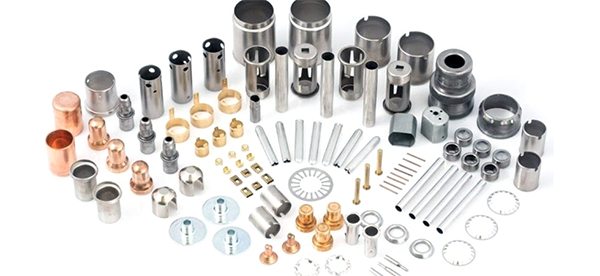
What Precision Turned Parts Are and How They Are Manufactured
Precision turned parts are cylindrical or rotational components produced using CNC turning or Swiss-type lathe machining, where a rotating bar stock is cut by stationary tools to achieve precise geometry. This subtractive manufacturing process is widely used to produce shafts, connectors, bushings, and threaded components.precision turned parts supplier
In a typical CNC turning operation, the workpiece rotates at high speed while a cutting tool gradually removes material. The machine follows G-code instructions generated from CAD/CAM software to ensure dimensional accuracy and repeatability.
The typical workflow used by a professional precision turned parts supplier includes:
| Manufacturing Stage | Description | Purpose |
|---|---|---|
| Material Preparation | Metal bar stock cut to size | Prepare raw material |
| Rough Turning | Rapid material removal | Shape basic geometry |
| Finish Turning | High-precision machining | Achieve final dimensions |
| Secondary Operations | Drilling, threading, milling | Add functional features |
| Surface Treatment | Anodizing, plating, polishing | Improve durability |
| Inspection | CMM and precision gauges | Verify tolerances |
Rough turning removes most material quickly, while finish turning ensures tight tolerances and improved surface quality.
For example:
- Automotive shafts
- Aerospace connectors
- Medical implant components
All rely heavily on precision turned manufacturing.
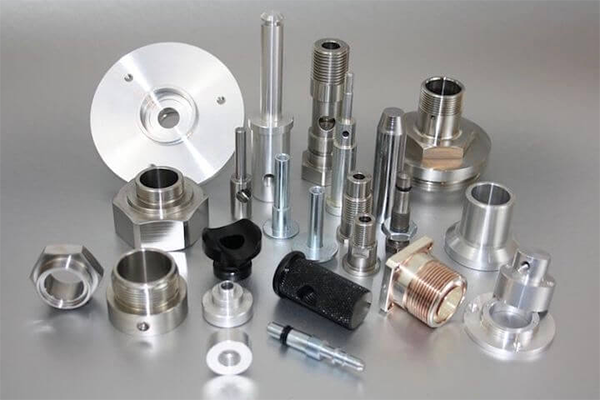
Typical Tolerances and Dimensional Accuracy in CNC Turning
Tolerance control is one of the most critical capabilities of any precision turned parts supplier.
Typical tolerance ranges in CNC turning are summarized below.
| Material | Standard Tolerance | Optimized Tolerance | Example Applications |
|---|---|---|---|
| Aluminum alloys | ±0.025 mm | ±0.005 mm | Electronics housings |
| Stainless steel | ±0.03 mm | ±0.008 mm | Medical components |
| Titanium alloys | ±0.035 mm | ±0.01 mm | Aerospace parts |
| Engineering plastics | ±0.04 mm | ±0.015 mm | Automotive components |
These values vary depending on machine capability, part geometry, and measurement methods.
High-precision CNC turning can even achieve ±0.005 mm (±0.0002″) tolerance levels in ideal conditions.
Typical tolerance levels used in industry:
| Precision Level | Typical Tolerance |
|---|---|
| Standard machining | ±0.1 mm |
| General CNC turning | ±0.02 mm |
| Precision turned parts | ±0.01 mm |
| Ultra precision machining | ±0.005 mm |
Tighter tolerances increase machining time, tool wear, and inspection requirements, which directly affects cost.
Materials Commonly Used for Precision Turned Components
Material selection plays a critical role in machining efficiency, durability, and performance.
Professional precision turned parts suppliers typically support the following materials:
| Material | Advantages | Typical Use |
|---|---|---|
| Aluminum | Lightweight, excellent machinability | Aerospace & electronics |
| Brass | Corrosion resistant, easy to machine | Connectors & fittings |
| Stainless Steel | High strength, corrosion resistance | Medical & food equipment |
| Titanium | High strength-to-weight ratio | Aerospace & implants |
| Engineering Plastics | Electrical insulation | Electronics |
Many suppliers can machine parts from 0.093″ to 2″ diameter across a wide range of materials including aluminum, brass, copper, stainless steel, and plastics.
Example applications:
- Hydraulic valve components
- Electrical connectors
- Medical surgical devices
Material machinability also affects tool life and machining speed.
CNC Turning vs Swiss Turning in High-Precision Manufacturing
Two major processes are used by precision turned parts suppliers:
CNC Turning and Swiss Turning.
| Feature | CNC Turning | Swiss Turning |
|---|---|---|
| Best for | Medium to large parts | Small precision parts |
| Diameter range | 5–500 mm | 0.5–32 mm |
| Complex features | Moderate | Very high |
| Production speed | Medium | High |
Swiss machines support live milling, cross drilling, and sub-spindles, allowing multiple machining operations in one cycle.
Typical Swiss-machined parts include:
- Medical screws
- Watch components
- Electronics connectors
Swiss machining is ideal for high-volume micro components.
Surface Finishing Options for Turned Parts
Surface finishing affects corrosion resistance, appearance, and friction performance.
Common finishing processes include:
| Finish Type | Application |
|---|---|
| As-Machined | Functional mechanical parts |
| Polishing | Decorative components |
| Bead Blasting | Matte finish |
| Anodizing | Aluminum corrosion protection |
| Zinc Plating | Steel rust protection |
| Passivation | Stainless steel cleaning |
Surface roughness for CNC turning commonly reaches Ra 3.2 μm or better depending on cutting parameters.
Finishing processes also increase wear resistance and extend component life.
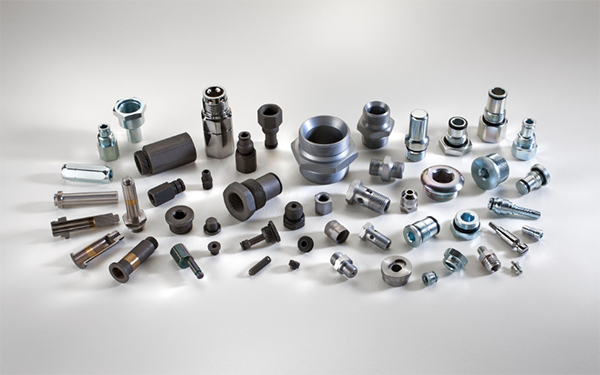
Inspection and Quality Control in Precision Machining
Precision turned parts suppliers rely on advanced inspection equipment to guarantee dimensional accuracy.
Typical inspection tools include:
| Tool | Purpose |
|---|---|
| CMM (Coordinate Measuring Machine) | Complex geometry verification |
| Micrometers | Diameter measurement |
| Optical comparators | Profile inspection |
| Surface roughness tester | Ra measurement |
Inspection strategy depends on tolerance requirements.
For example:
| Tolerance Range | Inspection Method |
|---|---|
| ±0.1 mm | Vernier caliper |
| ±0.02 mm | Micrometer |
| ±0.005 mm | CMM measurement |
Professional manufacturers adjust inspection frequency based on production volume to balance quality and cost.
Design for Manufacturability (DFM) in Turned Parts
A reliable precision turned parts supplier will review your drawings before production.
Key DFM recommendations include:
Avoid unnecessary tight tolerances
Over-specifying tolerances significantly increases machining cost.
Maintain reasonable wall thickness
Thin walls can deform during machining.
Standardize thread sizes
Using standard thread specifications reduces tooling complexity.
Example DFM guideline:
| Design Factor | Recommendation |
|---|---|
| Minimum hole diameter | ≥0.5 mm |
| Thread depth | 3–6× diameter |
| Chamfer size | 0.5–1 mm typical |
These guidelines improve production efficiency and reduce lead time.
Cost Structure of Precision Turned Parts Production
Understanding cost factors helps buyers choose the right supplier.
Typical cost breakdown:
| Cost Factor | Impact |
|---|---|
| Raw material | 20–40% |
| Machining time | 30–50% |
| Surface finishing | 10–20% |
| Inspection & packaging | 5–10% |
CNC machining hourly rates vary widely by region:
| Region | Typical Hourly Rate |
|---|---|
| China | $10–30/hour |
| Europe / US | $30–60/hour |
This is why many global buyers source precision turned parts internationally.
Industries That Depend on Precision Turned Parts
Precision turned parts suppliers serve multiple industries where dimensional accuracy is critical.
| Industry | Example Components |
|---|---|
| Aerospace | Aircraft fasteners |
| Medical | Surgical screws |
| Automotive | Transmission shafts |
| Electronics | Connector pins |
| Energy | Valve components |
Many manufacturers hold ISO 9001 or AS9100 certification to ensure consistent production quality for these industries.
How to Choose a Reliable Precision Turned Parts Supplier
Selecting the right supplier requires evaluating several factors.
| Criteria | Why It Matters |
|---|---|
| Machining capability | Determines complexity |
| Tolerance capability | Ensures part performance |
| Quality certifications | Guarantees reliability |
| Lead time | Impacts production schedule |
| Engineering support | Improves manufacturability |
Key questions to ask suppliers:
- What tolerances can you guarantee?
- Do you provide CMM inspection reports?
- What is your typical lead time?
- Can you support both prototype and mass production?
Professional suppliers often deliver prototypes in 3–10 working days depending on complexity.
Why Xavier Is a Trusted Precision Turned Parts Supplier
If you are looking for a reliable precision turned parts supplier, Xavier provides a complete machining solution for global customers.
Xavier specializes in:
- CNC turning and milling
- Custom metal components
- Multi-axis machining
- Tight tolerance manufacturing
- Surface finishing and assembly
With advanced machining centers and strict quality control systems, Xavier delivers precision components for industries including automotive, aerospace, electronics, and industrial equipment.
Whether you require:
- prototype parts
- low-volume production
- high-volume OEM manufacturing
Xavier’s engineering team can review your drawings, optimize manufacturability, and provide competitive quotations quickly.
Choosing a professional precision turned parts supplier like Xavier ensures consistent quality, reliable delivery, and long-term manufacturing support.
Some of the images and text in this article are collected and compiled from the internet. If there is anything inappropriate, please contact us for processing.