
Precision Turned Parts: Manufacturing Guide to High-Accuracy CNC Turned Components
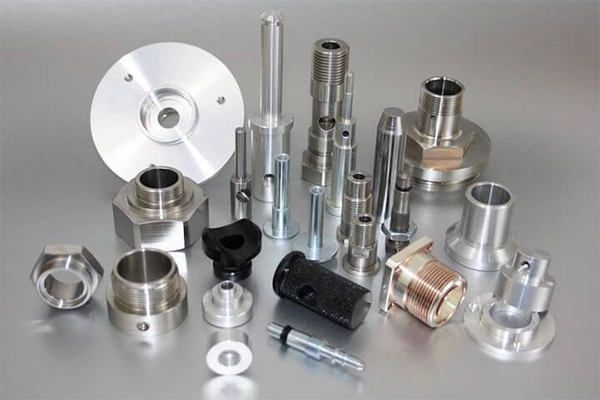
Precision turned parts are cylindrical components manufactured using CNC turning or Swiss-type machining processes. These parts are widely used in assemblies where tight tolerances, concentricity, and repeatable dimensional accuracy are required. Typical examples include shafts, bushings, connectors, threaded fasteners, and precision pins used across aerospace, medical, automotive, and electronics industries.
Modern CNC turning centers and Swiss screw machines allow manufacturers to produce extremely accurate parts with tolerances as tight as ±0.005 mm or better, depending on material and geometry.
The following sections explore 10 essential engineering topics related to precision turned parts, based on common technical themes found in high-ranking machining resources.
Key Technical Topics Related to Precision Turned Parts
- What Precision Turned Parts Are
- CNC Turning Process and Manufacturing Workflow
- Achievable Tolerances in Precision Turning
- Materials Used for Precision Turned Components
- Surface Finish Requirements and Post-Processing
- Swiss Turning vs Conventional CNC Turning
- Quality Control and Inspection Methods
- Design Guidelines for Precision Turned Parts
- Industries That Rely on Precision Turned Components
- Cost Drivers in Precision Turned Part Manufacturing
What Precision Turned Parts Are
Precision turned parts are mechanical components created using CNC lathes where the workpiece rotates while cutting tools remove material to form the desired geometry.
Unlike basic turned components, precision turned parts require strict dimensional control, consistent production quality, and detailed inspection procedures.
Typical geometric features include:
| Feature | Description |
|---|---|
| Outer diameters | Controlled shaft diameters |
| Internal bores | Precision ID machining |
| Threads | External or internal threads |
| Grooves | Retaining ring or sealing grooves |
| Chamfers | Edge finishing for assembly |
These components are usually designed for mechanical assemblies where fit and alignment are critical, such as bearings, hydraulic systems, and motion mechanisms.
Example:
A precision shaft used in an electric motor must maintain accurate diameter and concentricity to avoid vibration and mechanical wear.
CNC Turning Process and Manufacturing Workflow
Precision turned parts are typically produced using CNC turning centers or Swiss-type lathes.
The basic process workflow includes:
| Manufacturing Stage | Purpose |
|---|---|
| Material preparation | Bar stock or billet cutting |
| Rough turning | Removing bulk material |
| Finish turning | Achieving final dimensions |
| Secondary operations | Drilling, threading, milling |
| Surface finishing | Coating or polishing |
| Inspection | Dimensional verification |
Rough turning removes most of the material quickly, while finish turning ensures the final tolerance and surface quality.
Advanced turning centers can combine multiple operations in one setup, including drilling, grooving, and cross-milling.
This reduces handling errors and improves production efficiency.
Achievable Tolerances in Precision Turning
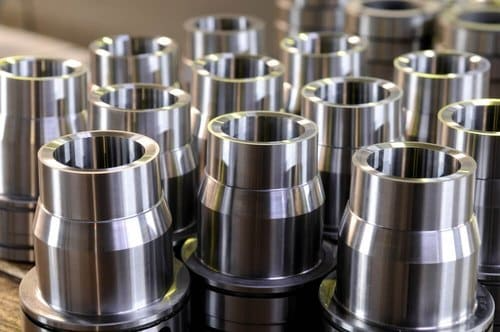
One of the key advantages of precision turning is its ability to produce extremely tight tolerances.
Typical tolerance ranges:
| Feature Type | Typical Tolerance |
|---|---|
| Standard CNC turning | ±0.05 mm |
| Precision turned parts | ±0.01 mm |
| High-precision components | ±0.005 mm |
These values depend on material properties, machine stability, and tool condition.
In controlled environments with advanced equipment, some suppliers can achieve tolerances around ±0.005 mm or tighter on critical features.
Example:
Hydraulic valve spools often require tolerances within ±0.01 mm to ensure correct fluid sealing and flow control.
Materials Used for Precision Turned Components
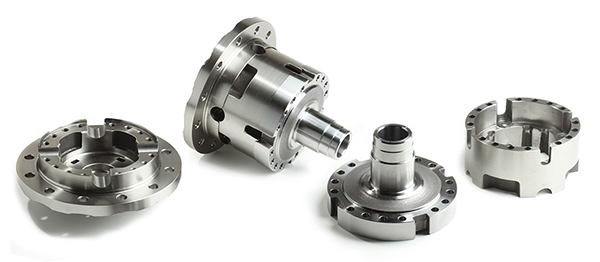
Precision turning supports a wide range of materials depending on performance requirements.
Common materials include:
| Material | Key Properties | Typical Applications |
|---|---|---|
| Stainless steel | Corrosion resistance | Medical instruments |
| Aluminum | Lightweight | Aerospace components |
| Brass | Excellent machinability | Electrical connectors |
| Titanium | High strength-to-weight ratio | Aerospace fasteners |
| Engineering plastics | Chemical resistance | Medical and electronic parts |
Steel and stainless steel remain the most widely used materials due to their strength and durability.
Material choice directly affects machining parameters such as cutting speed, tool wear, and achievable tolerances.
Surface Finish Requirements and Post-Processing
Surface finish affects both performance and appearance of precision turned parts.
Typical surface roughness levels:
| Surface Finish | Roughness (Ra) | Application |
|---|---|---|
| Standard machining | 3.2 μm | General mechanical parts |
| Fine machining | 1.6 μm | Precision components |
| High precision finish | 0.8 μm or better | Sealing surfaces |
Common post-processing treatments include:
- anodizing for aluminum
- passivation for stainless steel
- zinc or nickel plating for steel
- bead blasting or polishing
These processes improve corrosion resistance and aesthetic quality.
Swiss Turning vs Conventional CNC Turning
Swiss turning is a specialized machining method used for extremely precise cylindrical parts.
The main difference between Swiss turning and traditional turning is how the workpiece is supported.
| Feature | Swiss Turning | Conventional Turning |
|---|---|---|
| Workpiece support | Guide bushing | Chuck |
| Precision | Extremely high | High |
| Best for | Small long parts | Larger components |
| Production volume | High | Medium |
Swiss machines are ideal for parts with high length-to-diameter ratios, such as medical screws and connector pins.
This design significantly reduces vibration and improves dimensional stability.
Quality Control and Inspection Methods
Precision turned parts require strict quality control to ensure dimensional accuracy.
Typical inspection equipment includes:
| Inspection Tool | Purpose |
|---|---|
| Micrometers | Diameter measurement |
| CMM machines | 3D dimensional inspection |
| Optical measurement systems | Micro-feature inspection |
| Thread gauges | Thread verification |
For high-precision parts, manufacturers often use statistical process control (SPC) to monitor machining consistency across large production runs.
Proper inspection strategy prevents dimensional drift and ensures product reliability.
Design Guidelines for Precision Turned Parts
Designing parts specifically for CNC turning improves manufacturability and reduces cost.
Recommended guidelines include:
| Feature | Recommended Value |
|---|---|
| Minimum diameter | ≥ 0.5 mm |
| Minimum wall thickness | ≥ 0.3 mm |
| Maximum thread depth | ≤ 4× diameter |
| Deep hole ratio | ≤ 10× diameter |
Avoid specifying unnecessarily tight tolerances across all dimensions.
Instead, focus tight tolerances only on functional surfaces that affect assembly or performance.
This approach significantly reduces machining time and production cost.
Industries That Rely on Precision Turned Components
Precision turned parts are essential in many high-technology industries.
Aerospace
Applications include:
- aircraft fasteners
- hydraulic components
- actuator shafts
These parts require extremely high reliability and precision.
Medical Industry
Examples include:
- surgical instruments
- orthopedic screws
- implant components
Many medical parts require micron-level tolerances and biocompatible materials.
Automotive Industry
Common automotive precision turned components include:
- fuel injector parts
- sensor housings
- transmission shafts
High-volume production and strict quality standards are typical in this industry.
Electronics Industry
Examples include:
- connector pins
- fiber optic alignment components
- micro shafts for motors
These components are usually very small but require extremely precise dimensions.
Cost Drivers in Precision Turned Part Manufacturing
Several factors influence the cost of manufacturing precision turned parts.
| Cost Factor | Impact |
|---|---|
| Material selection | Titanium costs more than aluminum |
| Tolerance requirements | Tighter tolerances increase machining time |
| Part complexity | Multi-axis machining increases programming cost |
| Surface finishing | Additional treatments add cost |
| Production volume | Higher quantities reduce unit cost |
For example, specifying a tolerance of ±0.005 mm instead of ±0.02 mm may require additional finishing passes and inspection steps, increasing manufacturing cost significantly.
Why Choose Xavier for Precision Turned Parts
If you are sourcing high-quality precision turned parts, selecting the right manufacturing partner is essential.
Xavier specializes in custom CNC turning and Swiss machining services, delivering precision components for demanding industries.
Xavier’s capabilities include:
- high-precision CNC turning and Swiss machining
- tight tolerances down to micron levels
- materials including stainless steel, aluminum, brass, and titanium
- rapid prototyping and large-scale production
- strict dimensional inspection and quality control
Whether you need precision shafts, connectors, threaded components, or miniature mechanical parts, Xavier provides reliable manufacturing solutions with consistent quality and competitive pricing.
For companies seeking dependable precision turned parts manufacturing, Xavier is a trusted partner capable of transforming complex engineering designs into high-performance precision components.
Some of the images and text in this article are collected and compiled from the internet. If there is anything inappropriate, please contact us for processing.