
Stainless Steel Parts Types and Manufacturing Processes
Stainless steel parts manufacturers produce a wide range of components designed for strength, durability, and corrosion resistance. These parts can vary from simple fasteners to complex aerospace components. Commonly machined stainless steel parts include shafts, brackets, valves, fittings, and flanges. Manufacturers often use multiple production techniques—such as CNC milling, turning, stamping, laser cutting, and EDM—to produce precision parts that meet exact specifications.
Different processes allow manufacturers to achieve desired geometries and tolerances. CNC machining offers high accuracy and repeatability, while stamping and sheet metal processes enable fast production for high volumes. Laser cutting and waterjet cutting provide precision with minimal thermal distortion, making them ideal for thin components that require smooth edges.
Stainless Steel Material Grades Used in Parts Manufacturing
Selecting the right stainless steel grade is fundamental to part performance. Stainless steel alloys are categorized based on their microstructure and performance characteristics:
| Grade | Key Traits | Typical Use |
|---|---|---|
| 304/304L | General corrosion resistance | Food, general hardware |
| 316/316L | Superior corrosion resistance | Marine, chemical |
| 303 | Excellent machinability | High-volume precision parts |
| 17-4PH | High strength, precipitation hardened | Aerospace, industrial |
| Duplex 2205 | High stress corrosion resistance | Offshore, chemical plants |
For example, grade 316/316L stainless steel is often chosen in chemical processing and marine environments due to its high chloride resistance, while 17-4PH is used in aerospace applications for its combination of strength and corrosion resistance.
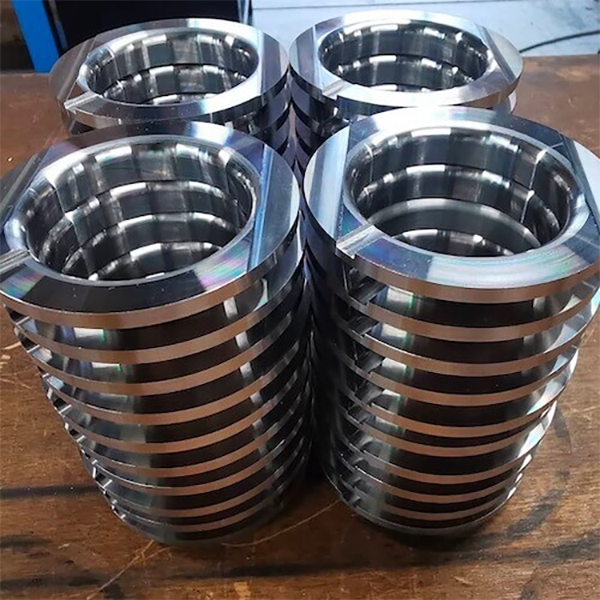
Precision and Tolerance Standards in Stainless Steel Parts
Precision is a key differentiator for stainless steel parts manufacturers, especially when supplying to aerospace, medical, and industrial customers.
| Part Size Range | Standard Tolerance | Precision Tolerance |
|---|---|---|
| Up to 0.5 in | ±0.005″ | ±0.002″ |
| 0.5–2.0 in | ±0.007″ | ±0.003″ |
| 2.0–6.0 in | ±0.010″ | ±0.005″ |
| Above 6.0 in | ±0.015–0.020″ | ±0.007–0.010″ |
These tolerances show how manufacturers maintain strict dimensional control to ensure part interchangeability and performance in assemblies that demand repeatability.
Surface Finishes and Corrosion Protection Methods
Stainless steel components often require finishing processes to improve appearance, surface integrity, and corrosion resistance:
| Finish Type | Purpose |
|---|---|
| Electropolishing | Smooths micro-asperities, improves corrosion resistance |
| Passivation | Removes free iron, enhances protective oxide layer |
| Bead Blasting | Satin finish for aesthetics |
| Mirror Polishing | Decorative and sanitary finish |
Passivation treatments following machining are particularly important. Passivation per ASTM A967 ensures that the chromium-rich oxide layer reforms evenly across the part surface, directly affecting corrosion resistance in aggressive environments.
Quality Control and Inspection Tools
High-end stainless steel parts manufacturers invest heavily in quality control systems to uphold dimensional accuracy and functional performance. Key equipment includes:
- Coordinate Measuring Machines (CMMs) for verifying geometric accuracy
- Laser scanners and optical inspection systems for surface profiling
- Calipers, micrometers, and pin gauges for dimensional checks
Manufacturers often integrate Statistical Process Control (SPC) to monitor production trends and detect deviations early. Certifications like ISO 9001:2015 or ISO/TS 16949 (for automotive) demonstrate a commitment to quality systems that support traceability and repeatability.
Stainless Steel Parts Applications Across Industries
Stainless steel parts are integral to many industrial sectors due to their strength and corrosion resistance:
- Automotive: Exhaust components, brackets, fasteners
- Food & Beverage: Hygienic tanks, fittings, conveyors
- Medical Devices: Surgical implants and instruments
- Marine & Offshore: Structural components, fittings
- Aerospace: Valve stems, actuator parts, structural clips
- Chemical Processing: Pumps, reactors, heat exchangers
In the food industry, for example, stainless steel’s non-magnetic and corrosion-resistant properties ensure hygiene and long-term reliability in contact with consumables.
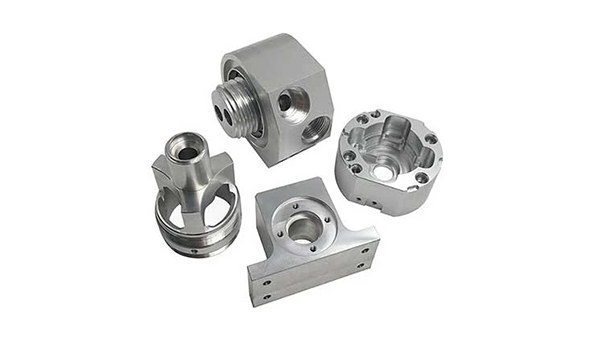
Stainless Steel Parts Manufacturing Processes
Stainless steel manufacturers utilize a combination of advanced fabrication techniques to meet complex part requirements:
- CNC Milling & Turning: High precision for complex geometries
- Laser Cutting: Precise flat parts with narrow kerf and minimal distortion
- Waterjet Cutting: Cold cutting with no heat-affected zone
- Sheet Metal Stamping: High-volume production with consistent tolerances
Each technique has strengths: laser cutting excels at tight tolerance flat parts, while waterjet cutting avoids thermal effects, making it suitable for parts sensitive to heat distortion.
Sustainability and Recycling in Stainless Steel Parts
A key trend in stainless steel manufacturing is sustainability. Stainless steel is highly recyclable, with most grades capable of being recycled at rates above 90%. This recyclability dramatically reduces the environmental impact associated with primary raw metal extraction and supports circular economy principles.
Manufacturers are also adopting closed-loop recycling systems and energy-efficient furnaces to reduce emissions. These practices align with global sustainability goals and increase competitiveness in green supply chains.
Design for Manufacturability (DFM) for Stainless Steel Parts
DFM practices help manufacturers reduce cost and lead time while improving part quality. For stainless steel parts, DFM guidelines often include:
- Avoiding deep narrow slots without support
- Standardizing hole sizes and thread classes
- Using generous fillets instead of sharp internal corners
Collaboration between designers and manufacturers at the early stage ensures manufacturable geometry that reduces unnecessary machining cycles and improves mechanical performance.
How to Choose the Right Stainless Steel Parts Manufacturer
Selecting a reliable manufacturer requires evaluation of several factors:
- Range of Material Grades Supported – Ability to work with 300, 400 series, duplex stainless
- Tolerance Capabilities – Can the provider hit needed tolerances?
- Quality Certifications – ISO standards, documented inspection processes
- Surface Finishing Expertise – Passivation, electropolishing, custom finishes
- Lead Time and Scalability – Ability to handle prototypes and mass production
Manufacturers that provide engineering support—such as tolerance advice and DFM review—often deliver better value and faster project success.
Xavier: Your Trusted Stainless Steel Parts Manufacturing Partner
When precision, reliability, and on-time delivery matter, Xavier stands out as a top choice among stainless steel parts manufacturers. With advanced CNC capabilities, deep material expertise in multiple stainless steel grades, comprehensive finishing options, and rigorous quality systems, Xavier delivers components that exceed industry standards.
From prototype components to high-volume production, Xavier offers tailored solutions backed by engineering insights and global delivery support—ensuring your stainless steel parts meet both performance and cost expectations.
Some of the images and text in this article are collected and compiled from the internet. If there is anything inappropriate, please contact us for processing.