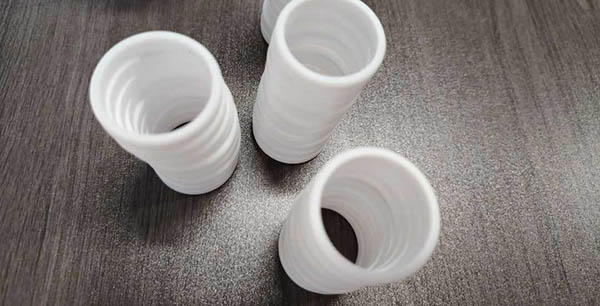
Polyacetal vs Delrin: Key Differences, Properties, and CNC Machining Applications
Engineering plastics have become critical materials in modern manufacturing, especially in precision industries such as aerospace, robotics, automotive, and consumer electronics. Among these materials, polyacetal (POM) and Delrin are often mentioned interchangeably. However, while they belong to the same polymer family, they are not identical materials.
Understanding the difference between polyacetal and Delrin is important for engineers, product designers, and CNC machining manufacturers who need to balance strength, cost, machinability, and long-term stability.
This guide explores the real engineering differences between polyacetal and Delrin, including molecular structure, mechanical performance, machinability, cost, and application scenarios.
What Is Polyacetal (POM)?
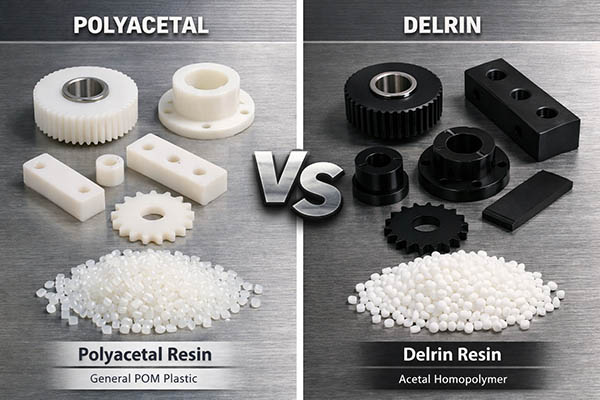
Polyacetal, also known as polyoxymethylene (POM) or acetal resin, is a high-performance semi-crystalline thermoplastic widely used for mechanical components requiring strength, stiffness, and dimensional stability.
Its molecular structure consists of repeating –CH₂O– units, forming a highly ordered crystalline polymer chain. This crystallinity gives polyacetal its well-known properties:
- High tensile strength
- Low friction coefficient
- Excellent wear resistance
- Good chemical resistance
- High dimensional stability
Typical mechanical characteristics include tensile strengths around 60 MPa and very low moisture absorption, allowing the material to maintain stable mechanical properties in humid environments.
Common Types of Polyacetal
Polyacetal materials are generally divided into two structural categories:
| Type | Description | Common Names |
|---|---|---|
| Homopolymer POM | Single repeating monomer structure | Delrin, POM-H |
| Copolymer POM | Two or more monomer structures | Acetal copolymer, POM-C |
This classification forms the basis of the polyacetal vs Delrin comparison.
What Is Delrin?
Delrin is a specific brand of acetal homopolymer, originally developed by DuPont and now produced by Celanese.
Unlike general polyacetal copolymers, Delrin contains a uniform molecular backbone, which increases crystallinity and improves mechanical bonding between polymer chains.
As a result, Delrin offers several performance advantages:
- Higher stiffness
- Greater tensile strength
- Better fatigue resistance
- Superior creep resistance
These characteristics allow engineers to design thinner and lighter parts without sacrificing mechanical performance.
Because of its reputation for reliability and consistency, many engineers use the term “Delrin” as a generic term for acetal, even though it is technically a brand name.
Molecular Structure: Homopolymer vs Copolymer
The fundamental difference between polyacetal and Delrin lies in their polymer chemistry.
| Property | Delrin (POM-H) | Polyacetal Copolymer (POM-C) |
|---|---|---|
| Polymer type | Homopolymer | Copolymer |
| Molecular chain | Uniform repeating unit | Multiple monomer units |
| Crystallinity | Higher | Lower |
| Internal stress | Higher | Lower |
| Chemical resistance | Moderate | Higher |
| Mechanical strength | Higher | Slightly lower |
Because Delrin has a more uniform crystalline structure, it typically provides higher stiffness and strength compared with copolymer acetals.
However, copolymer acetal materials offer advantages in thermal stability and chemical resistance.
Mechanical Properties Comparison
From a mechanical engineering perspective, the differences between polyacetal and Delrin become clearer when comparing their physical properties.
Typical Material Properties
| Property | Delrin (POM-H) | Polyacetal Copolymer |
|---|---|---|
| Tensile strength | 65–75 MPa | 55–65 MPa |
| Elastic modulus | Higher | Slightly lower |
| Fatigue resistance | Excellent | Very good |
| Impact resistance | High | Moderate |
| Creep resistance | Excellent | Good |
| Chemical resistance | Good | Better |
| Moisture absorption | Low | Very low |
Delrin can exhibit over 40% higher impact resistance and significantly improved fatigue resistance compared with general acetal copolymers.
This is why Delrin is often chosen for high-cycle mechanical components, such as gears and snap-fit assemblies.
CNC Machinability: Why Delrin Is Popular
In CNC machining environments, both polyacetal and Delrin are considered excellent engineering plastics. However, Delrin is often preferred.
Reasons Delrin Machines Better
- Higher stiffness improves dimensional accuracy
- Chips break cleanly during cutting
- Lower friction reduces tool wear
- Smooth surface finish after machining
These characteristics make Delrin particularly suitable for:
- Precision gears
- Bearings
- bushings
- sliding mechanical parts
- high-speed machined components
The higher rigidity of Delrin also makes it ideal for thin-wall or small-diameter parts, especially on high-speed CNC lathes.
Chemical Resistance and Thermal Stability
While Delrin excels in mechanical performance, polyacetal copolymer materials outperform it in chemical and hydrolysis resistance.
Polyacetal Copolymer Advantages
Copolymer acetals offer:
- Better resistance to chlorine chemicals
- Improved hydrolysis resistance
- Greater stability in hot water environments
- Reduced thermal degradation
This makes polyacetal copolymers better suited for:
- water system components
- pump housings
- plumbing components
- chemical-handling equipment
Delrin, on the other hand, is preferred for mechanical load-bearing applications.
Dimensional Stability and Porosity
One interesting but often overlooked difference between Delrin and polyacetal copolymers is centerline porosity.
During extrusion, Delrin rods may develop microscopic voids in the center. These voids can affect structural integrity in large cross-sections.
Polyacetal copolymers generally show less centerline porosity, making them better suited for thicker stock shapes and pressure-tight components.
For example:
| Application | Recommended Material |
|---|---|
| Precision gears | Delrin |
| Pump components | Polyacetal copolymer |
| Thin mechanical parts | Delrin |
| Thick structural blocks | Copolymer POM |
Typical Industrial Applications
Both materials are widely used across multiple industries.
Common Delrin Applications
- Automotive gear systems
- seatbelt mechanisms
- conveyor components
- zippers and fasteners
- mechanical springs
- robotic components
Common Polyacetal Applications
- pump parts
- valve components
- water system fittings
- electrical insulators
- chemical processing equipment
Because polyacetal offers low friction and excellent wear resistance, it is often used as a lightweight alternative to metal parts.
Cost Considerations
In many projects, material selection ultimately comes down to cost.
Price Comparison
| Material | Relative Cost |
|---|---|
| Delrin (POM-H) | Higher |
| Polyacetal Copolymer | Lower |
Polyacetal copolymer materials are usually more affordable, which makes them attractive for large-volume production.
However, Delrin can reduce overall manufacturing cost by enabling:
- thinner designs
- faster molding cycles
- lower material usage
Some production redesigns using Delrin have achieved over 12% reduction in total part cost.
When Should You Choose Polyacetal vs Delrin?
Choose Delrin if you need
- Higher mechanical strength
- Better fatigue resistance
- Precision CNC machining
- Thin wall structural parts
- High-load mechanical components
Choose Polyacetal Copolymer if you need
- Better chemical resistance
- Hot water stability
- Lower material cost
- Thick stock shapes
- Reduced internal stress
In practice, both materials often perform similarly, and the final choice depends on specific application requirements.
Why Precision Manufacturers Prefer Xavier for POM Machining
For companies producing high-performance mechanical components, choosing the right machining partner is just as important as selecting the right material.
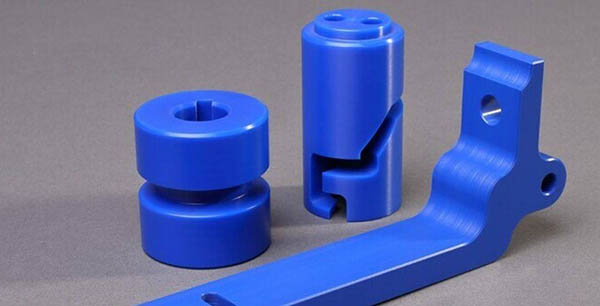
At Xavier Precision Manufacturing, we specialize in CNC machining engineering plastics, including:
- Delrin (POM-H)
- Polyacetal copolymer (POM-C)
- Nylon
- PEEK
- PTFE
Our engineering team helps customers optimize part designs for:
- material efficiency
- dimensional stability
- surface finish
- production cost reduction
With advanced 3/4/5-axis CNC machining systems, Xavier delivers precision plastic components for robotics, automotive, aerospace, and industrial automation.
If you’re deciding between polyacetal vs Delrin, our engineers can help determine the best material based on load conditions, environment, and manufacturing cost.
Conclusion
Polyacetal and Delrin belong to the same polymer family but represent two different structural forms of POM plastic.
Delrin, as an acetal homopolymer, offers higher stiffness, strength, and fatigue resistance, making it ideal for precision mechanical components. Polyacetal copolymers, meanwhile, provide better chemical resistance and thermal stability, which makes them suitable for chemical and water-handling applications.
Choosing the right material requires balancing mechanical performance, environmental resistance, machinability, and cost. By understanding the key differences outlined in this guide, engineers and manufacturers can make smarter material decisions for high-precision CNC components. cnc machining services
Some of the images and text in this article are collected and compiled from the internet. If there is anything inappropriate, please contact us for processing.