Medical Precision Machining: Engineering Standards, Materials, Compliance, and Manufacturing Control
Medical precision machining is fundamentally different from general CNC machining. It operates under strict regulatory frameworks, demands ultra-high dimensional accuracy, requires biocompatible materials, and must support full traceability from raw material to finished component.
This article breaks down how medical precision machining actually works, from materials and tolerances to validation, inspection, and regulatory compliance—with real manufacturing logic rather than generic claims.
What Medical Precision Machining Means in Practice
Medical precision machining refers to the manufacturing of components used in medical devices, surgical instruments, implants, and diagnostic equipment, where patient safety, repeatability, and regulatory compliance are mandatory.
Typical technical expectations include:
| Parameter | Medical Industry Requirement |
|---|---|
| Dimensional tolerance | ±0.01 mm to ±0.002 mm |
| Surface roughness (Ra) | 0.2–1.6 μm |
| Burr control | Zero sharp edges |
| Lot traceability | Mandatory |
| Process validation | Required |
Unlike industrial parts, medical components cannot rely on “functional fit only”—they must meet documented, validated, and auditable standards.
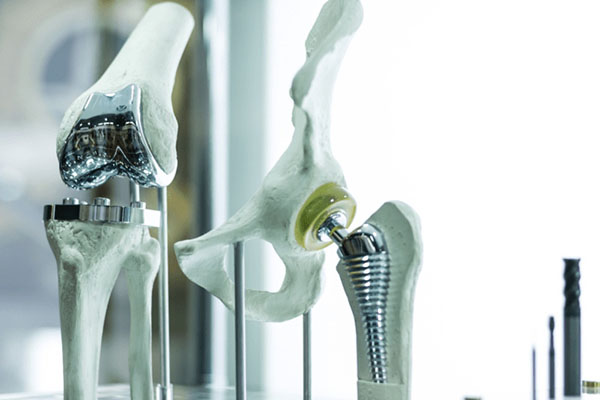
Medical-Grade Materials and Biocompatibility Requirements
Material selection in medical precision machining is driven by biocompatibility, corrosion resistance, sterilization compatibility, and mechanical stability.
| Material | Standard | Typical Applications |
|---|---|---|
| Stainless Steel 316L | ASTM F138 | Surgical instruments |
| Titanium Ti-6Al-4V | ASTM F136 | Implants |
| PEEK | ISO 10993 | Implantable devices |
| Aluminum 6061 | Non-implant | Medical equipment housings |
| Cobalt-Chrome | ASTM F75 | Orthopedic implants |
Example:
Titanium alloys are preferred for implants due to their osseointegration capability, but require slower machining speeds and strict tool wear monitoring to avoid surface contamination.
CNC Machining Processes Used in Medical Manufacturing
Medical precision machining relies on tightly controlled CNC processes to ensure consistency across batches.
CNC Milling
Used for instrument bodies, housings, and complex implant geometries.
CNC Turning
Ideal for pins, screws, bone fasteners, and cylindrical implants.
Swiss-Type Machining
Essential for micro medical components with diameters below 5 mm.
| Process | Typical Accuracy |
|---|---|
| CNC Milling | ±0.01 mm |
| CNC Turning | ±0.005 mm |
| Swiss Machining | ±0.002 mm |
Swiss machining is widely used in orthopedic screws and spinal components due to superior concentricity control.
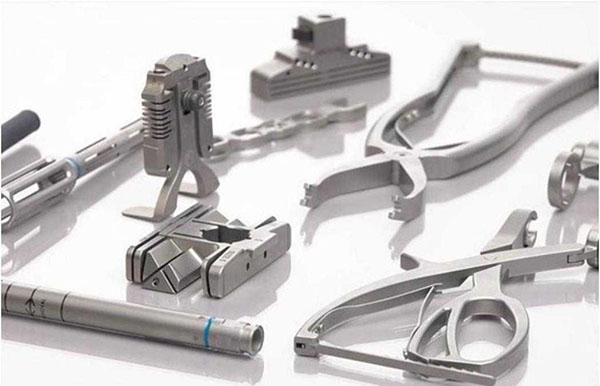
Tolerances and Geometric Control in Medical Components
Tolerance stack-up is a critical failure risk in medical assemblies.
| Tolerance Type | Common Medical Requirement |
|---|---|
| Dimensional | ±0.005 mm |
| Roundness | ≤0.003 mm |
| Flatness | ≤0.01 mm |
| Concentricity | ≤0.005 mm |
Over-tight tolerances significantly increase cost, but under-tolerancing risks device malfunction or regulatory rejection.
Experienced medical manufacturers actively provide DFM and tolerance optimization feedback.
Surface Finish, Edge Condition, and Functional Safety
Surface quality directly affects patient safety, sterilization effectiveness, and wear behavior.
| Surface Condition | Application |
|---|---|
| Ra ≤ 0.8 μm | Implantable parts |
| Ra 1.6 μm | Surgical tools |
| Mirror polish | Joint contact surfaces |
All edges must be deburred and radius-controlled. Even microscopic burrs can cause tissue damage or bacterial retention.
Cleanliness, Contamination Control, and Handling
Medical precision machining requires strict contamination control beyond normal shop standards.
Key practices include:
- Dedicated medical material zones
- Non-silicone cutting fluids
- Ultrasonic cleaning
- Cleanroom-compatible packaging
| Risk | Control Method |
|---|---|
| Metal particles | Ultrasonic cleaning |
| Oil residue | Medical-grade detergents |
| Cross-material contamination | Segregated tooling |
Inspection, Metrology, and Validation Systems
Inspection in medical machining is not optional—it is regulated.
| Inspection Tool | Purpose |
|---|---|
| CMM | 3D dimensional validation |
| Optical measurement | Micro features |
| Surface profilometer | Ra verification |
| Gauge R&R | Measurement reliability |
Process validation often includes IQ / OQ / PQ documentation, especially for Class II and Class III medical devices.
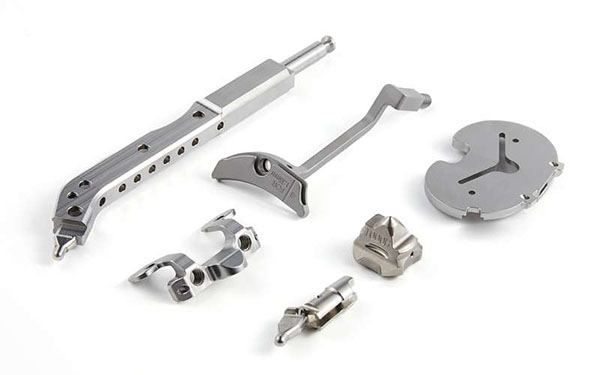
Regulatory Standards and Medical Certifications
Compliance defines whether parts can legally enter the medical supply chain.
| Standard | Scope |
|---|---|
| ISO 13485 | Medical quality management |
| ISO 10993 | Biocompatibility |
| FDA 21 CFR Part 820 | US medical devices |
| MDR (EU) | European compliance |
Manufacturers must support audit readiness, document control, and long-term record retention.
Prototype to Production Scaling in Medical Machining
Medical product development typically follows:
| Phase | Focus |
|---|---|
| Prototype | Design validation |
| Pilot run | Process validation |
| Production | Repeatability & traceability |
A qualified medical precision machining partner ensures no process redesign when moving from prototype to regulated production.
Cost Drivers and Risk Factors in Medical Precision Machining
Major cost contributors include:
- Material certification requirements
- Tight tolerances
- Inspection intensity
- Documentation and validation
- Batch size
Example:
Medical-grade titanium parts can cost 30–50% more than aerospace equivalents due to compliance overhead.
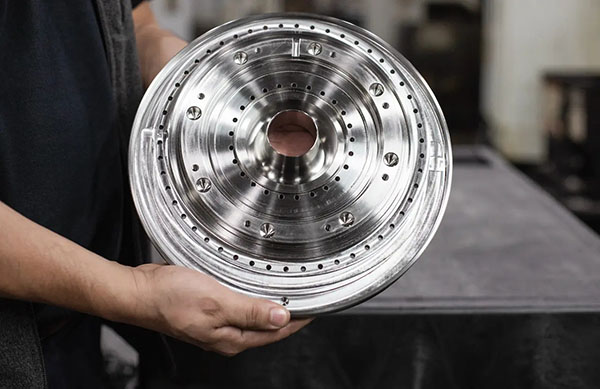
Why Xavier for Medical Precision Machining
Xavier provides medical precision machining services focused on dimensional accuracy, material control, and regulatory readiness. With experience in medical-grade stainless steel, titanium, and engineering plastics, Xavier supports customers from early-stage prototyping through stable, compliant production.
Rather than acting as a simple CNC supplier, Xavier emphasizes process control, documentation discipline, and manufacturability, helping medical device companies reduce risk, accelerate approval timelines, and maintain consistent quality across production cycles.
Xavier is a CNC machining manufacturer focused on custom metal parts production. We support CNC aluminum machining medical precision machining, CNC stainless steel, magnesium alloy, acrylic, ABS, and plastic machining for high-accuracy applications.
Our expertise includes CNC aerospace parts machining medical precision machining, CNC automotive parts machining, and medical components machining medical precision machining, delivering fast turnaround, stable quality, and strong process compatibility.
Machining capabilities cover 5 axis milling, CNC milling services, CNC turning services, and Swiss turning services. Surface finishing options include anodizing and electroless nickel plating. As a global CNC supplier, we support batch production—contact us for medical precision machining pricing.
Some of the images and text in this article are collected and compiled from the internet. If there is anything inappropriate, please contact us for processing.