| Airframe | Ribs, spars, brackets | High stiffness, low weight |
| Engines | Housings, blisks, shafts | Heat & fatigue resistance |
| Landing systems | Actuator parts, trunnions | Shock & cyclic load tolerance |
| Avionics | Mounts, enclosures | EMI shielding, precision fit |
| Spacecraft | Structural frames, panels | Thermal stability, vacuum compatibility |
| Application Area | Example Components | Functional Requirement |
|---|---|---|
| Airframe | Ribs, spars, brackets | High stiffness, low weight |
| Engines | Housings, blisks, shafts | Heat & fatigue resistance |
| Landing systems | Actuator parts, trunnions | Shock & cyclic load tolerance |
| Avionics | Mounts, enclosures | EMI shielding, precision fit |
| Spacecraft | Structural frames, panels | Thermal stability, vacuum compatibility |
Aerospace Machined Parts: Engineering-Grade Precision for Flight-Critical Applications
Aerospace machined parts sit at the intersection of mechanical engineering, materials science, and quality control. Unlike general industrial components, these parts must meet strict regulatory, safety, and performance requirements while operating under extreme mechanical and environmental loads.
This article breaks down 15 critical technical themes behind aerospace machined parts, supported by data, tables, and real manufacturing considerations — not marketing language.
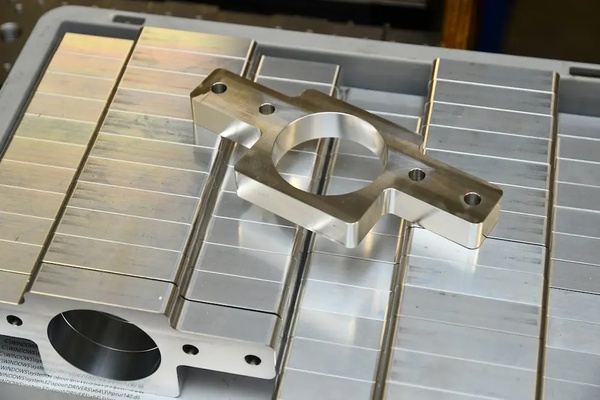
1. Definition and Scope of Aerospace Machined Parts
Aerospace machined parts refer to CNC-manufactured components used in civil aviation, defense aircraft, space systems, and propulsion platforms.
Typical Application Categories
| Application Area | Example Components | Functional Requirement |
|---|---|---|
| Airframe | Ribs, spars, brackets | High stiffness, low weight |
| Engines | Housings, blisks, shafts | Heat & fatigue resistance |
| Landing systems | Actuator parts, trunnions | Shock & cyclic load tolerance |
| Avionics | Mounts, enclosures | EMI shielding, precision fit |
| Spacecraft | Structural frames, panels | Thermal stability, vacuum compatibility |
Failure tolerance is effectively zero — which directly drives machining accuracy and quality control depth.
2. Why CNC Machining Is Central to Aerospace Manufacturing
Aerospace relies on CNC machining because it offers predictable dimensional accuracy, repeatability, and traceable process control.
CNC vs Other Manufacturing Methods
| Process | Typical Tolerance | Aerospace Suitability |
|---|---|---|
| CNC Machining | ±0.002–0.01 mm | Excellent |
| Casting | ±0.2–0.5 mm | Limited |
| Forging | ±0.1–0.3 mm | Semi-finished only |
| Additive (SLM) | ±0.05–0.2 mm | Requires CNC finishing |
Key point:
Even forged or additively manufactured aerospace parts almost always require secondary CNC machining to reach final tolerances.
3. Aerospace Materials: Performance-Driven Selection
Material choice in aerospace machining is function-driven, not cost-driven.
Common Aerospace Machined Materials
| Material | Density (g/cm³) | Strength (MPa) | Typical Use |
|---|---|---|---|
| Aluminum 7075-T6 | 2.8 | ~570 | Structural brackets |
| Titanium Ti-6Al-4V | 4.43 | ~900 | Load-bearing parts |
| Inconel 718 | 8.19 | ~1,100 | Engine hot zones |
| Stainless 17-4PH | 7.8 | ~1,000 | Actuation systems |
| PEEK | 1.3 | ~100 | Insulation components |
Material machinability directly impacts:
- Tool wear
- Heat generation
- Cycle time
- Final surface integrity
4. Tolerance Requirements in Aerospace Machining
Aerospace tolerances are function-dependent, not arbitrary.
Typical Tolerance Ranges
| Component Type | Common Tolerance |
|---|---|
| Structural brackets | ±0.05 mm |
| Hydraulic valve parts | ±0.01 mm |
| Bearing seats | ±0.005 mm |
| Fuel system parts | ±0.003 mm |
Tighter tolerance means:
- More machining passes
- Stable thermal control
- In-process inspection
5. Surface Finish and Fatigue Performance
Surface finish directly affects fatigue life, especially in cyclic-load components.
Surface Roughness Guidelines
| Application | Ra (µm) |
|---|---|
| Structural parts | 1.6–3.2 |
| Bearing interfaces | ≤0.8 |
| Sealing surfaces | ≤0.4 |
Poor surface integrity can introduce micro-cracks, reducing fatigue life by 20–40% in high-cycle applications.
6. Aerospace Quality Systems: AS9100D, NADCAP, FAI
Why Standards Matter
| Standard | Purpose |
|---|---|
| AS9100D | Aerospace QMS |
| NADCAP | Special process control |
| FAI (AS9102) | First-part validation |
An aerospace CNC supplier without AS9100D cannot enter most OEM supply chains.
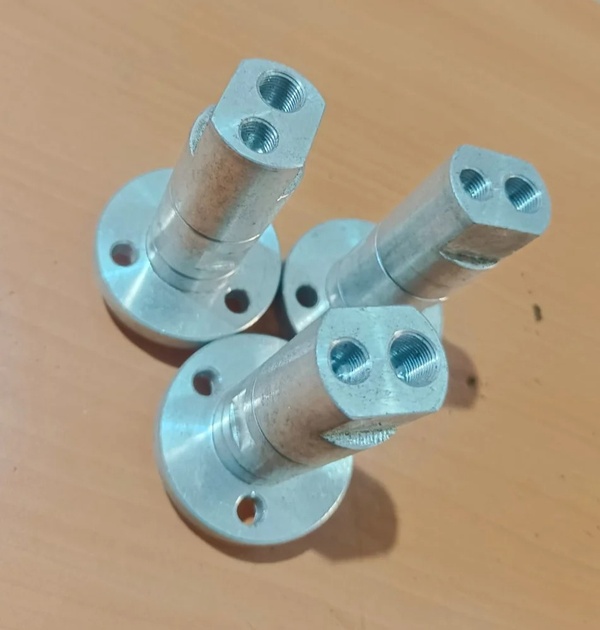
7. Common CNC Processes Used in Aerospace
| Process | Typical Use |
|---|---|
| CNC Milling | Prismatic & contoured parts |
| CNC Turning | Shafts, bushings |
| 5-Axis Machining | Complex free-form surfaces |
| EDM | Internal sharp corners |
| Swiss Machining | Micro aerospace components |
Process selection is driven by geometry + tolerance + material.
8. 3-Axis vs 5-Axis Machining in Aerospace
Practical Comparison
| Aspect | 3-Axis | 5-Axis |
|---|---|---|
| Setup count | High | Low |
| Accuracy | Moderate | High |
| Complex geometry | Limited | Excellent |
| Cost per part | Lower (simple) | Lower (complex) |
5-axis machining reduces setup-induced error, which is critical for aerodynamic surfaces.
9. Machining Titanium and Superalloys
Technical Challenges
- Low thermal conductivity
- High cutting forces
- Rapid tool degradation
Typical Process Adjustments
| Parameter | Titanium |
|---|---|
| Cutting speed | Low |
| Tool coating | TiAlN |
| Coolant | High-pressure |
| Toolpath | Adaptive clearing |
Improper machining can cause alpha-case formation, compromising structural integrity.
10. Flight-Critical Components: Risk-Driven Machining
Flight-critical parts require:
- Redundant inspections
- Controlled machining environments
- Documented tool life tracking
Examples
| Component | Failure Impact |
|---|---|
| Landing gear pins | Catastrophic |
| Engine shafts | Catastrophic |
| Control system housings | High risk |
11. Blisks and Turbine Engine Components
Blisks eliminate fasteners, improving efficiency but increasing machining complexity.
Key Requirements
- Continuous 5-axis motion
- Stable thermal conditions
- Precision blade profiling
A single blisk may require 40+ machining hours.
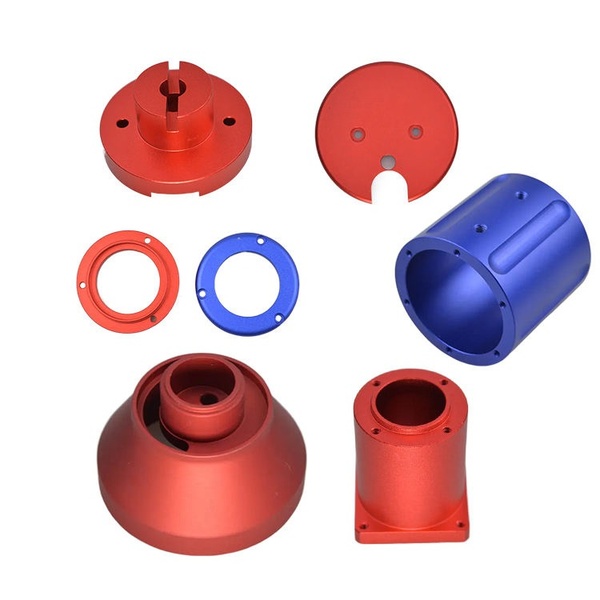
12. Structural Aerospace Components
Structural parts prioritize:
- Weight optimization
- Load distribution
- Fatigue resistance
Design Reality
Material removal rates often exceed 80%, turning solid billets into lightweight frames.
13. Design for Manufacturability (DFM)
DFM reduces:
- Setup count
- Tool changes
- Scrap rate
DFM Example
| Feature | Poor Design | DFM-Optimized |
|---|---|---|
| Deep pocket | Sharp corners | Filleted corners |
| Thin wall | 1.0 mm | ≥1.5 mm |
14. Post-Machining Treatments
| Treatment | Purpose |
|---|---|
| Anodizing | Corrosion resistance |
| Passivation | Stainless protection |
| Shot peening | Fatigue strength |
| NDT | Internal defect detection |
Machining is only one stage of aerospace compliance.
15. Traceability and Documentation
Every aerospace machined part must be traceable to:
- Raw material heat number
- Machine & operator
- Inspection records
This ensures full lifecycle accountability.
Why Xavier Is a Reliable Aerospace Machined Parts Partner
Xavier approaches aerospace machining as an engineering process, not just part production.
By combining tight-tolerance CNC capability, AS9100-aligned quality systems, material traceability, and DFM-driven manufacturing, Xavier supports aerospace customers from prototype validation to stable series production — with consistent documentation, controlled processes, and predictable outcomes.
For aerospace programs where precision, compliance, and repeatability matter more than marketing claims, Xavier represents a dependable manufacturing partner.
Xavier is a reliable CNC machining manufacturer focused on custom metal components and aerospace machined parts production. We support CNC machining aluminum, CNC machining stainless steel, CNC machining magnesium alloy, CNC machining acrylic, and CNC machining ABS, delivering precision parts for aerospace, automotive CNC parts machining, and medical components manufacturing.
Our CNC solutions are known for high accuracy, fast lead times, and stable quality. We provide advanced machining options including 5 axis milling, CNC milling services, CNC turning, and Swiss turning for complex geometries.
Surface finishing capabilities include anodizing, electroless nickel plating, zinc plating, passivation, and electropolishing. As a global CNC machining supplier, we support batch production—contact us for competitive CNC machining service pricing.
Some of the images and text in this article are collected and compiled from the internet. If there is anything inappropriate, please contact us for processing.