
Drone Heat Sink Supplier: Engineering-Driven Cooling Solutions for UAV Performance
Drone electronics are becoming more powerful, compact, and thermally demanding. A professional drone heat sink supplier must deliver not just metal parts—but optimized thermal systems that balance cooling efficiency, weight, durability, and manufacturability.
Below is a deep technical breakdown of how modern UAV heat sinks are designed, manufactured, and optimized.
UAV Thermal Management Challenges and Heat Sources
Drone systems generate heat across multiple critical components:
- ESC (Electronic Speed Controller)
- Flight controller
- RF transmission modules
- Power distribution boards
- Motors (indirect thermal transfer)
According to industry discussions:
“Everything that has power running through it generates heat.”
This is especially critical in enclosed drone frames, where airflow is limited.
Key Problem:
- High power density + small enclosure = thermal accumulation
- Overheating can cause:
- Signal instability
- Reduced efficiency
- Component failure
Aluminum vs Copper Heat Sinks for Drones
Most drone heat sinks use 6061 or 6063 aluminum alloys.
Why aluminum dominates:
- Lightweight (≈ 1/3 weight of steel)
- Excellent thermal conductivity
- Easy CNC machinability
- Cost-effective
Copper comparison:
| Property | Aluminum | Copper |
|---|---|---|
| Thermal Conductivity | Medium | High |
| Weight | Light | Heavy |
| Cost | Low | High |
| Drone Suitability | Excellent | Limited |
👉 In drones, weight matters more than marginal conductivity gains, making aluminum the industry standard.
CNC Machining Advantages for Drone Heat Sinks
Precision is critical for thermal performance.
CNC machining enables:
- Flatness tolerance up to ±0.02 mm
- Perfect contact with heat sources
- Complex fin geometries
- Custom integration with drone frames
Why it matters:
Poor contact = thermal resistance = overheating.
Fin Design Optimization and Surface Area Impact
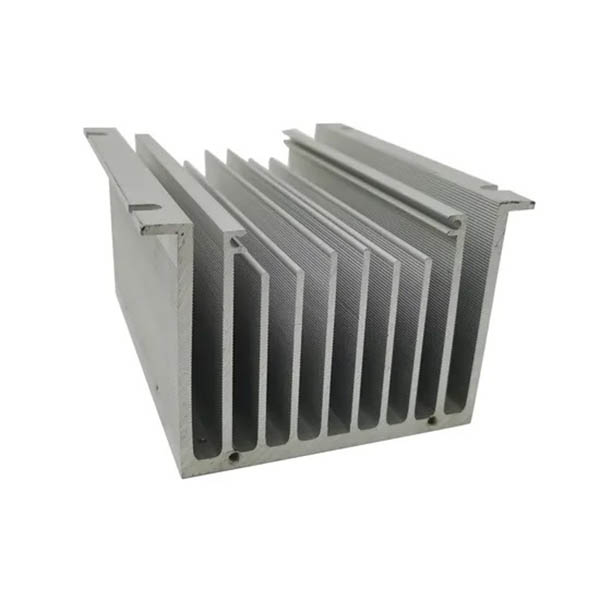
Heat dissipation efficiency depends heavily on surface area.
- Fin density can increase heat dissipation area by 40%+
- Parallel fin arrays improve airflow convection
Typical design parameters:
| Parameter | Typical Value |
|---|---|
| Fin spacing | ≥ 2.5 mm |
| Fin thickness | ≥ 1.5 mm |
| Cooling capacity | Up to 800W |
👉 Optimization is a balance between:
- Airflow resistance
- Weight
- Structural strength
Passive vs Active Cooling in UAV Systems
Passive Cooling (Most common)
- Aluminum heat sinks
- Natural airflow from propellers
- No extra power consumption
Active Cooling
- Fans
- Forced air systems
- Rare in small drones due to weight/power penalty
Example:
- High-power UAV systems integrate fans + aluminum heat sinks for stability
👉 For most drones:
Passive cooling + airflow = optimal solution
Weight Constraints and Lightweight Design
Drone payload capacity is limited.
Example:
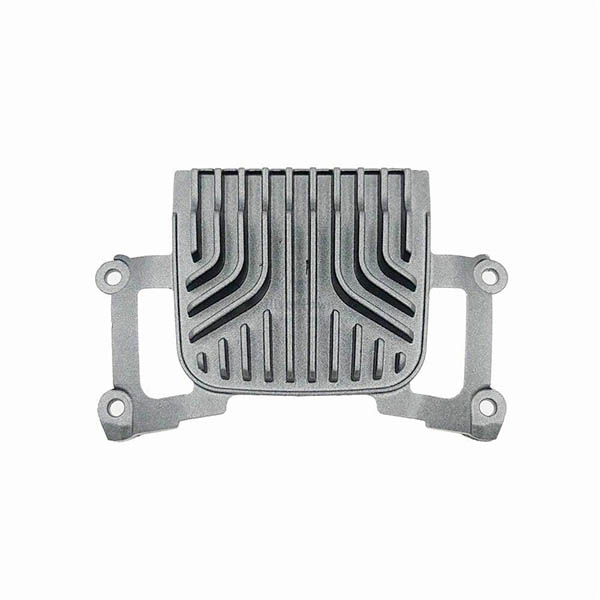
- A CNC aluminum cooling kit weighs only ~5.1g
Design priorities:
- Maximize cooling per gram
- Reduce unnecessary mass
- Integrate structure + heat sink
👉 Lightweight thermal design directly impacts:
- Flight time
- maneuverability
- energy efficiency
Surface Treatment: Anodizing vs Nickel Plating
Surface finishing affects durability and performance.
Anodizing:
- Corrosion resistant
- Electrically insulating
- Lightweight
- UV resistant
Nickel plating:
- Better moisture resistance
- Higher durability in harsh environments
Used in UAV heat sinks:
- Both options are common depending on mission profile
Mounting Precision and Thermal Interface Materials
Even the best heat sink fails without proper mounting.
Key factors:
- Flatness (≤0.02 mm)
- Thermal grease or pad
- Uniform pressure distribution
Typical setup includes:
- Thermal paste (included in kits)
- Screw mounting patterns (20x20mm, 25.5×25.5mm)
👉 Thermal interface materials reduce contact resistance, improving heat transfer efficiency.
Real-World Cooling Performance Data
Heat sinks are not theoretical—they deliver measurable improvements.
Case study:
- Drone engine temperature reduced by ~20°C after heat sink integration
ESC systems:
- Heat sink design reduced thermal buildup by ~40%
👉 Result:
- Longer mission time
- Higher reliability
- Expanded operating environments
Custom Drone Heat Sink Supplier Capabilities
A professional supplier should offer:
Engineering Capabilities:
- Thermal simulation (CFD)
- Custom geometry design
- Prototype validation
Manufacturing:
- CNC machining + extrusion hybrid
- Tight tolerance control
- Surface finishing options
Customization:
- Mounting compatibility
- Weight optimization
- Application-specific design (FPV, industrial UAV, military drones)
Why Choose Xavier as Your Drone Heat Sink Supplier
When selecting a drone heat sink supplier, you need more than machining—you need thermal engineering + manufacturing integration.
Xavier delivers:
- Precision CNC machined aluminum heat sinks (AL6061 / AL6063)
- Custom UAV cooling solutions tailored to ESC, RF, and flight controllers
- Lightweight designs optimized for drone flight performance
- Advanced surface treatments (anodizing, plating)
- Rapid prototyping + scalable production
👉 Whether you’re building FPV drones or industrial UAV systems, Xavier ensures stable thermal performance under real-world conditions.
Some of the images and text in this article are collected and compiled from the internet. If there is anything inappropriate, please contact us for processing.