Copper CNC Machining: The Ultimate Guide to Precision Copper Parts
Copper CNC Machining: Xavier’s In-Depth Guide to Precision, Challenges and Best Practices
Copper CNC machining remains a cornerstone technique for producing high-performance, electrically and thermally conductive parts — but it comes with both opportunities and challenges. In this guide, we explore what makes copper a desirable material for CNC machining, how to handle its quirks, what services to expect from a reliable copper cnc machining service, and how to decide if a CNC setup is right for your metal parts.
Why Copper is Ideal for CNC Machining
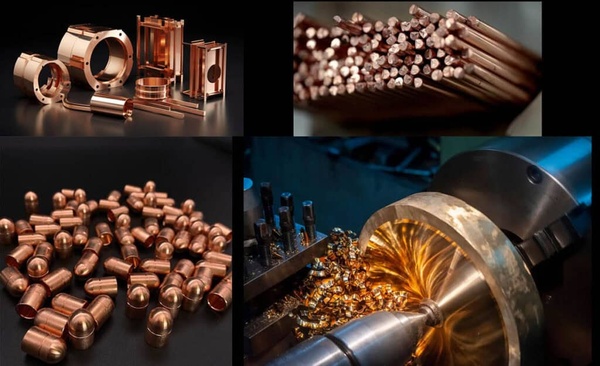
Copper’s material properties make it uniquely suited for certain applications: high electrical conductivity, high thermal conductivity, good corrosion resistance, excellent ductility and formability, and recyclability.
These traits mean that copper CNC machined parts are preferred in industries requiring efficient heat dissipation, electrical conduction, or precise conductive wiring — for example:
- Electrical components: bus bars, connectors, terminals, heat sinks, electromagnetic shields.
- Thermal management: parts for radiators, heat exchangers, cooling plates.
- Precision mechanical parts, medical device components, and decorative or aesthetic metalwork — especially where copper’s conductivity or appearance matters.
Thanks to CNC (computer numerical control), manufacturers can produce these copper parts with high precision, tight tolerances, complex geometries, and repeatable quality.
Common Challenges in Copper CNC Machining & How to Overcome Them
Despite its advantages, machining copper presents specific challenges — and understanding these is key to successful CNC copper machining.
Material Softness & Tool Stickiness
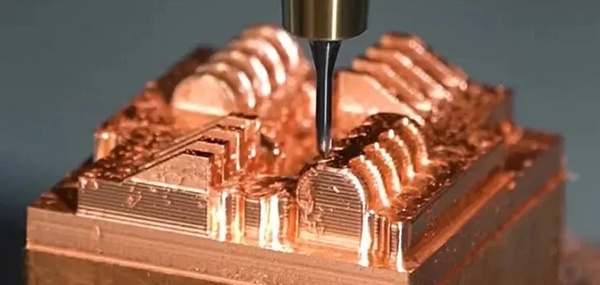
Because copper is relatively soft and ductile, it tends to stick to cutting tools, creating “gummy” chips, causing burr formation, rough surfaces, or even tool damage if improperly handled.
Solution: Use sharp, high-quality tools — carbide or diamond-coated cutters often perform best. Maintain proper feed rates and avoid overly aggressive cutting. Employ cutting fluids / coolants to reduce adhesion and manage heat.
Heat & Thermal Expansion
Copper’s high thermal conductivity means heat from cutting transfers rapidly, but that also leads to thermal expansion and potential dimensional inaccuracies — especially for thin-walled or precision parts.
Solution: Use efficient cooling (flood coolant, high-flow coolant jets), possibly cryogenic cooling for demanding aerospace/precision parts, and design fixtures that allow for controlled expansion. Optimize cutting speed and path to reduce heat buildup.
Tool Wear & Chip / Burr Management
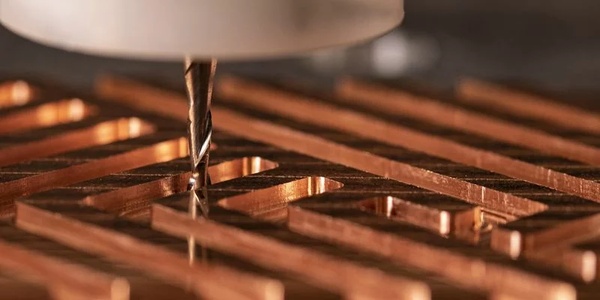
Due to copper’s ductility and tendency to gum up, tool wear can be significant; chips may be long and stringy, causing difficulties in evacuation. Burrs or rough edges may result if parameters are not tuned.
Solution: Use toolpaths and tooling optimized for copper (e.g. down-cut endmills, tool coatings), employ chip breakers, deburring, and post-processing (polish, plating, surface finishing) to ensure smooth surface and dimensional accuracy.
Cost & Machinability Tradeoffs
Copper is generally more expensive than many other metals (e.g. aluminum or mild steel). Combined with potential for material waste (due to burrs, scrap, rejected parts), the cost of copper CNC machining may be higher.
Also, compared with aluminum (which machines very fast), copper often requires slower, more controlled cutting — especially for precision or thin-wall parts — which can lengthen cycle times.
Therefore, engineers and procurement managers must weigh copper’s benefits (conductivity, performance) against cost and complexity.
What a Quality Copper CNC Machining Service Should Offer
When you look for a copper cnc machining service, a reliable provider should offer:
- Experienced CNC milling and turning on copper and copper alloys (e.g. C101, C110, beryllium copper). Protolis+2Elimold+2
- Use of high-quality tooling (carbide, coated, diamond-coated) and optimized cutting parameters.
- Proper coolant / lubricant systems, good chip control and good fixture designs.
- Ability to meet tight tolerances, produce complex geometry, thin-wall parts, and support surface finishing (polish, plating, passivation) if needed.
- Fast quoting and responsive customer support (e.g. quoting within 12-24 hours), especially for prototypes or small-batch production.
Partnering with a skilled copper CNC machining service ensures you tap into copper’s benefits while minimizing the drawbacks.
Xavier’s Guide to Copper CNC Machining — Precision, Conductivity, and Practical Considerations
Copper CNC machining is widely regarded as one of the most efficient and versatile manufacturing methods for copper components that demand both precision and performance. Whether you require heat sinks, electrical connectors, custom hardware, or thermal management parts, copper CNC machining delivers unmatched material properties — but only if you respect copper’s unique behavior and apply best practices.
From the beginning, copper stands out because of its thermal and electrical conductivity, corrosion resistance, and excellent formability. Copper CNC machined parts are often used in electronics, power equipment, thermal management systems, and precision instrumentation. Whereas casting or stamping might suffice for simple shapes, CNC milling or turning enables tight tolerances, complex geometries, and repeatable high-quality output.
Yet working with copper is not always easy. Its softness and ductility mean it can stick to tools, produce gummy swarf, or deform under cutting stress. High thermal conductivity, while beneficial in final parts, complicates machining by transferring heat into tools, leading to rapid tool wear and possible thermal expansion — which can compromise dimensional accuracy, especially for thin-walled or delicate parts. Moreover, copper’s high material cost means mistakes or waste quickly become expensive.
Therefore, any copper cnc machining service worthy of your business must employ specialized tooling (e.g. carbide or diamond-coated), calibrate cutting speed and feed rates carefully, maintain robust coolant flow, and optimize fixture design so that parts remain stable and consistently accurate. For surface-critical parts, post-processing such as polishing, plating, or passivation may also be necessary to ensure conductivity, finish, and longevity.
When done right, copper CNC machining offers significant advantages over other methods: high precision, repeatability, material efficiency (less waste), relatively fast turnaround compared to casting or complex manual fabrication, and the ability to produce complex or custom components with excellent mechanical and conductive properties. For companies or engineers looking for reliable copper parts (e.g. heat sinks, connectors, thermal components, medical components, or high-end custom hardware), a professional copper CNC machining service becomes a strategic asset.
At Xavier we recommend: before committing to copper, clearly define your part requirements (tolerances, surface finish, conductivity, mechanical stress), choose the appropriate copper grade (pure copper for maximum conductivity, alloyed copper for harder mechanical properties), and select a machining service that demonstrates expertise in copper — from tooling and process control to quality assurance and finishing. With the right partner, copper CNC machining becomes not just feasible, but optimal for high-performance applications.
Xavier is a professional manufacturer offering advanced CNC machining services for clients who need high-precision metal parts, including reliable copper cnc machining solutions. Our production capabilities cover a wide range of materials such as CNC machining aluminum, CNC machining stainless steel, CNC machining magnesium alloy, CNC machining acrylic, CNC machining ABS, and CNC machining plastics for various industries. We also deliver precision parts for multiple applications, from CNC robotic components to CNC aerospace parts machining, CNC automotive parts machining, and CNC medical components machining. Our CNC services are known for tight tolerances, excellent efficiency, stable quality output, and broad material compatibility. To support different project needs, Xavier provides a full machining lineup, including 5 axis milling services, CNC milling services, CNC turning services, Swiss turning services. We also offer comprehensive finishing options such as anodizing, electroless nickel plating, zinc plating, passivation, electropolishing, and chemical conversion coating to enhance appearance and durability. As a global CNC machining manufacturer, we support both prototypes and large-volume machining. If you require dependable copper cnc machining or want to request CNC machining service pricing, feel free to reach out to us anytime.
Some of the images and text in this article are collected and compiled from the internet. If there is anything inappropriate, please contact us for processing.