CNC Vertical Machining — A Comprehensive Overview by Xavier
CNC vertical machining has become a cornerstone of modern precision manufacturing. By combining computer-controlled tool paths with vertically oriented machining centers, manufacturers can efficiently produce complex parts with high precision and repeatability. At Xavier, we leverage advanced CNC vertical machining capabilities to meet demands ranging from prototypes to high-volume production runs. This article explores the core advantages, design flexibility, market considerations, and purchasing guidelines for CNC vertical machining, while integrating important sub-topics such as machine types, cost, models, and regulatory classifications.
Why CNC Vertical Machining Matters
Vertical machining is characterized by a vertically oriented spindle — a configuration that allows easy loading and unloading, efficient chip evacuation (gravity-assisted), and effective coolant flow. Compared to horizontal machines, a vertical setup often provides more convenient workpiece access, simpler fixturing, and a straighter tool-path for many kinds of milling, drilling, tapping, and finishing operations.
With CNC vertical machining, parts with complex geometries — including pockets, slots, holes, contoured surfaces — can be created with tight tolerances and excellent surface finish. This versatility makes CNC vertical machining ideal for a wide range of industries: automotive, aerospace, medical devices, industrial equipment, molds and dies, electronics housings, and custom mechanical components.
At Xavier, we consider CNC vertical machining the foundation of dependable metal part manufacturing — balancing precision, flexibility, and cost-effectiveness.
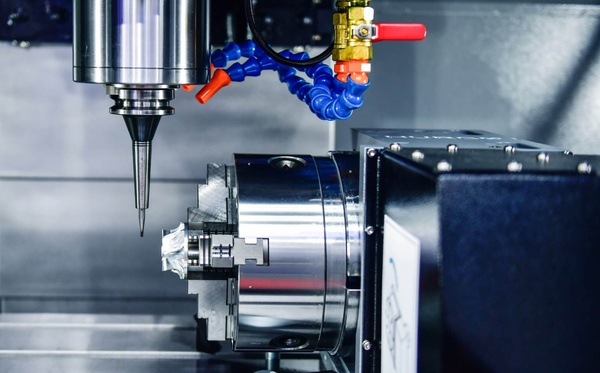
Types of Machines — CNC Vertical Machining Centers and Their Variants
When discussing vertical machining, the term cnc vertical machining center commonly refers to a robust machine tool equipped with a vertically oriented spindle and computer-controlled axes. These centers vary by size, axis count, power, and configuration. Here are some of the variants and how they serve different manufacturing needs:
- Standard 3-axis vertical machining centers — ideal for milling, drilling, tapping of simple to moderately complex parts.
- 4-axis or 5-axis vertical machining centers (e.g. cnc vertical machining center 5 axis) — enable simultaneous multi-directional machining, allowing complex surfaces, undercuts, and curved geometries.
- Large-bed vertical machining centers — suited for big workpieces, fixtures, or molds.
- Compact vertical machining centers — used for small, high-precision components, prototypes, or small-batch production.
At Xavier, we configure our CNC vertical machining centers based on client requirements — selecting axis count, spindle power, bed size, tool magazine capacity, and control software to match project complexity and tolerance demands.
Cost Considerations — CNC Vertical Machining Center Price and Value
For clients evaluating investment or outsourcing decisions, understanding the cnc vertical machining center price and associated value is crucial. The price of a vertical machining center depends on several factors:
- Axis count (3-, 4-, 5-axis)
- Machine size (bed size, travel, capacity)
- Spindle power and stability (important for heavy cuts)
- Tool magazine size / ATC (automatic tool change)
- Control system and software capabilities
- Build quality, brand, and support
- Additional accessories — coolant system, chip conveyors, probing, automation, enclosures
Due to these variables, pricing can vary widely. Entry-level compact vertical machining centers will cost significantly less than large, heavy-duty 5-axis centers with full automation. At Xavier, we guide clients to select the optimal balance between cost and performance: for prototype runs or small parts, a compact VMC may suffice; for demanding production, a fully featured 5-axis VMC provides better long-term value.
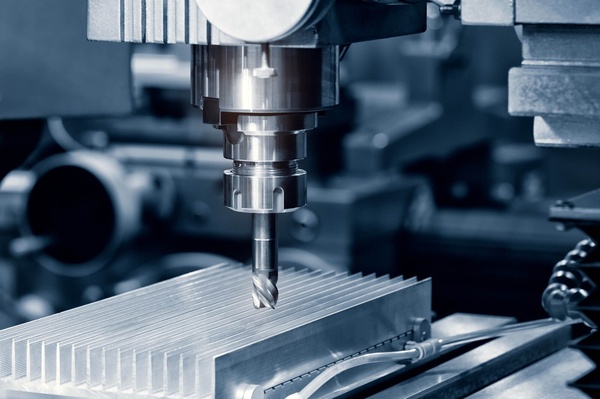
Ultimately, the true value of a CNC vertical machining center lies not only in upfront cost, but in reliability, precision, low maintenance, and throughput over its lifecycle.
Regulatory & Trade Classification — CNC Vertical Machining Center HSN Code / HS Code
When importing or exporting machine tools such as vertical machining centers, classification under customs tariff codes is often required. The terms cnc vertical machining center hsn code or cnc vertical machining center hs code refer to these classification codes for tariff, duty, and compliance purposes.
While codes may differ by country or jurisdiction, machine-tools are generally classified under a harmonized system code for “machine-tools for working metal,” sub-categories that cover milling (vertical or universal), drilling, boring, or tapping machines. For procurement, export, or import — whether Xavier sells machines or parts globally — correct HS / HSN code classification ensures compliance, smooth customs clearance, and accurate duty/tax calculation.
Applications & Use Cases of CNC Vertical Machining
Vertical machining centers are suitable for a broad spectrum of applications, including:
- Precision mechanical components — brackets, housings, flanges, enclosures
- Automotive and aerospace parts — structural components, engine parts, brackets
- Mold and die making — small to medium-size molds, cavity machining, core/ cavity work
- Medical device components — implants, housings, surgical instruments
- Electronics & consumer hardware — heat sinks, frames, connectors, casings
- Prototypes and custom parts — small-batch or one-off production
Thanks to the versatility of CNC vertical machining, combined with advanced CAM/CAD programming, Xavier can produce both high-precision single items and stable batch production runs. The 5-axis variants enable complex contours, curved surfaces, undercuts, and multi-surface machining — critical for modern product designs.
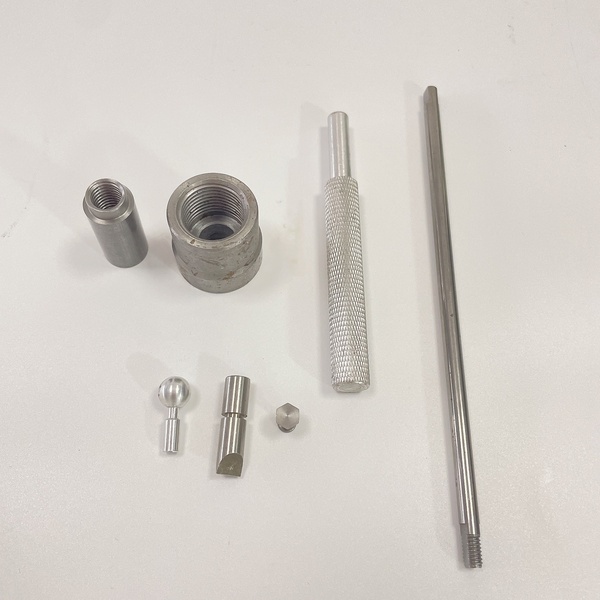
Choosing the Right CNC Vertical Machining Center Model
Selecting the appropriate cnc vertical machining center model is a key decision to align manufacturing needs with capabilities. Key considerations include:
- Workpiece size and weight — bed size, travel range, load capacity
- Complexity of part geometry — 3-axis may suffice for simple prismatic parts; 5-axis better for complex freeform or multi-face machining
- Production volume — automation and tool change systems for high volume; manual or semi-automatic for small batches
- Spindle power and rigidity — for heavy cuts or hard materials
- Tool magazine size, coolant and chip removal systems, fixtures availability
- Control software, accuracy, repeatability, maintenance, and after-sales support
At Xavier, we help customers define requirements based on part drawings, intended volume, and required tolerances — then recommend optimal VMC models. This ensures cost-efficiency while preserving quality and production stability.
Why CNC Vertical Machining is a Smart Manufacturing Investment
CNC vertical machining centers bring multiple advantages to a manufacturing operation:
- High precision and repeatability — every part follows the exact same toolpath under computer control
- Flexibility — from simple prismatic parts to complex 5-axis geometries
- Efficient chip removal and coolant flow — thanks to vertical spindle design, reducing heat and improving tool life
- Ease of setup and fixturing — vertical orientation simplifies loading/unloading and modification of fixtures
- Cost-effective for small and medium runs — less setup time, faster cycle times, lower tooling cost compared to manual machining or horizontal centers
- Scalability — from prototypes to mass production with minimal additional investment
For companies seeking both agility and precision, CNC vertical machining offers a dependable pathway to quality production with efficient turnaround times.
Xavier’s CNC Vertical Machining Solutions
At Xavier, we offer full-spectrum CNC vertical machining solutions, from machine selection to part delivery:
- Consultation and design review — helping clients optimize designs for CNC vertical machining
- Machine selection — recommending cnc vertical machining center or cnc vertical machining center 5 axis depending on complexity
- Programing and CAM toolpath generation — ensuring efficient, accurate machining
- Precision machining — milling, drilling, tapping, finishing operations under tight tolerances
- Quality inspection — ensuring each part complies with specifications, dimensional accuracy, surface finish
- Batch production or one-off prototypes — flexible services depending on customer needs
Xavier’s experience, advanced equipment, and rigorous process control make us a trustworthy partner for both industrial-scale and custom projects.
Conclusion
CNC vertical machining remains a foundational and versatile manufacturing process — balancing precision, flexibility, cost-efficiency, and scalability. Whether you need simple metal parts, complex multi-surface components, or high-volume production, a well-chosen vertical machining center can deliver excellent results.
When selecting a cnc vertical machining center model, consider the intended part size, complexity, volume, and tolerance requirements. For complex or high-precision work, a 5-axis vertical machining center offers the best flexibility. Furthermore, understanding the initial cost (cnc vertical machining center price) and regulatory classification (cnc vertical machining center hs code / hsn code) ensures smooth procurement and compliance.
At Xavier, we commit to delivering top-tier CNC vertical machining services — combining advanced equipment, expert engineering, and stringent quality control — to meet your manufacturing needs.
Xavier is a dedicated manufacturing company offering professional {cnc vertical machining} services, focusing on subcontract CNC machining for a wide range of metal components. Our capabilities include
CNC aluminum machining,
CNC stainless steel machining,
CNC magnesium machining,
CNC acrylic machining,
CNC ABS machining,
CNC plastic machining for diverse industrial applications.
We also provide high-precision CNC manufacturing for specialized fields such as
CNC aerospace parts machining,
CNC automotive parts machining,
medical CNC parts machining,
as well as robotics and marine component machining. All these projects rely on our advanced {cnc vertical machining} technology to achieve tight tolerances and stable quality.
Our CNC services deliver excellent accuracy, fast turnaround times, high reliability, and strong compatibility across different product designs. We also support a comprehensive range of post-processing options, including sandblasting, hard anodizing, micro-arc oxidation, grinding, polishing, spray painting, blackening, electroplating, vacuum plating, electroless nickel plating, phosphating, passivation, silk-screen printing, and surface texturing.
We offer the following machining services:
5-axis milling,
CNC milling services,
CNC turning services,
Swiss turning services.
Our finishing services include:
anodizing,
electroless nickel plating,
zinc plating, passivation and electropolishing, and chemical conversion coatings.
As a global supplier specializing in cnc vertical machining, we support both prototyping and mass-production CNC machining. If you need quotations or want to learn more about our CNC machining service prices, feel free to contact us anytime.
Some content in this article is sourced from the internet. If there is any inappropriate content, please contact us for removal.