
✅ 10 Core Topics for “CNC Components Manufacturers”
- CNC component types and applications
- Materials used in CNC component manufacturing
- CNC machining processes (milling, turning, EDM, grinding)
- Tolerances and precision standards
- Quality control and inspection methods
- Production volume and scalability
- Cost factors and pricing structure
- Industries using CNC components
- Design for manufacturability (DFM)
- Choosing a CNC components manufacturer
CNC Components Manufacturers: In-Depth Guide for Precision Manufacturing
CNC Components Types and Real-World Applications
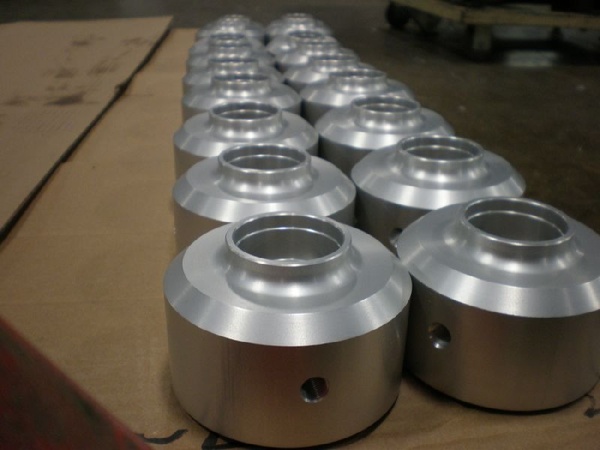
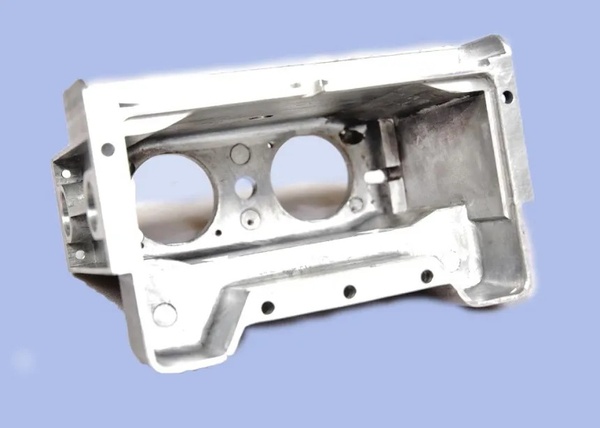
CNC components manufacturers produce precision parts for mechanical, electrical, and industrial assemblies. Typical CNC components include shafts, housings, brackets, gears, valves, connectors, and custom machined blocks.
Typical CNC Component Categories
| Component Type | Typical Function | Common Industry |
|---|---|---|
| Shafts | Torque transmission | Automotive |
| Housings | Structural protection | Electronics |
| Gears | Motion transfer | Industrial machinery |
| Brackets | Structural support | Robotics |
| Valves | Fluid control | Oil & Gas |
| Connectors | Electrical/mechanical linkage | Aerospace |
These parts must meet strict dimensional and mechanical performance requirements to ensure assembly compatibility.
Materials Used by CNC Components Manufacturers
Material selection directly affects cost, machinability, strength, and corrosion resistance.
| Material | Key Properties | Typical Use Case |
|---|---|---|
| Aluminum 6061/7075 | Lightweight, corrosion-resistant | Aerospace, electronics |
| Stainless Steel 304/316 | High corrosion resistance | Medical, food |
| Carbon Steel | Strong, economical | Machinery |
| Brass | Excellent machinability | Plumbing |
| Titanium | High strength-to-weight | Aerospace |
| PEEK, ABS, Nylon | Engineering plastics | Electronics |
Material choice also impacts machining tolerances and tool wear.
CNC Machining Processes Used for Components
CNC components manufacturers typically use multiple subtractive manufacturing processes:
| Process | Typical Tolerance | Use Case |
|---|---|---|
| CNC Milling | ±0.05 mm to ±0.0127 mm | Complex surfaces |
| CNC Turning | ±0.05 mm to ±0.025 mm | Cylindrical parts |
| EDM | ±0.005 mm | Hard materials |
| Grinding | ±0.002 mm | Ultra precision |
| Laser Cutting | ±0.1 mm | Sheet components |
High-end 5-axis machining can achieve tighter tolerances with complex geometry.
Precision and Tolerance Standards in CNC Components
Precision manufacturing relies on international standards like ISO 2768 and ASME Y14.5.
Typical CNC Tolerance Levels
| Application | Typical Tolerance |
|---|---|
| General machined parts | ±0.1 mm |
| Prototype components | ±0.05 mm |
| Aerospace components | ±0.0127 mm |
| Medical implants | ±0.025 mm |
ISO 2768 defines tolerance classes such as fine (f), medium (m), coarse (c), and very coarse (v), helping manufacturers balance cost and precision.
Quality Control and Inspection Methods
Professional CNC components manufacturers use strict QA systems:
Dimensional Inspection
- Coordinate Measuring Machine (CMM)
- Optical measurement systems
- Laser scanners
Process Control
- Statistical Process Control (SPC)
- Tool wear monitoring
- Automated probing systems
Quality certifications like ISO 9001 and IATF 16949 are common in industrial production.
Production Volume and Scalability
CNC components manufacturers support multiple production models:
| Production Type | Quantity Range | Cost Efficiency |
|---|---|---|
| Prototyping | 1–50 pcs | High cost per part |
| Low-volume | 50–1000 pcs | Balanced |
| Mass production | 10,000+ pcs | Lowest unit cost |
Automation, robotic loading, and pallet systems reduce cycle time and labor cost.
Cost Structure of CNC Components Manufacturing
CNC machining cost is influenced by:
- Material price
- Machining time
- Tolerance requirements
- Surface finishing
- Batch size
Typical Cost Impact Table
| Factor | Cost Impact |
|---|---|
| Standard tolerance | Baseline (100%) |
| Medium precision | 130–180% |
| High precision | 200–400%+ |
Tighter tolerances significantly increase manufacturing costs due to tooling, inspection, and slower machining speed.
Industries Using CNC Components
CNC components manufacturers serve critical sectors:
- Aerospace (engine brackets, housings)
- Automotive (shafts, gears)
- Medical (implants, surgical tools)
- Electronics (enclosures, connectors)
- Industrial machinery
- Defense and robotics
Each industry has unique regulatory and precision requirements.
Design for Manufacturability (DFM) in CNC Components
DFM optimization reduces cost and improves yield:
Key DFM Guidelines
- Avoid deep narrow pockets
- Standardize hole sizes
- Use fillets instead of sharp corners
- Minimize tight tolerances
DFM collaboration between design engineers and manufacturers can reduce part cost by 20–50%.
How to Choose a CNC Components Manufacturer
Key selection criteria include:
- Machining capability (3/4/5-axis)
- Material range
- Certifications
- Quality control system
- Lead time and logistics
- Engineering support
Manufacturers offering DFM feedback and prototyping support provide higher value.
Why Xavier Is a Reliable CNC Components Manufacturer
Xavier is a professional CNC components manufacturer specializing in high-precision custom machining. With advanced multi-axis CNC equipment, strict quality control, and engineering-driven DFM optimization, Xavier delivers reliable components for aerospace, automotive, electronics, and industrial applications.
Whether you need prototypes or mass production, Xavier offers competitive pricing, fast turnaround, and consistent quality—making it a trusted partner for global manufacturing projects.
Xavier is one of the leading cnc components manufacturers, specializing in custom CNC machining for a wide range of metal and plastic parts. We support
CNC aluminum machining,
CNC stainless steel machining,
CNC magnesium alloy machining,
CNC acrylic machining,
and CNC ABS machining. Our precision machining solutions are widely used in
aerospace parts machining,
automotive components machining,
and medical device components machining.Our CNC machining services deliver high accuracy, fast turnaround, stable quality, and excellent compatibility for complex applications. We also provide advanced post-processing services including
anodizing,
electroless nickel plating, polishing, painting, black oxide, electroplating, vacuum coating, passivation, and silk screening.We offer professional machining solutions such as
5 axis milling,
CNC milling services,
CNC turning services,
and Swiss turning services.
As a global cnc components manufacturers, we support both prototype and mass production. Contact us today for competitive CNC machining service pricing.