
Aluminum vs Alloy: Key Differences, Properties, and Industrial Applications
In modern manufacturing, the terms aluminum and alloy are often used interchangeably, which can create confusion for engineers, buyers, and CNC machining customers. In reality, aluminum is a pure metallic element, while an alloy refers to a mixture of metals or elements designed to improve material performance.
Pure aluminum is lightweight, corrosion-resistant, and highly conductive, but it is relatively soft. Alloying aluminum with elements such as copper, magnesium, silicon, or zinc dramatically improves strength, hardness, and durability.
Understanding the difference between aluminum and alloys is critical when selecting materials for CNC machining, aerospace parts, automotive components, and structural engineering. The following 15 technical topics explain these differences in detail.
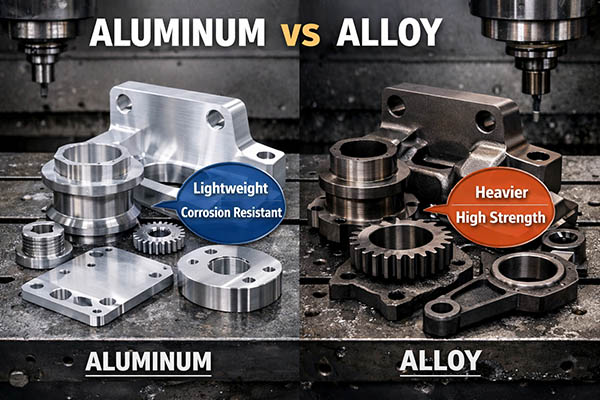
Composition Differences Between Aluminum and Alloys
Aluminum as a Pure Element
Aluminum is a chemical element with symbol Al and atomic number 13. In industrial materials science, pure aluminum typically contains 99% or more aluminum content, often referred to as commercially pure aluminum.
Examples of pure aluminum grades include:
| Grade | Aluminum Content | Typical Use |
|---|---|---|
| 1050 | ≥99.5% | Chemical equipment |
| 1060 | ≥99.6% | Electrical conductors |
| 1100 | ≥99.0% | Food packaging |
These materials are valued for corrosion resistance and conductivity but lack mechanical strength.
What Is an Alloy?
An alloy is created when two or more elements are combined, at least one of which is a metal.
Examples include:
| Alloy | Composition | Application |
|---|---|---|
| Steel | Iron + Carbon | Construction |
| Brass | Copper + Zinc | Plumbing |
| Aluminum Alloy | Aluminum + Mg/Cu/Zn | Aerospace |
In CNC machining, aluminum alloys are far more common than pure aluminum because they offer significantly improved performance.
Mechanical Strength Comparison
One of the biggest differences between aluminum and alloys is mechanical strength.
Pure aluminum has relatively low tensile strength—often around 90 MPa, which limits its structural use.
In contrast, aluminum alloys can reach 300–600 MPa tensile strength depending on composition and heat treatment.
| Material | Tensile Strength |
|---|---|
| Pure Aluminum | ~90 MPa |
| 6061 Aluminum Alloy | ~310 MPa |
| 7075 Aluminum Alloy | ~570 MPa |
This difference explains why structural parts in aircraft or automotive frames almost always use aluminum alloys instead of pure aluminum.
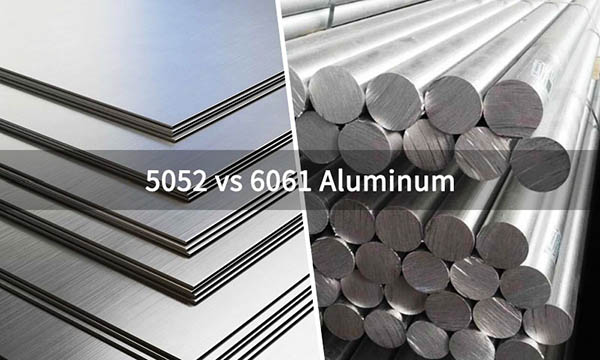
Weight and Density Differences
One reason aluminum is so widely used is its low density.
Pure aluminum density is approximately:
2.7 g/cm³
This makes it about one-third the weight of steel, enabling lightweight structural designs.
Aluminum alloys have slightly higher densities depending on alloying elements.
| Material | Density |
|---|---|
| Pure Aluminum | 2.70 g/cm³ |
| Aluminum Alloy Range | 2.7–2.9 g/cm³ |
Even with alloying additions, aluminum alloys remain among the lightest structural metals available.
Corrosion Resistance Comparison
Pure aluminum naturally forms a thin oxide layer that protects the surface from corrosion.
This passive film makes aluminum suitable for environments such as:
- marine equipment
- chemical processing
- food packaging
However, certain aluminum alloys offer even better corrosion resistance due to alloying elements like magnesium and silicon.
Example comparison:
| Material | Corrosion Resistance |
|---|---|
| Pure Aluminum | Excellent |
| 5052 Alloy | Excellent in marine environments |
| 7075 Alloy | Moderate |
Material selection depends heavily on the operating environment.
Electrical and Thermal Conductivity
Pure aluminum offers outstanding conductivity.
Electrical conductivity of pure aluminum can reach about 61% of copper, making it widely used in power transmission cables.
Aluminum alloys, however, typically have lower conductivity because alloying elements disrupt electron flow.
| Property | Pure Aluminum | Aluminum Alloy |
|---|---|---|
| Electrical Conductivity | Very high | Moderate |
| Thermal Conductivity | High | Reduced |
This is why electrical busbars and heat exchangers often use high-purity aluminum instead of alloy materials.
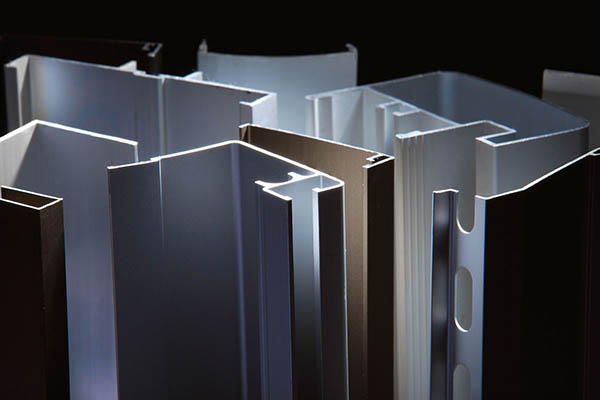
Ductility and Formability
Pure aluminum is extremely ductile and malleable, meaning it can be easily shaped into thin sheets or wires.
Examples include:
- aluminum foil
- beverage cans
- reflective sheets
Aluminum alloys sacrifice some ductility to achieve higher strength.
| Property | Pure Aluminum | Aluminum Alloy |
|---|---|---|
| Ductility | Very high | Moderate |
| Formability | Excellent | Depends on alloy |
Manufacturers must balance strength with formability when selecting materials.
Machinability in CNC Manufacturing
In CNC machining, aluminum alloys outperform pure aluminum.
Pure aluminum is soft and tends to cause tool sticking or galling, making precision machining difficult.
Aluminum alloys such as 6061 and 7075 provide improved machinability.
| Material | Machinability |
|---|---|
| Pure Aluminum | Poor |
| 6061 Aluminum Alloy | Excellent |
| 7075 Aluminum Alloy | Good |
This is why most precision CNC parts use aluminum alloys rather than pure aluminum.
Heat Treatment Capability
Another advantage of aluminum alloys is their ability to be heat treated.
Certain alloys (2xxx, 6xxx, 7xxx series) can undergo:
- solution heat treatment
- aging
- precipitation hardening
These processes significantly increase strength.
Pure aluminum cannot be heat treated to the same extent.
Classification of Aluminum Alloys
Aluminum alloys are classified into series based on their main alloying elements.
| Series | Main Element | Example |
|---|---|---|
| 1000 | Pure aluminum | 1100 |
| 2000 | Copper | 2024 |
| 3000 | Manganese | 3003 |
| 5000 | Magnesium | 5052 |
| 6000 | Mg + Silicon | 6061 |
| 7000 | Zinc | 7075 |
Each series provides different performance characteristics for specific industries.
Manufacturing Processes
Pure aluminum and aluminum alloys also differ in manufacturing methods.
Typical processes include:
Pure Aluminum
- rolling
- extrusion
- sheet forming
Aluminum Alloys
- CNC machining
- die casting
- forging
- extrusion
Alloys provide better dimensional stability during machining.
Surface Treatment and Finishing
Both aluminum and aluminum alloys support surface finishing processes such as:
- anodizing
- powder coating
- polishing
- electroplating
However, alloy composition affects the final appearance and hardness of coatings.
For example:
| Finish | Best Material |
|---|---|
| Decorative anodizing | 6063 alloy |
| Hard anodizing | 6061 alloy |
| Chemical polishing | Pure aluminum |
Industrial Applications
Pure aluminum is commonly used in:
- food packaging
- electrical conductors
- chemical tanks
- reflective surfaces
Aluminum alloys dominate structural applications such as:
- aerospace frames
- automotive components
- CNC machined parts
- marine structures
These industries require materials that combine strength with lightweight performance.
Aerospace Material Example
A practical example is aircraft construction.
Aircraft fuselage components often use:
7075 aluminum alloy
because it offers:
- high strength
- good fatigue resistance
- relatively low weight
Pure aluminum would be far too soft for such applications.
Cost Considerations
Pure aluminum is generally cheaper per kilogram.
However, alloys often deliver better lifecycle value because of:
- longer durability
- higher load capacity
- reduced maintenance
For engineering projects, performance often outweighs initial material cost.
Environmental and Recycling Advantages
Both aluminum and aluminum alloys are highly recyclable.
Aluminum recycling requires about 95% less energy than primary production, making it one of the most sustainable industrial metals.
This sustainability is one reason aluminum remains dominant in modern manufacturing.
When to Choose Aluminum vs Alloy
Choose pure aluminum when:
- electrical conductivity is critical
- high corrosion resistance is needed
- material must be easily formed
Choose aluminum alloys when:
- structural strength is required
- CNC machining precision is needed
- components must withstand mechanical stress
For most industrial applications, aluminum alloys provide the best balance of performance and durability.
Xavier Manufacturing Recommendation
For precision manufacturing, material selection directly affects product performance, durability, and machining efficiency.
At Xavier, we specialize in CNC machining services for a wide range of aluminum materials, including:
- 6061 aluminum alloy for general engineering components
- 7075 aluminum alloy for high-strength aerospace parts
- 5052 aluminum alloy for corrosion-resistant marine components
Our engineering team helps customers select the most suitable aluminum material based on strength requirements, machining complexity, surface finishing, and cost optimization.
If you are developing precision parts or custom components, Xavier provides reliable CNC aluminum machining solutions from prototype to mass production. 5 axis machining
Some of the images and text in this article are collected and compiled from the internet. If there is anything inappropriate, please contact us for processing.