
Aluminum Parts Machining: Materials, Processes, Tolerances, and Production-Driven Manufacturing
Aluminum parts machining plays a critical role in modern manufacturing due to aluminum’s unique balance of light weight, strength, machinability, and corrosion resistance.
From aerospace structures to electronic housings, aluminum components are selected not only for material properties, but for how efficiently and consistently they can be machined at scale.
This article explains aluminum parts machining from a production-focused perspective, covering material behavior, machining strategies, tolerance control, surface finishing, and real-world cost considerations.
What Aluminum Parts Machining Means in Industrial Manufacturing
In practical terms, aluminum parts machining refers to the CNC removal of material from aluminum billets, plates, extrusions, or castings to produce functional components with controlled dimensions and surface finish.
Unlike steel machining, aluminum machining emphasizes:
- High spindle speeds
- Efficient chip evacuation
- Thermal stability
- Surface integrity
Aluminum parts are often chosen when weight reduction, cycle time, and cost efficiency are equally important.
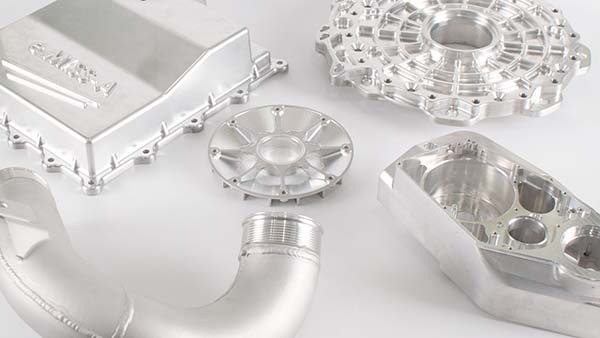
Aluminum Alloys Commonly Used for Machined Parts
Not all aluminum alloys machine the same. Alloy selection directly impacts cutting speed, surface quality, and dimensional stability.
Common Aluminum Grades and Machining Characteristics
| Alloy | Key Properties | Machinability | Typical Applications |
|---|---|---|---|
| 6061 | Balanced strength, corrosion resistance | Excellent | Structural parts |
| 7075 | High strength | Very good | Aerospace components |
| 5052 | High formability | Good | Sheet-based parts |
| 2024 | Fatigue resistance | Moderate | Aircraft structures |
| ADC12 | Die-cast aluminum | Moderate | Automotive housings |
Example:
6061 aluminum is often preferred for general CNC machining because it maintains dimensional stability during high-speed cutting while producing a clean surface finish.
CNC Machining Processes Used for Aluminum Parts
Aluminum parts machining includes multiple CNC processes depending on geometry and precision requirements.
Common CNC Processes for Aluminum
| Process | Strength | Typical Use |
|---|---|---|
| CNC milling | Complex 3D geometry | Housings, brackets |
| CNC turning | Rotational accuracy | Shafts, bushings |
| 5-axis machining | Multi-face precision | Aerospace, medical |
| High-speed machining | Cycle time reduction | Mass production |
High-speed machining is especially effective for aluminum due to its low cutting resistance, allowing spindle speeds above 20,000 rpm in many applications.
Machining Speed and Cutting Parameters for Aluminum
One of aluminum’s biggest advantages is its ability to be machined at high speeds without excessive tool wear.
Typical Cutting Parameters (6061 Aluminum)
| Operation | Spindle Speed | Feed Rate |
|---|---|---|
| Rough milling | 12,000–18,000 rpm | 1,500–3,000 mm/min |
| Finish milling | 18,000–24,000 rpm | 600–1,200 mm/min |
| Turning | 3,000–6,000 rpm | 0.1–0.3 mm/rev |
Correct parameter selection reduces burr formation and improves surface consistency across production batches.
Tolerance Capability in Aluminum Parts Machining
Aluminum allows relatively tight tolerances due to low cutting force and minimal tool deflection.
Typical Machining Tolerances
| Feature Type | Achievable Tolerance |
|---|---|
| Linear dimensions | ±0.01 mm |
| Bore diameter | ±0.005–0.01 mm |
| Flatness | ≤ 0.02 mm |
| Position tolerance | ≤ 0.05 mm |
Over-specifying tolerances can significantly increase machining time without functional benefit, especially for non-critical features.
Surface Finish Quality and Functional Requirements
Surface finish in aluminum parts machining affects more than appearance.
Surface Roughness Levels and Applications
| Ra Value | Application |
|---|---|
| Ra 3.2 μm | General industrial parts |
| Ra 1.6 μm | Mechanical interfaces |
| Ra 0.8 μm | Precision assemblies |
| Ra 0.4 μm | Optical or sealing surfaces |
Aluminum achieves smoother finishes more easily than steel, often eliminating secondary polishing steps.
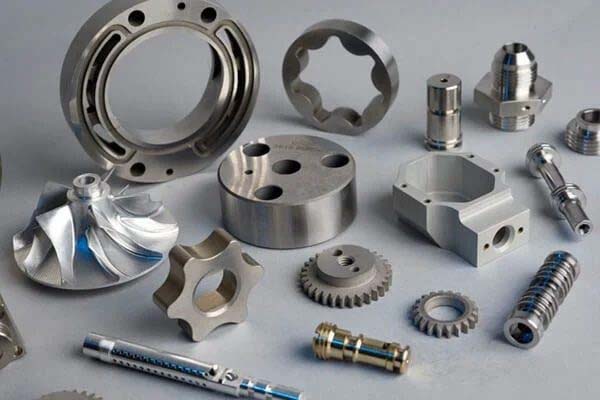
Tooling Selection and Chip Control for Aluminum
Tooling strategy has a major impact on productivity and part quality.
Tooling Best Practices
- Sharp carbide tools with polished flutes
- High helix angles for chip evacuation
- Dedicated roughing and finishing tools
- Proper coolant or air blast usage
Chip Control Comparison
| Tool Type | Chip Evacuation |
|---|---|
| Standard carbide | Moderate |
| Polished carbide | Excellent |
| Diamond-coated | Excellent (high volume) |
Good chip evacuation prevents surface scratching and tool re-cutting.
Secondary Operations for Machined Aluminum Parts
Many aluminum components require secondary processes after machining.
Common Secondary Processes
| Process | Purpose |
|---|---|
| Anodizing | Corrosion resistance, appearance |
| Powder coating | Wear protection |
| Thread inserts | Strength enhancement |
| Deburring | Assembly safety |
Anodizing slightly changes part dimensions, so it must be accounted for during machining design.
Quality Inspection and Process Control
Precision aluminum machining relies on consistent inspection practices.
Common Inspection Methods
| Tool | Application |
|---|---|
| Calipers | General dimensions |
| Micrometers | Critical features |
| CMM | GD&T verification |
| Surface tester | Ra measurement |
For medium to high volumes, SPC is often used to monitor dimensional trends and prevent drift.
Industries Using Machined Aluminum Parts
Aluminum parts machining supports industries where performance and efficiency matter.
Key sectors include:
- Aerospace and aviation
- Automotive and EV systems
- Electronics and enclosures
- Industrial automation
- Medical devices
Each industry applies different standards for tolerance, traceability, and surface treatment.
Cost Drivers in Aluminum Parts Machining
Understanding cost structure helps optimize sourcing decisions.
Main Cost Factors
| Factor | Cost Impact |
|---|---|
| Aluminum grade | Medium |
| Part complexity | High |
| Tolerance tightness | High |
| Surface treatment | Medium |
| Production volume | High |
Design-for-machining (DFM) can reduce unit cost by 20–35% without compromising functionality.
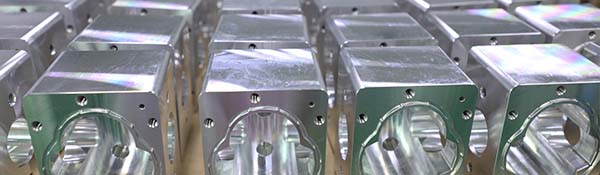
Why Manufacturers Choose Xavier for Aluminum Parts Machining
Xavier approaches aluminum parts machining as a process-driven manufacturing service rather than simple CNC cutting.
Xavier provides:
- Expertise across 6061, 7075, and specialty aluminum alloys
- Advanced CNC milling, turning, and 5-axis machining
- Controlled tolerances with in-process inspection
- Scalable production from prototypes to high-volume orders
For manufacturers seeking reliable aluminum parts machining with consistent quality and engineering support, Xavier delivers production-ready solutions.
Xavier is a CNC machining manufacturer focused on aluminum parts machining and custom metal components. We support CNC machining aluminum, CNC machining stainless steel, CNC machining magnesium alloy, CNC machining acrylic, and CNC machining ABS for high-precision requirements. Our aluminum parts machining solutions are widely applied in CNC aerospace parts machining, CNC automotive parts machining, and medical parts machining, delivering stable quality and fast lead times. We provide 5 axis milling, CNC milling services, CNC turning services, and Swiss turning services, with optional finishing such as anodizing and electroless nickel plating. As a global CNC machining service provider, Xavier supports batch aluminum parts machining. Contact us for CNC machining service pricing.
Some of the images and text in this article are collected and compiled from the internet. If there is anything inappropriate, please contact us for processing.