Aluminum Parts CNC Machining: Engineering Principles, Materials, and Manufacturing Reality
Aluminum parts CNC machining is one of the most widely used manufacturing methods across aerospace, automotive, electronics, medical, and industrial equipment sectors. Its popularity is not driven by cost alone, but by a unique balance of machinability, strength, weight, and dimensional stability that few metals can match.
This article breaks down aluminum CNC machining from an engineering and manufacturing perspective, supported by data, material comparisons, and real process considerations.
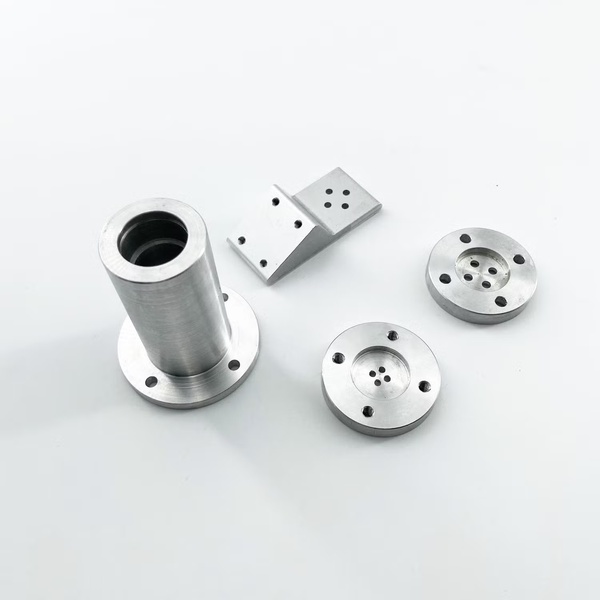
What Aluminum Parts CNC Machining Really Means
Aluminum parts CNC machining refers to the subtractive manufacturing process where aluminum billets, plates, or extrusions are precisely cut using CNC-controlled tools to produce finished components.
Unlike casting or extrusion, CNC machining delivers:
- Tight dimensional control
- Superior surface integrity
- High repeatability for batch production
It is commonly used for functional, load-bearing, and precision-fit parts, not cosmetic components.
Why Aluminum Is Ideal for CNC Machining
Aluminum offers one of the highest machinability ratings among engineering metals.
Machinability Comparison
| Material | Machinability Rating (%) |
|---|---|
| Aluminum 6061 | ~90 |
| Aluminum 7075 | ~70 |
| Mild Steel | ~60 |
| Stainless Steel 304 | ~45 |
| Titanium Ti-6Al-4V | ~25 |
High machinability means:
- Faster cutting speeds
- Lower tool wear
- Reduced cycle time
This directly impacts part cost and lead time.
Common Aluminum Grades Used in CNC Machining
Different aluminum alloys are selected based on strength, corrosion resistance, and machinability.
Popular CNC Aluminum Grades
| Alloy | Key Properties | Typical Use |
|---|---|---|
| 6061-T6 | Balanced strength, corrosion resistance | Structural parts |
| 7075-T6 | High strength, lower corrosion resistance | Aerospace, tooling |
| 2024 | Excellent fatigue resistance | Aircraft structures |
| 5052 | High corrosion resistance | Marine components |
| 6082 | Higher strength than 6061 (EU) | Machinery frames |
Grade selection impacts cutting parameters, surface finish, and post-treatment.
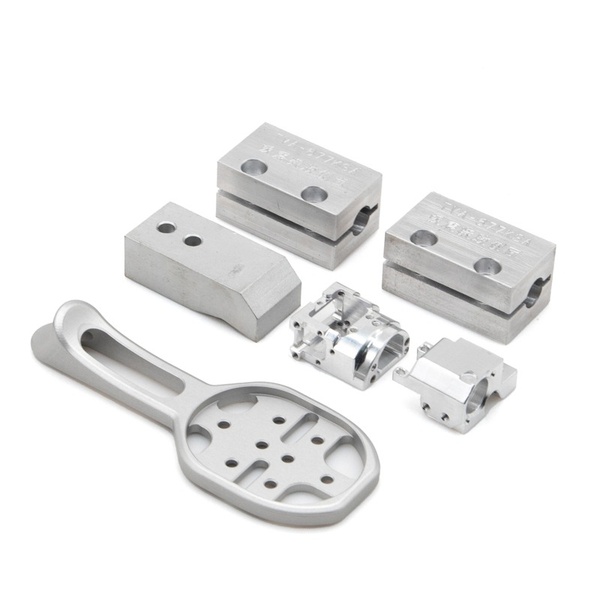
Mechanical Properties of CNC Machined Aluminum Parts
Property Comparison (T6 Condition)
| Alloy | Tensile Strength (MPa) | Yield Strength (MPa) |
|---|---|---|
| 6061-T6 | ~310 | ~275 |
| 7075-T6 | ~570 | ~505 |
| 2024-T3 | ~470 | ~325 |
These values guide engineers in selecting aluminum alloys for load-bearing vs lightweight applications.
Tolerance Capabilities in Aluminum CNC Machining
Aluminum allows tighter tolerances compared to many harder metals due to reduced cutting forces.
Typical CNC Tolerances
| Feature Type | Standard Tolerance |
|---|---|
| General dimensions | ±0.05 mm |
| Precision fits | ±0.02 mm |
| Bearing seats | ±0.01 mm |
| High-precision bores | ±0.005 mm |
Thermal expansion must still be controlled, especially for long or thin parts.
Surface Finish Options for Aluminum CNC Parts
Surface finish is not cosmetic alone — it affects fatigue life, sealing performance, and coating adhesion.
Common Surface Roughness Levels
| Application | Ra (µm) |
|---|---|
| General machined parts | 3.2 |
| Functional mating surfaces | 1.6 |
| Precision sealing areas | ≤0.8 |
Tool sharpness and cutting strategy play a larger role than spindle speed alone.
CNC Milling vs CNC Turning for Aluminum Parts
Process Comparison
| Process | Best For |
|---|---|
| CNC Milling | Flat surfaces, pockets, contours |
| CNC Turning | Shafts, bushings, round parts |
Many aluminum parts require combined milling + turning to achieve full geometry.
3-Axis vs 5-Axis CNC Machining for Aluminum
Practical Difference
| Factor | 3-Axis | 5-Axis |
|---|---|---|
| Setup count | Higher | Lower |
| Accuracy | Setup-dependent | Higher |
| Complex geometry | Limited | Excellent |
| Cost efficiency | Simple parts | Complex parts |
For aluminum, 5-axis machining often reduces total cost by minimizing re-fixturing.
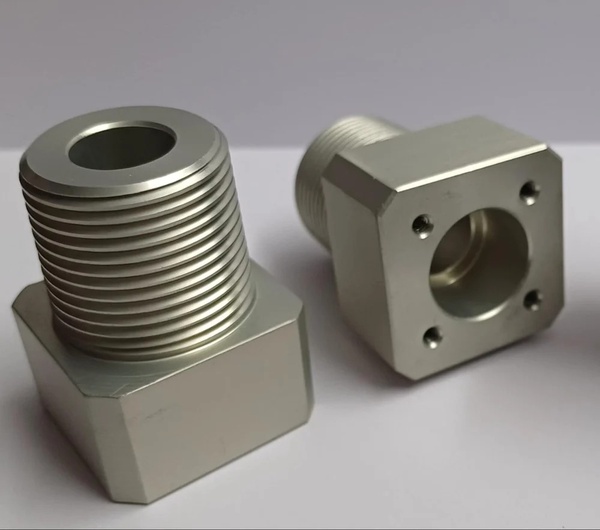
Tooling Selection for Aluminum CNC Machining
Aluminum machining requires sharp tools with polished flutes.
Typical Tooling Choices
| Tool Type | Reason |
|---|---|
| Carbide end mills | High rigidity |
| Polished flutes | Chip evacuation |
| TiB2 coating | Prevents aluminum adhesion |
Incorrect tooling can cause built-up edge (BUE), degrading surface finish.
Cutting Parameters and Chip Control
Typical Aluminum Cutting Parameters
| Parameter | Aluminum |
|---|---|
| Cutting speed | High |
| Feed rate | Moderate to high |
| Coolant | Air or mist |
| Chip form | Short, continuous |
Effective chip evacuation prevents surface scratching and tool clogging.
Thin-Wall and Lightweight Aluminum Part Machining
Thin-wall aluminum parts are common in:
- Aerospace
- Electronics housings
- Robotics
Key Challenges
- Vibration
- Deformation
- Dimensional drift
Engineering Solutions
- Adaptive toolpaths
- Reduced radial engagement
- Symmetrical machining strategy
Heat Treatment and Its Impact on Machinability
Heat treatment improves strength but reduces machinability.
| Condition | Machinability |
|---|---|
| O (Annealed) | Excellent |
| T6 | Moderate |
| T73 | Lower |
Some parts are machined in soft condition, then heat treated to final strength.
Anodizing and Post-Machining Surface Treatments
Common Aluminum Surface Treatments
| Treatment | Purpose |
|---|---|
| Clear anodizing | Corrosion resistance |
| Hard anodizing | Wear resistance |
| Powder coating | Aesthetics + protection |
| Passivation | Surface cleanliness |
Machining allowances must account for coating thickness.
Typical Applications of CNC Machined Aluminum Parts
- Aerospace brackets and housings
- Automotive engine and transmission components
- Electronics enclosures and heat sinks
- Medical device frames
- Industrial automation parts
Aluminum CNC parts dominate applications where weight, precision, and efficiency intersect.
Cost Drivers and Lead Time Optimization in Aluminum CNC Machining
Major Cost Factors
| Factor | Impact |
|---|---|
| Material grade | Medium |
| Tolerance tightness | High |
| Setup count | High |
| Surface treatment | Medium |
| Quantity | High |
Early DFM feedback can reduce part cost by 20–30%.
Why Xavier Is a Reliable Aluminum CNC Machining Partner
Xavier approaches aluminum parts CNC machining with a process-driven mindset — combining alloy-specific machining strategies, tight tolerance control, and DFM optimization to deliver consistent, production-ready aluminum components. Whether for prototypes or volume production, Xavier focuses on dimensional accuracy, surface integrity, and predictable lead times, making it a dependable CNC machining manufacturer and supplier for aluminum parts across multiple industries.
Xavier is a professional CNC machining manufacturer specializing in custom metal components and aluminum parts cnc machining. We support CNC machining aluminum, CNC machining stainless steel, CNC machining magnesium alloy, CNC machining acrylic, and CNC machining ABS, delivering precision parts for aerospace, automotive CNC parts machining, and medical components manufacturing. Our CNC machining services feature high precision, fast production cycles, and consistent quality. We offer advanced solutions including 5 axis milling, CNC milling services, CNC turning, and Swiss turning services. Surface finishing options include anodizing, electroless nickel plating, zinc plating, and passivation. As a global CNC machining supplier, we support batch production—contact us for CNC machining service pricing.
Some of the images and text in this article are collected and compiled from the internet. If there is anything inappropriate, please contact us for processing.