
Aluminum CNC Service: Precision Manufacturing Guide for Custom Aluminum Parts
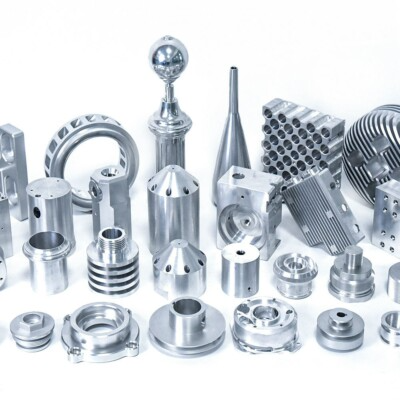
Aluminum CNC service has become one of the most widely used manufacturing solutions for producing lightweight, high-precision metal parts. Thanks to its excellent machinability, corrosion resistance, and strength-to-weight ratio, aluminum is widely used in aerospace, automotive, electronics, robotics, and industrial equipment.
Modern CNC machining centers can process aluminum components with extremely tight tolerances, complex geometries, and repeatable quality across prototype and mass production runs. Typical aluminum CNC services include milling, turning, drilling, tapping, and multi-axis machining.
The following sections explore the most important technical aspects engineers and buyers should understand when sourcing aluminum CNC machining services.
Why Aluminum Is Ideal for CNC Machining
Aluminum is one of the easiest metals to machine compared with steels or titanium alloys.
Key reasons include:
| Property | Aluminum Performance | Manufacturing Impact |
|---|---|---|
| Density | ~2.7 g/cm³ | Lightweight components |
| Thermal conductivity | Very high | Heat dissipates quickly during machining |
| Machinability | Excellent | Faster cutting speeds |
| Corrosion resistance | Natural oxide layer | Less need for protective coating |
| Strength-to-weight ratio | High | Ideal for structural components |
These properties allow aluminum parts to be produced faster and more cost-effectively than many other metals while maintaining high mechanical performance.
In CNC production environments, aluminum typically supports higher spindle speeds and feed rates, reducing machining time and production costs.
Common Aluminum Alloys Used in CNC Machining
Different aluminum alloys provide different mechanical properties and machining behavior. Selecting the correct alloy is critical.
| Alloy | Key Characteristics | Typical Applications |
|---|---|---|
| 6061-T6 | Balanced strength, machinability | Brackets, housings |
| 7075-T6 | Very high strength | Aerospace fittings |
| 5052 | Excellent corrosion resistance | Marine components |
| 2024 | High fatigue resistance | Aircraft structures |
| 6082 | Strong structural alloy | Industrial machinery |
Among these, 6061 aluminum is the most widely used because it offers an excellent balance of machinability, corrosion resistance, and strength.
Meanwhile, 7075 aluminum is commonly used in aerospace components where high strength comparable to steel is required.
Typical Tolerances in Aluminum CNC Machining
Precision is one of the biggest advantages of CNC machining.
Typical tolerance capabilities include:
| Machining Process | Typical Tolerance |
|---|---|
| CNC Turning | ±0.02 – 0.03 mm |
| CNC Milling | ±0.02 – 0.05 mm |
| High-precision features | ±0.01 mm |
| Ultra-precision machining | ±0.005 mm |
These ranges vary depending on machine rigidity, tooling, and part geometry.
For many standard mechanical components, tolerances around ±0.05 mm are considered sufficient.
However, critical aerospace or medical components may require tolerances tighter than ±0.01 mm.
Surface Finishes Available for Aluminum CNC Parts
Surface finish plays an important role in both function and appearance.
Typical surface roughness levels:
| Finish Type | Surface Roughness (Ra) | Application |
|---|---|---|
| Standard CNC finish | 3.2 μm | General industrial parts |
| Fine machining | 1.6 μm | Precision components |
| Polished finish | 0.8 μm or lower | Optical or decorative parts |
Aluminum CNC parts can also undergo additional treatments:
- Anodizing
- Sandblasting
- Powder coating
- Polishing
- Chromate conversion coating
These processes improve corrosion resistance, aesthetics, and wear resistance.
CNC Machining Processes Used for Aluminum Parts
Aluminum CNC services usually combine several machining methods.
CNC Milling
The most common process for aluminum parts.
Capabilities include:
- Pocket milling
- 3D surface machining
- Slotting and contouring
- Multi-axis complex geometry
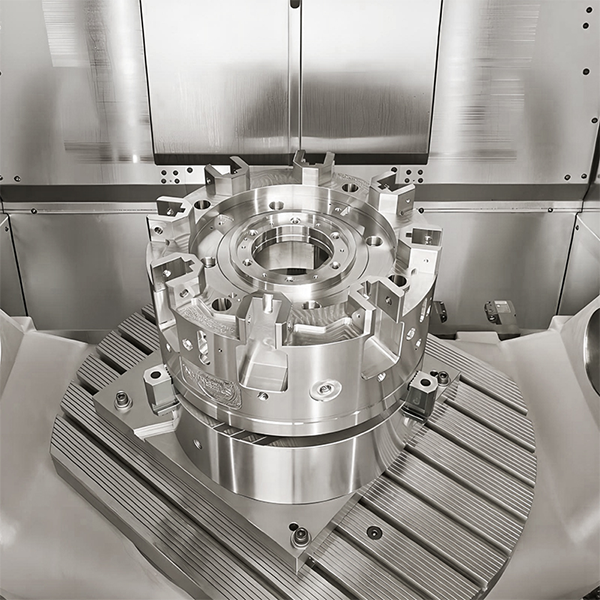
Modern 3-axis, 4-axis, and 5-axis machining centers allow the production of highly complex aluminum components in a single setup.
CNC Turning
Turning is ideal for cylindrical aluminum components such as:
- Shafts
- Bushings
- Connectors
- Precision fasteners
Turning typically achieves better concentricity and tighter tolerances due to rotational symmetry.
Drilling and Tapping
Many aluminum components require threaded holes or precision drilled features.
Typical drilling tolerance ranges:
| Operation | Typical Tolerance |
|---|---|
| Drilling | ±0.1 mm |
| Precision drilling | ±0.02 mm |
Proper coolant and chip evacuation are important because aluminum chips can stick to cutting edges if heat builds up.
Design Guidelines for Aluminum CNC Parts
Design decisions significantly affect manufacturability and cost.
Recommended design parameters:
| Feature | Recommended Value |
|---|---|
| Minimum wall thickness | 0.5 – 1.0 mm |
| Minimum drill diameter | 0.3 – 0.5 mm |
| Deep pocket ratio | ≤ 4:1 depth/diameter |
| Internal corner radius | ≥ tool radius |
Thin walls below 1 mm may deform under cutting forces due to aluminum’s softness and thermal expansion.
Designing parts with realistic tolerances and avoiding unnecessary precision requirements significantly reduces manufacturing costs.
Industries That Rely on Aluminum CNC Services
Aluminum machining supports many industries.
Aerospace
- Structural brackets
- Aircraft interior components
- Avionics housings
Lightweight materials and tight tolerances are critical in aerospace engineering.
Automotive
Typical aluminum CNC parts include:
- Engine components
- Transmission housings
- Suspension brackets
Aluminum reduces vehicle weight while maintaining strength.
Electronics
Common applications include:
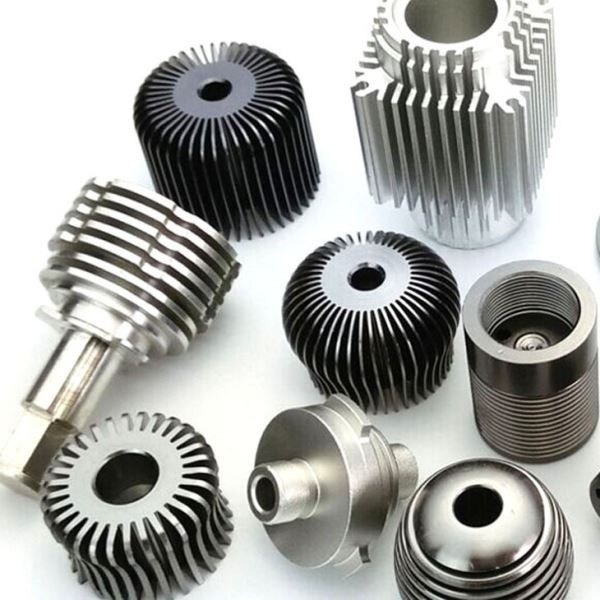
- Heat sinks
- Device housings
- Thermal management systems
Aluminum’s high thermal conductivity makes it ideal for heat dissipation.
Robotics and Automation
Robotics systems often use CNC aluminum parts such as:
- Robot arm components
- Precision brackets
- Structural frames
Lightweight structures improve motion efficiency and energy consumption.
Cost Factors in Aluminum CNC Machining
Several factors influence machining cost.
| Factor | Impact on Cost |
|---|---|
| Material grade | 7075 costs more than 6061 |
| Tolerance requirements | Tight tolerances increase inspection and machining time |
| Part complexity | Multi-axis machining increases programming cost |
| Surface finishing | Additional finishing increases total price |
| Production quantity | Larger batches reduce per-unit cost |
Ultra-tight tolerances often require additional machining passes and slower cutting speeds, which increase cost and lead time.
Aluminum CNC Prototyping vs Mass Production
One advantage of aluminum CNC service is its flexibility.
| Production Type | Typical Quantity | Advantages |
|---|---|---|
| Rapid prototyping | 1–50 pcs | Fast design validation |
| Small batch | 50–500 pcs | Ideal for product launch |
| Mass production | 1000+ pcs | Consistent quality |
CNC machining allows rapid iteration during product development before transitioning to other processes like die casting or extrusion.
Quality Control and Inspection
High-quality CNC machining suppliers implement strict inspection processes.
Common inspection equipment:
- CMM (Coordinate Measuring Machine)
- Optical measurement systems
- Surface roughness testers
- Gauge inspection tools
Inspection ensures parts meet dimensional tolerances and functional requirements.
Why Choose Xavier for Aluminum CNC Service
If you are looking for a reliable aluminum CNC service provider, choosing a manufacturer with real machining experience and advanced equipment is essential.
Xavier specializes in custom CNC machining of aluminum components, offering:
- Precision CNC milling and turning
- Support for alloys such as 6061, 7075, and 2024
- 3-axis, 4-axis, and 5-axis machining capabilities
- Rapid prototyping and large-volume production
- Strict dimensional inspection and quality control
Whether you need custom aluminum housings, structural brackets, or complex precision components, Xavier provides professional machining solutions with consistent quality and competitive pricing.
If you need reliable custom aluminum CNC parts, Xavier is a trusted partner capable of turning complex designs into high-precision manufactured components.
Some of the images and text in this article are collected and compiled from the internet. If there is anything inappropriate, please contact us for processing.