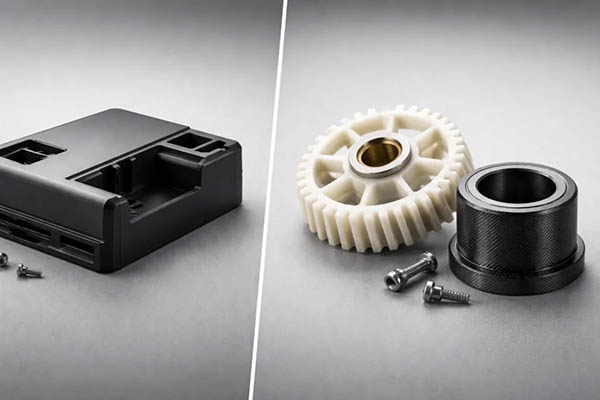
ABS Plastic vs Nylon: Differences, Properties, Applications, and CNC Machining Guide
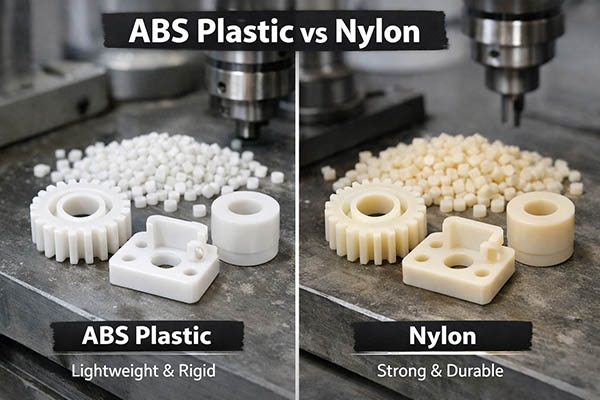
In modern manufacturing, engineers frequently choose between ABS plastic and nylon (polyamide) when designing plastic components. Both materials belong to the thermoplastic family and are widely used in industries such as automotive, robotics, electronics, consumer products, and CNC machining.
Although they may appear similar at first glance, ABS and nylon have very different mechanical behaviors, chemical resistance, and thermal performance. ABS is known for its impact resistance and ease of manufacturing, while nylon is famous for its strength, wear resistance, and load-bearing capabilities.
Understanding the real differences between these materials helps designers select the best plastic for strength, durability, machining performance, and cost efficiency.
Basic Overview of ABS Plastic and Nylon
Before comparing them, it is important to understand what these materials actually are.
ABS Plastic (Acrylonitrile Butadiene Styrene)
ABS is a copolymer composed of three monomers:
- Acrylonitrile – improves chemical resistance and hardness
- Butadiene – provides toughness and impact resistance
- Styrene – enhances rigidity and surface finish
This combination results in a material that is tough, rigid, and easy to process, which explains why ABS is widely used in injection molding and consumer products.
Common examples include:
- LEGO bricks
- electronic housings
- automotive interior parts
- appliance casings
ABS also offers good dimensional stability and a glossy surface finish, which makes it attractive for visible consumer components.
Nylon (Polyamide)
Nylon is a synthetic polymer belonging to the polyamide family, first developed in the 1930s. The most common variants are:
- Nylon 6
- Nylon 66
- Nylon 12
Nylon’s molecular chains form strong intermolecular hydrogen bonds, giving it excellent mechanical strength and wear resistance.
Because of this structure, nylon is widely used to replace metal parts in mechanical systems such as:
- gears
- bearings
- bushings
- industrial machine components
Molecular Structure and Material Behavior
One of the most important differences between ABS and nylon lies in polymer structure.
| Property | ABS Plastic | Nylon |
|---|---|---|
| Polymer type | Amorphous thermoplastic | Semi-crystalline thermoplastic |
| Molecular structure | Random chain arrangement | Ordered crystalline regions |
| Shrinkage during molding | Low (0.4–0.7%) | Higher due to crystallization |
| Dimensional stability | Very stable | Can warp due to crystallization |
ABS is amorphous, meaning its polymer chains are randomly arranged. This prevents strong crystal formation and makes the material easier to mold and machine.
Nylon, on the other hand, is semi-crystalline, meaning it forms ordered crystalline structures during cooling. These crystals increase strength and stiffness but can also cause higher shrinkage during manufacturing.
Mechanical Properties Comparison
Mechanical strength is often the deciding factor in material selection for engineering components.
Typical Mechanical Data
| Property | ABS Plastic | Nylon (PA6/PA66) |
|---|---|---|
| Tensile strength | 30–50 MPa | 70–100 MPa |
| Flexural strength | ~50 MPa | ~90 MPa |
| Density | 1.05–1.18 g/cm³ | ~1.13 g/cm³ |
| Elongation at break | 10–40% | >30% |
Nylon generally exhibits significantly higher tensile and flexural strength than ABS, making it more suitable for load-bearing mechanical parts.
For example:
- ABS tensile strength ≈ 30–45 MPa
- Nylon tensile strength ≈ 70–100 MPa
This difference explains why nylon is often used in mechanical power transmission components such as gears and bushings.
Heat Resistance and Thermal Performance
Temperature resistance is another key engineering consideration.
| Property | ABS | Nylon |
|---|---|---|
| Heat deflection temperature | 90–105 °C | 180–220 °C |
| Melting temperature | ~200–250 °C | ~260 °C |
| Continuous service temperature | ~80 °C | ~120 °C |
Nylon can withstand significantly higher temperatures than ABS before deforming.
This makes nylon ideal for applications such as:
- automotive engine components
- industrial machinery
- mechanical drive systems
ABS, however, performs well in moderate-temperature environments, especially when appearance and cost are important.
Wear Resistance and Friction Performance
One area where nylon clearly outperforms ABS is tribological performance (friction and wear).
Nylon provides:
- excellent wear resistance
- self-lubricating characteristics
- low friction coefficient
These properties allow nylon components to operate without lubrication in many cases.
Typical nylon applications include:
- sliding rails
- bearings
- gears
- pulleys
ABS, by comparison, has average wear resistance, making it less suitable for moving mechanical parts.
Chemical Resistance and Moisture Absorption
Both materials offer good chemical resistance, but their behaviors differ.
| Property | ABS | Nylon |
|---|---|---|
| Oil resistance | Moderate | Excellent |
| Chemical resistance | Good | Very good |
| Water absorption | 0.2–0.8% | 1–3.5% |
Nylon is resistant to oils, greases, and hydrocarbons, which makes it ideal for automotive and industrial environments.
However, nylon absorbs significantly more moisture than ABS. This can cause:
- dimensional changes
- reduced stiffness
- processing difficulties
ABS has lower water absorption, which improves dimensional stability in humid environments.
CNC Machining Performance
From a CNC machining perspective, both ABS and nylon are commonly used engineering plastics.
ABS Machining Characteristics
Advantages:
- easy to machine
- good surface finish
- stable dimensions
- lower tool wear
ABS is frequently used for:
- prototypes
- enclosures
- lightweight structural parts
Nylon Machining Characteristics
Advantages:
- excellent mechanical strength
- good fatigue resistance
- superior wear resistance
Challenges:
- absorbs moisture
- may deform during machining
Because of its mechanical performance, nylon is often used for precision mechanical components rather than cosmetic parts.
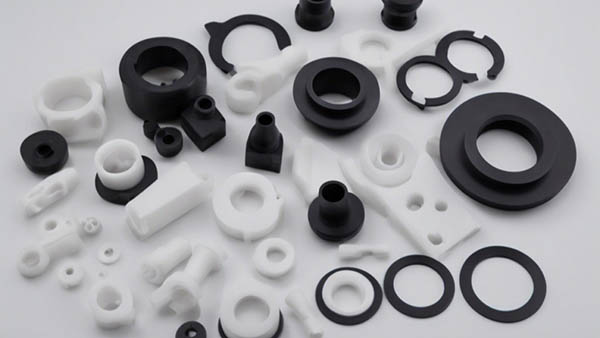
Typical Industrial Applications
ABS Applications
ABS is widely used in industries where appearance, toughness, and cost efficiency are important.
Common uses include:
- automotive interior panels
- electronic housings
- consumer appliances
- protective covers
- rapid prototypes
ABS is also popular in 3D printing and injection molding due to its easy processing.
Nylon Applications
Nylon is typically chosen for mechanical engineering applications.
Examples include:
- gears and sprockets
- bearings and bushings
- conveyor rollers
- industrial machine components
- automotive engine parts
Its ability to replace metal components makes nylon valuable in weight-reduction engineering projects.
Cost Comparison
Cost is always an important factor in manufacturing.
| Material | Relative Cost |
|---|---|
| ABS | Lower |
| Nylon | Higher |
ABS is generally cheaper and easier to process, which is why it dominates mass-produced consumer products.
Nylon costs more because of its higher mechanical performance and more complex processing requirements.
However, nylon can reduce long-term costs when used in mechanical systems due to its durability and wear resistance.
When Should You Choose ABS vs Nylon?
Choose ABS When:
- cost is a priority
- good impact resistance is needed
- appearance and surface finish matter
- prototypes or consumer parts are being produced
Choose Nylon When:
- high mechanical strength is required
- components experience friction or wear
- parts must withstand higher temperatures
- the application involves oils or mechanical loads
Selecting the right material depends on functional requirements, manufacturing method, and operating environment.
Why Precision Manufacturers Choose Xavier for Plastic CNC Machining
Selecting the right plastic material is only one part of the engineering challenge. Achieving high-precision parts also requires advanced machining expertise.
At Xavier Precision Manufacturing, we specialize in CNC machining high-performance engineering plastics, including:
- ABS
- Nylon (PA6 / PA66)
- POM / Delrin
- PEEK
- PTFE
Our 3/4/5-axis CNC machining systems allow us to produce complex plastic components with excellent dimensional accuracy and surface quality.
Whether you need rapid prototypes, mechanical nylon parts, or high-volume ABS components, Xavier engineers can help optimize:
- material selection
- part design
- manufacturing cost
- production efficiency
If you are deciding between ABS plastic vs nylon, our team can provide professional guidance to ensure your components achieve the best balance of performance, durability, and cost.
Conclusion
ABS plastic and nylon are two of the most widely used engineering thermoplastics, but they serve different roles in manufacturing.
ABS offers excellent impact resistance, easy processing, and low cost, making it ideal for consumer products and prototypes. Nylon, on the other hand, provides higher strength, superior wear resistance, and better heat performance, which makes it suitable for demanding mechanical applications.
Understanding the differences between ABS and nylon allows engineers to design components that perform reliably while controlling manufacturing costs.
Some of the images and text in this article are collected and compiled from the internet. If there is anything inappropriate, please contact us for processing.