
Key 10 Topics for 5 Axis Machining Services
- What 5 axis machining is and how it differs from 3/4 axis
- Precision, tolerances, and accuracy in 5 axis machining
- Reduction of setup times and production efficiency
- Complex geometry machining capabilities
- Surface finish and tool life advantages
- Materials commonly machined with 5 axis services
- Cost structure and total cost savings comparison
- Industry applications and real-world use cases
- Advanced technologies shaping 5 axis services
- Choosing the right 5 axis machining provider
What 5 Axis Machining Services Are and Why They Matter
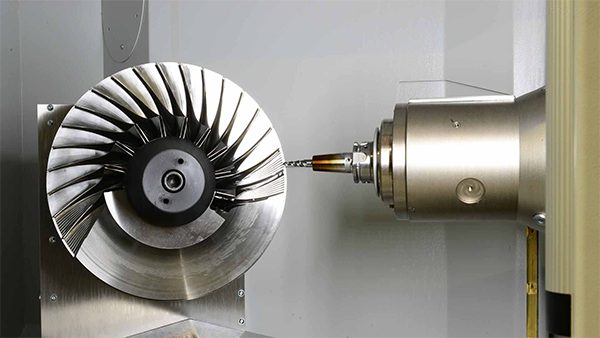
5 axis machining services utilize CNC machines capable of moving a cutting tool or workpiece along five different axes simultaneously—typically X, Y, Z (linear) and A, B (rotary). This multi-axis movement allows a single machine to access almost any surface orientation without repositioning the part.
This capability stands in stark contrast with traditional 3-axis or 4-axis machines, where complex parts require multiple setups and fixturing to reach different faces. In 5 axis machining, tool access from virtually any angle enables production of highly complex designs in a single operation—a transformational advantage in modern precision manufacturing.
Precision, Tolerances, and Accuracy
Why 5 Axis Machines Achieve Higher Accuracy
The inherent design of 5 axis systems reduces mechanical errors and repositioning variance. With fewer setups and automated tool paths, these machines achieve extremely tight tolerances. Many shops can consistently hit accuracies within ±0.005 mm or tighter, critical for aerospace, medical, and high-performance industrial applications.
Typical tolerance comparison:
| Machining Type | Typical Tolerance | Notes |
|---|---|---|
| 3-Axis CNC | ±0.01–0.05 mm | Requires more setups |
| 4-Axis CNC | ±0.01–0.03 mm | Adds one rotational axis |
| 5-Axis CNC | ±0.005 mm or better | Minimal repositioning |
By reducing manual intervention and repeated fixturing, 5 axis machining inherently lowers the risk of human error and cumulative positioning inaccuracies.
Reduction of Setup Time and Increased Efficiency
One of the most cited practical benefits of 5 axis machining services is the dramatic reduction in setup time. Because a part does not need to be flipped, re-clamped, and measured between operations, a machine can complete complex components in fewer, faster cycles.
A typical example in aerospace or automotive production:
- 3-Axis Workflow: 3 setups × 30 min each = 90 min setup
- 5-Axis Workflow: Single setup × 10 min = 10 min setup
This efficiency translates to improved throughput, reduced labor, and shorter lead times. Additionally, eliminating intermediate handling decreases the risk of damage and misalignment.
Complex Geometry Machining Capabilities
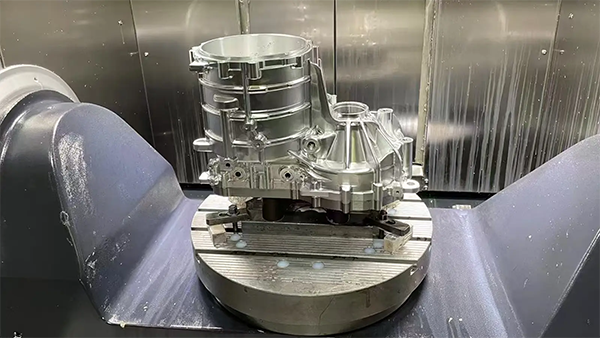
5 axis machines excel in producing parts with intricate curves, compound angles, undercuts, and contoured surfaces that would be impossible or uneconomical on lower-axis systems.
Examples of complex geometries achievable:
- Turbine blades with twist and compound curvature
- Medical implants with internal micro-features
- Automotive manifolds with integrated fluid channels
Previously, such parts often required welding of multiple sub-components. With 5 axis machining, integrally shaped parts emerge in one piece—reducing assembly steps and improving mechanical integrity.
Surface Finish and Tool Life Advantages
Thanks to the dynamic positioning of tools relative to the workpiece, 5 axis machining minimizes tool deflection and vibration. This not only yields smoother surface finishes but also extends tool life.
Why surface finish improves:
- Optimal cutting angle maintained throughout the cut
- Shorter tools reduce overhang and chatter
- Continuous motion produces uniform texture
In many cases, high-quality finishes achieved during machining eliminate the need for costly secondary processes like hand polishing or grinding, cutting both time and cost.
Materials Commonly Machined with 5 Axis CNC Services
5 axis machining is compatible with a wide range of materials, from common alloys to advanced exotic metals. These include:
| Material | Typical Application |
|---|---|
| Aluminum | Aerospace housings, automotive parts |
| Stainless Steel | Medical implants, industrial components |
| Titanium | High-strength aerospace structures |
| Inconel | Turbine and power generation components |
| Composite materials | Weight-sensitive structures |
The flexibility to handle both metallic and non-metallic materials with equivalent precision makes 5 axis services vital for diverse industries.
Cost Structure and Total Cost Benefit
While 5 axis machining equipment typically has higher hourly costs than 3-axis machines, the total cost of ownership (TCO) often favors 5 axis for complex parts.
Where savings occur:
- Reduced fixtures: General-purpose fixtures replace multiple custom setups
- Lower labor: Fewer setups and handling reduce operator hours
- Footprint efficiency: One machine replaces multiple pieces of equipment
Industry sources report that 5 axis workflows can reduce total production time by 30–50% compared to traditional approaches.
Industry Applications and Real-World Use Cases
5 axis machining is a core enabling technology for sectors where precision and complexity intersect:
- Aerospace: Engine components, airframe parts, satellite structures
- Automotive: Transmission housings, engine blocks, prototype components
- Medical Devices: Surgical guides, orthopedic implants
- Energy: Turbine hubs, pump bodies
- Tool & Die: Complex dies and mold cavities with contour features
Its use in these fields reflects stringent industry requirements for accuracy, repeatability, and surface quality.
Advanced Technologies in 5 Axis Machining Services
Beyond the machine tools themselves, advanced technologies are now shaping the future of 5 axis services. These include:
Digital Twin Simulation
Virtual replicas of machining setups allow operators to simulate full production runs, including tool paths and thermal effects, before cutting metal. This reduces trial runs and first-article failures.
Hybrid Manufacturing
Integrating additive processes (e.g., metal 3D printing) with 5 axis machining enables near-net-shape parts that are then machined to final tolerance.
Automated and Lights-Out Operations
Robotic loading, automated tool measurement, and multi-pallet systems enable unattended machining shifts, boosting utilization and lowering cost per finished part.
Choosing the Right 5 Axis Machining Provider
Selecting a partner for 5 axis machining services requires evaluating:
- Machine capability: simultaneous 5 axis vs. indexed axes
- Software ecosystem: advanced CAM and simulation tools
- Material expertise: experience with titanium, Inconel, composites
- Quality systems: ISO certifications and documented quality control
- Lead times and support: engineering guidance and delivery reliability
A combination of technological depth and manufacturing discipline determines the value delivered by a 5 axis service provider.
Xavier: Your Premier 5 Axis Machining Services Partner
When precision, complexity, and reliability are mission-critical, Xavier stands out as a trusted 5 axis machining services partner. With state-of-the-art simultaneous 5 axis CNC machines, advanced CAM programming, and robust quality systems, Xavier delivers components that meet demanding specifications across aerospace, medical, automotive, and industrial applications.
From single-piece prototypes to high-volume production runs, Xavier’s expertise ensures optimized manufacturing—minimizing cost, reducing lead time, and maximizing part performance. Whether your design is complex, high-precision, or tightly toleranced, Xavier is equipped to exceed expectations and accelerate your project to success.
Some of the images and text in this article are collected and compiled from the internet. If there is anything inappropriate, please contact us for processing. 5 Axis CNC Machining Services