
Core Knowledge Points & Themes for Metal Enclosure Manufacturers
- What Metal Enclosure Manufacturers Actually Provide
- Common Types of Metal Enclosures and Use Scenarios
- Material Selection and Environmental Performance
- Sheet Metal Fabrication Processes for Enclosures
- Precision, Tolerances, and Assembly Fit
- Protection Standards: IP, NEMA, and Compliance
- Surface Finishing and Long-Term Durability
- Customization, Integration, and Design for Assembly
- Cost Structure, Tooling, and Lead Time Factors
- How to Choose the Right Metal Enclosure Manufacturer
What Metal Enclosure Manufacturers Actually Provide
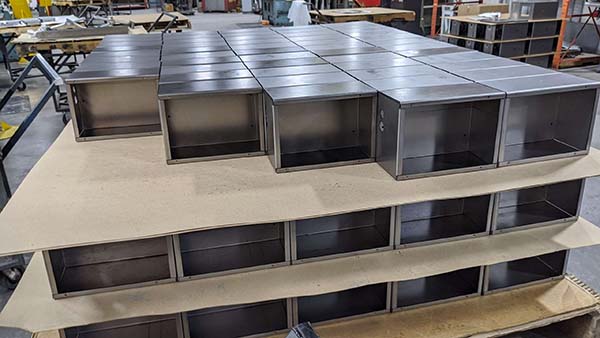
Metal enclosure manufacturers specialize in producing protective housings designed to safeguard electrical, electronic, or mechanical components from environmental, mechanical, and operational risks. These enclosures are not just boxes—they are engineered systems that must balance protection, heat dissipation, accessibility, and structural integrity.
Typical functions of metal enclosures include:
- Protecting internal components from dust, moisture, and impact
- Providing electromagnetic shielding (EMI/RFI)
- Supporting thermal management
- Ensuring safe access for maintenance
Unlike general sheet metal suppliers, professional metal enclosure manufacturers understand industry standards, enclosure ratings, and real-world installation conditions, which directly influence enclosure design.
Common Types of Metal Enclosures and Use Scenarios
Metal enclosures are designed based on application context, installation environment, and internal equipment requirements.
| Enclosure Type | Typical Application | Key Requirement |
|---|---|---|
| Electrical Control Cabinets | Industrial automation | Cable access & ventilation |
| Server & Network Enclosures | Data centers | Cooling & cable management |
| Outdoor Enclosures | Telecom & energy | Weather resistance |
| Instrument Housings | Measurement devices | Precision & sealing |
| Custom Machine Enclosures | Manufacturing equipment | Structural rigidity |
For example, an outdoor telecom enclosure may prioritize IP66 protection and corrosion resistance, while an industrial control cabinet focuses more on modularity and internal mounting flexibility.
Material Selection and Environmental Performance
Material choice directly impacts enclosure lifespan, cost, and performance under environmental stress.
| Material | Advantages | Typical Use |
|---|---|---|
| Mild Steel | Low cost, strong | Indoor cabinets |
| Stainless Steel 304 | Corrosion resistant | Food & medical |
| Stainless Steel 316 | High corrosion resistance | Coastal & chemical |
| Aluminum | Lightweight, good heat dissipation | Electronics |
| Galvanized Steel | Rust protection | Outdoor industrial |
For instance, aluminum enclosures dissipate heat 30–40% faster than steel but offer lower impact resistance, making them ideal for electronics but less suitable for heavy industrial environments.
Experienced metal enclosure manufacturers guide material selection based on installation conditions, expected lifespan, and compliance needs, not just upfront cost.
Sheet Metal Fabrication Processes for Enclosures
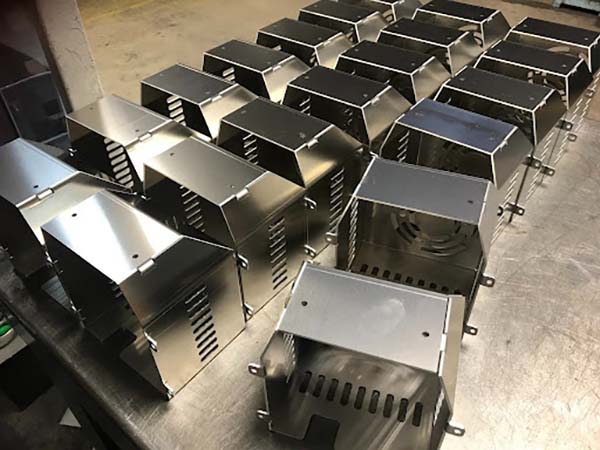
Metal enclosures rely heavily on precision sheet metal fabrication, where process selection affects fit, strength, and appearance.
| Process | Purpose | Impact |
|---|---|---|
| Laser Cutting | Profile accuracy | Clean edges |
| CNC Bending | Structural form | Dimensional consistency |
| Punching | Vent holes & cutouts | Speed & repeatability |
| Welding | Structural joining | Strength & sealing |
| PEM Insertion | Fastener integration | Assembly efficiency |
A well-designed enclosure minimizes welding by using tabs, slots, and bends, which reduces distortion and improves consistency in batch production.
Precision, Tolerances, and Assembly Fit
Although enclosures are not always ultra-precision parts, tolerance control is critical for door alignment, sealing, and internal mounting.
Typical enclosure tolerance expectations:
| Feature | Common Tolerance |
|---|---|
| Panel flatness | ±0.5 mm |
| Hole position | ±0.2 mm |
| Door fit | ≤1.0 mm gap |
| Gasket compression | Application-specific |
Poor tolerance control leads to issues such as misaligned doors, ineffective seals, and difficult field installation, increasing total ownership cost.
Protection Standards: IP, NEMA, and Compliance
Professional metal enclosure manufacturers design according to recognized protection standards.
| Standard | Focus | Typical Use |
|---|---|---|
| IP Rating | Dust & water ingress | Global |
| NEMA | Environmental & safety | North America |
| UL Certification | Electrical safety | Electrical enclosures |
| CE Compliance | Regulatory conformity | EU markets |
For example, an IP65 enclosure protects against dust and water jets, while NEMA 4X also addresses corrosion resistance, often requiring stainless steel or special coatings.
Surface Finishing and Long-Term Durability
Surface finishing affects corrosion resistance, aesthetics, and maintenance cost.
| Finish | Benefit | Consideration |
|---|---|---|
| Powder Coating | Durable & aesthetic | Thickness tolerance |
| Anodizing | Aluminum protection | Color consistency |
| Brushing | Reduced fingerprints | Limited corrosion resistance |
| Galvanizing | Outdoor durability | Rough surface |
Powder coating typically adds 60–120 μm thickness, which must be accounted for in hinges, latches, and mounting features during design.
Customization, Integration, and Design for Assembly
Custom metal enclosures often integrate:
- Cable glands and cutouts
- Internal mounting plates
- Cooling fans or vents
- Locking mechanisms
Designing enclosures with assembly and service access in mind reduces installation time and field errors. Modular designs also allow future upgrades without enclosure redesign.
Leading metal enclosure manufacturers review customer drawings and suggest design-for-assembly improvements before production.
Cost Structure, Tooling, and Lead Time Factors
Enclosure cost is driven by more than material size.
| Cost Element | Impact |
|---|---|
| Material thickness | Strength & cost |
| Tooling | Punching & forming |
| Welding complexity | Labor |
| Finishing | Surface durability |
| Certification | Compliance cost |
Typical lead times range from 2–3 weeks for standard enclosures to 6–8 weeks for fully custom designs. Manufacturers with in-house fabrication and finishing maintain better delivery reliability.
How to Choose the Right Metal Enclosure Manufacturer
Key evaluation criteria include:
- Experience with similar enclosure types
- Knowledge of IP/NEMA standards
- In-house fabrication and finishing
- Ability to scale from prototype to production
- Engineering communication and DFM support
A reliable metal enclosure manufacturer helps customers avoid field failures, redesign costs, and compliance risks.
Why Xavier Is a Reliable Metal Enclosure Manufacturer
Xavier is an experienced metal enclosure manufacturer offering custom sheet metal enclosures, precision fabrication, surface finishing, and assembly support. With strong engineering involvement from early design stages, Xavier helps customers achieve reliable protection, clean assembly, and long-term durability.
From industrial control cabinets to custom electronic housings, Xavier delivers metal enclosures that balance performance, compliance, and cost efficiency.
Some of the images and text in this article are collected and compiled from the internet. If there is anything inappropriate, please contact us for processing.