
What Machined Components Manufacturers Actually Produce
Machined components manufacturers specialize in producing precision metal or plastic parts by material removal processes, primarily using CNC machining. These components are typically functional parts that serve as critical interfaces, load-bearing elements, or precision assemblies within larger systems.
Common machined components include:
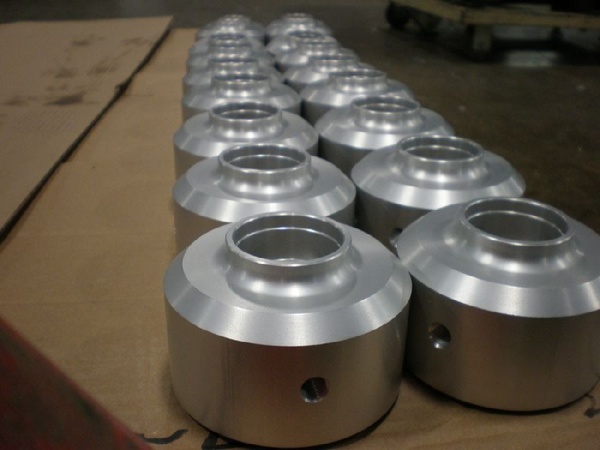
- Shafts, pins, bushings, and sleeves
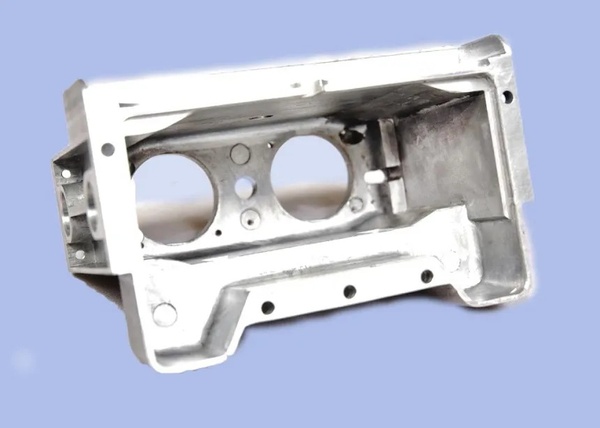
- Housings, brackets, and structural blocks
- Valve bodies and fluid control parts
- Precision connectors and couplings
Unlike general fabrication shops, machined components manufacturers focus on dimensional accuracy, repeatability, and functional reliability, often working directly from engineering drawings with strict tolerance requirements.
In many industries, a single machined component failure can compromise an entire system—this is why supplier capability matters more than price alone.
CNC Machining Capabilities and Process Coverage
A competitive machined components manufacturer must support multiple CNC processes, not just basic milling or turning. Process coverage directly affects part complexity, cost efficiency, and lead time.
| Machining Process | Typical Use Case | Capability Impact |
|---|---|---|
| CNC Turning | Cylindrical parts | High concentricity |
| CNC Milling | Prismatic components | Complex geometry |
| 3/4/5 Axis Machining | Multi-face parts | Reduced setups |
| Swiss Machining | Small precision parts | Tight tolerances |
| CNC Drilling & Tapping | Threaded features | Assembly readiness |
For example, a 5-axis CNC machining setup can reduce 3–5 separate setups into one, cutting cumulative tolerance stack-up and shortening production time by up to 30%.
Manufacturers with broader CNC capabilities can often optimize part design for manufacturability, rather than forcing designs into limited machine constraints.
Material Expertise and Engineering Trade-Offs
Material selection is one of the most underestimated factors when choosing machined components manufacturers. Different materials affect tool wear, cycle time, surface finish, and long-term performance.
| Material | Machining Difficulty | Typical Applications |
|---|---|---|
| Aluminum 6061 | Low | Structural & lightweight parts |
| Aluminum 7075 | Medium | Aerospace-strength components |
| Stainless Steel 304 | Medium–High | Corrosion-resistant parts |
| Stainless Steel 316 | High | Chemical & marine |
| Carbon Steel | Medium | Load-bearing components |
| Engineering Plastics (POM, PEEK) | Low–Medium | Insulating or lightweight parts |
For instance, machining stainless steel 316 may increase machining time by 40–60% compared to aluminum, but provides superior corrosion resistance—critical in medical or offshore applications.
Experienced manufacturers advise on material-performance-cost trade-offs, rather than defaulting to customer-specified materials without review.
Tolerance Control and Dimensional Accuracy
Tolerance capability defines whether a manufacturer can produce functional machined components consistently, not just once.
Typical tolerance ranges:
| Tolerance Range | Manufacturing Context |
|---|---|
| ±0.1 mm | General industrial parts |
| ±0.05 mm | Standard precision components |
| ±0.01 mm | High-precision assemblies |
| ±0.005 mm | Critical mechanical interfaces |
Tight tolerances dramatically increase cost due to:
- Slower cutting speeds
- Tool wear compensation
- Increased inspection frequency
A professional machined components manufacturer helps customers apply functional tolerances, ensuring critical features are tight while non-critical dimensions remain cost-efficient.
Production Volume: Prototypes to Mass Manufacturing
Leading machined components manufacturers support full lifecycle production, from early-stage prototypes to long-term batch or mass production.
| Production Stage | Volume Range | Key Focus |
|---|---|---|
| Prototype | 1–10 pcs | Design validation |
| Low Volume | 10–500 pcs | Process optimization |
| Medium Volume | 500–10,000 pcs | Cost efficiency |
| High Volume | 10,000+ pcs | Automation & stability |
Manufacturers capable of scaling production often invest in fixtures, standardized tooling, and process documentation, allowing customers to transition smoothly without changing suppliers.
This continuity reduces requalification costs and minimizes supply chain risk.
Quality Management and Inspection Systems
Quality assurance is a defining factor for machined components manufacturers, especially in regulated industries.
Common quality tools include:
- Coordinate Measuring Machines (CMM)
- Optical comparators
- Surface roughness testers
- Material traceability reports
| Quality Standard | Industry Use |
|---|---|
| ISO 9001 | General manufacturing |
| ISO 13485 | Medical devices |
| AS9100 | Aerospace |
| IATF 16949 | Automotive |
For high-precision machined components, inspection data is often recorded and archived, enabling process repeatability and traceability over time.
Cost Drivers and Pricing Transparency
Understanding cost structure helps buyers evaluate quotes realistically.
| Cost Element | Typical Share |
|---|---|
| Material | 20–35% |
| Machining Time | 30–45% |
| Tooling & Fixtures | 10–20% |
| Quality Inspection | 5–15% |
Small design changes—such as increasing internal radii or relaxing non-critical tolerances—can reduce machining time significantly.
Transparent manufacturers explain why a part costs what it costs, rather than offering unexplained low pricing that often leads to quality issues.
Lead Time Control and Supply Chain Reliability
Lead time is influenced by machine availability, programming efficiency, and material sourcing.
Typical lead times:
- Prototypes: 5–10 working days
- Low-volume production: 2–4 weeks
- Repeat orders: 1–2 weeks
Manufacturers with in-house programming, tooling, and inspection can respond faster and avoid delays caused by subcontracting dependencies.
Reliable machined components manufacturers treat lead time as a controllable variable, not an estimate.
Industry-Specific Manufacturing Requirements
Different industries impose different expectations on machined components manufacturers.
| Industry | Key Requirement |
|---|---|
| Aerospace | Traceability & tight tolerances |
| Medical | Surface finish & cleanliness |
| Automotive | Consistency & volume |
| Industrial Equipment | Durability & cost balance |
| Energy | Material strength & reliability |
Understanding these requirements allows manufacturers to anticipate compliance needs, reducing costly redesigns or rejected parts.
How to Evaluate and Select a Machined Components Manufacturer
When evaluating suppliers, buyers should focus on:
- CNC machine range and axis capability
- Material experience relevant to the application
- Inspection and quality systems
- Communication during DFM review
- Proven industry references
A capable machined components manufacturer acts as a manufacturing partner, not just a parts supplier.
Why Xavier Is a Trusted Machined Components Manufacturer
Xavier is a professional machined components manufacturer offering CNC turning, milling, 3/4/5 Axis machining, and precision inspection under one roof. With a strong focus on manufacturability, quality control, and scalable production, Xavier supports customers from early prototypes to long-term production programs.
By combining engineering expertise with reliable machining capacity, Xavier helps customers reduce risk, control cost, and maintain consistent quality across every production stage.
Xavier is one of the experienced machined components manufacturers, specializing in precision CNC machining for aluminum CNC machined aluminum, stainless steel CNC machined stainless steel, magnesium alloys CNC machined magnesium, acrylic, and ABS parts CNC machined ABS. We support CNC precision machining for aerospace components CNC aerospace parts, automotive components CNC automotive parts, and medical components medical machined components, delivering high accuracy, fast turnaround, and stable quality. Our machining services include 5 axis milling, CNC milling services, CNC turning services, and Swiss turning services. Surface finishing options include anodizing and electroless nickel plating. As a global CNC machining supplier, we provide batch production services. For CNC machining service pricing, please contact us.
Some of the images and text in this article are collected and compiled from the internet. If there is anything inappropriate, please contact us for processing.