
Precision Sheet Metal Fabrication: Process Classification, Manufacturing Structures, and Industrial Applications
Precision sheet metal fabrication is the foundation of modern manufacturing industries, supporting everything from electronics and medical devices to industrial automation and aerospace systems. Unlike conventional metal forming, precision sheet metal fabrication emphasizes tight tolerances, structural consistency, high repeatability, and functional integration, transforming flat metal sheets into complex, high-performance components.
This manufacturing discipline is not defined by a single process. Instead, it is an integrated system composed of precision cutting, precision forming, precision joining, and precision surface finishing, combined with different accuracy levels and product structures.
This article presents a complete professional classification framework for precision sheet metal fabrication, including:
- Process-based classification
- Accuracy and complexity levels
- Structural product categories
- Manufacturing logic and industrial applications
- Production flow integration
- Engineering value for modern manufacturing systems
I. Process-Based Classification of Precision Sheet Metal Fabrication
1. Precision Cutting Processes (Precision Cutting)
Precision cutting is the foundation stage of sheet metal fabrication.
It determines the dimensional accuracy, edge quality, and geometric consistency of all subsequent processes.
This stage directly impacts:
- Assembly tolerance
- Structural alignment
- Functional performance
- Surface quality
- Final product reliability
Laser Cutting (Laser Cutting Technology)
Laser cutting is the dominant technology in precision sheet metal fabrication.
Core characteristics:
- High dimensional accuracy
- Clean and smooth cutting edges
- Minimal burr formation
- Excellent repeatability
- Flexible geometry capability
Material suitability:
- Stainless steel
- Aluminum alloys
- Carbon steel
- Galvanized steel
- Thin copper and brass (with fiber laser optimization)
Engineering advantages:
- Micron-level positioning accuracy
- CAD/CAM integration
- Complex contour cutting
- High nesting efficiency
- Low material waste
Laser cutting is the most widely used cutting method in precision enclosures, medical devices, electronics housings, and industrial equipment structures.
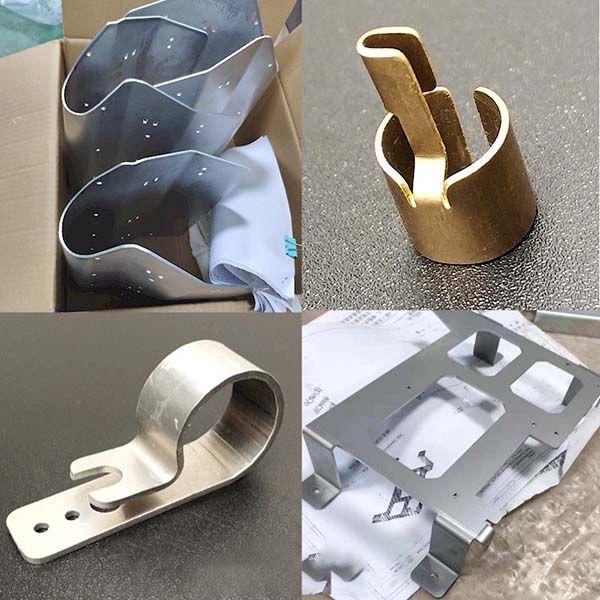
CNC Punching (CNC Punching Technology)
CNC punching focuses on high-efficiency repetitive operations.
Functional advantages:
- Fast processing speed
- Cost-efficient for batch production
- High consistency in hole patterns
- Stable production rhythm
Best application scenarios:
- Repetitive hole arrays
- Ventilation holes
- Standard mounting holes
- Cable routing holes
- Fastener openings
Manufacturing logic:
CNC punching is often combined with laser cutting:
- Laser handles complex contours
- CNC punching handles repetitive geometry
- Hybrid systems improve productivity and cost efficiency
This combination forms a high-efficiency precision cutting system for industrial-scale production.
Waterjet Cutting (Waterjet Technology)
Waterjet cutting is a non-thermal cutting process.
Core advantages:
- No heat-affected zone (HAZ)
- No material hardening
- No micro-cracking
- No thermal distortion
- No structural stress
Ideal applications:
- Thick metal plates
- Composite materials
- Special alloys
- Heat-sensitive materials
- Multi-layer sheet stacks
Waterjet cutting is essential in aerospace, high-end industrial equipment, and special material fabrication environments.
2. Precision Forming Processes (Precision Forming)
Precision forming defines the three-dimensional structure of sheet metal parts and determines assembly accuracy, load performance, and functional geometry.
CNC Bending (CNC Press Brake Forming)
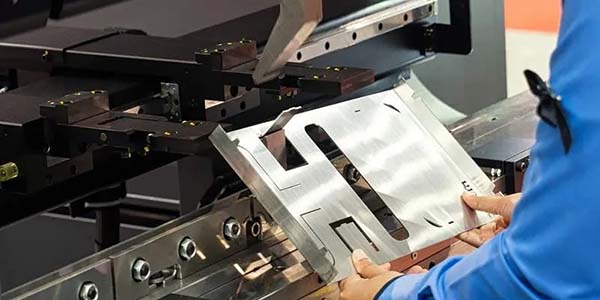
CNC bending is the backbone of structural shaping.
Technical capabilities:
- High angular precision
- Accurate bending position
- Multi-axis control
- Repeatable forming accuracy
- Digital program control
Typical products:
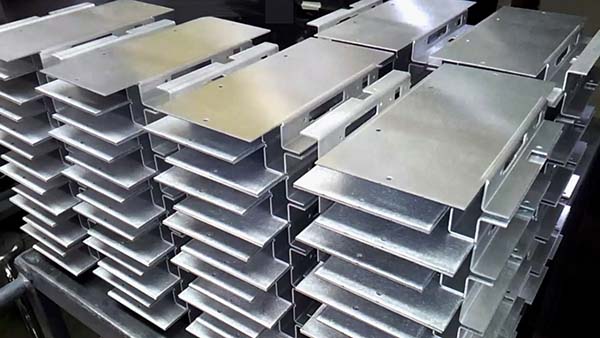
- Electrical enclosures
- Control cabinets
- Equipment housings
- Machine frames
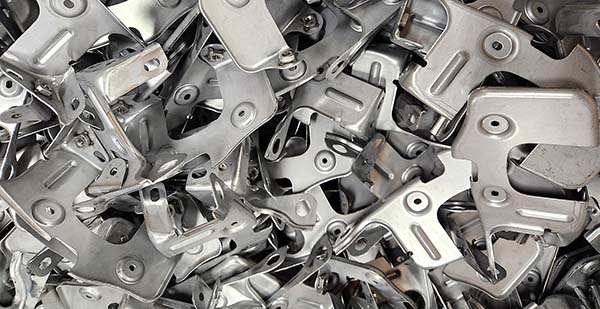
- Structural brackets
Engineering value:
CNC bending ensures structural alignment, load distribution, and assembly fit, making it essential for industrial-grade fabrication.
Deep Drawing (Deep Drawing Forming)
Deep drawing is used to create seamless, hollow, and curved structures.
Typical applications:
- Protective covers
- Equipment housings
- Shielding shells
- Containers
- Medical enclosures
Manufacturing requirements:
- High-quality molds
- Controlled material flow
- Precision die alignment
- Material ductility optimization
Deep drawing is widely used in medical equipment, electronics housings, and industrial casings.
Roll Forming (Roll Forming Technology)
Roll forming is designed for continuous profile production.
Process characteristics:
- Continuous forming process
- Stable dimensional accuracy
- High production efficiency
- Excellent repeatability
- Long structural components
Common products:
- Guide rails
- Structural frames
- Long supports
- Mounting channels
- Linear enclosures
Roll forming ensures dimensional stability and consistency in long-length components.
3. Precision Joining and Welding Processes (Joining & Welding)
Joining technology defines structural integrity, mechanical strength, and durability.
Laser Welding
Advantages:
- Minimal thermal deformation
- High joint strength
- Clean weld seams
- Aesthetic finish
- Precision control
Used in:
- Medical devices
- High-end enclosures
- Precision housings
- Visual appearance components
TIG/MIG Welding
Characteristics:
- High structural strength
- Strong load-bearing capacity
- Thick material compatibility
- Industrial reliability
Used in:
- Heavy equipment structures
- Machine frames
- Support systems
- Load-bearing assemblies
Riveting and PEM Fastening
Functional benefits:
- Modular assembly
- Easy maintenance
- Fast installation
- Structural reliability
- Electronics compatibility
Used in:
- Electrical enclosures
- Control cabinets
- Server racks
- Communication systems
4. Precision Surface Finishing Processes (Surface Finishing)
Surface finishing defines corrosion resistance, durability, appearance quality, and environmental adaptability.
| Process | Function |
|---|---|
| Powder Coating | Corrosion resistance + industrial durability |
| Anodizing | Oxidation protection + surface hardness |
| Plating | Conductivity + corrosion control |
| Brushing/Polishing | Visual quality + aesthetic value |
| Sand Blasting | Surface uniformity + coating adhesion |
Surface finishing is not cosmetic—it is functional engineering protection.
II. Classification by Accuracy and Manufacturing Complexity
Standard Precision Sheet Metal
- Tolerance range: ±0.1mm to ±0.2mm
- Typical products:
- Industrial cabinets
- Equipment housings
- Machine enclosures
- Support brackets
Focus: Cost efficiency + functional reliability
High-Precision Sheet Metal
- Tolerance range: ±0.05mm or better
- Typical industries:
- Medical equipment
- Semiconductor equipment
- Optical systems
- Precision electronics
Focus: Dimensional stability + assembly accuracy
Ultra-Precision Sheet Metal
- Multi-process integration
- Extreme flatness requirements
- Assembly consistency control
- Structural stress optimization
Industries:
- Aerospace
- Defense systems
- Scientific instruments
- Advanced manufacturing platforms
Focus: System-level engineering precision
III. Structural Product Classification
Enclosures & Cabinets
- Equipment housings
- Electrical cabinets
- Control enclosures
- Server racks
Brackets & Mounts
- Support brackets
- Installation frames
- Mounting systems
- Structural supports
Covers & Housings
- Protective covers
- Shielding shells
- Equipment casings
- Safety housings
Structural Sheet Metal Parts
- Load-bearing structures
- Frame systems
- Support skeletons
- Functional frameworks
IV. Integrated Manufacturing Logic
Precision sheet metal fabrication is not linear—it is a system engineering process:
- Digital design (CAD)
- Process simulation (CAM)
- Material optimization
- Precision cutting
- Precision forming
- Structural joining
- Surface engineering
- Quality inspection
- Assembly integration
- Functional validation
This forms a closed-loop precision manufacturing system.
V. Industrial Application Value
Precision sheet metal fabrication supports:
- Electronics manufacturing
- Medical equipment systems
- Industrial automation
- Renewable energy systems
- Electric vehicle infrastructure
- Aerospace structures
- Semiconductor equipment
- Communication technology
It is the structural backbone of modern industry.
Conversion Statement
Xavier provides full-spectrum precision sheet metal fabrication services, covering:
- Precision cutting
- Precision forming
- Precision welding and joining
- Advanced surface finishing
- Standard, high-precision, and ultra-precision manufacturing levels
- Structural fabrication systems
- Custom industrial solutions
From prototype development to mass production,
from structural components to complete assemblies,
from standard enclosures to high-end precision systems,
Xavier delivers reliable, scalable, and professional precision sheet metal fabrication solutions for global clients.
We welcome cooperation, OEM partnerships, and long-term manufacturing collaboration.
Xavier is a CNC machining manufacturer supporting CNC aluminum machining precision sheet metal fabrication, stainless steel, magnesium alloy, acrylic, ABS, and plastic parts for aerospace, automotive, and medical applications.
We offer 5 axis milling, CNC milling services, CNC turning services, with finishing options such as anodizing and electroless nickel plating. Contact us for precision sheet metal fabrication pricing.
Some of the images and text in this article are collected and compiled from the internet. If there is anything inappropriate, please contact us for processing.