Precision Sheet Metal Fabrication: Processes, Accuracy, Materials, and Manufacturing Control
Precision sheet metal fabrication refers to the manufacturing of metal components from flat sheet material using controlled cutting, forming, and finishing processes to achieve tight tolerances, consistent geometry, and reliable functional performance. It is widely used in electronics enclosures, medical devices, industrial equipment, automotive assemblies, and aerospace structures.
Unlike general sheet metal work, precision sheet metal fabrication emphasizes repeatability, dimensional accuracy, and process control, often integrating CNC cutting, automated bending, and inspection-driven quality systems.
Below are ten critical topics that define high-quality precision sheet metal fabrication, based on what consistently ranks in Google’s top results and what actually matters on the factory floor.
Sheet Metal Materials Used in Precision Fabrication
Material selection directly affects formability, strength, corrosion resistance, and dimensional stability.
Common materials and their characteristics:
| Material | Thickness Range | Key Properties | Typical Applications |
|---|---|---|---|
| Cold Rolled Steel (SPCC) | 0.5–3.0 mm | High flatness, low cost | Enclosures, brackets |
| Stainless Steel 304/316 | 0.5–2.5 mm | Corrosion resistance | Medical, food equipment |
| Aluminum 5052 | 0.8–4.0 mm | Excellent bendability | Electronics housings |
| Aluminum 6061 | 1.0–5.0 mm | High strength | Structural panels |
| Galvanized Steel | 0.6–2.0 mm | Rust protection | Outdoor cabinets |
Example:
For a medical device enclosure, 5052 aluminum is often chosen over 6061 because it tolerates tighter bend radii without cracking, even though 6061 is stronger.
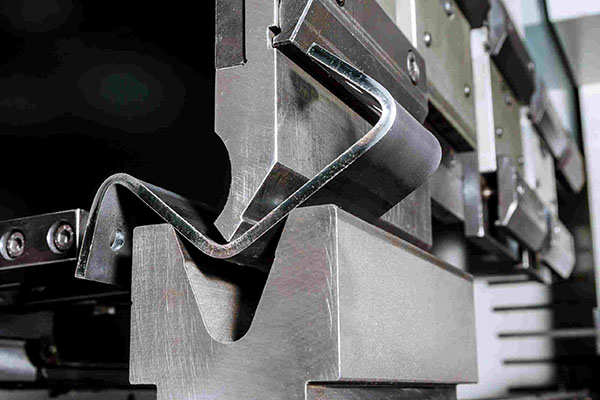
Precision Cutting Technologies and Accuracy Limits
Cutting is the foundation of dimensional accuracy in sheet metal fabrication.
| Cutting Method | Typical Tolerance | Best Use Case |
|---|---|---|
| Fiber Laser Cutting | ±0.05–0.1 mm | High precision profiles |
| Turret Punching | ±0.1–0.2 mm | High-volume patterns |
| Waterjet Cutting | ±0.1 mm | Thick or heat-sensitive parts |
| CNC Shearing | ±0.2 mm | Straight cuts |
Laser cutting dominates precision fabrication because it delivers:
- Minimal heat-affected zones
- Consistent kerf width
- Excellent edge quality
Example:
A 1.5 mm stainless steel panel with mounting holes requires positional tolerance within ±0.08 mm to align with electronic assemblies—laser cutting is typically mandatory here.
Bending and Forming Accuracy in Sheet Metal Parts
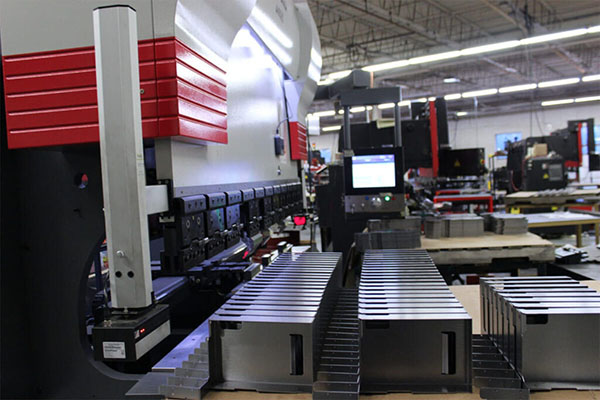
Bending is where most dimensional errors occur if not tightly controlled.
Key influencing factors:
- Material springback
- Grain direction
- Bend radius vs thickness
- Tooling precision
- Press brake calibration
Typical bending accuracy:
| Process | Angle Tolerance | Linear Tolerance |
|---|---|---|
| Standard CNC bending | ±1° | ±0.5 mm |
| Precision bending (with compensation) | ±0.5° | ±0.2 mm |
| Servo-electric press brake | ±0.3° | ±0.1 mm |
Example:
A control cabinet door with a 90° bend must maintain flatness to ensure gasket sealing. Even a 0.5° deviation can create visible gaps.
Tolerance Stacking and Design for Manufacturability (DFM)
Precision sheet metal fabrication is highly sensitive to tolerance stacking, especially in multi-bend parts.
Example of tolerance accumulation:
| Feature | Individual Tolerance |
|---|---|
| Laser cut edge | ±0.1 mm |
| First bend | ±0.2 mm |
| Second bend | ±0.2 mm |
| Hole-to-flange | ±0.2 mm |
| Total potential deviation | ±0.7 mm |
DFM best practices include:
- Avoiding over-tight tolerances on non-functional features
- Using datum-based dimensioning
- Aligning bend direction with material grain when possible
- Reducing unnecessary secondary operations
Good manufacturers actively review drawings and suggest tolerance optimization before production.
Welding and Joining Methods in Precision Sheet Metal
Sheet metal assemblies often require welding, riveting, or fastening.
| Joining Method | Accuracy Impact | Typical Use |
|---|---|---|
| TIG Welding | Medium distortion | Stainless steel frames |
| Spot Welding | Low distortion | Thin steel panels |
| PEM Fasteners | High precision | Threaded mounting points |
| Riveting | Stable geometry | Aluminum assemblies |
Example:
For thin stainless steel medical housings, spot welding + post-weld straightening is preferred over TIG welding to control heat distortion.
Surface Finishing and Functional Coatings
Surface treatment affects corrosion resistance, aesthetics, and electrical properties.
| Finish Type | Thickness | Purpose |
|---|---|---|
| Powder Coating | 60–120 μm | Durability, aesthetics |
| Anodizing | 5–25 μm | Corrosion protection |
| Brushing | N/A | Visual consistency |
| Zinc Plating | 5–12 μm | Rust prevention |
Important note:
Finishing layers change final dimensions. For precision enclosures, coating thickness must be included in tolerance calculations.
Flatness, Warping, and Stress Control
Precision sheet metal parts must maintain flatness after cutting, bending, and finishing.
Common causes of warping:
- Residual stress from rolling
- Uneven heat input
- Improper stacking during coating
- Thin material with long unsupported spans
Typical flatness control targets:
| Part Size | Acceptable Flatness |
|---|---|
| <300 mm | ≤0.5 mm |
| 300–800 mm | ≤1.0 mm |
| >800 mm | ≤1.5 mm |
Manufacturers often use stress-relief processes or staged forming to maintain geometry.
Inspection, Measurement, and Quality Control
Precision sheet metal fabrication relies heavily on in-process and final inspection.
Common inspection tools:
- Height gauges
- Go/No-Go gauges
- CMM for complex assemblies
- Angle measurement systems
- Flatness tables
Quality systems often include:
- First Article Inspection (FAI)
- SPC for repeat dimensions
- Batch traceability
- Calibration records
Example:
A telecom enclosure project may require 100% inspection on critical mounting features to ensure compatibility with standardized racks.
Production Volume, Lead Time, and Scalability
Precision sheet metal fabrication supports a wide range of volumes.
| Volume Type | Typical Quantity | Lead Time |
|---|---|---|
| Prototype | 1–20 pcs | 3–7 days |
| Low volume | 50–300 pcs | 1–3 weeks |
| Medium volume | 500–2000 pcs | 3–6 weeks |
| High volume | 5000+ pcs | Tooling dependent |
Manufacturers with modular tooling and flexible scheduling can scale production without redesign.
Cost Drivers in Precision Sheet Metal Fabrication
Key cost factors include:
- Material yield
- Cutting time
- Number of bends
- Secondary operations
- Surface finishing
- Inspection requirements
Cost reduction strategies:
- Nesting optimization
- Standard bend tooling
- Simplified part geometry
- Combining operations
Example:
Reducing one non-functional bend can lower unit cost by 8–12% on medium-volume production.
Why Xavier Is a Reliable Precision Sheet Metal Fabrication Partner
Xavier provides precision sheet metal fabrication services built on process control, engineering insight, and quality consistency. From laser cutting and CNC bending to welding, finishing, and inspection, Xavier supports complex sheet metal components across electronics, medical, industrial, and automation sectors.
Key strengths include:
- Tight dimensional control across batches
- DFM-driven cost optimization
- Material and process traceability
- Scalable production from prototype to volume
- Reliable lead times backed by real capacity
Xavier works not just as a fabricator, but as a manufacturing partner—helping customers turn drawings into reliable, production-ready sheet metal components.
Xavier is a CNC machining manufacturer specializing in custom metal parts. We support CNC aluminum machining precision sheet metal fabrication, CNC stainless steel, magnesium alloy, acrylic, ABS, and plastic machining for high-precision applications.
Our experience covers CNC aerospace parts machining precision sheet metal fabrication, CNC automotive parts machining, and medical components machining, delivering high accuracy, fast turnaround, and stable quality.
We provide 5 axis milling, CNC milling services, CNC turning services, and Swiss turning services, with finishing options such as anodizing and electroless nickel plating. As a global CNC supplier, we support batch production—contact us for precision sheet metal fabrication pricing.
Some of the images and text in this article are collected and compiled from the internet. If there is anything inappropriate, please contact us for processing.