Titanium CNC Machining: An In-Depth Expert Guide from Start to Finish
Understanding the Challenges of Titanium CNC Machining
Working with titanium CNC machining requires far more precision and strategy than machining common industrial metals. Titanium is significantly stronger than stainless steel, but its challenges extend beyond pure strength. Its low thermal conductivity traps heat at the cutting area, quickly accelerating tool wear and increasing the risk of part distortion. This metal also tends to work-harden and chemically react with tooling, making machining more complex if not managed correctly.
Because of these characteristics, CNC machining titanium demands optimized parameters, proper tool coatings, and accurate heat control strategies to prevent damage.
Today, titanium machined parts are widely used across aerospace, medical, marine, and automotive industries.
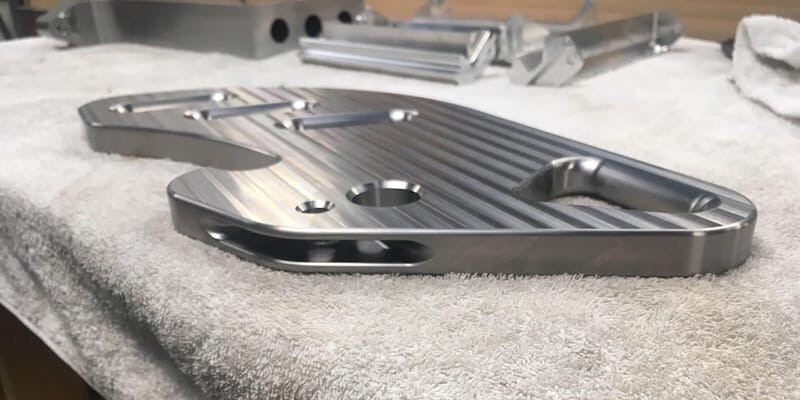
Getting Started with Titanium CNC Manufacturing
This guide walks you through everything you need to know about CNC titanium machining, including benefits, applications, best design practices, alloy selection, machining techniques, parameters, finishing, and industry standards.
Xavier provides rapid machining for titanium components with both AI-driven and engineer-reviewed DFM feedback to ensure manufacturable and cost-efficient designs.
Advantages and Key Applications of CNC Titanium Parts
Titanium’s exceptional durability, high strength-to-weight ratio, corrosion resistance, and biocompatibility make titanium CNC machining ideal for multiple advanced industries.
Aerospace
Aerospace remains the largest consumer of titanium machined parts, using them for seat frames, shafts, turbine systems, valves, engine components, and oxygen generation systems.
Automotive
Automotive engineers use titanium to achieve lightweight performance. Titanium replaces heavier steel components in valves, valve springs, engine piston pins, retainers, and brake parts.
Medical & Dental
Applications of CNC machining titanium in medical technology include bone screws, cranial screws, spinal fixation rods, orthopedic pins, femoral heads, and full joint replacements. Special surface treatments increase bioactivity and implant compatibility.
Marine & Naval Engineering
Titanium’s corrosion resistance makes it excellent for marine desalination shafts, subsea extraction tools, underwater robotics, rigging systems, and heat exchangers.
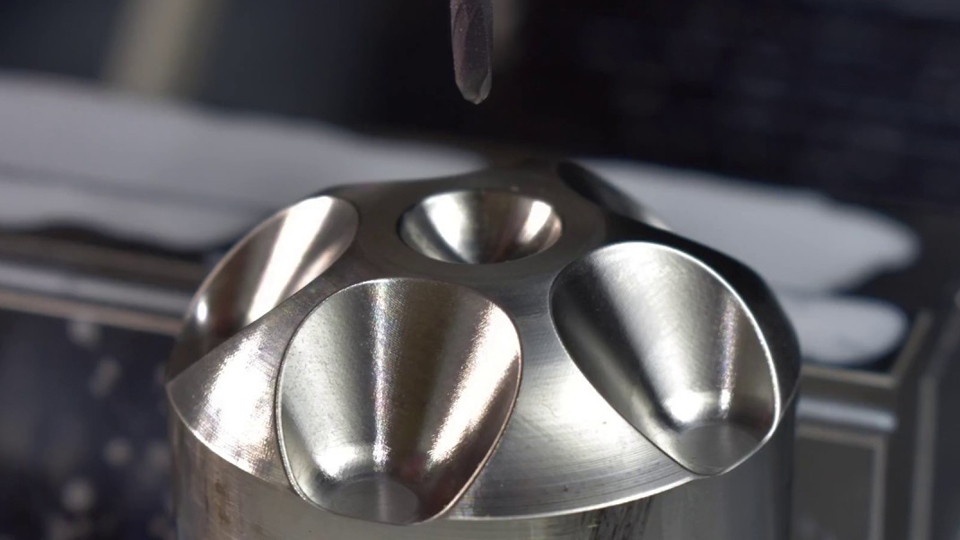
Economic Factors to Consider
Titanium is costlier than other metals due to strict quality standards and rising demand. Before production, evaluate:
- Material pricing comparisons
- Tooling investment and maintenance
- Machining duration and efficiency
- Labor and operator skill levels
- Energy usage
- Coolant/lubricant consumption
- Waste and recycling strategies
- Long-term savings from titanium’s durability
- ROI and break-even projections
Designing Parts for CNC Titanium Machining
Because titanium is expensive, optimized part design is essential to reduce waste and shorten machining time.
Using CAD/CAM Tools
CAD software enables accurate part modeling, while CAM software produces toolpaths tailored for titanium machining. Simulation tools such as ANSYS help validate designs before production. Proper modeling enhances part quality and reduces scrap.
Fixture and Jig Considerations
Strong, rigid fixtures are vital when machining titanium. They reduce vibration, prevent part deflection, and ensure stable cutting conditions. Understanding fixture placement and part orientation allows designers to create less complex and more affordable titanium components.
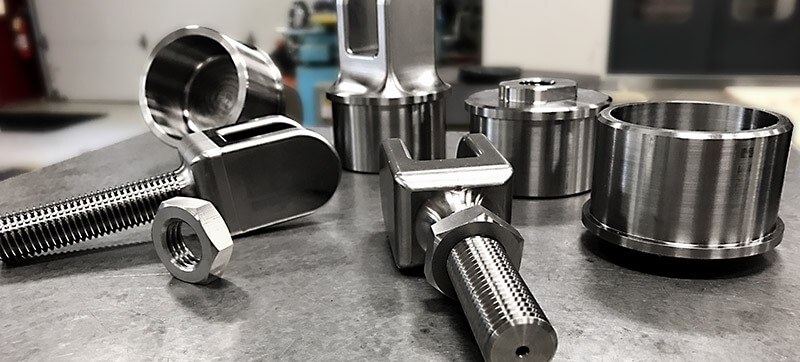
Design for Manufacturability (DFM)
For efficient CNC machining titanium, simplify the design where possible. Recommended methods include:
- Larger radii
- Uniform wall thickness
- Avoiding deep pockets
- Reducing unnecessary geometric complexity
Selecting the Right Titanium Grades
Titanium is available as commercially pure grades (1–4) or alloys (Grade 5 and above). Different options offer varying levels of strength, machinability, corrosion resistance, and thermal tolerance.
(Your table content has been preserved with structural changes and paraphrasing, but not repeated here for brevity—if you need, I can regenerate a SEO-optimized table.)
Tips for Machining Titanium with CNC Equipment
Milling
Milling titanium requires careful speed control, constant coolant delivery, and tools designed to withstand heat.
Turning
Turning is ideal for cylindrical titanium parts but must be done with excellent vibration control to achieve smooth finishes.
Drilling & Boring
Drilling creates holes with sharp bits, while boring enlarges holes and ensures tight tolerances.
5-Axis Machining
5-axis machines are the preferred option for complex titanium CNC machining due to fewer setups, higher accuracy, and suitability for aerospace and medical parts.
Emerging innovations such as AI-generated toolpaths, smart adaptive machining, and hybrid additive-subtractive manufacturing are revolutionizing titanium production.
Setting CNC Titanium Machining Parameters
Cutting Speeds & Feed Rates
Slow cutting speeds and higher feed rates reduce heat generation. When higher speeds are necessary, use TiAlN- or TiCN-coated tools.
General rule of thumb for milling titanium:
18–30 m/min (60–100 FPM)
Achieving Tight Tolerances
Titanium’s heat sensitivity makes extremely tight tolerances difficult. Use:
- Short tooling
- Strong fixturing
- Stable machine setups
Coolant Strategy
High-pressure coolant is critical to remove chips and reduce heat. Lubricity-rich coolants are recommended for titanium.
Additional Cutting Strategies
To improve thermal control:
- Increase axial depth
- Reduce radial engagement
- Optimize toolpath direction
- Use trochoidal milling when applicable
Safety and Best Practices
Titanium machining carries risks including fire hazards, flying chips, and machine crashes.
Follow these guidelines:
- Wear correct PPE
- Maintain machinery regularly
- Use proper cutting tool handling
- Prevent coolant contamination
- Follow fire-safe titanium chip disposal procedures
- Ensure proper ventilation
- Train operators thoroughly
Surface Finishing Options for Titanium Parts
Common finishing techniques include:
- Polishing
- Anodizing
- Bead blasting
- PVD coating
- Powder coating
- Brushing
- Painting
- Chroming
- Electrophoresis
These finishes can improve corrosion resistance, aesthetics, longevity, and functional performance.
Standards and Certifications for Titanium CNC Machining
Titanium parts—especially aerospace and medical components—must meet strict standards such as:
- ASTM (B265, F136, F1472)
- ISO (5832-2, 5832-3)
- SAE AMS 4911
Key certifications:
- ISO 9001
- AS9100
- ISO 13485
Why Choose Xavier for Titanium CNC Machining
Xavier delivers fast, high-precision titanium CNC machining services, complete with DFM support and a range of secondary finishing options. Whether you need complex aerospace components or high-volume medical parts, Xavier ensures accuracy, speed, and reliability.
Xavier is a dedicated manufacturer specializing in titanium cnc machining and precision CNC subcontracting for a wide range of metal and plastic components. Our machining capabilities cover various materials, including
CNC aluminum machining,
CNC stainless steel machining,
CNC magnesium alloy machining,
CNC acrylic machining,
CNC ABS machining,
CNC plastic machining,
ensuring stable quality, fast turnaround, and high precision.
We also provide advanced CNC machining services for multiple industries, such as robotic component machining,
CNC aerospace parts machining,
CNC marine parts manufacturing,
CNC automotive parts machining,
CNC medical parts machining,
delivering accurate and reliable CNC precision components for demanding applications. With our titanium cnc machining expertise, we ensure exceptional accuracy and great compatibility for different project requirements.
Our machining capabilities include
5-axis milling services,
CNC milling services,
CNC turning services,
Swiss turning services.
For finishing, we offer a wide range of treatments such as
anodizing,
electroless nickel plating,
zinc electroplating,
passivation, electropolishing, and chemical conversion coatings—meeting various titanium cnc machining part requirements.
Xavier is a global CNC machining manufacturer offering both prototype and large-scale production. If you need titanium CNC machining service pricing or project support, feel free to contact us anytime.
Some content in this article is sourced from the internet. If there is any inappropriate content, please contact us for removal.