
What a CNC Milling Parts Manufacturer Does
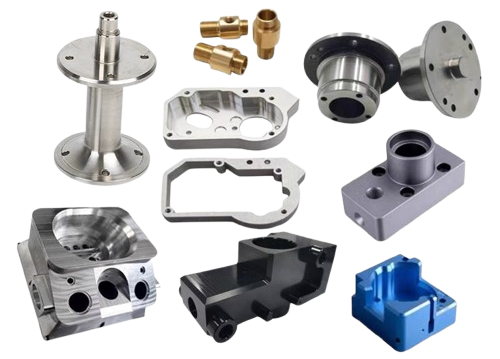
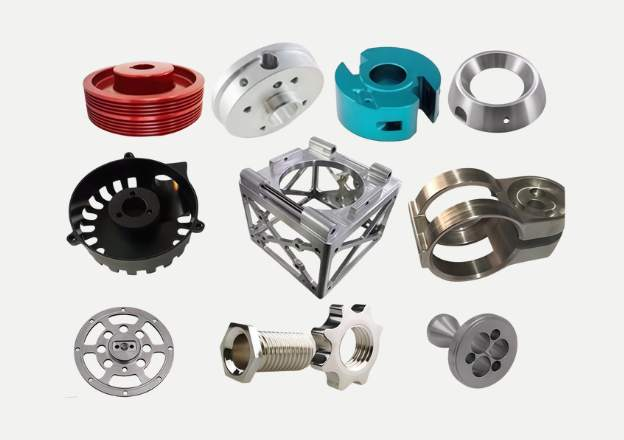
A CNC milling parts manufacturer specializes in producing custom, precision machined components by removing material via computer-numerically controlled milling machines. These manufacturers take engineered CAD designs and turn them into finished components used in industries like automotive, aerospace, medical, and industrial equipment. CNC milling is one of the most versatile subtractive manufacturing techniques, capable of producing complex geometries with excellent repeatability and surface quality.
Key capabilities include handling small to large parts, machining metals and plastics, and combining turning and milling operations within integrated cells.
Capabilities & Machine Technologies
Modern CNC mills range from simple 3-axis vertical machines to advanced 4- and 5-axis centers. The sophistication of a manufacturer’s equipment directly impacts:
- Part complexity — 5-axis machines can produce undercuts, deep cavities, and features unreachable on simpler mills.
- Tolerance consistency — simultaneous multi-axis control reduces setup errors.
- Lead times — fewer setups = shorter cycle times.
Manufacturers often categorize machines like this:
| Machine Type | Axis Movement | Typical Use |
|---|---|---|
| 3-Axis Mill | X, Y, Z | Basic pockets, contours |
| 4-Axis | X, Y, Z + A | Rotary features, indexed faces |
| 5-Axis | X, Y, Z + A + B | Complex surfaces, aerospace components |
Advanced 5-axis CNC milling can hold tolerances down to ±0.0002″ (±0.005 mm) on complex geometries — indispensable for high-precision parts.
Materials Used & Machinability
CNC milling parts manufacturers typically work with a spectrum of materials — each with unique machining properties. Understanding machinability helps estimate tooling wear, cycle time, and cost.
| Material Category | Common Examples | Machinability Notes |
|---|---|---|
| Aluminum & Alloys | 6061, 7075 | Excellent + low tool wear |
| Steel & Stainless | 1018, 304, 316 | Strong, slower feeds |
| Titanium & Superalloys | Ti6Al4V, Inconel | High strength, harder to cut |
| Plastics | Delrin, Nylon | Low cutting forces |
| Brass / Copper | C360, C110 | Easy cut, good finish |
For instance, aluminum alloys like 6061 are often preferred for CNC milling because of fast cutting speeds and minimal tool wear, making them cost-effective for high-volume production.
Tolerance Standards & Precision Accuracy
Precision tied to tolerance specification determines functionality and interchangeability. Most reputable manufacturers offer tolerance options such as:
| Tolerance Range | Typical Application |
|---|---|
| ±0.005″ (±0.127 mm) | General functional parts |
| ±0.001″ (±0.025 mm) | Precision engineering |
| ±0.0005″ (±0.013 mm) | Aerospace / medical |
Achieving tighter tolerances often involves advanced machine control, environmental stabilization, and sophisticated fixturing, which increases cycle time and inspection effort.
Processes & Workflow: From Prototype to Production
A typical CNC milling manufacturer workflow includes:
- Engineering Review & DFM — assess design for optimized machining.
- CAM Programming & Simulation — toolpaths are generated to minimize cycles and avoid collisions.
- Machine Setup & Fixture Design — accurate holding drastically improves precision.
- Milling Operations — roughing, semi-finishing, and finishing passes.
- Inspection & Validation — dimensional and surface checks before delivery.
Many manufacturers also offer rapid prototyping and bridge production services, enabling quick design iterations before full production.
Surface Finishing & Secondary Processing
Beyond basic machining, CNC milling parts manufacturers often provide finishing options that add both functional and aesthetic value:
| Surface Treatment | Common Uses |
|---|---|
| Anodizing | Increased corrosion resistance |
| Deburring/Polishing | Smooth edges & functional surfaces |
| Passivation | Stainless steel corrosion control |
| Powder Coating | Visual finish + protection |
Surface finishes are specified in terms of roughness average (Ra) — lower Ra values denote smoother surfaces. For example, aerospace housings might require Ra ≤ 32 µin (0.8 µm) for optimal assembly performance.
Quality Control & Standards Compliance
Precision CNC milling relies heavily on rigorous quality assurance. Top manufacturers perform:
- Coordinate Measuring Machine (CMM) inspection
- Process Capability Index (Cpk) monitoring
- First Article Inspection (FAI)
- Statistical Process Control (SPC)
A well-run facility will align with ISO 9001 (general quality), and in many industries, with AS9100 (aerospace) or IATF 16949 (automotive). These systems ensure traceability and consistent delivery quality.
Cost Factors & Pricing Breakdown
Understanding pricing helps buyers budget realistically and choose the right partner. Key cost components include:
| Cost Category | Typical Impact |
|---|---|
| Material | 30–60% of cost |
| Machine Time | Depends on cycle & complexity |
| Setup & Programming | Fixed overhead per job |
| Tooling | Cutting tools & inserts |
| Finishing & Inspection | Adds labor & time |
Typical cost example for CNC milling:
- Machine time: $50–$200/hr
- Setup: $100–$500 per job
- Tooling: $20–$100+ per tool
- Programming: $50–$100/hr
- Finishing: $10–$50/part
Because milling is subtractive, material waste (30–70% of original) adds to cost — especially with expensive materials like titanium or superalloys.
Design for Manufacturability (DFM) Best Practices
A CNC milling parts manufacturer adds value by reviewing designs early to avoid costly revisions. Effective DFM includes:
- Minimizing unnecessary tight tolerances
- Designing features accessible to milling tools
- Reducing deep cavities & thin walls
- Standardizing threads & hole sizes
Good DFM increases first-pass yield and reduces cycle time — positively affecting cost and delivery reliability.
Industry Applications & Case Examples
CNC milled parts serve a broad spectrum of industries:
| Sector | Example Parts |
|---|---|
| Aerospace | Structural components, brackets |
| Medical | Surgical instrument bodies |
| Automotive | Engine mounts, custom chassis parts |
| Electronics | Heat sinks, enclosures |
| Industrial Machinery | Precision gears, tooling |
For instance, CNC-milled aluminum brackets with tolerances of ±0.01 mm are typical in aerospace and LED manufacturing, where light weight and tight fit are essential.
Xavier — Your Premier CNC Milling Parts Manufacturing Partner
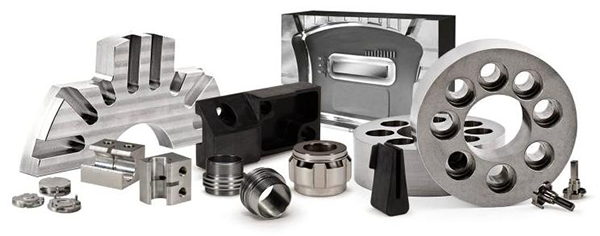
When precision, flexibility, and reliability matter, Xavier stands out among CNC milling parts manufacturers. With cutting-edge multi-axis machining centers, comprehensive material expertise, and robust quality systems backed by ISO/industry compliance, Xavier delivers engineered components that meet stringent requirements across aerospace, automotive, medical, and industrial sectors. Whether you need prototype runs with rapid turnaround, tight-tolerance production parts, or high-volume batches, Xavier’s deep engineering support and transparent pricing ensure cost-effective, high-quality outcomes with predictable delivery and performance.
Partnering with Xavier means better parts and better engineering collaboration — from DFM reviews to final inspection reporting — helping you reduce risk and accelerate time-to-market.
Some of the images and text in this article are collected and compiled from the internet. If there is anything inappropriate, please contact us for processing.