Low Volume Machining: A Practical Manufacturing Strategy for Small-Batch Production
Low volume machining is increasingly used by companies that need functional parts without committing to large production volumes. Instead of focusing on scale, low volume machining emphasizes flexibility, engineering accuracy, and controlled cost—making it a practical solution for early-stage products, customized components, and pilot production runs.
Unlike mass manufacturing, low volume machining allows manufacturers to react quickly to design changes, market feedback, and technical validation requirements. For many engineering-driven projects, it is not a temporary compromise but a deliberate production strategy.
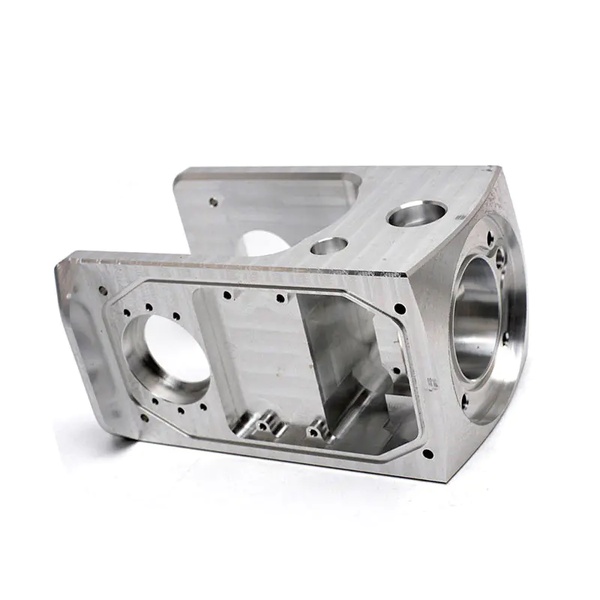
Why Low Volume Machining Is Used Across Multiple Industries
Managing Risk in Early-Stage Manufacturing
One of the main reasons companies choose low volume machining is risk control. Before investing in tooling or automated production lines, manufacturers often need to validate form, fit, and function under real operating conditions.
Low volume machining enables this validation using production-grade materials and processes, reducing the gap between prototype and final product.
Faster Iteration Without Tooling Lock-In
In low volume machining, design changes do not require scrapping molds or dedicated tooling. Adjustments to dimensions, tolerances, or features can be implemented directly in the machining process.
This flexibility shortens development cycles and allows engineering teams to refine designs based on real-world feedback rather than assumptions.
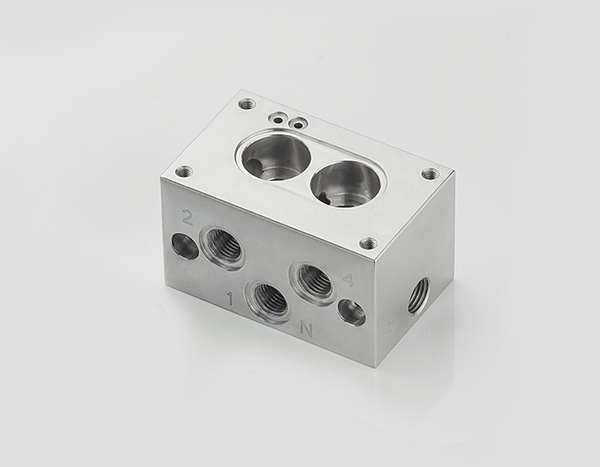
Cost Efficiency Beyond Unit Price
Although unit cost in low volume machining may be higher than in mass production, total project cost is often lower. Eliminating tooling investment, reducing scrap risk, and avoiding redesign delays significantly improves cost predictability.
For many buyers, low volume machining is a way to control financial exposure while maintaining technical accuracy.
How Low Volume Machining Differs from Traditional Production Models
Production Planning and Process Control
Low volume machining requires a different planning mindset. Instead of optimizing for maximum throughput, machining strategies focus on repeatability, setup efficiency, and process stability across small batches.
Suppliers experienced in low volume machining typically invest more time in process planning and inspection rather than automation.
Quality Expectations Do Not Scale Down
A common misconception is that low volume machining allows looser quality standards. In reality, quality issues are more costly in small batches because there is less opportunity to absorb rework or scrap.
Consistent inspection logic and process control are critical to ensuring that low volume machining results remain scalable if production volume increases later.
Choosing a Reliable Low Volume Machine Shop
Engineering Capability Over Machine Count
A capable low volume machine shop is defined less by the number of machines and more by engineering judgment. The ability to identify machining risks, suggest manufacturability improvements, and control tolerance stack-up directly affects part performance and cost.
Suppliers lacking engineering depth often rely on trial-and-error, which increases lead time and uncertainty.

Equipment Flexibility and Setup Efficiency
Low volume machining often involves frequent setup changes. Machine shops supporting this model must be equipped to handle diverse geometries and materials without excessive downtime.
Versatile CNC milling and turning capabilities are essential for maintaining responsiveness.
Communication as a Cost Factor
In low volume machining projects, unclear drawings or delayed feedback can easily become the largest hidden cost. Clear communication between buyer and supplier is often the difference between a smooth build and repeated revisions.
Experienced suppliers typically address communication gaps early in the process.
Low Volume CNC Machining Near Me vs Global Manufacturing Options
Many buyers begin their search with low volume CNC machining near me, prioritizing proximity and turnaround time. Local suppliers can be effective for urgent projects or simple geometries.
However, local capacity may be limited for complex parts or tighter tolerances. In such cases, global low volume machining options offer broader technical capability and cost flexibility—provided quality control and communication are well managed.
The most effective sourcing strategies balance responsiveness with manufacturing depth rather than relying solely on location.
Common Materials Used in Low Volume Machining
Aluminum and Lightweight Alloys
Aluminum is widely used in low volume machining due to its machinability, strength-to-weight ratio, and suitability for functional testing.
Steel and Stainless Steel
For durability testing and load-bearing applications, low volume machining allows steel and stainless steel parts to be produced without committing to mass production tooling.
Engineering Plastics
Low volume machining of plastics supports functional prototypes that closely resemble injection-molded parts in performance and tolerance.
When Low Volume Machining Makes the Most Sense
Low volume machining is particularly effective when:
- Product designs are still evolving
- Demand forecasts are uncertain
- Tooling investment needs to be minimized
- Functional testing requires production-grade materials
- Custom or specialized components are required
In these scenarios, low volume machining provides a controlled path from concept to validated production.
Preparing for Scale-Up After Low Volume Machining
A well-executed low volume machining project creates valuable process data. Tooling strategies, inspection plans, and machining parameters developed during small-batch production can often be transferred directly to larger runs.
This continuity reduces risk during scale-up and shortens the transition to higher-volume manufacturing.
Final Perspective on Low Volume Machining
Low volume machining is not simply about producing fewer parts. It is about manufacturing decisions that prioritize flexibility, engineering accuracy, and informed risk management.
Companies that treat low volume machining as a structured production phase—rather than an informal shortcut—are better positioned for long-term manufacturing success.
Working with an Experienced Low Volume Machining Partner
At this stage, many buyers look for a supplier that can provide not only machining capacity, but also manufacturing insight.
Xavier supports low volume machining projects with an engineering-focused approach, helping customers evaluate design feasibility, control cost drivers, and prepare for future scale-up. For projects where precision, consistency, and communication matter, working with an experienced low volume machine shop can significantly reduce uncertainty.
Xavier is a professional CNC machining manufacturer specializing in custom metal parts production. We support low volume machining CNC machining aluminum, CNC machining stainless steel, CNC machining magnesium alloy, CNC machining acrylic, and CNC machining ABS to meet diverse project needs.
Our precision CNC capabilities are widely used in low volume machining CNC aerospace parts machining, CNC automotive parts machining, and CNC medical parts machining, offering high accuracy, fast turnaround, stable quality, and strong flexibility.
We provide advanced machining solutions including low volume machining five-axis milling services, low volume machining CNC milling services, CNC turning services, and low volume machining Swiss turning services.
Surface finishing options include low volume machining anodizing, low volume machining electroless nickel plating, zinc plating, passivation, and chemical conversion coatings.
As a global low volume machining supplier, Xavier supports small-batch and bulk production. For CNC machining service pricing, please contact us.
Some of the images and text in this article are collected and compiled from the internet. If there is anything inappropriate, please contact us for processing.