High Volume Parts Manufacturing: How Industry Leaders Scale Production Reliably
High volume parts manufacturing is a core capability behind some of the world’s most successful industrial and consumer products. From automotive powertrain components to aerospace structural parts and consumer electronics housings, large-scale manufacturing is what transforms a validated design into a profitable product.
Companies such as Tesla, Boeing, Bosch, Foxconn, and Siemens all rely on highly structured high volume parts manufacturing systems—not because they are the cheapest in the short term, but because they deliver consistency, predictability, and long-term cost control.
Understanding how these systems work—and how they differ from a low volume machine shop approach—helps buyers make better sourcing decisions.
What Defines High Volume Parts Manufacturing in Practice
In real-world manufacturing, high volume parts manufacturing typically begins when annual demand exceeds several tens of thousands of units and continues into hundreds of thousands or millions.
At this level, production shifts from “job-based machining” to process-based manufacturing. Leading suppliers focus on:
- Dedicated production lines or cells
- Standardized tooling and fixturing
- Fixed cycle times and takt-based planning
- Repeatable quality validation methods
This is why automotive suppliers like Bosch or Denso invest heavily in process engineering long before full production starts.
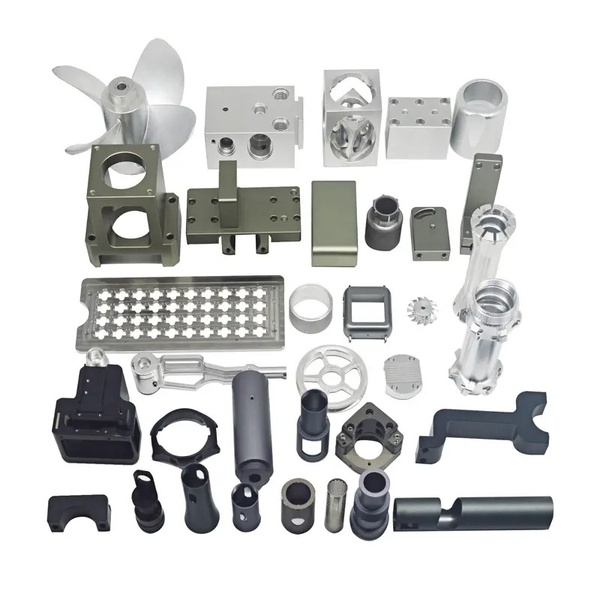
High Volume vs Low Volume Manufacturing: A Clear Comparison
Many sourcing mistakes happen when companies push the wrong production model too far.
High volume parts manufacturing excels at:
- Lowest possible cost per unit over time
- Consistent dimensional accuracy
- Stable delivery schedules
- Automation and labor efficiency
By contrast, a low volume machine shop is better suited for:
- Prototypes and early-stage products
- Design iterations and engineering changes
- Specialized or highly customized parts
- Short lead times with minimal setup
This is why even companies like Apple rely on low volume CNC machining near me solutions during development—before transitioning to mass production partners such as Foxconn.
Why Tooling Strategy Separates Serious Manufacturers from Job Shops
One major difference between high volume parts manufacturing and low volume CNC machining is tooling philosophy.
In high volume environments:
- Fixtures are designed for a single part or part family
- Tool life is monitored statistically, not reactively
- Changeovers are minimized or eliminated
- Automation justifies higher upfront tooling costs
For example, automotive transmission housing suppliers often run the same fixture for years with only minor revisions. This level of stability is rarely achievable in a low volume machine shop, where flexibility is prioritized over specialization.
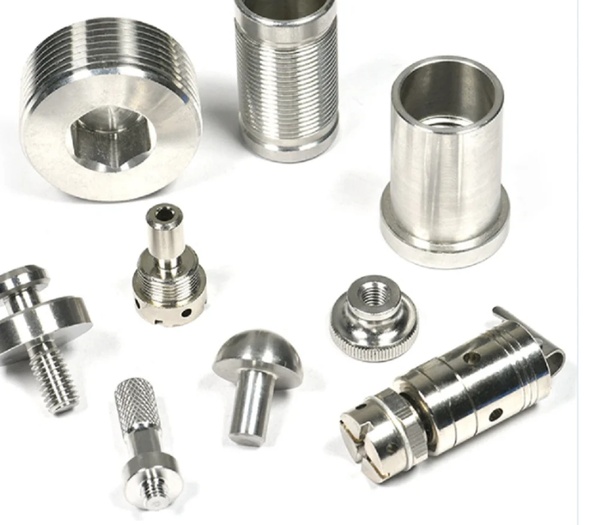
Cost Structure: Why High Volume Is Not “Cheap” at the Start
A common misconception is that high volume parts manufacturing is immediately cheaper. In reality, early costs are higher due to:
- Tooling and fixture investment
- Process validation and pilot runs
- Quality system setup
However, once volume ramps up, unit cost drops dramatically. This cost curve is why companies like Tesla continuously push suppliers toward scalable manufacturing rather than perpetual low volume production.
Quality Control at Scale: Lessons from Aerospace and Automotive
Industries such as aerospace and automotive provide the clearest examples of how high volume parts manufacturing manages risk.
Key practices include:
- In-process inspection instead of final inspection
- SPC tied to critical-to-function features
- Automated measurement integrated into production
- Clear escalation procedures for deviation
This approach is standard at Tier 1 suppliers serving Boeing, Airbus, and major OEMs, where even a small defect rate can have massive downstream consequences.
Where Low Volume CNC Machining Still Fits
Even in high volume production programs, low volume CNC machining near me remains essential.
Typical use cases include:
- Engineering change orders (ECOs)
- Bridge production during tooling updates
- Spare parts and aftermarket demand
- Regional or customized variants
Smart manufacturers do not abandon low volume capability—they integrate it strategically.
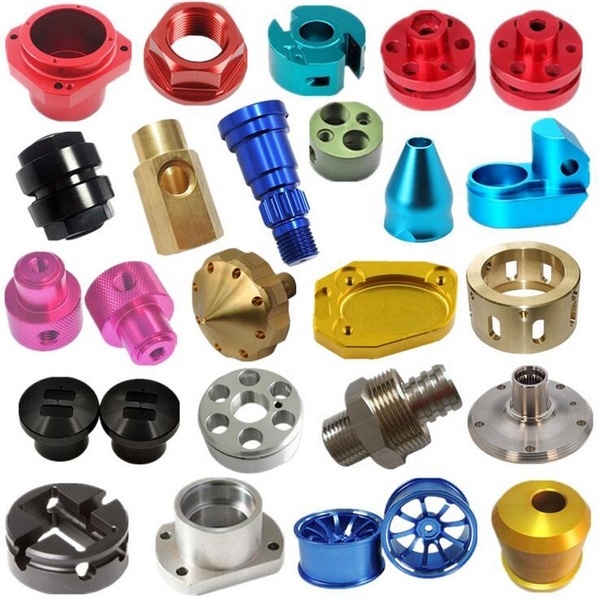
Supplier Selection: What Buyers Actually Look For
Experienced buyers evaluating high volume parts manufacturing partners focus less on marketing claims and more on operational proof.
Key evaluation points include:
- Track record with similar annual volumes
- Evidence of process stability over time
- Capacity planning and scalability
- Willingness to support low volume ramp-up phases
Companies like Xavier typically enter projects during pilot or mid-volume stages, supporting the transition from low volume machine shop production into structured high volume parts manufacturing.
Common Failures in High Volume Production
High volume parts manufacturing fails when decisions are rushed.
The most common causes:
- Freezing designs too early
- Ignoring manufacturability feedback
- Over-reliance on a single supplier
- Underestimating logistics and packaging constraints
Learning from automotive and electronics industries shows that manufacturing planning must start long before volume demand peaks.
From Manufacturing Strategy to Action
If you are currently producing parts through a low volume machine shop and demand is growing, the question is not if you should consider high volume parts manufacturing—but when and how.
A practical next step is:
- Evaluate which parts are stable enough for tooling investment
- Separate development parts from production parts
- Identify suppliers capable of supporting both low volume CNC machining near me and long-term high volume production
Manufacturers like Xavier work with engineering and sourcing teams during this transition phase, helping reduce risk while preparing for scalable manufacturing.
For companies planning the move from pilot production to sustained volume, the right manufacturing strategy can be the difference between growth and bottleneck.
Xavier is a professional {high volume parts manufacturing} focused on CNC machining of various metal parts. We support CNC machining aluminum, CNC machining stainless steel, CNC machining magnesium alloy, CNC machining acrylic, and CNC machining ABS. Our expertise covers CNC robotics machining, CNC aerospace parts machining, CNC marine parts machining, CNC automotive parts machining, and CNC medical parts machining, ensuring precision, fast turnaround, stable quality, and high compatibility. We offer the following machining services: five-axis milling services, CNC milling services, CNC turning services, and Swiss turning services. Surface finishing includes anodizing, electroless nickel plating, zinc plating, passivation, and chemical conversion coatings. As a global {high volume parts manufacturing}, Xavier provides bulk CNC machining services. For CNC machining pricing, please contact us.
Some of the images and text in this article are collected and compiled from the internet. If there is anything inappropriate, please contact us for processing.