
Understanding What a CNC Turning Parts Manufacturer Does
A CNC turning parts manufacturer specializes in producing cylindrical and rotational parts by removing material from a rotating workpiece using computer-controlled lathes and turning centers. These parts often include shafts, bushings, threaded pins, collars, and complex internal bores — all requiring high accuracy and repeatability. CNC turning differs fundamentally from milling because the workpiece rotates while the cutting tool moves along programmed paths to remove material, yielding symmetric and precise geometries.
Unlike manual lathes, CNC turning centers automate the entire sequence — including tool changes, feeds, and speeds — providing consistency across batches. This automation is vital for both prototype parts and mass production runs with repeatable quality performance.
Material Selection and Machinability: Beyond Metals
Material choice directly affects manufacturability, precision, surface finish, and cost. A reputable CNC turning parts manufacturer will be capable of working with a broad spectrum of materials including:
| Material Category | Examples | Typical Uses | Machinability Notes |
|---|---|---|---|
| Light Metals | Aluminum 6061/7075 | Aerospace housings, brackets | Excellent machinability, good strength-to-weight |
| Stainless Steel | 304, 316 | Medical components | Higher hardness, slower feeds |
| Titanium Alloys | Ti-6Al-4V | Aerospace/defense | Difficult to machine, needs optimized tooling |
| Non-Ferrous | Copper, Brass | Electrical & fluid fittings | Good conductivity, easy to turn |
| Engineering Plastics | Delrin, PEEK | Insulators, gears | Low thermal change, careful chip control needed |
Material properties such as thermal expansion, hardness, and ductility determine how tight tolerances can be held. For example, aluminum rotates more freely and expands thermally, which may affect tolerances unless controlled with careful CNC parameters.
Tolerance Standards & Dimensional Accuracy in Turning
Tolerance defines how much a machined dimension can deviate from design intent. In turning, tolerances correlate closely with part function such as fit, alignment, and mechanical performance.
| Tolerance Class | Typical Value | Application Example |
|---|---|---|
| Standard turning | ±0.01 mm | General industrial components |
| Precision turning | ±0.005 mm | Aerospace connectors |
| Ultra-precision | ±0.002 mm | High-speed bearings |
Acceptance to international standards such as ISO 2768 or DIN tolerance charts ensures consistency. During quoting and pre-production, a strong manufacturer will review tolerance feasibility and suggest revisions if a design is too tight or unnecessary from an engineering perspective.
Core Processes and Machine Types in CNC Turning
Turning operations use different machine configurations optimized for part complexity:
- 2-Axis CNC Lathes: Basic turning with X and Z axes — ideal for simple shafts and stepped diameters.
- Multi-Axis Turning Centers: Incorporate live tooling and additional axes for milling, drilling, and grooving within a single setup.
- Swiss-Style Lathes: Hold the part at both guide bushing and collet, offering exceptional accuracy for long, slender parts.
Multi-axis capabilities reduce setup times and cumulative positioning errors because the part only needs to be clamped once. This directly improves quality and reduces cycle times for complex geometries.
Surface Finishes and Post-Machining Treatments
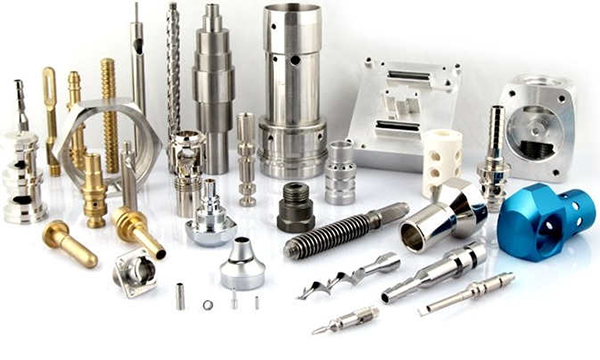
Surface quality affects mechanical behavior, fit, and aesthetics. Common finish types for turned parts include:
| Surface Finish Type | Typical Roughness (Ra μm) | Use Case |
|---|---|---|
| As-Machined | 0.8–3.2 | Functional parts |
| Polished | 0.2–0.6 | Wear surfaces |
| Anodized (metals) | N/A | Corrosion resistance |
| Bead Blasted | Visual finish | Cosmetic parts |
Turning combined with finishing steps such as anodizing or passivation improves corrosion resistance and wear performance, critical for aerospace, medical, and harsh environment components.
Quality Control Systems & Inspection Protocols
A reliable CNC turning parts manufacturer implements robust QA processes throughout production stages:
- Incoming Material Inspection: Mill test certificates (MTC) and chemical composition verification.
- In-Process Checks: First-article inspection and patrol checks.
- Final Inspection: Coordinate Measuring Machines (CMM), micrometers, and surface profilometers tied to documented accept/reject criteria.
- Continuous Improvement: CAPA (Corrective and Preventive Action) systems monitor defects and reduce variability over time.
ISO 9001 and industry-specific certifications such as AS9100 (aerospace) or IATF 16949 (automotive) signal systematic quality governance.
Design for Manufacturability (DFM) in CNC Turning
DFM reduces cost, improves yield, and enhances precision. Practical DFM rules for turned parts include:
- Avoid tolerances tighter than necessary — for instance, ±0.01 mm instead of ±0.002 mm if performance allows.
- Favor symmetrical features to simplify toolpath programming.
- Standardize threads and fits whenever possible.
These practices reduce machining time, lower scrap rates, and enable faster cycle times without sacrificing functional performance.
Industry Applications of CNC Turned Parts
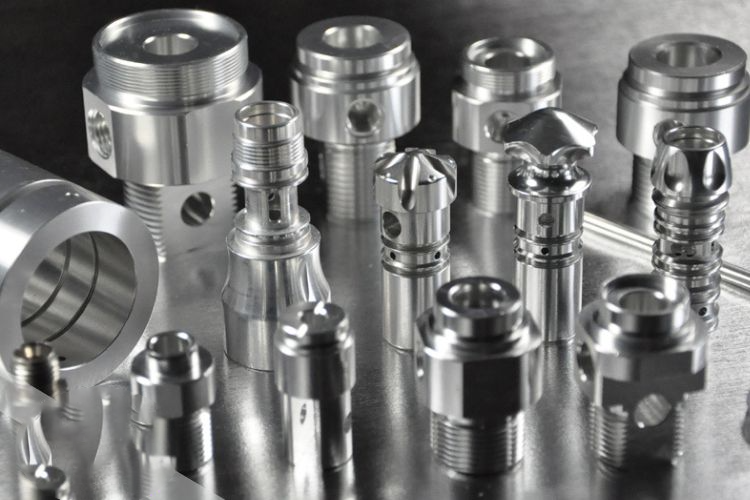
CNC turning plays a foundational role across multiple sectors:
Aerospace: Engine shafts, fasteners, and housings with tight concentricity and traceability.
Automotive: Transmission components, wheel studs, and sensor housings requiring high throughput.
Medical Devices: Surgical tool components and implant interfaces needing biocompatibility and surface quality.
Industrial Automation: Precision shafts and couplings ensuring high speed, low vibration in robotics and conveyors.
Each application has unique tolerance and material requirements, and a good manufacturer customizes machining strategies accordingly.
Cost Structure, Lead Times, and Production Efficiency
Major cost contributors in CNC turning include:
| Cost Category | Contribution % | Notes |
|---|---|---|
| Material | 25% | High-grade metals like titanium cost more |
| Machine Hours | 40% | Multi-axis at higher hourly rates |
| Tooling | 15% | Carbide and precision inserts |
| Inspection | 10% | CMM and trace documentation |
| Finishing | 10% | Anodizing, plating |
Lead times vary from rapid prototypes in 3–7 days to full production runs in 2–6 weeks, depending on complexity and batch size. Early DFM review reduces lead times and improves cost predictability.
Choosing the Right CNC Turning Manufacturer
When selecting a supplier, consider:
- Technical capability: Advanced multi-axis centers and Swiss lathes.
- Quality governance: Documented inspection and certification.
- Communication: Transparent quoting and tolerance review.
- Support: Engineering support for DFM and material recommendations.
Good cultural alignment and process documentation translate into fewer surprises during production and delivery.
Xavier: Your Trusted Partner for CNC Turning Parts Manufacturing
Choosing a CNC turning parts manufacturer isn’t just about milling metal — it’s about engineering integrity, repeatable precision, process transparency, and delivery reliability. Xavier combines state-of-the-art multi-axis CNC turning centers with deep material engineering expertise and ISO-aligned quality systems. With comprehensive machining capabilities across metals and advanced plastics, precise tolerance control, surface finish excellence, and data-driven inspection reports, Xavier ensures your parts perform exactly as designed — whether for aerospace, automotive, medical devices, or high-precision industrial applications.
From rapid prototype iterations to high-volume production, Xavier partners with you to optimize cost, quality, and schedule — turning your designs into engineered reality.
Some of the images and text in this article are collected and compiled from the internet. If there is anything inappropriate, please contact us for processing.