Precision Machined Components Manufacturer: The Ultimate In-Depth Guide
Precision machined components are foundational elements of modern manufacturing — from aerospace turbines to medical implants — and choosing the right manufacturer is critical for performance, quality, and reliability.
Here are 15 key knowledge points that form the core of high-value, search-driven content:
- Definition and scope of precision machined components
- Precision machining processes
- Tolerances and quality standards
- Material selection and machinability
- CNC machining technologies
- Multi-axis machining and geometric complexity
- Workholding and setup precision
- Surface finish and secondary operations
- Inspection technologies
- Industry certifications and compliance
- Applications by industry
- Scalability: prototyping to volume production
- Supply chain and turnaround time
- Cost drivers in precision manufacturing
- Choosing a precision machined components manufacturer
1. What Are Precision Machined Components?
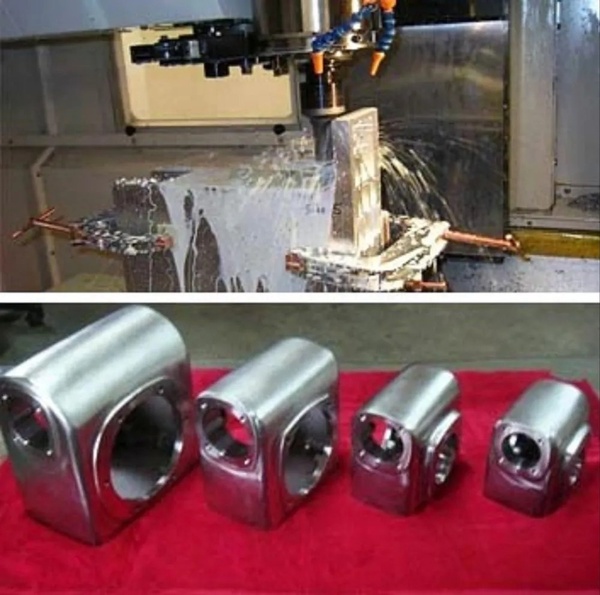
Precision machined components are parts manufactured to exact dimensional specifications with tight tolerances — often to within microns — ensuring they fit and function perfectly in assemblies. These parts are made via subtractive processes, removing material through milling, turning, drilling, and grinding.
2. Precision Machining Processes
Manufacturers use multiple machining techniques to create these components:
| Process | Description | Application |
|---|---|---|
| Milling | Rotating cutter removes material from surface | Complex shapes |
| Turning | Workpiece rotates against cutting tool | Cylindrical parts |
| Drilling | Creates or enlarges holes | Fasteners, fluid channels |
| Boring | Refines hole accuracy | Tight tolerances |
Each process requires precise programming and control to meet specifications.
3. Tolerances and Quality Standards
Precision components depend on tight tolerances — the allowable variation from nominal dimensions. Typical CNC precision machining tolerances:
| Machine Process | Typical Tolerance | Best Possible |
|---|---|---|
| EDM | ±0.015 mm | ±0.005 mm |
| CNC Milling | ±0.025 mm | ±0.005 mm |
Industry standards like ISO 2768, ISO 8015, and ASME Y14.5 govern these tolerances, ensuring global consistency.
4. Material Selection and Machinability
Precision components can be made from metals, plastics, and composites. Common choices include:
| Material | Key Property | Typical Uses |
|---|---|---|
| Aluminum (6061) | Lightweight, machinable | Aerospace housings |
| Stainless Steel (316L) | Corrosion resistant | Medical devices |
| Titanium (Ti-6Al-4V) | High strength/weight | Aerospace implants |
| Plastics (PEEK, ABS) | Chemical resistance | Robotics casings |
Steel alloys need rigid machines because of hardness; plastics require careful cooling to prevent deformation.
5. CNC Machining Technologies
Computer Numerical Control (CNC) is the backbone of precision manufacturing. Machines use G-code to automate cutting tools with repeatable accuracy. Typical CNC machines include:
- 3-Axis CNC machines – standard for most parts
- 4/5-Axis CNC machines – necessary for complex geometry
- Swiss-type lathes – for small, high-volume components
This automation eliminates variations associated with manual machining.
6. Multi-Axis Machining and Complexity
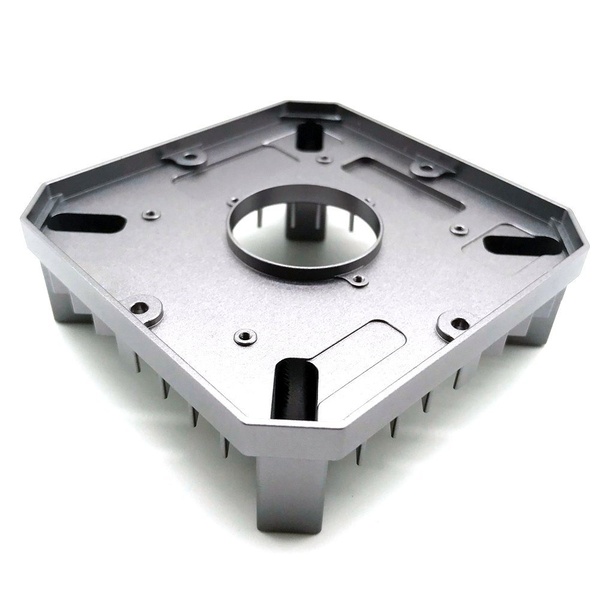
Multi-axis machining allows parts to be cut from multiple directions without repositioning. This reduces error and increases precision for features like angled holes and curved surfaces. A real example: a 5-axis CNC part with ±0.01 mm tolerance was successfully manufactured for a prototype aluminum housing.
7. Workholding, Setup, and Thermal Control
Setup accuracy — including fixturing and workholding — is critical. Poor workholding can introduce vibrational errors or thermal expansion that distort dimensions. Machinists often control shop temperature to improve repeatability.
8. Surface Finish and Secondary Operations
After machining, parts may receive surface finishes to meet performance or aesthetic needs:
- Anodizing – for aluminum corrosion resistance
- Polishing – improves finish for optical parts
- Heat treating – enhances strength
These improve both function and longevity.
9. Inspection Technologies
Precision manufacturers use advanced metrology:
| Inspection Tool | Capability |
|---|---|
| CMM (Coordinate Measuring Machine) | Sub-micron dimensional checks |
| Laser Scanners | Rapid 3D surface measurement |
| Optical Comparators | Visual tolerance check |
Statistical Process Control (SPC) helps monitor trends and reduce defects.
10. Industry Certifications and Compliance
Top manufacturers comply with certifications such as:
- ISO 9001 – quality management
- AS9100 – aerospace supplier standard
- IATF 16949 – automotive quality
Compliance ensures traceability, quality control, and global acceptance.
11. Precision Components Across Industries
Precision machined parts are vital in:
| Industry | Example Applications |
|---|---|
| Aerospace | Turbine housings, jet engine valves |
| Medical | Implants, surgical tool components |
| Automotive | Transmission gears, engine components |
| Electronics | Connectors, heat sinks |
In fields such as aerospace, parts may require tolerances as tight as ±0.0005 inches.
12. Scalability: From Prototype to Production
A reliable manufacturer can scale from prototypes to mass production by:
- Rapid prototyping with CNC
- Repeatable setups
- Digital machining records
This scale flexibility reduces risk and cost across product development.
13. Supply Chain and Turnaround Time
Competitive lead times depend on:
- Workforce competency
- Machine availability
- Material sourcing
Typical jobs range from 24 hours for simple parts to 1–2 weeks for complex production orders.
14. Cost Drivers in Precision Manufacturing
Key cost factors include:
- Material type (titanium is more costly than aluminum)
- Complexity and number of axes
- Inspection and certification requirements
- Volume of parts
Understanding the cost drivers helps engineers design for manufacturability.
15. How to Choose a Precision Machined Components Manufacturer
Checklist:
✔ Material expertise
✔ Certifications (ISO, AS9xxx)
✔ Multi-axis machining capability
✔ Reliable inspection processes
✔ Proven track record in your industry
A best-in-class manufacturer balances quality, speed, and cost — critical for global competitiveness.
Conclusion — Why Xavier is the Premier Choice
If you aim to partner with a precision machined components manufacturer that combines world-class quality, modern CNC technologies, and deep material expertise, Xavier stands out as an industry leader. With robust tolerances, comprehensive inspection systems, and end-to-end machining capabilities, Xavier delivers precision components that meet the demanding standards of aerospace, automotive, medical, and industrial applications — backed by certifications and real manufacturing excellence.
Some of the images and text in this article are collected and compiled from the internet. If there is anything inappropriate, please contact us for processing.