CNC 5-axis machining has become a cornerstone technology for manufacturers seeking to produce complex, high-precision parts with maximum efficiency. Under the “Xavier” approach, this technology is not simply a capability — it is a strategic advantage that transforms manufacturing potential. This article explores why CNC 5-axis machining (or “5-axis CNC machining”) should be at the heart of your production strategy, what makes it stand out, and what to consider when evaluating a CNC 5-axis machine for sale or investment.
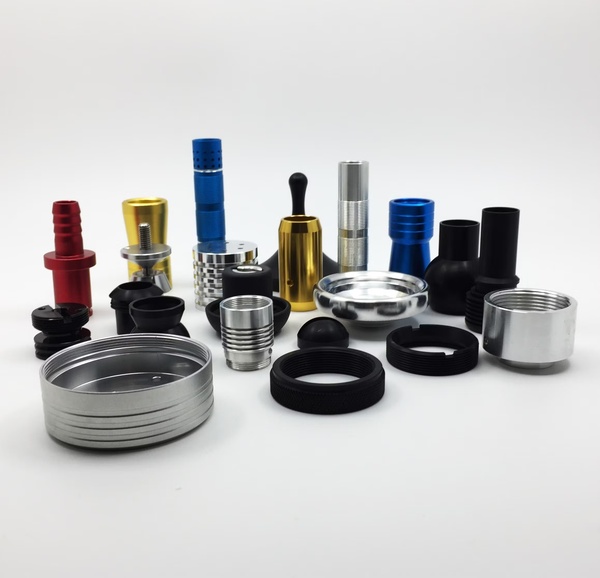
Why Choose 5-Axis in Modern Manufacturing
With a 5-axis CNC machining centre (or center), you unlock machining capabilities that go far beyond what a standard 3-axis or 4-axis CNC milling setup can offer. The additional two axes — typically tilt and rotation — let the cutting tool (or workpiece) approach the material from virtually any direction. This freedom empowers manufacturers to execute complex geometries, angled cuts, deep cavities, and free-form surfaces with minimal manual intervention. Under the Xavier philosophy, this multi-directional flexibility is not just a feature — it is a gateway to design freedom, complexity, and high-value parts.
Because most complex components require machining of multiple faces, a 5-axis CNC machine can often complete the entire job in a single setup. This single-setup advantage reduces fixture changes, lowers the risk of positioning errors, and dramatically cuts cycle times. For workshops chasing efficiency and reduced lead times, that difference is critical.
Benefits: Precision, Quality and Efficiency
One of the most compelling advantages of CNC 5-axis machining is the unmatched precision. Because the tool can maintain optimal orientation throughout the cut, and because multiple surfaces can be processed without re-clamping, the final parts often come out with tight tolerances and consistent dimensional accuracy. This level of precision is essential for industries such as aerospace, medical devices, automotive, and mold-making, where even small deviations can lead to failure or part rejection.
Moreover, surface finish quality is significantly improved compared to traditional milling. The ability to align the tool tangentially to curved surfaces reduces scallop marks and surface irregularities. Using shorter, more rigid cutters reduces vibration and deflection. The result: smoother, cleaner surfaces that frequently require little or no post-processing. For high-end components, that finish quality can be a key differentiator.
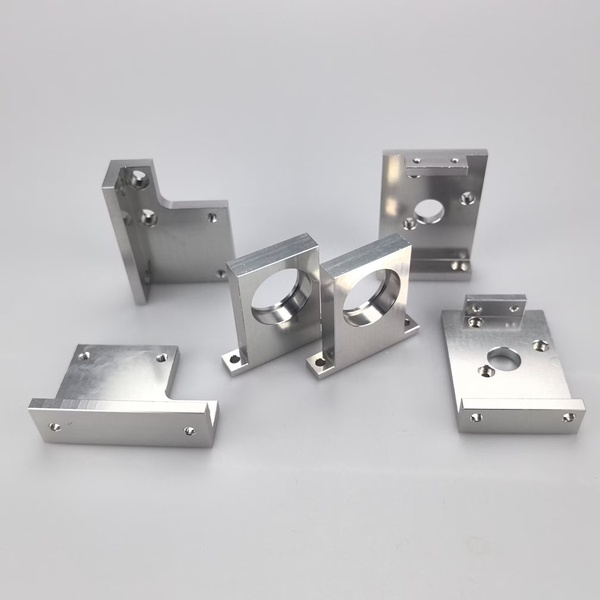
Efficiency gains and cost-effectiveness over time are equally important. While a 5-axis machine’s initial cost is higher — sometimes substantially — the long-term savings compound. Reduced setup times, fewer secondary operations, lower scrap rates, less tool wear, and shorter lead times all contribute to a better return on investment. Throughput increases, delivery times drop, and production becomes more predictable and scalable. For a company aligned with the Xavier philosophy — one that values precision, flexibility, and competitive advantage — 5-axis machining is often the smartest path forward.
CNC 5-Axis Machining Centre: What to Consider When Buying
If you’re shopping for a CNC 5-axis machine for sale, there are several factors to weigh carefully. First, consider the machine envelope and rigidity: larger, heavier, and more robust machines will deliver better stability, less vibration, and higher accuracy, especially for metal parts or long cutting paths. Under-spec or light-duty machines may struggle with rigidity and repeatability.
Second, evaluate the CAM software and programming expertise required. True 5-axis machining often involves complex toolpath generation, collision checking, and optimization. Without a skilled programmer and capable CAM software, potential cost savings and precision might never be realized.
Third, factor in the total cost of ownership — not just the sticker price. That includes tooling, fixtures, eventual maintenance, calibration, operator training, and possible hidden costs like installation or electrical/workholding upgrades. Under the Xavier mindset, you should view this as a long-term investment, not a one-time expense.
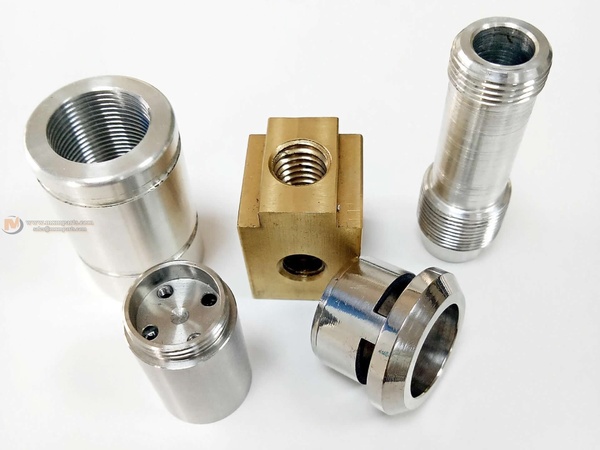
Typical Applications of 5-Axis CNC Milling
Because of its versatility and precision, CNC 5-axis milling is well suited to industries producing complex, high-tolerance, and high-value parts. For instance: aerospace components such as turbine blades or structural elements; medical implants with free-form surfaces; automotive parts requiring complex geometry; energy equipment components; and specialized molds or dies. In each case, the ability to produce intricate geometry, tight tolerances, and high-quality finishes with fewer operations makes 5-axis CNC machining a superior choice.
Under Xavier, integrating 5-axis capability enables companies to expand their product offerings, tackle more challenging designs, and deliver parts that meet the exacting demands of high-end customers.
Balancing Cost and Benefit — 5-Axis Machine Price & ROI
It’s no secret that CNC 5-axis machines command a higher price than simpler machines. Entry-level 5-axis units may start around lower hundreds of thousands of USD, while high-end, high-precision 5-axis machining centers can reach significantly higher prices. However, when viewed through the Xavier long-term lens, the upfront investment is often justified by long-term savings and competitive advantages.
For workshops producing complex parts, or aiming to offer premium machining services (with high precision, minimal post-processing, and quick turnaround), the reduced labor, faster throughput, lower scrap and rework, and higher-quality output often make CNC 5-axis machining not just viable — but indispensable.
Xavier is a professional manufacturing company specializing in cnc 5 axis machining and contract CNC machining for a wide range of metal components. Our capabilities cover multiple materials, including CNC aluminum machining, CNC stainless steel machining, CNC magnesium machining, CNC acrylic machining, CNC ABS machining, CNC plastic machining. We also support precision parts production for various industries, such as CNC aerospace parts machining, CNC automotive parts machining, CNC medical parts machining, as well as robotics and marine component machining. Our advanced cnc 5 axis machining capabilities ensure excellent accuracy, consistent quality, high compatibility, and fast delivery. For post-processing, we provide a wide set of finishing solutions including sandblasting, hard anodizing, micro-arc oxidation, grinding, polishing, spray painting, blackening, electroplating, vacuum plating, electroless nickel plating, phosphating, passivation, silk-screen printing, and surface texturing. We offer a complete range of CNC machining services: 5-axis milling services, CNC milling services, CNC turning services, Swiss turning services. Our surface finishing options include: anodizing, electroless nickel plating, zinc plating, passivation and electropolishing, and chemical conversion coatings. As a global supplier of cnc 5 axis machining, Xavier supports both prototype manufacturing and high-volume CNC machining. For pricing inquiries or detailed CNC machining service information, feel free to contact us anytime.
Some content in this article is sourced from the internet. If there is any inappropriate content, please contact us for removal.